Triquetra
The triquetra is one of the most recognizable interlaced symbols in the history of European art and religious imagery. Consisting of three connected arcs or loops, it appears in Celtic, Christian, and broader decorative traditions, where it has been interpreted in multiple ways: as a sign of unity, eternity, the threefold nature of existence, or simply as an attractive geometric motif. Because it has been reused across different periods and belief systems, the triquetra is best understood not as a symbol with a single fixed meaning, but as a form whose significance changes according to context.
In modern usage, the triquetra is especially associated with Celtic art and Christian iconography, although its visual history extends beyond either. Its enduring appeal lies in its simplicity, symmetry, and layered symbolism.
Origin and Meaning
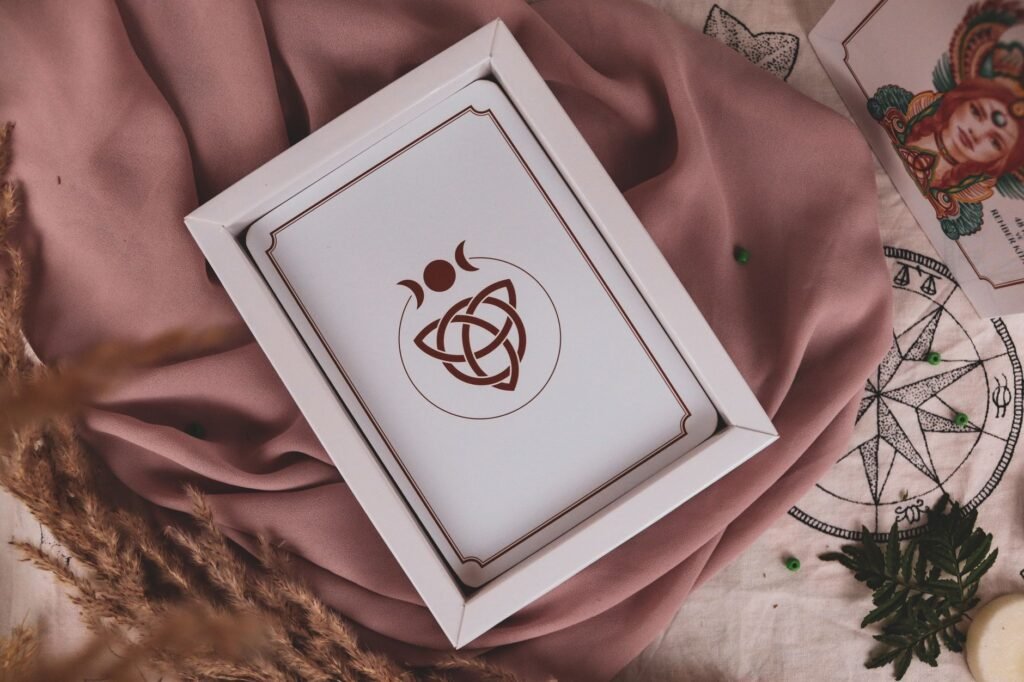
The word triquetra comes from Latin, meaning “three-cornered” or “having three corners.” In English, the term is often used for the three-looped knot-like figure, although historical usage has sometimes been broader and can refer to several three-part geometric forms.
The symbol itself is ancient in visual design, but its exact origin is difficult to pinpoint. Similar three-lobed or interlaced forms appear in various cultures and artistic traditions. In the European context, the triquetra became especially prominent in Insular art—the distinctive artistic style of early medieval Britain and Ireland. In that setting, it was one of several interlace motifs used by scribes, metalworkers, and stone carvers.
Because the triquetra is found across different eras and regions, scholars generally treat it as a motif rather than a symbol with one single origin story. Its meaning depends heavily on the culture that adopted it.
Historical Context
Pre-Christian and Early Medieval Context
The triquetra is often associated with the Celtic world, but this association is partly modern and partly historical. The symbol appears in early medieval manuscripts and carved stones from Ireland and Britain, where it was used within a wider artistic vocabulary that included spirals, knots, zoomorphic interlace, and triskele forms.
The early medieval period was marked by interaction between Celtic, Germanic, Roman, and Christian traditions. In that environment, symbols were frequently reused and reinterpreted. The triquetra likely gained prominence through artistic transmission rather than from a single religious doctrine.
Christian Context
One of the most important historical developments in the symbol’s career was its adoption in Christian art. In medieval manuscript illumination, stone carving, and church decoration, the triquetra could be interpreted as a visual expression of the Trinity—Father, Son, and Holy Spirit. This made it especially useful in cultures where local artistic forms were adapted to Christian theology.
Modern Revival
In the nineteenth and twentieth centuries, the triquetra experienced a major revival through the broader interest in Celtic identity, medieval art, and occult symbolism. It later entered popular culture through jewelry, tattoos, fantasy fiction, and television. As a result, the symbol now carries multiple modern associations, some historical and some newly created.
Main Characteristics
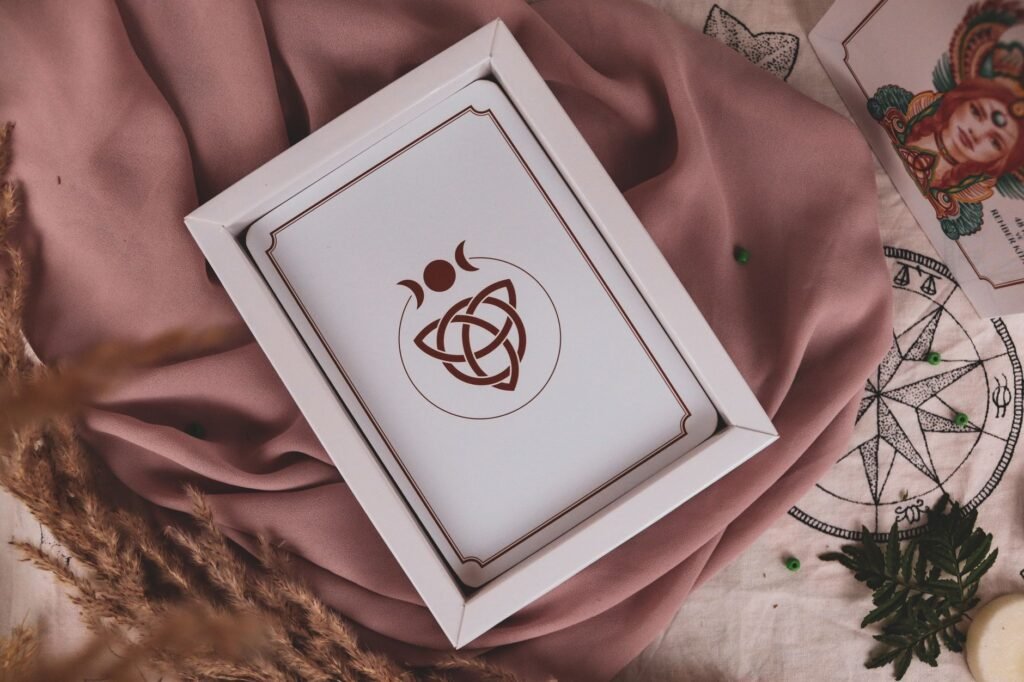
The triquetra is usually identified by its three interlocking arcs or three-cornered knot. In many examples, the lines form a continuous loop with no beginning or end. This gives the symbol an impression of unity, movement, and completeness.
Common Visual Features
- Threefold symmetry
- Interlaced or continuous line structure
- Circular or near-circular enclosure
- Balanced, repeating geometry
- Knot-like appearance in artistic variants
Distinctions from Related Symbols
The triquetra is often confused with other three-part symbols:
| Symbol | Main Feature | Typical Association |
|---|---|---|
| Triquetra | Three interlaced arcs or points | Unity, Trinity, eternity |
| Triskele | Three spirals or legs radiating from a center | Motion, cycles, triadic symbolism |
| Trefoil | Three-lobed ornamental form | Decorative, sometimes religious |
| Triad knot | Broader category of three-part knots | Varies by tradition |
Although these forms may overlap visually, they are not always historically identical.
Family and Genealogy
The triquetra is not a mythological being, so it does not have parents, children, spouses, or descendants in the literal sense. However, if considered as a cultural symbol, it belongs to a broader “family” of triadic motifs found in religious art and ornament.
Related Symbolic “Relations”
- Triskele: A closely related triple form often linked with movement and cycles.
- Borromean rings: A later symbolic geometry of three linked units, sometimes used in theological contexts.
- Trinity imagery: Christian theological concepts that the triquetra has been used to represent.
- Knotwork traditions: Insular and medieval decorative systems from which the triquetra is often inseparable.
In symbolic terms, the triquetra’s “genealogy” is best understood as part of a long lineage of threefold design in art and religion.
Symbols
The triquetra has been interpreted in different ways depending on time, place, and belief system.
Common Symbolic Meanings
- The Trinity in Christianity
- Unity of three elements
- Eternity and continuity
- Interconnection and wholeness
- Balance among three forces or realms
- Feminine symbolism in some modern spiritual traditions
Color Associations
The triquetra itself does not have a fixed traditional color. Its meaning in art depends on materials and context. In modern usage, however, certain colors are sometimes chosen deliberately:
- Gold or yellow: sacredness, divinity, value
- Green: nature, Celtic identity, growth
- Blue: spirituality, depth, harmony
- Black: mystery, protection, permanence
- Silver: moon, purity, elegance
These are modern or artistic associations rather than universal historical rules.
Objects and Materials
The triquetra has appeared on many types of objects:
- Manuscripts
- Stone crosses
- Jewelry
- Coins and seals
- Textile patterns
- Stained glass
- Book covers
- Modern tattoos and logos
Its adaptability helps explain its longevity.
Sacred Animals
There are no universally recognized sacred animals uniquely associated with the triquetra. However, in traditions where it is used symbolically, animal associations may be inferred from broader cultural systems rather than from the symbol itself.
Possible Contextual Associations
- Birds: Often linked with the soul, the divine, or transcendence in Christian and Celtic art.
- Serpents: Sometimes associated with eternity, renewal, or knowledge in wider symbolic traditions.
- Stags: In Celtic-inspired imagery, frequently represent nobility, wilderness, and otherworldly power.
- Doves: In Christian symbolism, may reinforce Trinitarian or spiritual meaning.
These associations are contextual and not part of a single fixed triquetra tradition.
Sacred Plants
Like sacred animals, no plant is exclusively or universally tied to the triquetra. Still, in later Celtic or Christian-inspired usage, certain plants may appear alongside it because they share related meanings.
Commonly Associated Plants
- Shamrock: Often linked to Irish identity and the Christian Trinity, especially in later tradition.
- Ivy: Symbol of endurance and continuity in European ornament.
- Oak: A tree of strength and sacredness in many European traditions.
- Yew: Associated with longevity, death, and sacred spaces in some cultures.
- Vines and laurel: Decorative and symbolic of growth, victory, or immortality.
These plant associations are cultural and decorative rather than inherent to the triquetra itself.
Sacred Places
The triquetra is not attached to one sacred geography, but it is found in places linked to early Christianity, Insular art, and later Celtic revivalism.
Important Contexts and Locations
- Ireland and Britain: Major centers for early medieval manuscripts and stone carving featuring interlace motifs.
- Monastic sites: Scriptoria and churches where illuminated manuscripts and carved crosses preserved the symbol.
- North Atlantic Celtic regions: Areas where revivalist interest in Celtic art later flourished.
- Museums and cathedral collections: Many surviving examples are now held in historical collections rather than in active ritual use.
Because the symbol is decorative and portable, it is not confined to one shrine or sanctuary. Its “sacred places” are best understood as the cultural landscapes where it was carved, copied, or reinterpreted.
Powers and Attributes
As a symbol, the triquetra does not possess powers in the literal sense. However, in religious and cultural interpretation, it is often linked with a set of conceptual attributes.
Common Attributes
- Unity in diversity
- Continuity without end
- Threefold completeness
- Spiritual harmony
- Protection or blessing in some later uses
- Sacred order in Christian interpretation
In Christian art, the triquetra could visually express the doctrinal unity of the Trinity. In modern spiritual contexts, it is sometimes interpreted more broadly as representing:
- mind, body, and spirit
- past, present, and future
- maiden, mother, and crone
- earth, sea, and sky
These meanings are modern reinterpretations and vary widely.
Main Myths
The triquetra is not the central figure in a single ancient myth, but it appears in the symbolic language of stories and beliefs that emphasize triadic structures.
Christian Triadic Theology
Its most important “mythic” role in historical usage is theological rather than narrative: the symbol visually expresses the three-in-one nature of God in Christian doctrine.
Celtic and Neo-Pagan Interpretations
In modern Celtic-inspired spirituality, the triquetra is often connected to triple goddesses, cycles of nature, and the threefold division of existence. These interpretations are widely popular but are not always traceable to a specific ancient source. Different modern communities may assign different meanings.
Narrative Functions
In literature and art, the triquetra may be used to suggest:
- destiny
- hidden knowledge
- lineage
- sacred power
- ancient continuity
These are literary and symbolic uses rather than mythic stories in a strict historical sense.
Relationship with Other Mythological Figures
Since the triquetra is a symbol rather than a deity, its “relationships” are best described in terms of the figures or traditions it has been used to represent.
In Christianity
The triquetra is most strongly associated with:
- The Father
- The Son
- The Holy Spirit
It may also appear alongside the cross, the chi-rho, or other Christograms.
In Celtic-Inspired Tradition
Modern interpretations sometimes connect it with:
- triple goddesses
- mother figures
- nature spirits
- triple aspects of deities
However, these associations vary by source, and scholars caution against assuming a direct ancient Celtic theology behind every modern use.
In Broader Symbolic Systems
The triquetra may be linked conceptually with other triadic figures such as:
- gods of creation, preservation, and destruction
- maiden, mother, and crone
- birth, life, and death
- land, sea, and sky
These are interpretive frameworks, not a single canonical tradition.
Worship and Cult
There is no cult devoted specifically to the triquetra. Instead, the symbol appears in worship traditions and devotional settings where it serves a representational role.
Christian Use in Devotion
In Christian contexts, the triquetra appears in:
- manuscript decoration
- church carving
- liturgical art
- inscriptions
- decorative panels and windows
It was not itself an object of worship, but a symbolic aid to contemplation of the Trinity.
Ritual and Popular Use
In modern contexts, the symbol is sometimes worn as:
- a pendant
- a ring
- a tattoo
- a protective charm
- a mark of spiritual identity
Some contemporary pagan and neo-pagan practitioners use it in ritual settings, but practices vary significantly by group and are not standardized.
Festivals
No historical festival is uniquely dedicated to the triquetra. When the symbol appears in festivals or ceremonies, it generally does so as part of broader Celtic, Christian, or seasonal observances.
Ancient Sources
There are no classical literary sources that define the triquetra in the same way that ancient authors describe a deity or hero. Its history is primarily visual and archaeological.
Important Source Types
- Insular manuscripts: illuminated books such as gospel books and psalters
- Stone sculpture: crosses, grave markers, and carved monuments
- Metalwork: decorative objects and fittings
- Archaeological finds: items from early medieval contexts
Scholars and Primary Evidence
Rather than Homer or Hesiod, the triquetra is studied through art historical and archaeological evidence. Examples of relevant source categories include:
- early medieval Irish and British manuscript art
- ecclesiastical stone carvings
- comparative studies of Celtic interlace
- Christian iconographic manuals and medieval commentary
The symbol’s meaning is reconstructed from its use, not from a single ancient text.
Roman Equivalent
There is no direct Roman equivalent to the triquetra in the sense of a one-to-one mythological counterpart. However, Roman and later Romanized art used numerous geometric and knot motifs, and Roman culture helped shape the visual environment in which later Christian symbolism developed.
Possible Comparisons
- Knot patterns in Roman decorative art
- Triadic symbolism in Roman religion and philosophy
- Christian Trinitarian symbolism within the Roman Empire and its successor traditions
Because the triquetra is not a deity or personified figure, the idea of a Roman “equivalent” is only approximate. In practice, the symbol was absorbed into late antique and medieval Christian visual culture rather than replaced by a Roman counterpart.
Influence on Modern Culture
The triquetra has had a substantial afterlife in modern culture, where it serves both as an ornament and as a sign of identity.
Literature and Fantasy
Writers often use the triquetra to evoke:
- ancient heritage
- mystery
- magic
- Celtic atmosphere
- sacred continuity
It appears frequently in fantasy novels and historical fiction, sometimes with accurate cultural grounding and sometimes as a generalized “Celtic” emblem.
Film and Television
The symbol appears in costume design, set decoration, and prop imagery, especially in productions involving:
- medieval settings
- Celtic myth
- supernatural themes
- occult or spiritual storylines
Its visual clarity makes it easy to recognize on screen.
Games and Popular Media
The triquetra is also common in:
- role-playing games
- video game iconography
- tabletop fantasy settings
- logo design
- album artwork
- fashion and jewelry branding
Contemporary Identity
For many people today, the triquetra functions as a sign of:
- Irish or Celtic heritage
- Christian faith
- spiritual eclecticism
- aesthetic appreciation of knotwork and sacred geometry
This wide range of uses has made it one of the most versatile symbols in contemporary design.
Curiosities
- The triquetra is often called a “Celtic knot,” but that label is modern and can be imprecise.
- Some medieval examples are so stylized that it can be difficult to distinguish a triquetra from other interlace patterns.
- The symbol’s popularity in jewelry owes much to its balance of simplicity and visual richness.
- In Christian contexts, its meaning is often strengthened by surrounding imagery such as a circle, which can suggest eternity.
- Modern neopagan interpretations of the triquetra are influential but should not automatically be projected back into the ancient Celtic world.
- The symbol can be drawn as a standalone figure or woven into larger knotwork compositions.
- In some designs, an enclosing circle is added to emphasize unity and continuity.
Frequently Asked Questions
What does the triquetra symbolize?
The triquetra commonly symbolizes threefold unity, eternity, and interconnectedness. In Christianity, it is often used to represent the Trinity.
Is the triquetra a Celtic symbol?
It is strongly associated with Celtic art, especially Insular and medieval traditions, but it is not exclusively Celtic. Similar three-part forms appear in other cultures too.
Is the triquetra the same as the triskele?
No. Although both are three-part symbols, the triquetra usually consists of three interlaced arcs, while the triskele is typically made of three spirals or three radiating forms.
Is the triquetra religious?
It can be. In Christian art it has clear theological significance, while in modern spiritual settings it may also be used in neopagan or symbolic contexts. It can also be purely decorative.
Where did the triquetra come from?
Its exact origin is uncertain. The symbol appears in early medieval European art, especially in Ireland and Britain, but related three-part motifs are found more widely.
Does the triquetra have a fixed meaning?
No. Its meaning varies by context. Different traditions have interpreted it in different ways, and some uses are purely ornamental.
Why is the triquetra popular today?
Its popularity comes from its elegant design, historical associations, and flexible symbolism. It works well in art, jewelry, logos, and spiritual imagery.
Conclusion
The triquetra is a symbol of remarkable durability and adaptability. Emerging through the artistic traditions of early medieval Europe and gaining strong significance in Christian iconography, it has continued to evolve through later Celtic revivalism and modern popular culture. Its power lies not in a single fixed meaning, but in its ability to express unity, threefold balance, and continuity across different historical settings.
As both an artistic motif and a cultural emblem, the triquetra remains an important example of how symbols can move across religions, regions, and centuries while retaining their visual identity. Its long history demonstrates the lasting appeal of simple geometric forms that can carry rich and changing meanings.

Orin Vale has spent the better part of two decades tracing the threads that connect the world’s oldest stories — from the halls of Asgard to the banks of the Nile, from Olympus to the jungles of the Maya. What began as a childhood fascination with flood myths and trickster gods grew into years of independent study across comparative mythology and ancient religion, always chasing the same question: what did these stories mean to the people who first told them? Orin writes for readers who want more than trivia — the ones looking for the beliefs, fears, and truths that myths were built to carry.