Zeus and Danae
Introduction
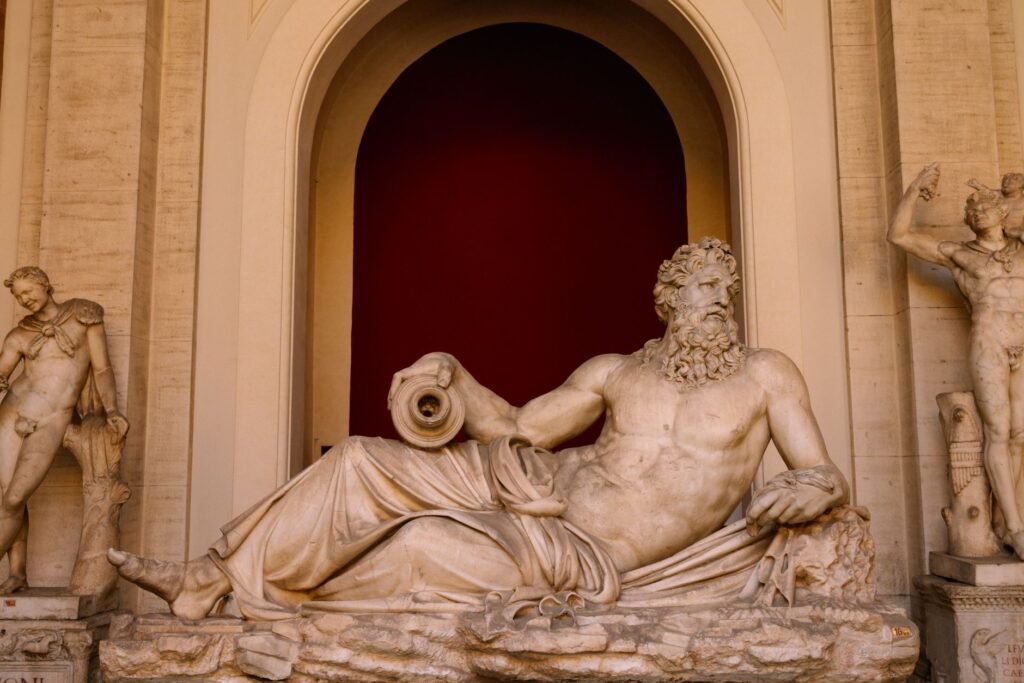
The story of Zeus and Danae is one of the best-known myths of ancient Greece. It tells how Danae, a mortal princess of Argos, was imprisoned by her father to prevent a prophecy from being fulfilled, only for Zeus, king of the gods, to reach her in the form of a shower of gold and father Perseus, one of the great heroic figures of Greek myth.
This myth mattered in antiquity because it combines several major themes of Greek storytelling: the limits of human power, the inevitability of fate, divine transformation, royal lineage, and the birth of a hero destined for extraordinary deeds. It also became a rich subject for ancient vase painting, sculpture, Renaissance art, and later literature because of its dramatic imagery and symbolic depth.
Origin and Meaning
The name Zeus
Zeus is the Greek chief deity, whose name is linguistically connected with ancient Indo-European words for the sky and daylight. He is the Greek counterpart of a sky father figure and was worshipped as the sovereign of gods and men.
The name Danae
Danae is a mythological name associated with Argive royal tradition. Her name does not have a single universally accepted etymology. Ancient sources treat her primarily as a legendary figure rather than as a person whose name invites detailed explanation. In some traditions, she is presented as the daughter of Acrisius, king of Argos, and the mother of Perseus.
Historical origin of the myth
The myth of Zeus and Danae belongs to the broader Greek heroic tradition, in which divine unions produce exceptional mortals. The earliest surviving literary allusions appear in archaic Greek poetry and later in more detailed mythographers and dramatists. The story likely developed within the mythic cycles surrounding Argos, Perseus, and the royal houses of the Peloponnese.
Historical Context
The tale emerged from an ancient world in which myth, religion, and genealogy were closely connected. Greek royal lineages often claimed descent from gods to explain prestige, political legitimacy, and local identity. The house of Argos was especially important in this respect.
Cultural background
In Greek mythology:
- gods frequently interact with mortals
- divine paternity often explains heroic greatness
- prophecy is powerful and difficult to escape
- family conflict is a common engine of myth
The Danae story also reflects ancient Greek ideas about:
- female enclosure and protection
- paternal authority
- the danger of prophecy
- divine intervention through metamorphosis
Religious and artistic context
The image of Zeus as a shower of gold became one of the most memorable visual motifs in ancient and later art. Artists were drawn to the story because it allowed them to represent both divine mystery and erotic suggestion without direct physical contact.
Main Characteristics
The myth is defined by a few striking features.
Zeus in divine disguise
Zeus is not seen in his usual thunderbolt-bearing form. Instead, he approaches Danae through an extraordinary transformation: a shower of gold or golden rain. Ancient and later interpreters have understood this in different ways:
- literally, as a miraculous golden substance
- poetically, as divine radiance
- symbolically, as wealth, fertility, or irresistible divine power
Danae as a protected princess
Danae is presented as a royal maiden, isolated by her father because of a prophecy. She is both vulnerable and central to the fate of her lineage. Her role in the myth is not active in the heroic sense, but she becomes the necessary human medium through which Perseus is born.
The birth of Perseus
The union produces Perseus, whose later achievements include:
- the slaying of Medusa
- the rescue of Andromeda
- the establishment of a heroic line
Thus, the Zeus and Danae episode functions as an origin story for a major Greek hero.
Family and Genealogy
The family relations in the myth are essential to understanding its narrative.
| Figure | Relationship | Notes |
|---|---|---|
| Acrisius | Danae’s father | King of Argos; fears a prophecy |
| Eurydice or other queenly consort | Danae’s mother in some traditions | Sources vary or leave the mother unnamed |
| Danae | Mortal princess | Daughter of Acrisius |
| Zeus | Divine lover | Visits Danae in transformed form |
| Perseus | Son of Danae and Zeus | Great hero of Greek myth |
Genealogical significance
Perseus becomes one of the most important ancestors in Greek mythic genealogy. He is linked to later heroes and dynasties, and the line descending from him includes major figures such as Heracles in some genealogical traditions.
Variations in tradition
Ancient sources differ in detail. Some versions emphasize:
- the tower or bronze chamber in which Danae is confined
- the manner of Zeus’s access
- the later fate of Acrisius
- the role of Danae’s son in fulfilling the prophecy
The central pattern, however, remains consistent: attempted human control fails in the face of destiny.
Symbols
The myth is closely associated with powerful symbols.
Common symbolic elements
- Gold: divine presence, wealth, fertility, transformation, and irresistible power
- Rain or shower: descent from heaven, fertilizing force, and supernatural access
- Tower or chamber: confinement, protection, and the attempt to control fate
- Chrysos: in artistic interpretation, gold can suggest both material splendor and divine radiance
Meaning of the golden shower
The “shower of gold” is the most iconic symbol in the myth. It has often been read as:
- a metaphor for Zeus’s ability to bypass human barriers
- a sign of divine abundance
- a poetic way to express impregnation by the sky god
- an image of light entering darkness
In later art, this motif became especially famous because it allowed artists to depict the divine union in visually imaginative ways.
Sacred Animals
The myth of Zeus and Danae does not center on sacred animals in the way some other myths do, but it belongs to the wider symbolic world of Zeus.
Animals associated with Zeus
- Eagle: symbol of Zeus’s kingship and power
- Bull: symbol of strength and fertility in broader Greek religion
- Lightning-bearing bird imagery in some artistic and cult contexts
Relevance to Danae
No animal is uniquely sacred to Danae herself in the surviving tradition. Her myth is primarily associated with the human-divine encounter and the miraculous birth of Perseus rather than with animal symbolism.
Sacred Plants
There are no major sacred plants specifically tied to Zeus and Danae in the surviving classical tradition.
Broader plant symbolism
In Greek religion, certain plants are strongly associated with Zeus or with fertility and divine favor in general, such as oak trees in some cult settings. However, no plant is central to the Danae narrative.
Sacred Places
The myth is strongly connected to specific places in the Greek world.
Argos
Argos is the principal setting of the story. It is Danae’s home and Acrisius’s kingdom. The myth contributes to the city’s heroic genealogy and prestige.
The bronze chamber or tower
Danae is often said to have been confined in a bronze chamber, underground room, or tower. The exact description varies across sources. This location symbolizes both imprisonment and the inability of human design to stop prophecy.
Seriphos
In later episodes of the Perseus cycle, Danae and her son are associated with Seriphos, where they are taken after drifting in a chest. The island is important in the broader story, though not the place of the divine conception itself.
Other connected places
The myth is also tied indirectly to:
- the routes of Perseus’s later travels
- the broader Peloponnesian mythic landscape
- sanctuaries and local cults honoring Perseus and related heroes
Powers and Attributes
Because Zeus and Danae are not a single deity but a divine-mortal pairing, their “powers” must be understood differently.
Zeus’s attributes in the myth
Zeus’s relevant powers include:
- transformation
- sovereign authority
- control over weather and sky imagery
- generative divine potency
- the ability to penetrate barriers of stone, bronze, or imprisonment
Danae’s role
Danae’s main attributes in the myth are:
- royal lineage
- beauty and desirability
- vulnerability under paternal control
- motherhood of a destined hero
- survival amid persecution
Narrative function
Together, they embody:
- the encounter of god and mortal
- the triumph of destiny over fear
- the origin of heroic excellence
Main Myths
Acrisius and the prophecy
The myth begins with a prophecy that Acrisius will be killed by his grandson. Seeking to prevent this, he confines Danae so she cannot bear children. Different versions describe her imprisonment in various ways, but the purpose is the same: to stop the predicted birth.
Zeus’s visit as golden rain
Zeus reaches Danae in a miraculous form, traditionally described as a shower of gold. This extraordinary union results in the conception of Perseus. Ancient writers do not all interpret the scene in the same way, and later readers have sometimes treated the image as metaphorical rather than literal.
Perseus’s birth
Danae gives birth to Perseus. Acrisius, though he tried to block the prophecy, cannot undo the child’s existence. In some traditions, he still seeks to eliminate Danae and her son.
The chest on the sea
A well-known episode tells how Danae and Perseus are placed in a chest or coffer and cast into the sea. They survive and wash ashore on Seriphos, where the next stage of Perseus’s story begins.
Fulfillment of the prophecy
The prophecy is ultimately fulfilled when Perseus, through a chain of events in some versions, causes the death of Acrisius. The exact circumstances vary among sources, but the theme is consistent: fate cannot be escaped.
Summary of the narrative arc
| Stage | Event | Significance |
|---|---|---|
| Prophecy | Acrisius learns he will die by his grandson | Sets the plot in motion |
| Imprisonment | Danae is confined | Human attempt to prevent fate |
| Divine visitation | Zeus appears as golden rain | Mythic conception |
| Birth | Perseus is born | Heroic destiny begins |
| Exile by sea | Danae and Perseus are cast away | Survival under divine favor |
| Fulfillment | Acrisius dies by Perseus’s involvement | Prophecy comes true |
Relationship with Other Mythological Figures
Acrisius
Acrisius is the most important human figure in the story besides Danae. His fear of prophecy drives the entire plot. He represents paternal authority, political power, and the tragic error of trying to resist fate.
Perseus
Perseus is the central result of the Zeus and Danae union. He is both a hero in his own right and a symbol of divine ancestry. His deeds elevate Danae’s story from a local Argive legend to a major component of Greek heroic myth.
Andromeda
Andromeda is not part of the Danae episode itself, but she becomes Perseus’s wife in later myth. Her inclusion extends Danae’s lineage and places the family within broader heroic tradition.
Athena and Hermes
In the Perseus cycle, Athena and Hermes assist the hero. Their involvement reflects the common Greek motif of divine support for favored mortals, especially those descended from Zeus.
Other divine figures
The story also belongs to the wider network of Zeus’s many unions with mortal women. Danae’s myth can be compared with those of:
- Europa
- Leda
- Semele
- Io
Each tale highlights different forms of divine intervention and transformation.
Worship and Cult
There is no major pan-Hellenic cult specifically devoted to “Zeus and Danae” as a pair. However, the myth existed within religious and civic environments where Zeus and heroic ancestors were honored.
Zeus worship
Zeus was widely worshipped across the Greek world in many local forms, including as:
- Zeus the king
- Zeus of oaths
- Zeus as protector of households and cities
- Zeus associated with fertility and weather
Hero cult and Perseus
Perseus, Danae’s son, could receive local heroic memory or cultic attention in places linked to his legend. Ancient Greek hero cult often focused on founders, royal ancestors, or great slayers of monsters.
Local identity
Myths such as this one helped communities connect religion with genealogy and place. Argos, in particular, could claim prestige through the story of Danae and Perseus.
Ancient Sources
The Zeus and Danae myth appears in several important ancient sources.
Key classical authors
Apollodorus, Bibliotheca
Gives a concise mythographic account of Danae, Acrisius, Zeus, and Perseus.Ovid, Metamorphoses and related works
Uses the story as part of his Roman poetic treatment of Greek myths.Pausanias, Description of Greece
Preserves local traditions and observations connected with Argos and heroic memory.Hyginus, Fabulae
Summarizes mythic versions in Roman-era handbook form.Pseudo-Apollodorus and later mythographers
Help preserve genealogical and narrative detail.
Earlier and poetic tradition
The story was also known from older Greek poetic traditions, though not always in complete surviving form. Later tragedians and vase painters further shaped the public understanding of the myth.
Variations in ancient accounts
Ancient sources differ on:
- whether Danae was imprisoned in a tower or chamber
- whether the golden shower is literal or symbolic
- the exact sequence of Danae and Perseus’s exile
- how Acrisius dies
These differences are normal in Greek mythology, which was never fixed into one canonical version.
Roman Equivalent
There is no exact Roman goddess or deity equivalent to Danae, since she is a mortal heroine rather than a goddess. Zeus’s Roman counterpart is Jupiter.
Roman adaptation
In Roman literature and art, the myth is generally retold as the story of Jupiter and Danae. Roman authors adapted the Greek tale into their own literary and artistic traditions, often emphasizing:
- divine power
- erotic transformation
- poetic imagery
- the theme of fate
The story remained especially popular in Renaissance and Baroque art, where the Roman and Greek versions often merged in reception.
Influence on Modern Culture
The myth of Zeus and Danae has had a long afterlife in Western culture.
Literature
Writers have returned to the story because it illustrates:
- divine desire
- predestination
- the vulnerability of women in myth
- the birth of a future hero
The myth appears in classical reception, retellings of Greek myths, and modern poetic reinterpretations.
Visual art
This is one of the most frequently depicted Greek myths in European art. Artists were drawn to the visual challenge of showing Danae receiving Zeus’s golden rain. Notable traditions include:
- Renaissance painting
- Baroque painting
- Neoclassical adaptations
The image allowed artists to explore themes of luxury, sensuality, and divine mystery.
Cinema and television
The myth appears occasionally in films, television adaptations, and documentaries on Greek mythology, usually as part of the Perseus cycle.
Games and popular media
Modern fantasy games, graphic novels, and mythological retellings often reference Danae indirectly through Perseus or by using the golden-rain motif as an emblem of divine intervention.
Cultural meaning today
Modern readers often interpret the myth in several ways:
- as a story about fate and inevitability
- as a myth of political anxiety and dynastic control
- as a poetic image of divine mystery
- as an example of how ancient myths portray women’s constrained agency
Curiosities
- The shower of gold is one of the most famous visual images in all of Greek mythology.
- In some artistic readings, the golden rain is understood as a metaphor for light, wealth, or supernatural impregnation rather than a literal meteorological event.
- Danae’s confinement is one of many Greek myths in which a father tries unsuccessfully to avoid a prophecy.
- The story provides the genealogical origin of Perseus, one of the great monster-slaying heroes of Greek myth.
- Ancient and later artists often used the Danae story to explore the boundary between mythological narrative and erotic imagery.
- The myth is closely associated with Argos, reinforcing the city’s importance in heroic legend.
- Although Zeus is the central divine actor, Danae remains crucial as the human bearer of the heroic line.
- The story illustrates a recurring Greek belief that fate cannot be defeated by force or imprisonment.
Frequently Asked Questions
1. Who were Zeus and Danae?
Zeus was the king of the Greek gods, and Danae was a mortal princess of Argos. According to myth, Zeus visited her in the form of a shower of gold, and she gave birth to the hero Perseus.
2. Why did Acrisius imprison Danae?
Acrisius imprisoned Danae because he had received a prophecy that he would be killed by his grandson. He hoped to prevent the prophecy by keeping her childless.
3. What does the golden shower symbolize?
It can symbolize divine power, fertility, transformation, and the ability of Zeus to overcome human barriers. Ancient and modern interpretations differ on whether it should be read literally or metaphorically.
4. Who was born from Zeus and Danae?
Their son was Perseus, one of the most important heroes in Greek mythology, famous for killing Medusa and rescuing Andromeda.
5. Is Danae a goddess?
No. Danae is a mortal woman, usually described as a princess of Argos. She is important because of her royal lineage and because she gives birth to Perseus.
6. What happened to Danae after Perseus was born?
In many versions, Danae and Perseus were placed in a chest and cast into the sea by Acrisius or by another authority figure. They survived and reached Seriphos.
7. Which ancient authors tell the story?
The myth is told or summarized by Apollodorus, Ovid, Hyginus, and Pausanias, among others. Earlier poetic references also existed, though not all survive in complete form.
8. Why is the myth important?
It is important because it explains the birth of Perseus, illustrates the Greek theme of fate versus human action, and produced one of the most enduring images in classical art: Zeus coming to Danae as golden rain.
Conclusion
The myth of Zeus and Danae occupies a central place in Greek mythology because it joins divine transformation, dynastic prophecy, and heroic birth in a single memorable narrative. Danae’s imprisonment and Zeus’s miraculous visitation express a deeply Greek idea: human attempts to control destiny are ultimately limited, while the gods and fate operate on a larger scale.
As the mother of Perseus, Danae is a key figure in one of Greece’s great heroic genealogies. As a mythic subject, she also inspired centuries of artistic and literary interpretation, especially through the enduring image of the golden shower. For this reason, Zeus and Danae remain a major topic in the study of ancient religion, myth, art, and cultural memory.

Orin Vale has spent the better part of two decades tracing the threads that connect the world’s oldest stories — from the halls of Asgard to the banks of the Nile, from Olympus to the jungles of the Maya. What began as a childhood fascination with flood myths and trickster gods grew into years of independent study across comparative mythology and ancient religion, always chasing the same question: what did these stories mean to the people who first told them? Orin writes for readers who want more than trivia — the ones looking for the beliefs, fears, and truths that myths were built to carry.