Introduction
The Kantharos of Dionysus is not a single fixed mythological being but a symbolic and ritual object closely associated with Dionysus, the Greek god of wine, ecstasy, theatre, vegetation, and religious transformation. In ancient Greek art and religion, the kantharos—a deep drinking cup with high, often looped handles—became one of the most recognizable attributes of Dionysus. Because of this strong association, the phrase “Kantharos of Dionysus” is often used to refer to the god’s emblematic cup and the meanings attached to it in mythology, ritual, and visual culture.
The kantharos matters because it links several important themes in ancient Mediterranean religion: wine as a sacred substance, divine abundance, ritual drinking, rebirth, and the blurred boundary between civilization and ecstatic release. It appears frequently in vase painting, sculpture, coinage, funerary art, and later classical reception. As a symbol of Dionysus, the kantharos helps explain how the Greeks imagined the god’s power and his role in both joy and danger.
Origin and Meaning
The word kantharos comes from Greek κάνθαρος (kantharos). In classical usage, it referred to a type of drinking vessel, especially one with two high rising handles and a relatively deep bowl. The term was also used in antiquity for a beetle or scarab-like insect, though that meaning is separate from the vessel and should not be confused with it.
The exact origin of the word is uncertain. Like many Greek technical terms, it may predate the classical period and could have been inherited from earlier Mediterranean or regional vocabularies. Ancient Greeks certainly understood the kantharos as both a practical cup and a culturally meaningful object.
In religious and artistic contexts, the kantharos became associated with Dionysus because it was a vessel for wine, the drink most strongly linked to the god. Over time, the cup acquired symbolic force:
- it represented festive intoxication
- it suggested ritual offering and libation
- it evoked fertility and abundance
- it could also symbolize death and rebirth, especially in funerary settings
The kantharos of Dionysus is therefore best understood as a sacred attribute rather than a separate mythological character.
Historical Context
The cult of Dionysus developed within the broader religious world of ancient Greece, where gods were honored through sacrifice, procession, song, dance, and communal feasting. Dionysus occupied a distinctive place among the Olympians. He was associated with wine, but also with altered consciousness, theatre, ecstatic worship, and the suspension of ordinary social order.
The kantharos fits this context because ancient Greek religion did not separate material objects from divine meaning. A cup used for drinking wine at a symposium could also appear in religious art as a sign of divine power. The vessel was especially appropriate for Dionysus because wine was not merely a beverage; it was a substance that could produce joy, disorder, inspiration, and religious intensity.
Cultural settings where the kantharos mattered
- Symposia: elite drinking gatherings where wine was mixed, poured, and consumed in social and intellectual settings
- Dionysian festivals: public celebrations honoring the god, including processions and dramatic performances
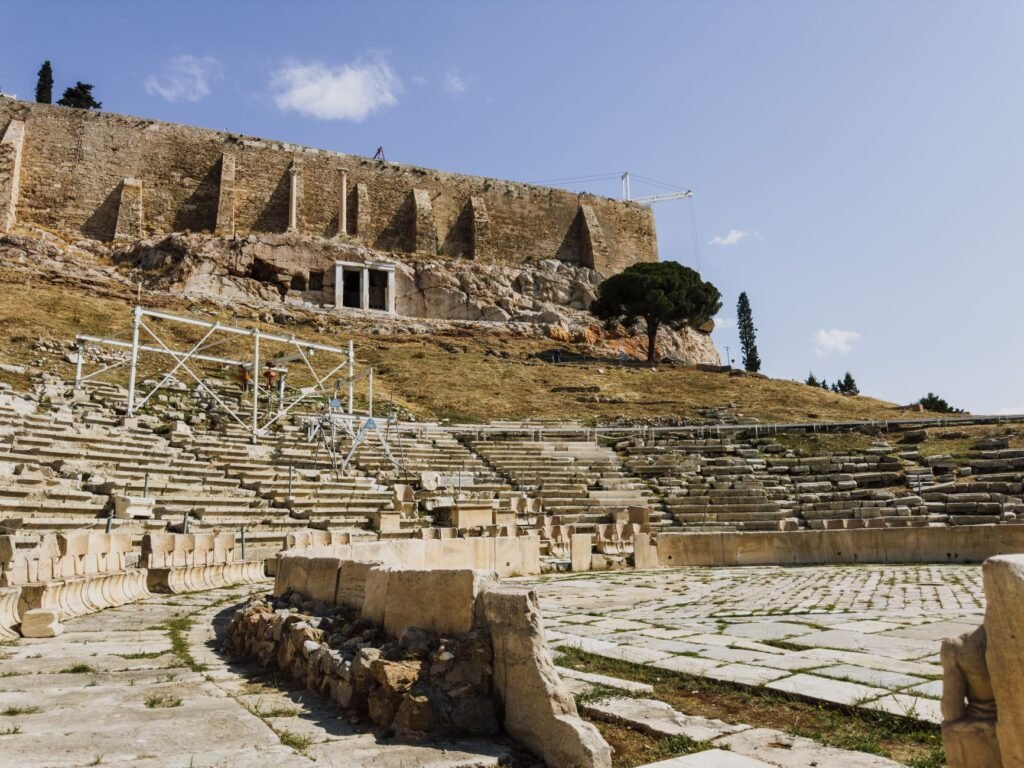
- Theatre: since Greek drama emerged from Dionysian cult, the god’s symbols often entered theatrical imagery
- Funerary art: the kantharos appears in tomb contexts as a sign of the soul’s passage, commemorative drink, or hope for continued life
In Greek visual culture, Dionysus is often shown holding a kantharos instead of a simpler cup, emphasizing both ritual sophistication and divine abundance.
Main Characteristics
The kantharos is a distinctive vessel type with several recognizable features.
Physical features
| Feature | Description |
|---|---|
| Shape | Deep bowl, often broad and rounded |
| Handles | Two tall handles rising above the rim |
| Function | Drinking vessel, especially for wine |
| Materials | In antiquity, made in pottery, metal, or precious materials |
| Iconographic use | Frequent attribute of Dionysus and related figures |
The high handles are one of its most important visual traits, making the vessel easy to identify in art. In some depictions, the cup appears large and elegant, sometimes held in one hand by the god or by followers such as satyrs and maenads.
Symbolic traits
The kantharos is not merely decorative. It conveys several ideas at once:
- Wine and celebration
- Divine generosity
- Ecstatic communion
- Transformation through intoxication
- Boundary-crossing between life and death
Because Dionysus is a god of paradox, the kantharos reflects both pleasure and danger. Wine can inspire friendship and creativity, but it can also dissolve discipline and reveal hidden truths.
Family and Genealogy
As an object or symbol, the kantharos does not have a genealogy in the same way a deity does. However, its meaning is closely tied to the mythological family and entourage of Dionysus.
Dionysus himself has a complex divine parentage in Greek mythology. In the best-known tradition, he is the son of Zeus and the mortal woman Semele, daughter of Cadmus and Harmonia. Some ancient traditions preserve variant accounts of his birth and upbringing.
The kantharos is associated with Dionysus in relation to:
- Semele: the mortal mother whose death and divine vindication are central to Dionysian myth
- Zeus: the divine father who grants Dionysus a place among the gods
- The Thyiads, Maenads, and Bacchae: female followers who participate in ecstatic rites
- Satyrs and Sileni: semi-bestial companions of the god, often shown in drinking scenes
- Ariadne: in later mythic tradition, Dionysus’s divine consort, linked to celebration, marriage, and immortality
The cup itself is not usually presented as an heirloom or family object. Rather, it belongs to the god’s symbolic repertoire.
Symbols
The kantharos is part of a larger network of Dionysian symbols. It is often represented alongside other emblems that reinforce the god’s identity.
Common symbols associated with the kantharos and Dionysus
- Vine and grape clusters: links to wine-making and fertility
- Ivy: a plant associated with Dionysus in cult and iconography
- Thyrsus: a staff tipped with ivy or a pine cone, carried by Dionysus and his followers
- Panther or leopard: a majestic animal often connected to the god
- Theatre mask: reflects Dionysus’s role in drama and performance
- Goblet, krater, or wine jug: other vessels associated with drinking and ritual mixing
The kantharos can function as a visual shorthand for Dionysian identity. When shown in art, it often signals that the scene involves the god’s sphere of influence, even if Dionysus himself is not present.
Meaning of the cup’s form
The elevated handles and deep bowl may have contributed to the cup’s symbolic resonance. It appears open, receptive, and ceremonial. In funerary art, the shape can suggest an offering vessel or a vessel that bridges the realm of the living and the dead.
Sacred Animals
Dionysus is associated with several animals, though the kantharos itself is not tied to a single sacred creature. Instead, the cup belongs to the god whose animal symbols reinforce his power.
Main animals associated with Dionysus
| Animal | Symbolic significance |
|---|---|
| Panther / leopard | Wildness, luxury, divine power |
| Bull | Fertility, sacrifice, vital force |
| Goat | Rural life, sexuality, fertility, and sacrifice |
| Snake | Chthonic energy, renewal, hidden power |
| Dolphin | Maritime association and protective transformation |
The relationship between the kantharos and these animals is indirect. Together, they create a symbolic field around Dionysus: the cup represents wine and civilization, while the animals represent untamed vitality and divine excess.
Sacred Plants
Plants are central to Dionysian religion, and their symbolism often appears in conjunction with the kantharos.
Important plants linked to Dionysus
- Vine: the most important Dionysian plant, source of wine
- Ivy: sacred and evergreen, often used in wreaths and cult imagery
- Fig tree: associated with fertility and rural abundance
- Pine: connected to the thyrsus and ritual settings in some traditions
The vine is the strongest botanical counterpart to the kantharos. Wine is produced from grapes, poured into vessels, and consumed in communal or sacred settings. Thus, the plant and the cup together express the cycle of cultivation, transformation, and religious enjoyment.
Sacred Places
The kantharos is not tied to one single sacred site, but it appears in many places connected to Dionysus worship across the Greek world.
Major places associated with Dionysus
- Athens: a major center of Dionysian festivals and the development of drama
- Eleutherae and the Athenian countryside: regions connected with the introduction of Dionysus to Attica
- Thebes: a city deeply linked to Dionysian myth, especially in relation to Semele and Pentheus
- Naxos: associated with Dionysus and Ariadne in later myth
- Delphi: primarily Apollonian, but with seasonal and symbolic links to Dionysus in some traditions
- Mount Cithaeron: associated with ecstatic worship and mythic episodes involving Dionysian followers
In sanctuaries, theaters, and private houses, the kantharos could appear as an image of divine favor and festive order. In tombs, it often functioned as a sign of continuing life or ritual remembrance.
Powers and Attributes
Since the kantharos is an attribute rather than a deity, it does not possess powers on its own. Its significance derives from Dionysus and the meanings assigned to wine and ritual vessels.
The powers it symbolizes
- Joy and festivity
- Ecstasy and altered consciousness
- Fertility and growth
- Religious communion
- Transformation and release
- Passage between life and death
Dionysus is the god who can bless or destabilize human life. The kantharos reflects that duality. A cup of wine may bring fellowship and divine participation, but it can also produce frenzy or loss of control. This ambiguity is central to Dionysian thought.
Main Myths
Ancient myths do not usually center on the kantharos itself, but the cup appears in scenes and traditions related to Dionysus.
Dionysus and wine
Myths about Dionysus often emphasize his discovery, teaching, or gift of wine. In some traditions, he travels through lands teaching mortals the cultivation of the vine and the proper use of wine. The kantharos serves as the natural vessel of this gift.
Dionysus among mortals
Many stories show the god in disguise or in contest with human rulers who reject him. In such narratives, the cup can appear as a sign of divine hospitality and revelry. Those who accept Dionysus’ gifts are rewarded; those who resist often suffer madness or destruction.
The death-rebirth pattern
Dionysus is frequently interpreted in scholarship as a god of cyclical vitality, and his cult has long been associated with themes of death and renewal. The kantharos, especially in funerary art, can reflect this symbolic connection. However, it is important to note that ancient sources do not always explain the cup in the same way; modern interpretations often derive from the vessel’s recurring iconographic use rather than from direct mythological narratives.
The return of Ariadne
In later mythological tradition, Dionysus brings or marries Ariadne after she is abandoned by Theseus. Their union is often linked with celebration, immortality, and festal abundance. The kantharos appears naturally within such celebratory imagery, although the cup is not the central object of the myth.
Relationship with Other Mythological Figures
The kantharos is most strongly tied to Dionysus, but it also appears in relation to other divine and mythic figures connected to wine, festivity, and ritual.
Dionysus
This is the principal association. In art, Dionysus is often shown with:
- a kantharos
- a vine wreath
- a thyrsus
- a leopard or panther
The cup marks him as lord of wine and ecstatic ritual.
Satyrs and Sileni
These companions of Dionysus are frequently shown drinking or carrying vessels. Their presence reinforces the comic, unruly, and sensual side of Dionysian culture.
Maenads
Female worshippers or mythic attendants of Dionysus may also be depicted in scenes involving wine vessels, though they more often carry thyrsi, fawns, or ritual instruments.
Apollo
Apollo is often considered Dionysus’s symbolic counterpart, representing order, measure, and clarity. While Apollo is not directly connected to the kantharos, the cup belongs to the Dionysian side of the Greek religious imagination, in contrast to Apollonian restraint.
Hades and chthonic figures
In funerary contexts, the kantharos can take on chthonic or underworld associations. This does not mean it is uniquely a symbol of Hades, but it can appear in settings concerned with death, memorialization, and the afterlife.
Worship and Cult
The kantharos played a role in broader Dionysian worship, though ancient sources do not provide a single standard ritual for the cup itself.
Ritual uses
- Wine pouring and libation
- Ritual drinking during festivals
- Offerings to the god
- Decorative and symbolic use in sanctuaries and tombs
- Representation in procession and feast imagery
Festivals and celebrations
Dionysian festivals included public drinking, singing, choral performances, and theatrical contests. The kantharos fits naturally into these events because it evokes the controlled, communal use of wine under divine patronage.
In private and public life
In everyday Greek life, drinking vessels were common at symposia. A luxurious or elaborately decorated kantharos could therefore work on two levels: practical and symbolic. Its use in religious imagery reflects the Greek habit of connecting daily practices with divine meaning.
Ancient Sources
No classical author provides a full “biography” of the kantharos, but many ancient sources help explain its significance through descriptions of Dionysus and his cult.
Important ancient sources
- Homer: does not focus on the kantharos as a Dionysian emblem, but is part of the early Greek epic background
- Hesiod: contributes to the broader mythic framework of the gods
- Euripides, Bacchae: crucial for understanding Dionysian ecstasy, resistance, and ritual power
- Apollodorus, Bibliotheca: preserves mythographic summaries of Dionysus and his lineage
- Pausanias, Description of Greece: valuable for religious customs, sanctuaries, and local cult practices
- Ovid, Metamorphoses: preserves Roman literary versions of Dionysian myths
- Pliny the Elder and other writers on art and material culture: useful for ancient technical and symbolic references
Artistic sources
The kantharos is especially well documented through:
- Attic vase painting
- Hellenistic and Roman sculpture
- Funerary reliefs
- Coins and engraved gems
These sources often tell us more about the cup’s symbolism than narrative literature does.
Roman Equivalent
In Roman religion and culture, Dionysus was identified with Bacchus or Liber Pater in different contexts. The kantharos remained an important emblem in Roman art, especially in depictions of Bacchus and bacchic revelry.
The Roman adaptation preserved the main associations:
- wine
- festivity
- abundance
- ritual ecstasy
- theatrical and convivial culture
Roman artists continued to use the cup in mosaics, wall paintings, sculpture, and funerary imagery. The shape may vary by period and region, but the symbolic role remained recognizable.
Influence on Modern Culture
The kantharos of Dionysus continues to influence modern interpretations of classical antiquity, especially in art history, archaeology, theatre studies, and popular visual culture.
Areas of modern influence
- Museum collections: kantharoi are important exhibit objects in classical archaeology
- Academic iconography: scholars use the kantharos to identify Dionysian scenes
- Neoclassical and decorative art: the vessel shape is often reused in design
- Literature and drama: Dionysian imagery appears in works about ecstasy, performance, and excess
- Film, games, and fantasy art: classical wine cups may be used to signal ancient or ritual themes
The kantharos is not as universally recognized as the thunderbolt of Zeus or the trident of Poseidon, but among readers interested in classical symbolism, it remains one of the key visual markers of Dionysus.
Curiosities
- The kantharos is often identified in art by its tall, rising handles, which make it visually distinct from many other ancient cups.
- In some contexts, the vessel is associated not only with wine but also with funerary and underworld symbolism.
- The kantharos was a real drinking vessel, not just a mythic emblem, which is one reason it was so effective as a religious symbol.
- Some ancient depictions show Dionysus with a kantharos in one hand and a vine or thyrsus in the other, combining the god’s main symbols in a single image.
- The cup’s association with Dionysus may have been strengthened by the role of symposium culture, where elite drinking was itself a performance of identity and social order.
- In archaeology, a “kantharos” can refer to the vessel type even when it is not connected to Dionysus iconographically.
- The symbol is especially useful for dating and interpreting Greek vases because it often appears in clearly Dionysian scenes.
Frequently Asked Questions
1. What is the Kantharos of Dionysus?
It is the kantharos, a deep drinking cup with high handles, as a symbolic object associated with the Greek god Dionysus.
2. Was the kantharos a real ancient vessel?
Yes. It was a real type of drinking cup used in ancient Greece and later in the Roman world. Its association with Dionysus came from its use in wine-related and ritual contexts.
3. Why is the kantharos linked to Dionysus?
Because Dionysus is the god of wine, ecstasy, festivity, and transformation, and the kantharos is a wine cup that visually expresses those ideas.
4. Does the kantharos appear in mythology?
Not usually as the subject of a standalone myth, but it appears often in art and in contexts associated with Dionysus, his followers, and funerary symbolism.
5. What does the kantharos symbolize?
It can symbolize wine, divine abundance, ritual drinking, fertility, ecstasy, and sometimes death and rebirth.
6. Is the kantharos only connected with Dionysus?
No. It is strongly associated with Dionysus, but as a vessel type it also appears in broader Greek and Roman art, including funerary contexts.
7. What is the difference between a kantharos and a goblet?
A kantharos is usually a deep cup with tall, high-rising handles. A goblet is a more general term and may not have the same distinctive shape.
Conclusion
The Kantharos of Dionysus is one of the most evocative symbols in Greek religious and artistic tradition. As a drinking vessel, it belongs to the material culture of ancient wine consumption; as a Dionysian emblem, it expresses the god’s domains of ecstasy, fertility, celebration, and transformation. Its presence in vase painting, sculpture, funerary art, and later classical reception demonstrates how a simple object could become a powerful religious sign.
Understanding the kantharos helps illuminate the broader world of Dionysian worship. It shows how the Greeks linked everyday practices like drinking with divine presence, ritual meaning, and artistic expression. For this reason, the Kantharos of Dionysus remains an important subject in the study of mythology, ancient art, and classical religion.

Orin Vale has spent the better part of two decades tracing the threads that connect the world’s oldest stories — from the halls of Asgard to the banks of the Nile, from Olympus to the jungles of the Maya. What began as a childhood fascination with flood myths and trickster gods grew into years of independent study across comparative mythology and ancient religion, always chasing the same question: what did these stories mean to the people who first told them? Orin writes for readers who want more than trivia — the ones looking for the beliefs, fears, and truths that myths were built to carry.