Minerva
Introduction
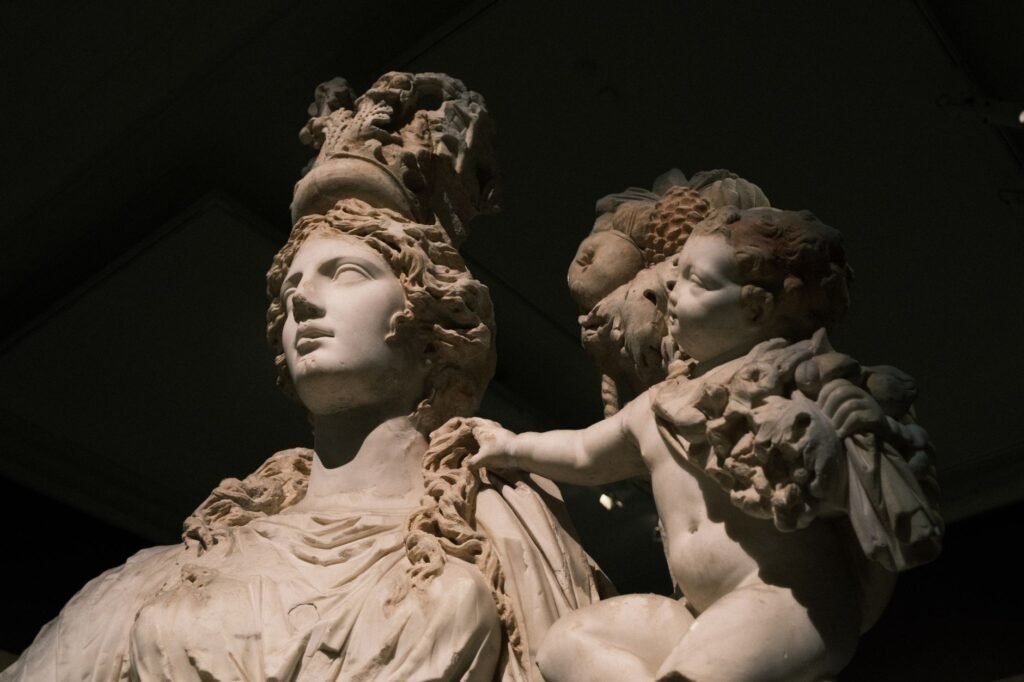
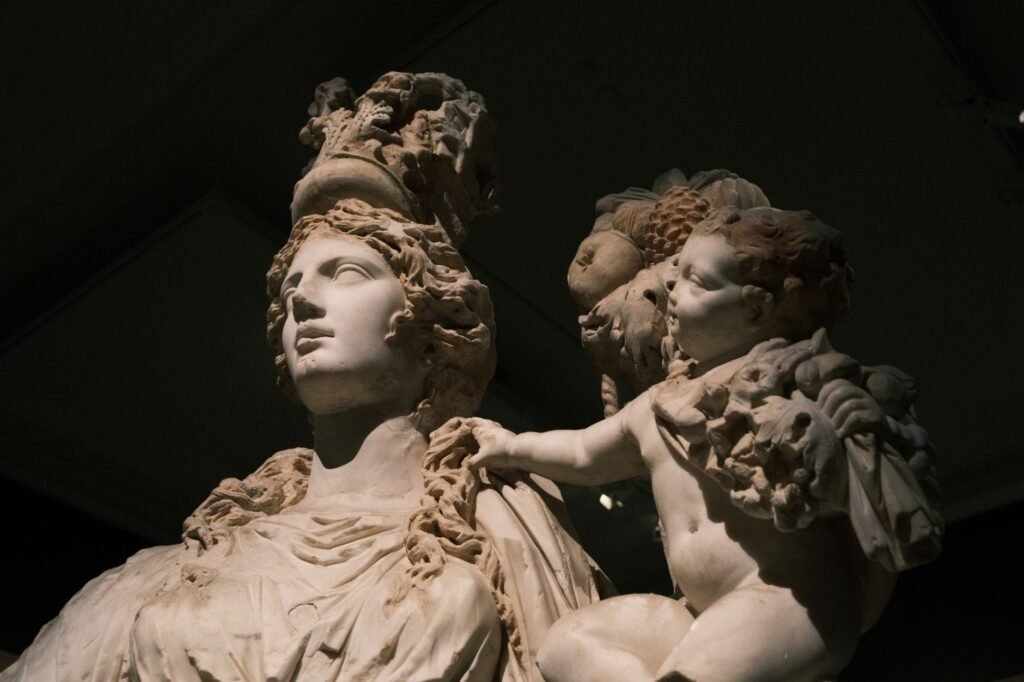
Minerva is one of the most important deities in Greco-Roman religion, known in Roman tradition as the goddess of wisdom, strategic warfare, crafts, learning, and skilled activity. She became especially prominent in Rome, where she was counted among the major state gods and associated with intellect, disciplined action, and civic protection. In the broader history of mythology, Minerva is significant both as a Roman goddess in her own right and as the Roman counterpart of the Greek Athena, though the two are not entirely identical in origin or emphasis.
Minerva appears in literature, sculpture, public ritual, and political symbolism across the ancient Mediterranean. Her long afterlife in European art, education, and national imagery has kept her among the most recognizable figures from classical antiquity.
Origin and Meaning
The name Minerva is generally considered ancient Italic, and its etymology is not fully certain. Ancient Roman writers connected her name with the idea of mens, meaning “mind,” but this is a traditional association rather than a secure linguistic derivation. Modern scholarship treats the origin of the name as likely pre-Roman and Italic, later assimilated to the Greek Athena during the process of cultural exchange between Greece and Rome.
Minerva may have roots in early Italic and Etruscan religion. The Etruscans worshipped a goddess named Menrva, whose cult strongly influenced Roman belief. By the time of historical Rome, Minerva had become firmly established within the Roman pantheon as a powerful divinity of intellect, defense, and craftsmanship.
Historical Context
Minerva’s importance grew within the religious and political life of ancient Rome. Unlike some deities tied primarily to agriculture, fertility, or the household, Minerva came to represent ordered intelligence and technical excellence. Her worship was especially prominent among artisans, teachers, physicians, writers, and state officials.
She belonged to the Capitoline Triad in its later Roman form, together with Jupiter and Juno, a position that underscored her state-level importance. In Rome, religion was closely tied to civic identity, and major deities were honored not only for personal devotion but also for the welfare of the city and empire.
Minerva’s role also reflects the Roman habit of interpreting foreign gods through equivalence with their own. As Roman contact with Greek culture deepened, Minerva was identified with Athena. This identification was highly influential, but the Roman goddess retained distinct traits, especially her place in Roman civic ideology and her patronage of skilled labor and practical intelligence.
Main Characteristics
Minerva is typically portrayed as a dignified, armored female deity. She is not a goddess of impulsive violence, but of strategic warfare, disciplined thought, and intelligent action. Her imagery emphasizes restraint, clarity, and authority.
Common attributes
- Helmet
- Spear
- Shield
- Armor or aegis
- Owl
- Olive branch
- Distaff or weaving tools
- Book or scroll in later artistic traditions
She is often depicted as virginal and self-possessed, standing apart from marriage and erotic relationships in the way many classical goddesses do not. Her virginity is not primarily about passivity, but about autonomy and independence. In myth and iconography, she is usually alert, fully armed, and intellectually commanding.
Minerva’s character combines seemingly different domains:
- wisdom and learning
- war strategy
- crafts and invention
- medicine and practical skill
- civic protection
- patronage of the arts
This combination made her one of the most versatile and enduring figures in classical mythology.
Family and Genealogy
The family background of Minerva varies by tradition, especially because Roman and Greek accounts are not identical.
In Roman tradition
In the most common Roman account, Minerva is the daughter of Jupiter. A well-known version states that she was born fully grown and armed from Jupiter’s head after he had swallowed her mother, Metis, though this story is primarily Greek in origin and belongs especially to Athena. Roman authors adopted and adapted it for Minerva.
In Greek-influenced tradition
In the Greek myth of Athena, Metis is the goddess of wisdom and prudent counsel. After Jupiter’s counterpart, Zeus, swallowed Metis, Athena emerged from his head. Roman writers often transferred this narrative to Minerva.
Spouses and children
Minerva is generally considered virgin and unmarried. She is not associated with a husband or children in mainstream classical tradition. This distinguishes her from many other major goddesses and reinforces her symbolic independence.
Genealogical summary
| Category | Common tradition |
|---|---|
| Parent | Jupiter; in Greek mythic parallel, Zeus |
| Mother | Metis in the Greek-derived birth myth; otherwise not always specified in Roman cult tradition |
| Spouse | None |
| Children | None in standard tradition |
| Equivalent figure | Athena |
Symbols
Minerva’s symbols express her dual nature as a goddess of intellect and disciplined force.
Principal symbols
| Symbol | Meaning |
|---|---|
| Owl | Wisdom, vigilance, night vision, intelligence |
| Helmet | Readiness, defense, martial discipline |
| Spear | Strategic warfare and authority |
| Shield | Protection of the city and ordered strength |
| Aegis | Divine protection and fearsome power |
| Olive tree or branch | Peace, prosperity, and useful cultivation |
| Loom and distaff | Domestic and technical skill, weaving, craftsmanship |
The owl is perhaps her most famous emblem. In classical culture, the owl signified perception beyond ordinary sight and became a standard symbol of wisdom. The olive tree is associated with civilizing skill and practical benefit; in Greek tradition it also links Minerva/Athena with the founding of a prosperous city.
Sacred Animals
Minerva is most closely associated with the owl, but other animals appear in classical imagery and later interpretations.
Owl
The owl is her principal sacred animal. It represents:
- wisdom
- nocturnal vigilance
- insight
- the ability to see hidden truth
Snake
Snakes occasionally appear in connection with Minerva, especially in artistic and symbolic contexts, where they can represent watchfulness, renewal, and protective power. In some classical iconography, serpentine forms accompany armored goddesses as signs of divine power.
Rooster
In some later cultural traditions, the rooster may be linked to alertness and the coming of light, echoing themes of vigilance and wakefulness. However, this association is less central than the owl.
Sacred Plants
The most important plant associated with Minerva is the olive tree.
Olive
The olive is deeply significant in the Athena/Minerva tradition. It symbolizes:
- peace
- cultivation
- wisdom applied to practical life
- prosperity
- civic civilization
The olive tree also appears in the famous myth of the contest for patronage of Athens. Although this myth belongs to Greek tradition, it strongly influenced Minerva’s symbolic profile in Roman culture as well.
Other plants
No single additional plant is universally central to Minerva in the way the olive is. Later artistic and literary works may associate her with laurel, ivy, or other classical motifs, but those connections are secondary and not uniformly attested.
Sacred Places
Minerva was honored in temples and sanctuaries throughout the Roman world, with particular emphasis on the city of Rome.
Temple of Minerva on the Aventine
One of the best-known Roman sanctuaries was the Temple of Minerva on the Aventine Hill, associated especially with craftsmen and professional guilds. The Aventine was historically linked to plebeian life and trade, making it a fitting location for a goddess of skilled labor.
Capitoline Hill
Minerva also held a major place in the Capitoline Triad. The Capitoline Hill was the religious and political center of Rome, and her presence there reinforced her status as a protector of the state.
Roman and provincial sanctuaries
Temples and dedications to Minerva existed throughout the Roman Empire. She was worshipped in cities, military settings, and among professional groups. In provinces, local traditions often blended with Roman practice, producing diverse forms of devotion.
Associated cities and places
Because Minerva was equated with Athena, she acquired strong symbolic ties to Athens, though this is technically a Greek sacred center rather than a Roman one. In Roman imagination, Athens remained closely linked to the goddess of wisdom and the arts.
Powers and Attributes
Minerva’s powers extend well beyond battle. She embodies the kind of power that comes from thought, skill, and planning.
Main domains
- Wisdom and intelligence
- Strategy in war
- Crafts and handiwork
- Artistic invention
- Writing and learning
- Medicine and practical knowledge
- Civic order and protection
- Skilled professions
Type of warfare
Unlike deities of frenzy or destruction, Minerva presides over strategic warfare. She does not glorify blind aggression. Instead, she represents discipline, tactical intelligence, and the use of force in an ordered and purposeful way.
Patronage of skills
Minerva was also the patron of:
- weavers
- spinners
- sculptors
- metalworkers
- teachers
- doctors
- scribes
- architects
This made her especially relevant in a society that valued both public service and technical mastery.
Main Myths
Minerva’s mythic profile is shaped largely by stories inherited from or shared with Athena.
Birth from Jupiter’s head
The most famous myth tells how Minerva was born from Jupiter’s head, fully armed and mature. This extraordinary birth symbolizes the sudden manifestation of intelligence and power directly from divine mind. In Greek versions, the story centers on Zeus and Athena; Roman writers adopted it for Minerva.
Contest with Neptune for a city
In the Greek tradition behind Minerva’s character, Athena and Poseidon competed for patronage of a city by offering gifts. Athena gave the olive tree, while Poseidon produced salt water or a horse, depending on the version. The city chose Athena, and the city came to bear her name, Athens. Roman authors and artists frequently reused this story to illustrate Minerva’s value as a civilizing goddess.
Arachne
One of the best-known myths involving Minerva is the story of Arachne, a gifted mortal weaver. In Ovid’s Metamorphoses, Arachne boasts of her skill and challenges Minerva. The goddess, offended by the mortal’s arrogance, competes with her and is angered by the quality of Arachne’s work and the themes depicted. Arachne is transformed into a spider or into a being condemned to weave forever, depending on the retelling.
This myth illustrates:
- the danger of hubris
- the superiority of divine skill
- the seriousness with which craftsmanship was regarded
Medusa and the aegis tradition
In later mythic tradition, Minerva is connected with the aegis and with the head of Medusa, though the details vary. In some accounts, the Gorgon’s head becomes part of her protective armor. This reinforces her terrifying aspect as a deity of controlled divine power. The exact narrative differs across sources and artistic traditions.
Other mythic episodes
Minerva appears in numerous smaller stories involving heroes, inventions, contests, and acts of protection. She often acts as a guide or defender rather than as the central subject of the myth. Her interventions are typically rational, measured, and authoritative.
Relationship with Other Mythological Figures
Minerva’s relationships with other divine and heroic figures help define her character.
Jupiter
Jupiter is her primary divine parent in Roman tradition. Their relationship expresses both authority and legitimacy. Minerva’s birth from Jupiter’s head also symbolizes her connection to sovereignty and cosmic order.
Juno
As a major Roman goddess, Minerva stands beside Juno in the Capitoline Triad. While Juno is associated with marriage, queenship, and womanly dignity, Minerva represents intelligence and skill. Together, they form complementary aspects of divine female power.
Neptune
In the contest myth, Neptune functions as Minerva’s rival. The contrast between them is meaningful: Neptune’s force is elemental and maritime, while Minerva’s gift is constructive and civilizing.
Mars
Minerva and Mars both have martial associations, but their styles differ sharply. Mars embodies aggressive war, whereas Minerva embodies strategic and defensive war. Roman thought often favored Minerva’s intelligence over Mars’s destructive energy, though both were important to the state.
Mercury and Apollo
Minerva’s domains intersect with those of Mercury and Apollo in areas such as knowledge, arts, and communication. Yet her profile remains distinct because of her emphasis on practical intelligence and craft.
Mortal heroes and craftsmen
Minerva frequently assists heroes, inventors, and artisans. Her role is often that of adviser, protector, or teacher. She rewards skill and punishes arrogant misuse of talent, as shown in the Arachne myth.
Worship and Cult
Minerva was widely worshipped in Rome and across the empire, both in public religion and in professional contexts.
Forms of worship
Her cult included:
- sacrifices
- temple dedications
- prayers for success in craft and study
- official civic ceremonies
- guild observances
Festivals
The most important festival associated with Minerva was the Quinquatrus, celebrated in March. It was especially connected with artisans, teachers, and students. Although details varied over time, the festival became a key occasion for honoring the goddess in her role as patron of skill and learning.
A longer observance, the Quinquatrus Minusculae, was celebrated in June and is also linked to musicians and other professional groups in some sources.
Devotees
Minerva was particularly honored by:
- craftsmen and artisans
- teachers and students
- physicians
- soldiers seeking strategic success
- officials and civic leaders
- women involved in textile work
Social meaning
Her cult reveals how deeply Roman religion connected divine favor with practical life. Minerva was not only a goddess of abstract wisdom; she was invoked in everyday labor, public service, and technical training.
Ancient Sources
Minerva is attested in many ancient sources, though some are Roman reinterpretations of Greek material.
Major classical authors
- Homer: The Greek Athena appears prominently in the Iliad and Odyssey, influencing later Roman Minerva.
- Hesiod: Provides the birth narrative of Athena in the Theogony.
- Apollodorus: Summarizes mythic traditions, including Athena’s birth and major stories.
- Pausanias: Describes sanctuaries, cult images, and regional traditions.
- Ovid: Especially important for Roman literary treatment, including the Arachne myth in the Metamorphoses.
- Virgil: References Minerva and related divine themes in the Aeneid.
- Cicero: Discusses the gods in philosophical and religious contexts.
- Varro and later Roman antiquarians: Preserve important details of Roman cult and interpretation.
Use of sources
Because Minerva’s Roman identity is intertwined with Athena’s Greek mythology, ancient testimony must be read carefully. Some stories are genuinely Roman in cult practice, while others are Roman adaptations of Greek myths.
Roman Equivalent
Minerva is the Roman equivalent of Athena, but the relationship is best understood as adaptation rather than simple identity.
Similarities
Both goddesses are associated with:
- wisdom
- strategic warfare
- crafts
- the owl
- the olive tree
- virginity
- civic protection
Differences
Minerva’s Roman character places stronger emphasis on:
- state religion
- crafts and professions
- educational and technical skills
- the practical organization of civic life
Athena is more closely tied to the Greek city-state of Athens and Greek heroic myth, while Minerva became integrated into the Roman political and religious system. In Roman culture, she could function as a goddess of intellectual order in a broader imperial framework.
Influence on Modern Culture
Minerva has remained visible in modern culture, especially in literature, art, education, and institutional symbolism.
Education and scholarship
Because she represents wisdom, Minerva is often used in the names and emblems of:
- universities
- academic societies
- libraries
- learned journals
Statues of Minerva still appear in educational settings as symbols of knowledge and disciplined study.
Art and literature
Renaissance and neoclassical artists frequently depicted Minerva, often following the visual language developed for Athena. She appears in:
- paintings
- sculptures
- allegorical works
- civic architecture
Writers have used her as a symbol of reason, learning, and statecraft. She also appears in poems, novels, and historical allegories.
Popular culture
Minerva is present in modern fantasy, comics, games, and television, sometimes directly and sometimes through characters modeled on her attributes. Her name often signals intelligence, authority, or protective power.
National and civic symbolism
Minerva has been adopted in coats of arms, seals, and public monuments as a figure of wisdom and enlightened governance. Her image frequently stands for education, republican virtue, and the arts.
Curiosities
- Minerva is one of the few major classical goddesses whose identity strongly blends war and intellect rather than war and passion.
- In Roman iconography, she is often visually indistinguishable from Athena unless contextual clues identify her specifically as Roman.
- The owl became so closely associated with wisdom partly through Minerva and Athena’s long classical tradition.
- She was especially important to guilds and professional associations, which makes her cult unusually practical in social function.
- In some Roman contexts, Minerva was not only a goddess of wisdom but also a protective power for medicine and healing.
- Her association with the arts of weaving and craftsmanship gave her a role in both elite and everyday life.
- The Arachne story remains one of the most enduring ancient myths about artistic competition and the ethics of skill.
Frequently Asked Questions
What is Minerva the goddess of?
Minerva is the Roman goddess of wisdom, strategic warfare, crafts, learning, and skilled work. She also protects artisans, teachers, and civic life.
Is Minerva the same as Athena?
Minerva is the Roman counterpart of Athena. They are closely identified, but Minerva developed within Roman religion and political culture, so the two are not perfectly identical.
What animals are associated with Minerva?
Her most famous sacred animal is the owl. Snakes and, in some later traditions, other animals may also appear in connection with her symbolism.
Was Minerva married?
No. In the main tradition, Minerva is a virgin goddess and is not associated with a husband or children.
What is Minerva’s most famous myth?
One of her best-known myths is the story of Arachne, the mortal weaver who challenged Minerva and was transformed after the contest. The birth from Jupiter’s head is another central myth.
What festival was dedicated to Minerva?
The main festival associated with her was the Quinquatrus, especially important for artisans, teachers, and students in Rome.
Why is Minerva important in Roman culture?
Minerva represented the Roman ideal of intelligence applied to public life. She stood for wisdom, discipline, craftsmanship, and the orderly power of the state.
Conclusion
Minerva occupies a central place in classical religion as a goddess of wisdom, strategic force, and skilled achievement. Her worship reveals the Roman respect for intelligence, craftsmanship, and civic order, while her myths connect her to some of the most enduring stories of the ancient world. Through her identification with Athena, she became one of the most widely recognized deities of antiquity, and her image continues to symbolize learning, reason, and disciplined power in modern culture.

Orin Vale has spent the better part of two decades tracing the threads that connect the world’s oldest stories — from the halls of Asgard to the banks of the Nile, from Olympus to the jungles of the Maya. What began as a childhood fascination with flood myths and trickster gods grew into years of independent study across comparative mythology and ancient religion, always chasing the same question: what did these stories mean to the people who first told them? Orin writes for readers who want more than trivia — the ones looking for the beliefs, fears, and truths that myths were built to carry.