Vertumnus
Vertumnus is a Roman deity associated with seasons, vegetation, orchards, gardens, ripening fruit, and the changing aspects of nature. He is especially remembered as a god of transformation and growth, able to change form at will and to reveal truth through metamorphosis. Although his cult was thoroughly Roman, Vertumnus later became closely linked with Greek ideas about nature deities and with literary traditions that emphasized change, fertility, and the turning of the year.
In Roman religion, Vertumnus occupied a distinctive place among agricultural gods. He was not a major Olympian figure, but he was important in the everyday world of farming, horticulture, and seasonal cycles. His name and myths reflect the Roman fascination with the turning of time, the ripening of fruit, and the instability of appearance. In art and literature, he became famous for his ability to assume different forms, especially in the well-known story preserved by Ovid in which he wins the love of Pomona by disguising himself.
Origin and Meaning
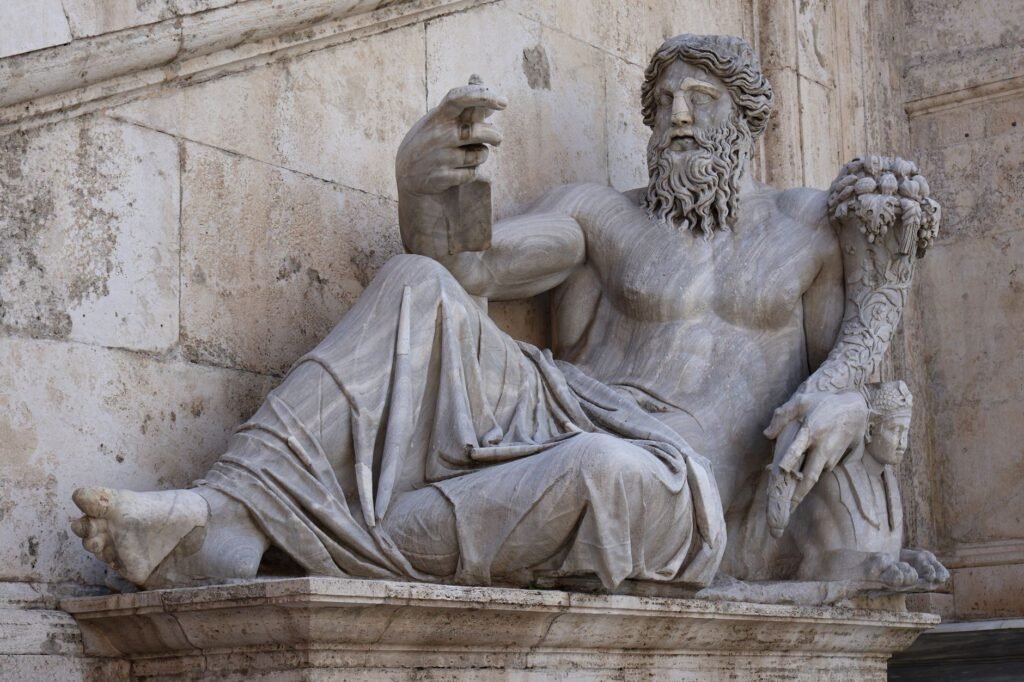
The name Vertumnus is generally connected with the Latin verb vertere, meaning “to turn,” “change,” or “transform.” Ancient and later scholars have often understood him as a god of turning, change, or seasonal rotation. This etymology fits both his agricultural function and his mythological power to alter his appearance.
Some ancient writers already associated the deity with change and seasonal movement. The Roman antiquarian tradition treated him as one of the native gods whose worship was rooted in Italy rather than imported from Greece. At the same time, Roman literature often gave him features that resemble Greek metamorphosis motifs.
The meaning of the name was not only linguistic but symbolic. Vertumnus represented:
- the turning of the seasons
- the ripening and changing of fruit
- the shift from blossom to harvest
- the instability of outward form
- the adaptability required in nature and human affairs
Because Roman religion often linked divine names with specific natural processes, Vertumnus was especially well suited to an agricultural environment where successful cultivation depended on timing, weather, and careful observation.
Historical Context
Vertumnus belongs to the world of Roman agricultural religion, where divine power was understood as present in the cycles of sowing, growth, harvest, and storage. Roman society depended heavily on farming, orchards, and market gardening, so gods connected with fertility and seasonal change were culturally important even when they were not among the most politically prominent.
Unlike Jupiter, Mars, or Venus, Vertumnus was not primarily a state god of war, sovereignty, or civic identity. He was more closely tied to orchards, gardens, and the ripening of produce, especially fruit trees. This made him significant in both rural and urban contexts. Farmers, gardeners, and sellers of produce could all see practical meaning in a deity who governed turning, maturation, and seasonal shifts.
Vertumnus also emerged in a cultural environment shaped by contact with Greek religion and literature. Roman authors, especially poets, often interpreted native gods through Greek literary forms. As a result, Vertumnus acquired a stronger mythological profile in surviving texts than he may originally have had in cult practice. His most detailed literary treatment comes from Ovid, writing in the early Imperial period, whose Fasti and Metamorphoses present him as a god of change and desire.
The deity also had civic importance in Rome, where he was associated with a sanctuary in the Forum. This location gave him a visible presence in public life and connected the god of growth with the commercial and symbolic center of the city.
Main Characteristics
Vertumnus is most commonly characterized by the following traits:
- God of change and turning
- Deity of the seasons
- Protector of orchards and gardens
- Guardian of ripening fruit
- Shape-shifter or metamorphic god
- Associated with fertility and abundance
- Linked to persuasion and successful timing
His most distinctive mythological quality is his ability to change form. In literary tradition, this power is not merely decorative; it reflects his nature as a god who presides over transformation in the natural world. As fruit changes from blossom to ripeness, so Vertumnus changes from one appearance to another.
He is also usually presented as youthful, graceful, and socially clever. In the literary story of Pomona, he uses disguise, speech, and persuasion rather than force. This makes him unusual among male gods in Roman myth, since he triumphs through adaptability and rhetorical skill.
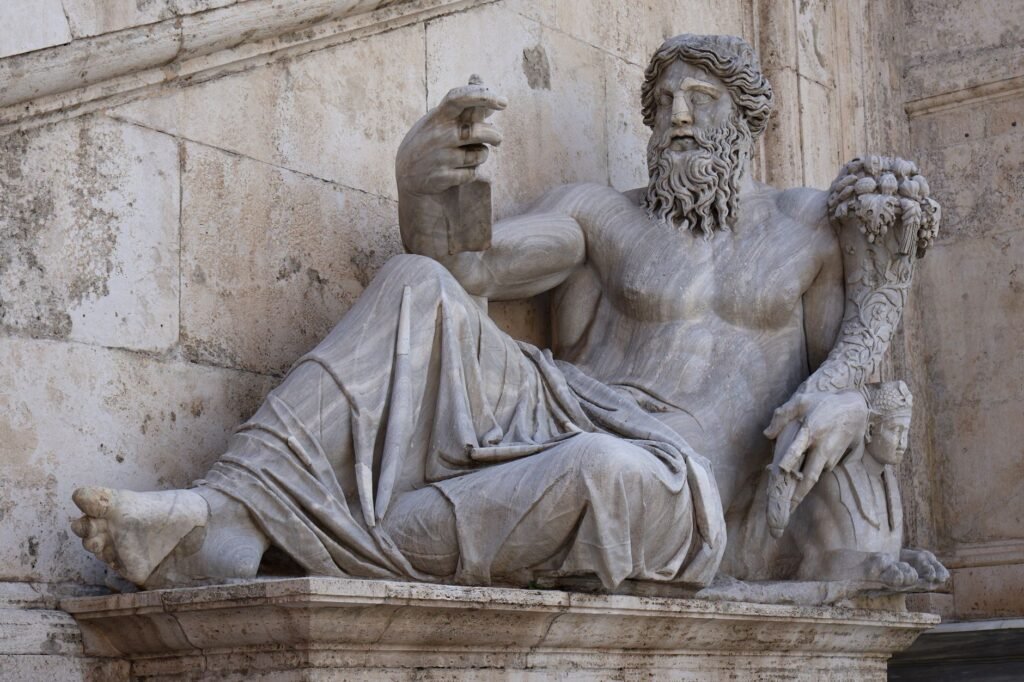
In visual art, Vertumnus is sometimes shown with seasonal or agricultural attributes rather than a fixed, standardized appearance. His iconography could therefore vary significantly depending on period and medium.
Family and Genealogy
Vertumnus is unusual because his family background is not consistently given in surviving ancient sources. He was primarily a Roman deity, and Roman religion did not always preserve elaborate genealogies for such local or functional gods.
Different traditions and later interpretations give varying accounts:
- Some sources treat him as a native Italian or Roman god without a detailed divine family.
- In poetic treatments, he appears as a self-sufficient deity whose identity is defined by function rather than ancestry.
- He is sometimes loosely connected with other agricultural divinities, but not through a stable mythic genealogy.
There is also no universally accepted list of spouses or children. His most famous relationship is with Pomona, a nymph or goddess of fruit trees and orchards. In Ovid’s version, Vertumnus falls in love with Pomona and eventually gains access to her by disguising himself as an old woman. He then persuades her to accept him in his true form.
Because the surviving evidence is literary rather than cultic, it is better to speak of mythic associations than of a firm genealogical system. Vertumnus is one of those Roman gods whose identity is defined less by lineage than by function and story.
Symbols
Vertumnus does not have a single universally fixed emblem, but several symbols are associated with him in ancient and later tradition.
| Symbol | Meaning |
|---|---|
| Seasonal garlands | Cycles of change and fertility |
| Fruit and produce | Ripening, harvest, abundance |
| Shears or pruning tools | Gardening and cultivation |
| Cornucopia | Plenty and agricultural prosperity |
| Changing costume or disguise | Transformation and adaptability |
| Autumn and spring imagery | The turning of the year |
Because he is a god of transition, his symbols often emphasize movement, seasonality, and abundance rather than permanence. Fruit in different stages of growth is especially appropriate, since it captures his role in guiding the transition from unripe to ripe.
In literature and art, the symbol of disguise is central. Vertumnus does not only represent physical change; he also stands for the idea that truth may appear in different forms and that successful action requires flexibility.
Sacred Animals
There is no single animal that is universally and exclusively sacred to Vertumnus in the way that the eagle is to Jupiter or the owl to Minerva. However, several animals are plausibly associated with him through agricultural and seasonal symbolism.
Commonly associated animals
Bee
- Connected with blossoms, gardens, and fertility
- Represents industriousness and seasonal productivity
Birds
- May symbolize seasonal movement and the return of spring
- Frequently appear in orchard and garden imagery
Goat
- Sometimes linked generally with fertility and rustic abundance in Roman religion
- Not uniquely tied to Vertumnus, but compatible with his pastoral context
Any animal association should be treated cautiously, since surviving evidence is limited and often indirect. Unlike some deities, Vertumnus does not have a well-established canonical sacred animal in the ancient record.
Sacred Plants
Plants are central to Vertumnus’s identity. He is above all a deity of growing things, especially those that change visibly over time.
Key plants associated with Vertumnus
Fruit trees
- Especially those in orchards
- Symbolize ripening, productivity, and careful cultivation
Vines
- Represent seasonal growth and the agricultural cycle
- Also suggest transformation, as grapes become wine
Flowers
- Especially blossoms that precede fruit
- Mark the transition from spring to harvest
Gardens and cultivated plants
- Reflect his role in structured, human-managed nature
The most important plant connection is with orchard fruit, particularly in relation to Pomona. In Roman imagination, fruit trees captured the logic of the god’s power: the same living thing appears in different stages, each marked by time and care.
Sacred Places
Vertumnus was associated with the Forum Romanum in Rome, where he had a shrine or statue near the center of public and commercial life. This location is significant because it placed a god of transformation and seasonal commerce within the city’s civic heart.
The Forum and the Vicus Tuscus
Ancient sources place Vertumnus near the Vicus Tuscus, a street in Rome connected with trade and movement. This setting is fitting for a deity linked to change, exchange, and fertility.
The Forum shrine made Vertumnus visible to a broad public. It also connected him with:
- merchants and market activity
- the circulation of goods
- urban-rural exchange
- the symbolic ordering of Roman space
Other possible cult locations
Because Vertumnus was primarily a Roman deity, smaller local forms of worship may have existed in gardens, orchards, and agricultural areas. However, these are less securely documented than the Roman shrine.
Powers and Attributes
Vertumnus’s powers are closely tied to natural change and agricultural prosperity.
Core domains
- Seasons
- Ripening and harvest
- Gardening
- Orchards and fruit trees
- Vegetation growth
- Transformation and disguise
- Persuasion through adaptability
Spiritual and symbolic functions
Vertumnus embodies the idea that nature is not static. He governs the turning from one state to another:
- blossom to fruit
- spring to summer to autumn
- unripe to ripe
- appearance to truth
- rigidity to flexibility
In Roman thought, such transitions were not abstract. They had immediate importance for food supply, trade, and household prosperity. Vertumnus therefore represented practical divine assistance in matters of cultivation and timing.
His mythic ability to change shape also made him a figure of mutability and strategic intelligence. He succeeds not by force but by reading circumstances and adapting to them.
Main Myths
The most famous story about Vertumnus is his pursuit of Pomona, preserved in Ovid’s Metamorphoses and Fasti.
Vertumnus and Pomona
Pomona is associated with fruit trees and orchards. She avoids male company and prefers to tend her gardens in isolation. Vertumnus falls in love with her, but direct approaches fail.
According to Ovid, Vertumnus repeatedly changes form to gain access to her. He may appear in different disguises, but his most famous disguise is that of an old woman. In this role, he enters Pomona’s orchard and praises the value of love and marriage. He finally reveals himself as a handsome young god and wins her affection.
This story is important for several reasons:
- it highlights Vertumnus’s shape-shifting power
- it links him to horticulture through Pomona
- it presents persuasion as stronger than coercion
- it reflects Roman interest in seasonal and erotic transformation
Mythic significance
The tale is not only a love story. It also allegorizes the movement from unproductiveness to fulfillment. Pomona’s orchard becomes the setting in which growth and union are achieved. The myth thus combines erotic, agricultural, and symbolic change.
Outside Ovid, surviving mythic material about Vertumnus is relatively limited. This makes the Pomona episode central to his literary identity.
Relationship with Other Mythological Figures
Vertumnus’s relationships with other deities and mythic beings are best understood through function and literary association.
Pomona
Pomona is Vertumnus’s most important mythic counterpart. She is the orchard goddess to whom he is eventually united. Their relationship is often read as a pairing of:
- change and cultivation
- movement and rootedness
- desire and reserve
- seasonal growth and orchard fertility
Flora, Ceres, and other agricultural deities
Vertumnus belongs to the broader Roman agricultural divine world alongside figures such as:
- Ceres, goddess of grain and agriculture
- Flora, associated with flowers and spring growth
- Pomona, orchard fertility
- Saturn, linked in Roman tradition with sowing and age
- Priapus, often connected with gardens and protection of produce
He is not simply interchangeable with these figures, but he shares their concern with fertility and the productivity of the land.
Greek parallels
No exact Greek equivalent exists, but literary analogies sometimes connect Vertumnus to Greek ideas of metamorphosis, rustic divinities, and seasonal change. Such parallels are interpretive rather than direct.
Worship and Cult
Vertumnus was worshipped in Roman religion, especially in connection with gardens, orchards, and public urban space.
Forms of worship
The ancient evidence suggests:
- offerings linked to produce and seasonal abundance
- reverence for his shrine in Rome
- possible prayers for successful ripening and harvest
- general agricultural observance rather than a large public festival cycle
Because the surviving sources are limited, detailed ritual reconstruction is difficult. However, his cult likely fit the Roman pattern of practical devotional acts aimed at securing divine favor for productive land.
Public and popular devotion
His shrine in the Forum suggests both elite and popular visibility. Merchants, urban residents, and farmers could all appreciate a deity associated with seasonal change and good fortune in produce.
Seasonal relevance
Vertumnus was likely invoked at moments when the agricultural year turned:
- planting
- flowering
- fruiting
- harvest
- storage and sale
His identity as a god of turning made him especially suitable for rites marking transition.
Ancient Sources
The most important ancient references to Vertumnus come from Roman literature and antiquarian tradition.
Major sources
Ovid
- Metamorphoses
- Fasti
- The main literary source for the Pomona story and for the god’s association with change
Varro
- Important for Roman religious and antiquarian knowledge, though surviving references are limited and indirect
Pliny the Elder
- Provides broader information on Roman religious and natural-cultural traditions
Propertius
- Mentions Vertumnus in a Roman cultural context
Livy and other Roman authors
- May refer to cultic or civic aspects indirectly in discussions of Rome’s sacred topography
Servius
- Later commentator valuable for mythological and etymological explanation
Because Vertumnus appears more prominently in poetry than in systematic theology, understanding him requires reading literary sources alongside Roman religious context. Ancient interpretation sometimes varied, especially on his origins and precise function.
Roman Equivalent
Vertumnus is already a Roman deity, so he does not have a straightforward “Roman equivalent” in the way that Greek gods were adapted into Roman forms. Instead, the more relevant question is whether he had a Greek counterpart or analog.
The answer is not exact. Vertumnus is best understood as a Roman agricultural and seasonal god with partial affinities to Greek metamorphic and rustic figures, but no single Greek deity matches him completely.
Roman authors sometimes interpreted him through Greek literary conventions, which gave him a more explicit narrative of transformation than may originally have been present in his cult. In later reception, he was occasionally compared with gods of nature, fertility, and metamorphosis, but these are approximate parallels rather than true equivalents.
Influence on Modern Culture
Vertumnus has had a lasting, if specialized, influence on literature, art, and cultural symbolism.
Literature and poetry
- Ovid’s version of Vertumnus and Pomona has remained the main source for later retellings.
- The figure has attracted writers interested in transformation, desire, disguise, and seasonal imagery.
- Vertumnus often appears in discussions of Roman mythology, metamorphosis, and allegory.
Art
- The most famous modern artistic treatment is Giuseppe Arcimboldo’s portrait commonly known as Vertumnus. In this work, the face of Emperor Rudolf II is assembled from fruits, vegetables, and plants, making the title especially apt.
- The name has also inspired later painters and sculptors drawn to themes of abundance, seasonal composition, and visual transformation.
Scholarship and symbolism
Vertumnus is frequently used in modern scholarship as an example of:
- Roman syncretism
- agricultural divinity
- the literary elaboration of minor gods
- metamorphosis as a mythic principle
Popular culture
He is less prominent in film, television, or games than major Olympian gods, but he appears in modern retellings of Roman myth and in works that draw on seasonal or shape-shifting symbolism.
Curiosities
- Vertumnus is one of the clearest examples of a Roman god whose identity is inseparable from change.
- His story with Pomona is often interpreted as a myth of courtship through transformation rather than conquest.
- He is closely tied to orchards, which makes him different from broader grain deities such as Ceres.
- The statue or shrine of Vertumnus in Rome’s Forum gave him a public visibility unusual for a deity of such specific agricultural concern.
- The name “Vertumnus” became especially attractive to Renaissance and Baroque artists because it suggested abundance, seasonality, and visual change.
- The Ovidian version of the god helped preserve his fame far beyond the practical limits of his cult.
Frequently Asked Questions
1. Who was Vertumnus in Roman mythology?
Vertumnus was a Roman god of seasons, orchards, gardens, ripening fruit, and transformation. He was especially associated with change and the turning of the year.
2. What does the name Vertumnus mean?
The name is generally connected with the Latin vertere, meaning “to turn” or “to change,” reflecting his role as a god of transformation and seasonal cycles.
3. What is Vertumnus famous for?
He is most famous for the myth in which he changes shape to win the love of Pomona, the goddess of orchards and fruit trees.
4. Was Vertumnus a major Roman god?
No, he was not among the most important state gods, but he was significant in agricultural religion and had an important shrine in Rome.
5. Did Vertumnus have a Greek equivalent?
Not a precise one. He has some thematic similarities to Greek nature and metamorphosis figures, but no single Greek deity matches him exactly.
6. What was Vertumnus associated with in worship?
He was associated with gardens, orchards, fruit, seasonal abundance, and the practical concerns of cultivation and harvest.
7. Where was Vertumnus worshipped?
He had a well-known shrine in the Forum Romanum, near the Vicus Tuscus, placing him at the center of Roman public life.
8. Why is Vertumnus important today?
He remains important because he illustrates Roman agricultural religion, the mythic power of transformation, and the literary richness of Ovid’s mythology.
Conclusion
Vertumnus is a distinctive figure in Roman religion: a god of turning, growth, ripening, and transformation. Unlike the great public deities of state and empire, he belongs to the practical and symbolic world of orchards, gardens, and seasonal change. His enduring importance comes from the way he unites agricultural life with mythic metamorphosis.
Through Ovid’s retelling, Vertumnus became a memorable shape-shifter and lover, while his cult in Rome anchored him in the city’s sacred landscape. He stands as a revealing example of how Romans understood divine power as present in the turning of nature itself. In mythology, as in the harvest, what matters is not only what something is, but what it is becoming.

Orin Vale has spent the better part of two decades tracing the threads that connect the world’s oldest stories — from the halls of Asgard to the banks of the Nile, from Olympus to the jungles of the Maya. What began as a childhood fascination with flood myths and trickster gods grew into years of independent study across comparative mythology and ancient religion, always chasing the same question: what did these stories mean to the people who first told them? Orin writes for readers who want more than trivia — the ones looking for the beliefs, fears, and truths that myths were built to carry.