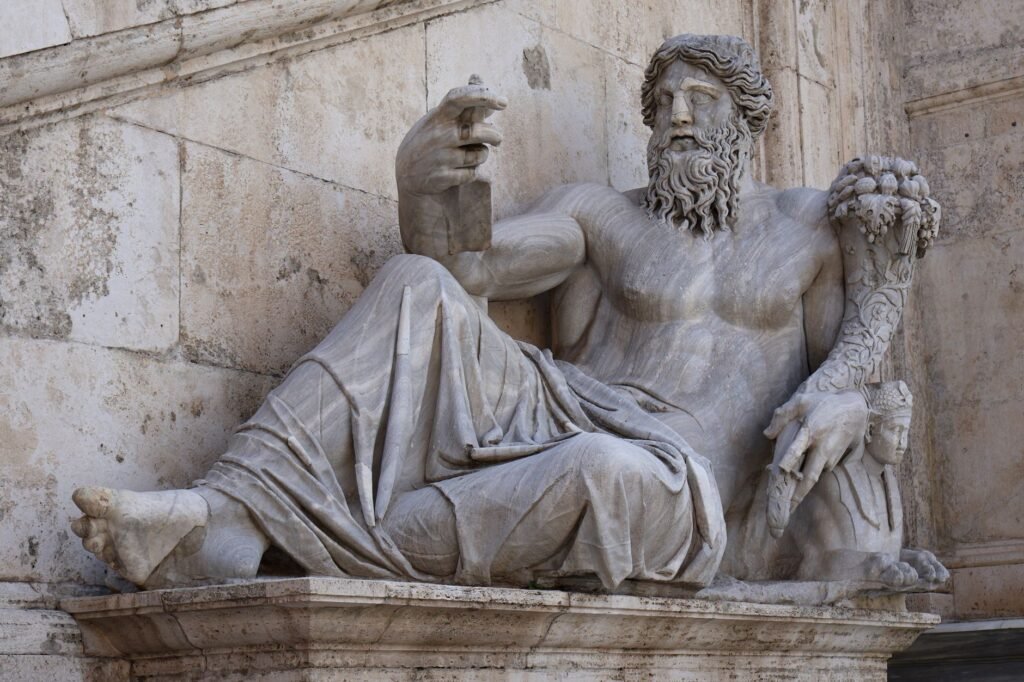
Silvanus
Introduction
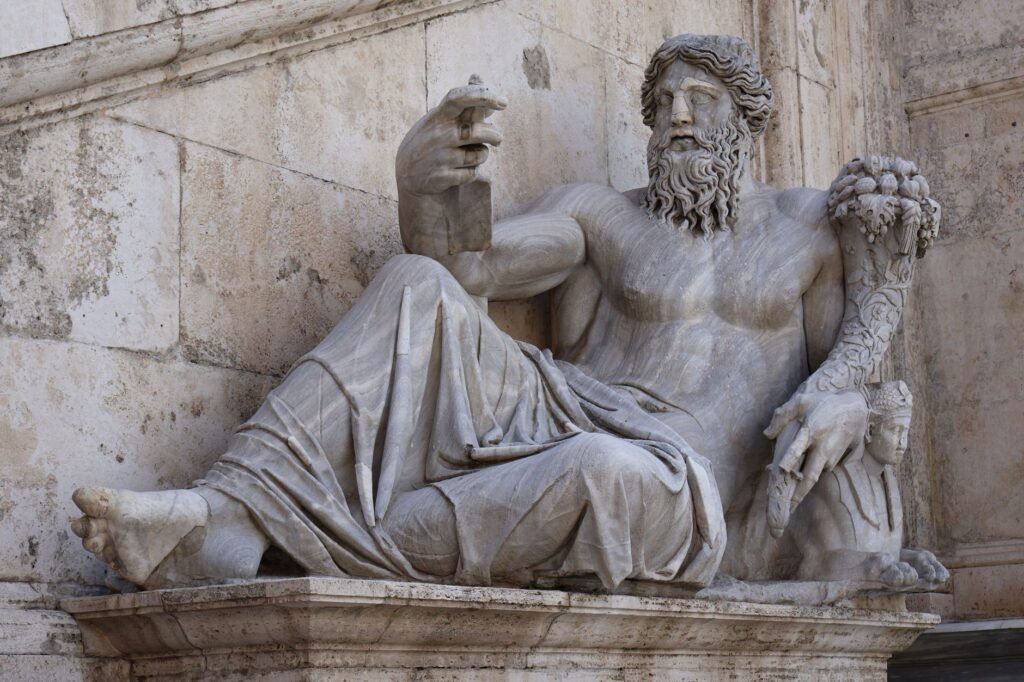
Silvanus is a Roman god associated primarily with woods, wild places, boundaries, and rural life. He belongs to the broad sphere of Roman nature divinities and is especially important as a protector of forests, fields, livestock, and the people who lived and worked outside the city. In Roman religion, Silvanus was not usually a grand Olympian-style deity with a single fixed myth cycle. Instead, he was a practical and deeply local god whose worship reflected everyday concerns: the safety of property, the fertility of the land, and the peace of the countryside.
His significance extends beyond Roman Italy. Silvanus appears in literature, inscriptions, household devotion, and later cultural memory as a vivid example of how the ancient Romans imagined the natural world as animated by divine presence. Because he overlaps in some respects with Greek and other Italic woodland gods, he is also an important figure for understanding Roman religious adaptation and syncretism.
Origin and Meaning
The name Silvanus is generally understood to be connected with the Latin word silva, meaning “forest” or “woodland.” His name therefore identifies him as a deity of wooded places and rural landscapes. In ancient usage, he was often thought of as “the one of the woods,” which fits both his name and his role.
The etymology is transparent in Latin, but the figure itself likely reflects older Italic rural religious traditions. Roman religion absorbed and systematized many local spirits and divinities associated with land, crops, animals, and boundaries. Silvanus may have emerged from this broader religious environment as a woodland guardian who came to have a more recognizable personal identity over time.
Different ancient authors and later interpreters sometimes treated Silvanus as a single god, while at other times he was understood as a category of rustic protective powers. This flexibility is typical of Roman religion, where divine figures could be both specific and fluid depending on context.
Historical Context
Silvanus belongs to the religious world of ancient Rome, especially its rural and agrarian dimension. Although Rome is often remembered for its urban temples, public rites, and political cults, a large part of Roman religion concerned farming, land management, livestock, and the boundary between cultivated and uncultivated spaces. Silvanus was especially relevant in this setting.
He was worshipped by landowners, shepherds, foresters, and rural communities. His cult fits the practical Roman belief that divine forces governed not only cities and states but also the everyday work of agriculture and husbandry. In this sense, Silvanus was part of a network of gods and spirits that included deities such as Faunus, Pales, Terminus, and the Lares.
The god’s role also reflects Roman ideas about the wilderness. Forests were not merely scenic settings; they were places of labor, danger, and resources. They provided timber, shade, pasture, and game, but they could also be associated with wild animals, theft, and supernatural uncertainty. Silvanus represented the divine power that made such spaces habitable and productive.
By the imperial period, Silvanus became widely attested in inscriptions across the Roman world. This suggests that his worship was not confined to literary tradition but remained meaningful in local and personal religious practice.
Main Characteristics
Silvanus is typically characterized as a rustic and wooded deity. He is associated with:
- forests and groves
- uncultivated land and edges of fields
- boundaries and property lines
- shepherds, livestock, and rural work
- the protection of gardens and farmland
He is often imagined as a mature male deity, sometimes connected with wildness and untamed nature. Unlike some major gods with standardized iconography, Silvanus appears in varied forms depending on region and artistic context.
Ancient and later depictions sometimes present him as:
- a bearded old man or rustic figure
- wearing a short tunic or a hunter’s garment
- carrying pruning tools, a branch, or a pine cone
- accompanied by dogs or other woodland symbols
Silvanus is not usually portrayed as hostile. Instead, he is a guardian of the countryside, though one whose power belongs to the untamed natural world. His character combines protection, fertility, and the mysterious vitality of the forest.
Family and Genealogy
Silvanus does not have a firmly fixed genealogy in the way that some Greek gods do. Ancient sources do not consistently identify his parents, spouse, or children. This absence is itself significant: it suggests that Silvanus was less a mythological character with a detailed family story than a functional deity tied to place and practice.
That said, some later interpretive traditions and literary sources connect him loosely with other rustic divinities. He is sometimes treated as similar to or associated with:
- Faunus, another Italic rural god
- Pan, the Greek god of wild places and shepherds
- the Fauni, a class of rustic spirits
- local guardian spirits of land and woodland
These relationships are more about religious comparison than strict genealogy. In Roman religious thought, gods could overlap in function and be interpreted through one another. Thus Silvanus may appear less as a member of a divine family and more as part of a shared rural divine ecosystem.
Symbols
Silvanus is associated with a range of symbols that reflect his role as a woodland and rural protector. Common symbolic elements include:
| Symbol | Meaning |
|---|---|
| Tree branches | Life, growth, and the sacredness of woodland space |
| Pine cones | Forest fertility and evergreen vitality |
| Pruning hook or knife | Management of trees, vineyards, and farmland |
| Dogs | Protection, vigilance, and the hunting-rural boundary |
| Groves and trees | His natural domain |
| Rustic clothing | Connection to rural labor and simplicity |
The pine is especially important in some representations, since evergreen trees often symbolize endurance and the life force of nature. Branches and wooded imagery are also central because they visually identify him as a deity of the forest rather than the city.
Colors are not consistently standardized in ancient sources, but green and earthy tones are commonly associated with woodland divinities in later art and interpretation.
Sacred Animals
Silvanus is not linked to a single canonical sacred animal in the way that some gods are. However, certain animals are repeatedly associated with him through iconography and rural symbolism.
Dogs
Dogs are among the most common companions of Silvanus in artistic representations. They symbolize watchfulness, protection, and the guarding of boundaries. In a rural setting, dogs also connect to shepherding and the defense of flocks.
Wild animals
As a god of forests and uncultivated spaces, Silvanus belongs to a world inhabited by wildlife. Ancient traditions do not consistently assign him one specific beast, but he is naturally associated with creatures of the woods, such as:
- deer
- boars
- wolves
- birds of the forest
These animals are not necessarily “sacred” in a formal cultic sense, but they reinforce his identity as a god of wild nature.
Livestock
Because Silvanus also protects the countryside, he has an indirect relationship with domestic animals, especially sheep and cattle. His role in safeguarding rural land implies concern for the animals that depended on that land.
Sacred Plants
Silvanus is strongly associated with plants of the forest and field. Although ancient sources do not give him an exclusive botanical emblem, several plants are especially relevant.
Pine
The pine is one of the most recognizable plants connected with Silvanus. It symbolizes the wooded landscape and enduring vitality. In Roman art, a pine cone or pine branch may appear as part of rustic and woodland imagery.
Trees in general
Since silva means forest, all trees are naturally part of his sphere. Trees represent not only wilderness but also useful resources: timber, shade, fuel, and boundary markers.
Vines and cultivated plants
Because Silvanus also protects rural land, he is sometimes associated more broadly with productive vegetation. Roman rustic religion often linked divine protection with orchards, vines, and fields. This does not make him a specialized agricultural god in the same sense as Ceres, but it shows his practical relevance to managed rural landscapes.
Herbs and boundary plants
In some local traditions, woodland and field-edge plants may have had protective or ritual functions connected to Silvanus. However, specific sacred plant lists vary by region and source.
Sacred Places
Silvanus is especially connected to natural rather than monumental sacred places. His cult was often linked to areas outside the city and to places where cultivated land met wilderness.
Groves and forests
Wooded places are his most natural sacred environment. Sacred groves were common in Roman religion, and Silvanus fits into this world as a divine presence in the trees.
Boundaries of fields and estates
He is frequently associated with the edges of property, where cultivated land met untamed space. These transitional zones were religiously significant because they marked the boundary between order and wilderness.
Rural shrines
Silvanus could be worshipped at small local shrines, especially on farms and rural estates. His cult was often personal and domestic rather than centered on a major state temple.
Caves and secluded places
Although not uniquely his, secluded natural places also align with his character. The older and wilder the landscape, the more naturally it belongs to a deity like Silvanus.
Powers and Attributes
Silvanus’ powers are grounded in the needs of rural life. He is not a universal creator god but a specialized protector of the countryside.
His major domains include:
- protection of forests and trees
- guarding farmland and boundaries
- watching over livestock and shepherds
- promoting fertility and healthy growth
- preserving rural order against wild forces
- ensuring the safety of property in the countryside
He is often approached as a deity who can prevent harm rather than one who performs dramatic cosmic feats. This makes him highly practical from the perspective of ancient worshippers.
Silvanus also embodies the ambiguous relationship between civilization and nature. He does not eliminate the wild; rather, he makes it inhabitable and useful. In this way, he stands at the threshold between the cultivated world and the forest beyond it.
Main Myths
Silvanus does not have a large corpus of well-known myths comparable to the stories of Jupiter, Venus, or Hercules. His mythological profile is relatively modest and often local. What survives are references, interpretations, and occasional literary scenes rather than a single coherent narrative cycle.
The guardian of the boundary
One of the most important mythic ideas surrounding Silvanus is his role as guardian of borders between property and wilderness. This is not a single myth in the narrative sense, but it is a recurring religious motif. Silvanus protects estates and fields from encroachment, symbolic disorder, and possibly supernatural threat.
Rustic and woodland encounters
In Roman literature, gods of the countryside often appear in scenes where travelers, shepherds, or poets enter wild places. Silvanus may be referenced in such contexts as part of the living spiritual landscape of the forest. These scenes emphasize his presence rather than telling a full story about him.
Association with rural fertility
Another recurring theme is the fertility of land and herds. Silvanus is not always described in mythic terms, but he belongs to the divine forces that help produce abundance. Ancient rural religion often expressed this through prayer, offerings, and practical ritual rather than epic narrative.
Because the sources are limited, it is important not to force a mythology onto Silvanus that the evidence does not support. He is better understood as a cultic and symbolic deity than as the subject of extensive mythic storytelling.
Relationship with Other Mythological Figures
Silvanus is closely connected with several other gods and spirits, though the nature of these relationships varies by source and tradition.
Faunus
Silvanus is often compared with Faunus, another Italic rural deity. The two overlap in their association with wild nature, shepherds, and rustic spaces. Ancient writers did not always sharply distinguish them.
Pan
Greek influence sometimes led to Silvanus being interpreted alongside Pan, the Greek god of shepherds and wild places. The comparison is understandable because both are linked to forests, rustic life, and the untamed countryside. However, they are not identical figures, and Silvanus remains a Roman deity with his own cultic context.
Terminus
Silvanus and Terminus both relate to boundaries, though in different ways. Terminus governs fixed property lines, while Silvanus protects the broader rural environment surrounding those lines. Their functions can overlap in the ideology of land protection.
The Lares and other household or local spirits
Silvanus can also be understood in relation to local protective spirits. Roman religion often placed gods like Silvanus within a wider network of guardianship that included the Lares and other divine presences tied to place and community.
Jupiter
In some inscriptions and local cults, Silvanus appears in relation to Jupiter, especially in formulas that reflect Roman religious syncretism. These associations do not mean he is subordinate in a mythological family sense, but they show how rural cults could be integrated into broader Roman religious frameworks.
Worship and Cult
Silvanus was worshipped through a variety of local and practical rituals rather than through a single standardized public cult.
Offerings
Offerings to Silvanus could include:
- wine
- milk
- grain
- incense
- first fruits
- rural produce
These offerings reflect his role as a benefactor of land and livestock.
Ritual settings
His worship often took place:
- on farms
- at boundary markers
- in groves
- at small rural shrines
- in local community settings
Festivals and observances
Silvanus may have been honored in conjunction with rural festivals and seasonal rites, but surviving evidence does not always allow precise reconstruction of a single universal festival dedicated solely to him. Roman rustic religion was often local and calendrical, tied to agricultural cycles rather than a central liturgical system.
Private and communal devotion
Evidence from inscriptions suggests that Silvanus was important to private worship. Landowners, freedmen, laborers, and rural communities could dedicate altars or inscriptions to him. This indicates a durable cult that remained meaningful across social levels.
Syncretic worship
In many parts of the Roman Empire, Silvanus was interpreted through local traditions. Inscriptions sometimes identify him with regional woodland or protection spirits. This adaptability helped his cult spread and persist.
Ancient Sources
Silvanus is mentioned in a variety of ancient sources, though not always in extensive narrative detail.
Literary sources
- Virgil refers to rustic divinities and the religious life of the countryside, providing an important literary backdrop for understanding figures like Silvanus.
- Ovid includes numerous references to Roman gods and rural religious practices in works such as the Fasti.
- Varro is valuable for Roman religious and antiquarian traditions, especially regarding the interpretation of divine names and functions.
- Servius, the commentator on Virgil, preserves important ancient explanatory material about rustic deities.
- Augustine, while writing critically from a Christian perspective, quotes and discusses Roman religious traditions that help illuminate Silvanus’ place in the pantheon.
Epigraphic evidence
Inscriptions are among the most important sources for Silvanus. They show how widely and locally he was worshipped throughout the Roman world. This evidence is essential because it reveals a god who lived not only in literature but in actual devotion.
Later mythographers and antiquarians
Later Roman and post-Roman writers often tried to classify or compare Silvanus with other gods. Their accounts are useful, but they sometimes reflect scholarly speculation rather than direct cult practice.
Roman Equivalent
Silvanus is already a Roman deity, so he does not require a Roman equivalent in the same way that Greek gods might. However, he was often equated or compared with other figures.
The closest parallels include:
- Faunus, an Italic rustic god
- Pan, the Greek pastoral god
- Satyrs in some artistic or literary comparisons, though these are not exact equivalents
If one asks for his “equivalent,” the answer depends on context. In Roman religion itself, Silvanus is the native Roman form of a woodland and rural protector. In comparative Greco-Roman terms, Pan is the nearest Greek analogue, though not a perfect match.
Influence on Modern Culture
Silvanus is not as prominent in modern popular culture as Zeus, Apollo, or Athena, but he continues to influence literature, fantasy, religion-inspired art, and historical imagination.
Literature and scholarship
Silvanus appears frequently in works on Roman religion, classical mythology, and ancient environmental symbolism. He is also used in modern literature as a name that evokes forests, antiquity, and the natural world.
Fantasy and gaming
The name Silvanus is especially attractive in fantasy settings because it sounds ancient and forest-like. It has been used for characters, deities, and nature-aligned beings in modern games, role-playing systems, and fictional worlds.
Art and design
Artists interested in classical themes sometimes depict Silvanus as a rustic woodland guardian. His imagery overlaps with broader depictions of nature spirits, forest protectors, and pastoral deities.
Environmental symbolism
In modern cultural interpretation, Silvanus can serve as a symbol of ecological balance, woodland preservation, or the sanctity of natural landscapes. While this is a modern reading, it resonates with his ancient identity as a guardian of forests and rural spaces.
Curiosities
- Silvanus is a good example of a Roman god whose importance is better seen in inscriptions and cult practice than in epic myth.
- His name directly reflects his function, since it is linked to the Latin word for forest.
- He was especially relevant in frontier zones between cultivated land and wilderness.
- Unlike many major gods, he does not have a single standardized family tree.
- He was one of several Roman deities whose worship could remain highly local and practical.
- His iconography often includes rustic tools, which connect divine protection with manual rural work.
- Because of his association with forests, he has become a popular name for fictional forest spirits and guardians.
Frequently Asked Questions
What is Silvanus the god of?
Silvanus is a Roman god of forests, rural land, boundaries, and the protection of the countryside. He is also associated with shepherds, livestock, and the safety of rural property.
Is Silvanus the same as Pan?
No. Silvanus and Pan are not the same god, although they are often compared because both are linked to wild nature and shepherd life. Pan is Greek, while Silvanus is Roman.
Did Silvanus have a major temple in Rome?
Silvanus was mainly worshipped in rural and local settings. He was not primarily a major state god with a famous central temple comparable to the great public cults of Rome.
What symbols are associated with Silvanus?
Common symbols include trees, branches, pine cones, pruning tools, dogs, and other rustic or woodland imagery.
Was Silvanus important in Roman religion?
Yes. Although not among the most famous Roman gods, Silvanus was important in everyday religious life, especially for people connected with land, forests, and livestock.
What do we know about Silvanus’ family?
Ancient sources do not provide a consistent family tree for Silvanus. He is better understood as a rural protective deity than as a god with a detailed mythological genealogy.
Where was Silvanus worshipped?
He was worshipped throughout the Roman world, especially in rural areas, estates, groves, and local shrines. Inscriptions show that his cult had a broad geographical spread.
Why is Silvanus still interesting today?
Silvanus matters because he reveals how the Romans understood forests, boundaries, and rural life as sacred. He also remains useful for studying the relationship between religion and the natural environment in antiquity.
Conclusion
Silvanus is one of the clearest examples of Roman rural religion at work. As a god of forests, boundaries, and countryside protection, he reflects the practical and deeply local character of Roman sacred life. He was not a myth-heavy Olympian figure, but a dependable divine presence linked to land, labor, and the rhythms of rural existence.
His cult demonstrates how the Romans sacralized the natural world without separating it from daily use. Forests were not merely admired; they were worked, protected, and understood as spiritually significant. Through Silvanus, the Romans expressed the idea that wilderness and cultivation existed in a delicate relationship maintained by divine care.
For that reason, Silvanus remains an important figure in the study of Roman mythology, religion, and cultural imagination.

Orin Vale has spent the better part of two decades tracing the threads that connect the world’s oldest stories — from the halls of Asgard to the banks of the Nile, from Olympus to the jungles of the Maya. What began as a childhood fascination with flood myths and trickster gods grew into years of independent study across comparative mythology and ancient religion, always chasing the same question: what did these stories mean to the people who first told them? Orin writes for readers who want more than trivia — the ones looking for the beliefs, fears, and truths that myths were built to carry.