Wheat Sheaf of Ceres
Introduction
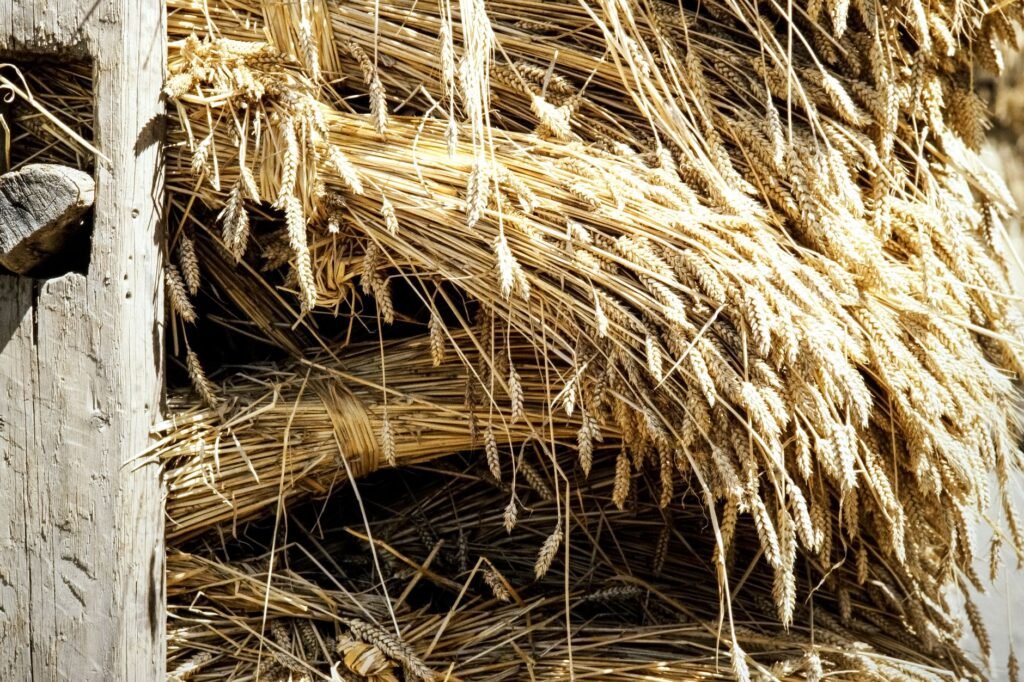
The wheat sheaf of Ceres is one of the most enduring images in Greco-Roman religion and symbolism. It represents Ceres, the Roman goddess of agriculture, grain, fertility, and ordered growth, and by extension the life-sustaining power of cultivated crops. In ancient art and later cultural memory, a sheaf of wheat or other grain bound together in one bundle became a visible sign of harvest, abundance, and divine favor.
As an emblem, the wheat sheaf of Ceres is not a single mythological being but a symbolic attribute associated with a major goddess of the Roman world. It appears in literature, sculpture, coinage, religious iconography, and modern heraldry. The image remains important because it links religion with agriculture, and agriculture with the survival of communities. In antiquity, grain was not merely a commodity; it was the basis of stability, taxation, ritual life, and political power.
Origin and Meaning
The name Ceres is the Roman name of a goddess whose functions correspond broadly to those of the Greek Demeter. The exact etymology of Ceres is debated by scholars, but the goddess is firmly connected with cereal crops, whence the English word cereal ultimately derives.
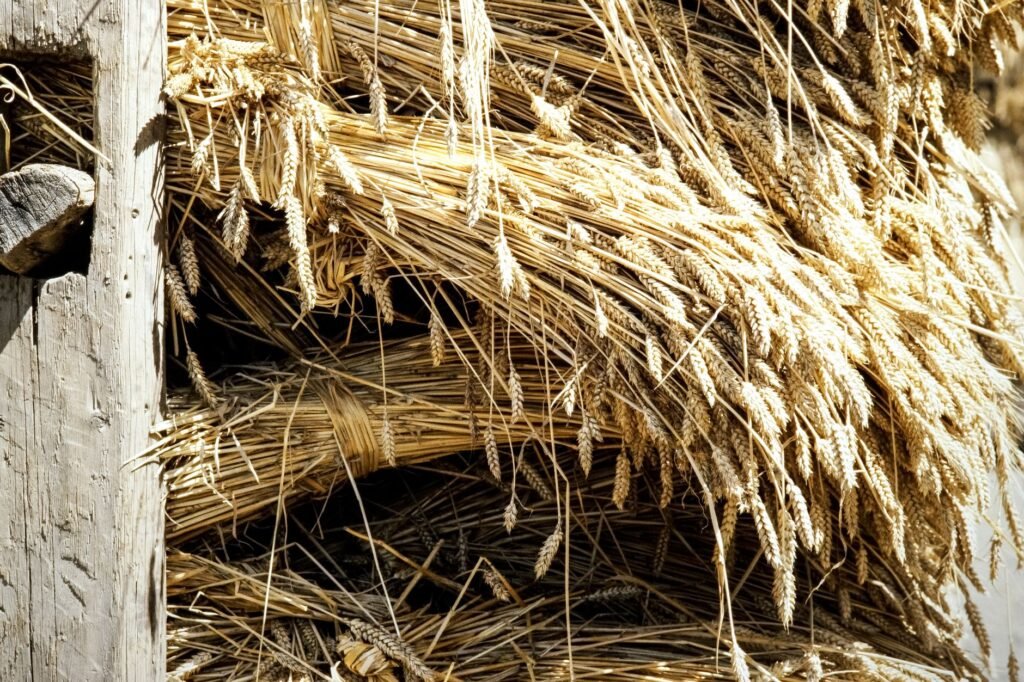
A wheat sheaf is a bundle of cut stalks of grain tied together after harvesting. In symbolic terms, the sheaf conveys several related ideas:
- the completion of the agricultural cycle
- the gathering of sustenance
- fertility and abundance
- the ordered taming of nature through cultivation
- the promise of future sowing and renewal
The sheaf associated with Ceres usually signifies wheat, though in ancient Mediterranean agriculture the broader concept of grain could include barley and spelt as well. Because Rome depended heavily on grain supplies, especially wheat, the goddess’s emblem carried religious and civic importance beyond simple agrarian imagery.
Historical Context
Ceres occupied a major place in Roman religion from an early period. She was among the divine figures tied to the basic necessities of human life: food, fertility, and the lawful organization of society. Her cult was especially important among the plebeian class in Rome, where she was associated with grain distribution and the welfare of the common people.
The historical background of the wheat sheaf of Ceres is therefore agricultural, but also political and social. In a society where harvest failure could trigger famine, the goddess embodied the hope that cultivation, ritual, and divine support would ensure survival. Grain was central to:
- daily diet
- state granaries
- taxation in kind
- food distributions
- festivals marking sowing and harvest
Ceres was closely connected with the rhythms of the Roman agricultural year. Her symbolic wheat sheaf reflected the cycle from seedtime to harvest, and from scarcity to plenty. The image also gained significance in state propaganda, where abundance of grain could represent good governance and public prosperity.
Main Characteristics
The wheat sheaf of Ceres is identified by several characteristic visual and symbolic features. In art, Ceres herself is often shown as a mature woman, dignified and serene, with attributes that underscore her agricultural role.
Typical features associated with Ceres and her wheat sheaf
- A bundle of grain stalks, often wheat
- A sickle or sickle-like implement, indicating harvest
- A torch, especially in myths related to the search for her daughter Proserpina
- A corona of grain or wheat crown
- A veil or headdress, in some representations
- A seated or standing maternal figure, emphasizing fertility and nourishment
The wheat sheaf itself functions as a concentrated visual sign. It compresses the entire agricultural process into one object: planting, growing, harvesting, storing, and feeding. This made it a powerful emblem in religious art and public iconography.
Family and Genealogy
As a Roman goddess, Ceres belongs to the divine family of the Saturnian line in Roman myth. Her genealogy is inherited largely from the Greek tradition of Demeter, although Roman sources preserve their own names and emphases.
Commonly reported family relationships
| Relationship | Name | Notes |
|---|---|---|
| Father | Saturn | Roman equivalent of Cronus |
| Mother | Ops | Earth and abundance goddess in Roman tradition |
| Sibling | Jupiter | Chief Roman god |
| Sibling | Neptune | God of the sea |
| Sibling | Pluto | God of the underworld |
| Sibling | Juno | Queen of the gods |
Ceres is most famously the mother of Proserpina in Roman tradition, corresponding to Persephone in Greek myth. The abduction of Proserpina by Pluto is central to Ceres’s mythic cycle and helps explain the seasonal alternation of growth and barrenness.
Different ancient traditions do not always agree on every detail of her divine family, but the mother-daughter relationship with Proserpina is one of the most stable and important elements.
Symbols
The wheat sheaf is the primary symbol of Ceres, but it appears within a broader symbolic field.
Main symbols associated with Ceres
| Symbol | Meaning |
|---|---|
| Wheat sheaf | Harvest, abundance, nourishment, agricultural order |
| Grain ears | Fertility and the sustenance of civilization |
| Torch | Search, grief, and the journey through darkness |
| Sickle | Harvesting and the human shaping of nature |
| Cornucopia | Plenty and divine generosity |
| Poppies | Sleep, fertility, and agricultural association in some iconography |
The wheat sheaf of Ceres is especially significant because it is both simple and universal. Unlike more elaborate divine emblems, it is immediately readable across cultures: a sign of food, survival, and seasonal renewal.
Sacred Animals
Unlike some deities whose cults are strongly centered on a particular sacred animal, Ceres is not primarily defined by animal symbolism. However, several animals appear in her broader religious and iconographic context.
Animals sometimes associated with Ceres
- Pig or sow: frequently linked with fertility rites and agricultural sacrifice
- Snake: in some classical and later symbolic contexts, connected with chthonic fertility and earth powers
- Dove or bird imagery: occasionally used in broader fertility symbolism, though less central
The pig is especially notable in Roman sacrificial practice connected with agricultural purification and fertility. Livestock sacrifice formed part of many rural and civic rites, and the animal offerings to Ceres reflected her role in ensuring productive land.
Sacred Plants
The most important plant associated with Ceres is wheat, especially because the goddess is so closely tied to bread grain and the harvest. Yet other plants also appear in her orbit.
Key sacred or significant plants
| Plant | Significance |
|---|---|
| Wheat | Principal emblem; nourishment and civilization |
| Barley | Ancient grain connected with ritual and food production |
| Spelt | Important early grain in Italy and ritual contexts |
| Poppy | Occasionally linked with fertility, sleep, and agricultural imagery |
| Herbs and field plants | Broader agrarian association, though not specific to Ceres |
Wheat is the clearest botanical symbol because it represents the transition from wild nature to cultivated food. In the context of Ceres, it becomes a sacred sign of human labor supported by divine order.
Sacred Places
Ceres was worshipped across the Roman world, but some places had special importance in her cult.
Notable locations connected with Ceres
- Rome
- The Temple of Ceres, Liber, and Libera on the Aventine Hill was an important cult center.
- The Aventine was historically associated with the plebeian order, reinforcing Ceres’s social role.
- The Roman countryside
- Rural shrines and local altars marked the everyday religious life of farmers.
- Magna Graecia and other Italian regions
- Greek and Italic agricultural traditions influenced her worship.
- Sicily
- In Greek-Roman tradition, Sicily is strongly associated with Demeter and Persephone, and thus with Ceres and Proserpina in Roman adaptation.
Because Ceres was tied to grain, her sacred geography was not limited to one sanctuary. Fields, granaries, threshing floors, and market spaces could all become meaningful in her cultic world.
Powers and Attributes
Ceres governs the basic processes that make civilized life possible. Her powers are not abstract in the way of some philosophical deities; they are concrete and life-giving.
Major domains of influence
- agriculture and cultivation
- grain growth and harvest
- fertility of the soil
- nourishment and sustenance
- lawful food distribution
- agricultural abundance
- seasonal renewal
- maternal care, in connection with Proserpina
Her wheat sheaf symbolizes these powers in condensed form. It reflects not only the harvest itself, but the wider system that turns land into food. In Roman thought, this was inseparable from social order, because grain supply affected peace, urban stability, and the legitimacy of rulers.
Main Myths
The most famous myths involving Ceres concern her daughter Proserpina and the seasonal cycle.
The abduction of Proserpina
According to the best-known tradition, Proserpina was taken by Pluto into the underworld. Ceres searched for her daughter in grief and anger. During this time, the earth became barren, and crops ceased to grow. Eventually a compromise was reached, allowing Proserpina to spend part of the year with her mother and part with Pluto.
This myth explains several connected themes:
- the changing seasons
- the alternation of fertility and dormancy
- the emotional power of maternal loss
- the connection between underworld and agricultural renewal
The search with torches
Ceres is often depicted with torches because she searched for Proserpina through the world and into darkness. The torch also became a symbol of ritual processions and of divine guidance through crisis.
Agriculture and divine instruction
In some traditions, Ceres is also associated with the teaching of agriculture and grain cultivation to humanity. While specific details vary by source and are more fully developed in some Greek traditions, the Roman goddess clearly functions as a benefactor of cultivated life. Her wheat sheaf thus represents not only what grows naturally, but what is learned, tended, and harvested through human effort.
Relationship with Other Mythological Figures
Ceres’s relationships with other gods are shaped by both family ties and thematic oppositions.
Key relationships
- Proserpina: her daughter and the center of her best-known myth
- Jupiter: sometimes depicted as involved in the arrangements concerning Proserpina
- Pluto: the abductor of Proserpina and ruler of the underworld
- Liber and Libera: deities associated with fertility and, in Rome, linked in cult with Ceres
- Tellus/Terra: the earth goddess, with whom Ceres overlaps in agricultural symbolism
- Bacchus/Liber in later interpretive traditions: connected through fertility, growth, and the abundance of nature
Ceres also stands in contrast to gods of war and destruction, since her domain concerns sustenance rather than violence. Yet in Roman religion, her agricultural role was not isolated; it interacted with law, civic identity, and public welfare.
Worship and Cult
The worship of Ceres was strongly practical and communal. It was tied to the fertility of fields, the storage of grain, and the well-being of the urban population.
Forms of worship
- offerings of grain, cakes, and produce
- sacrifices, including animals in some rites
- prayers for fertility and successful harvests
- public festivals linked to sowing and harvest
- processions and ritual observances by agrarian communities
The Cerialia
The most famous festival of Ceres was the Cerialia, held in April. This festival featured games and rites connected with the goddess and the renewal of agricultural life. Ancient sources describe elements such as ritual joy, public celebration, and symbolic agricultural actions.
Social significance
Ceres’s cult had strong associations with the plebs, the common people of Rome. The temple on the Aventine and the civic role of grain made her worship central to public order. In a society where grain shortages could destabilize cities, the goddess’s cult was inseparable from economics and politics.
Ancient Sources
Several ancient authors help reconstruct the traditions associated with Ceres and her symbols.
Important classical sources
- Homeric Hymn to Demeter
Though Greek rather than Roman, it is the most influential literary source for the mythic framework later adapted for Ceres and Proserpina. - Hesiod
Provides a broad genealogical background for the gods. - Ovid, Metamorphoses and Fasti
Especially important for Roman literary retellings of Ceres, Proserpina, and the seasonal cycle. - Vergil
Agricultural themes and divine imagery appear throughout his poetry, especially in the Georgics. - Apollodorus
Offers mythological summaries useful for comparison. - Pausanias
Valuable for descriptions of sanctuaries and local cult practices. - Cicero and Varro
Important for Roman religious and antiquarian context.
Because the Greek and Roman traditions overlap, ancient sources sometimes present the same underlying myth with different names, emphases, or ritual explanations.
Roman Equivalent
Ceres is the Roman counterpart of Demeter. The two goddesses are closely related, though not entirely identical in cultural emphasis.
Comparison between Ceres and Demeter
| Aspect | Ceres | Demeter |
|---|---|---|
| Cultural setting | Roman | Greek |
| Main focus | Grain, agriculture, civic welfare, plebeian cult | Grain, fertility, mystery cults, maternal grief |
| Key mythic daughter | Proserpina | Persephone |
| Major festival traditions | Cerialia and Roman public rites | Thesmophoria and Eleusinian mysteries |
| Symbolic emphasis | Agricultural order and grain supply | Fertility, initiation, and sacred mystery |
The wheat sheaf of Ceres is therefore not merely a Roman decorative motif. It is part of a broader Mediterranean religious vocabulary shared with Greek Demeter, though reframed in Roman civic and agrarian terms.
Influence on Modern Culture
The wheat sheaf of Ceres has remained visible well beyond antiquity. Its influence can be seen in heraldry, public sculpture, agricultural emblems, and modern visual design.
Areas of modern influence
- Heraldry and civic emblems
Wheat sheaves often symbolize agriculture, prosperity, and regional identity. - Agricultural organizations
Logos and seals may use the wheat sheaf as a sign of productivity and food security. - Architecture and sculpture
Ceres appears in neoclassical art as a figure of abundance or harvest. - Literature and symbolism
The sheaf can stand for fertility, abundance, the harvest season, or the dignity of labor. - Popular culture
References to Ceres may appear in fantasy fiction, role-playing games, and modern retellings of classical myth.
The goddess herself is less prominent in popular culture than some Olympian figures, but her emblem is widely understood because it is so closely tied to universal human experience.
Curiosities
Interesting facts about the wheat sheaf of Ceres
- The English word cereal is derived from Ceres’s name.
- Ceres was especially important in Rome’s public grain system, linking religion to food supply.
- Wheat sheaves appear in Roman coinage and later classical-inspired art as signs of prosperity.
- The association with Proserpina made Ceres a goddess not only of harvest, but also of loss and return.
- In modern symbolism, a wheat sheaf can still represent abundance, harvest, or civic prosperity without any explicit religious meaning.
- Ancient Roman religion often connected Ceres with the Aventine Hill, a location strongly linked to the common people of Rome.
- The image of a bound sheaf suggests both unity and dependence: individual stalks are weak, but gathered together they are strong.
Frequently Asked Questions
1. What does the wheat sheaf of Ceres symbolize?
It symbolizes harvest, abundance, fertility, nourishment, and the divine support of agriculture.
2. Is Ceres the same as Demeter?
Ceres is the Roman equivalent of Demeter. They are closely related, though Roman worship emphasized civic grain supply and public welfare more strongly.
3. Why is wheat associated with Ceres?
Wheat was a major staple crop in the ancient Mediterranean world. As goddess of grain and agriculture, Ceres naturally became associated with the wheat sheaf as a sign of harvest and sustenance.
4. What is the connection between Ceres and Proserpina?
Proserpina is Ceres’s daughter. Her abduction by Pluto is central to the myth explaining the seasons and Ceres’s grief over the earth’s barrenness.
5. Did the Romans actually worship the wheat sheaf?
They worshipped Ceres, not the sheaf as a separate deity. The wheat sheaf was a sacred symbol or attribute used in art, ritual contexts, and civic imagery.
6. What festivals were dedicated to Ceres?
The most prominent was the Cerialia, a festival in April associated with the goddess and agricultural renewal.
7. Where was Ceres especially worshipped in Rome?
A major center of her cult was the temple of Ceres, Liber, and Libera on the Aventine Hill.
8. Does the wheat sheaf have modern uses?
Yes. It remains a common symbol in heraldry, agricultural emblems, and artistic representations of abundance and harvest.
Conclusion
The wheat sheaf of Ceres is a compact but powerful symbol of ancient agricultural religion. It represents more than grain alone: it embodies the relationship between nature and culture, labor and abundance, grief and renewal, and the dependence of societies on stable food production. In Roman religion, Ceres was not only a goddess of the fields but also a guardian of civic wellbeing, especially for the common people whose lives depended on grain.
Through myth, cult, and visual art, the wheat sheaf became one of the most recognizable signs of agricultural prosperity in the classical world. Its survival in modern symbolism shows the lasting power of ancient religious imagery to express universal human concerns: sustenance, fertility, and the hope of a good harvest.

Orin Vale has spent the better part of two decades tracing the threads that connect the world’s oldest stories — from the halls of Asgard to the banks of the Nile, from Olympus to the jungles of the Maya. What began as a childhood fascination with flood myths and trickster gods grew into years of independent study across comparative mythology and ancient religion, always chasing the same question: what did these stories mean to the people who first told them? Orin writes for readers who want more than trivia — the ones looking for the beliefs, fears, and truths that myths were built to carry.