Why Does Rome Have Two Founding Myths (Aeneas and Romulus)?
Introduction
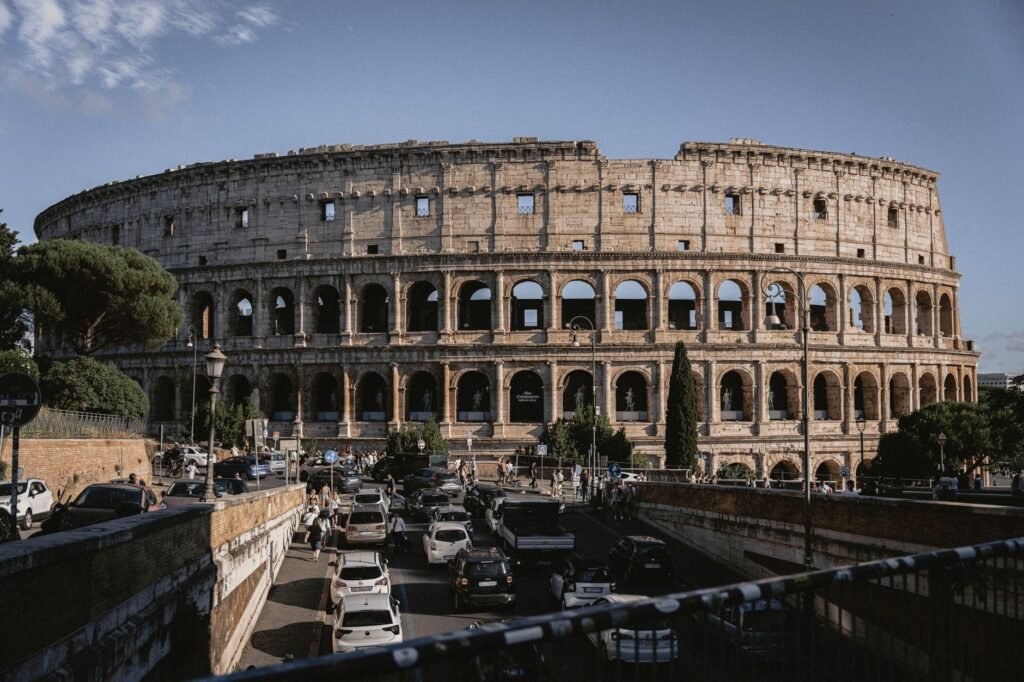
Rome is unusual among ancient cities because it has two major founding myths that seem to point to different beginnings. One tradition says Rome ultimately descends from Aeneas, the Trojan hero who survived the fall of Troy and brought his people to Italy. Another says Rome was founded by Romulus, the twin brother of Remus, who established the city after a dramatic episode of conflict, kin-slaying, and divine approval.
These are not simply duplicate stories. They reflect different needs in Roman identity: one links Rome to the heroic world of Homer and the ancient Mediterranean, while the other explains the city’s local origins in Italy and the authority of its political institutions. Together, they helped Romans imagine themselves as both ancient heirs of the East and self-made masters of Italy.
The coexistence of these myths is important for understanding Roman religion, literature, politics, and historical memory. Roman tradition did not usually insist on a single version of the past. Instead, multiple accounts could live side by side, each serving a different purpose.
Origin and Meaning
The name Rome was traditionally connected to Romulus, the city’s legendary founder. Ancient writers offered several explanations for the city’s name, but the most influential Roman tradition derived it from Romulus himself.
The name Aeneas comes from Greek and possibly older Anatolian or poetic roots, but in Roman literature he is primarily understood as the Trojan hero praised in archaic Greek epic and later developed in Latin poetry. His story was adapted by the Romans to explain how a refugee from Troy could become an ancestor of the Roman people.
The existence of two founding myths reflects the fact that Roman origin stories developed in different historical layers:
- Local Italic traditions favored a foundation in Latium by Romulus.
- Greek-influenced genealogical traditions tied Rome to Troy through Aeneas.
- Later Roman political and literary culture combined the two into a single chain: Aeneas in Italy, then several generations later Romulus founding Rome.
In short, Rome did not replace one myth with the other. It absorbed both.
Historical Context
A city built from many peoples
Rome was not born as a single, clearly documented event. It grew gradually from small settlements in central Italy. By the time Romans began writing their own history, the actual earliest stages of the city were already obscure. Myth filled that gap.
Roman self-understanding was shaped by three major contexts:
Italian local traditions
- Early Rome belonged to the cultural world of Latium.
- Its myths needed to explain Latin identity, kinship, kingship, and land.
Greek cultural influence
- From the 4th and 3rd centuries BCE onward, Romans increasingly engaged with Greek literature and mythology.
- A heroic genealogy connected Rome to the prestigious world of Homer.
Political consolidation and imperial ideology
- As Rome expanded, its founders had to symbolize not just a city but a world power.
- Aeneas offered antiquity and noble suffering; Romulus offered force, law, and state-building.
Why two foundations made sense
For Romans, the city could be founded in more than one sense:
- Aeneas could be the ancestor of the Roman people.
- Romulus could be the founder of the city itself.
This distinction helped reconcile two competing needs:
- Genealogical prestige: Rome should descend from a famous hero.
- Civic specificity: Rome needed a local founder tied to its walls, institutions, and rituals.
Main Characteristics
The two myths differ in tone, setting, and function.
| Figure | Main role | Cultural meaning | Key feature |
|---|---|---|---|
| Aeneas | Ancestor figure | Trojan and pan-Mediterranean origin | Piety, survival, exile |
| Romulus | City founder | Italian and civic origin | Violence, law, boundary-making |
Aeneas
Aeneas is marked by:
- Piety: he is especially associated with devotion to the gods.
- Exile: he survives Troy’s destruction.
- Continuity: he carries the future of a people through displacement.
- Dynastic significance: later Roman tradition made him ancestor of the Alban kings and, ultimately, Rome.
Romulus
Romulus is marked by:
- Foundation through division: he marks out the city’s boundary.
- Sovereignty and violence: his founding includes conflict with Remus.
- Political symbolism: he is associated with kingship, institutions, and military strength.
- Roman identity: he gives Rome an origin on Italian soil.
The contrast is striking: Aeneas represents survival and inheritance, while Romulus represents creation and authority.
Family and Genealogy
Aeneas’ family
Aeneas is usually presented as:
- Son of Anchises and the goddess Aphrodite/Venus
- Father of Ascanius, also called Iulus in some traditions
The family line matters because later Roman tradition linked the Julian family to Iulus, thereby claiming descent from Venus through Aeneas.
Different sources vary on the precise genealogical sequence between Aeneas and Romulus. A widely accepted Roman version places:
- Aeneas
- Ascanius/Iulus
- the kings of Alba Longa
- Numitor
- Rhea Silvia
- Romulus and Remus
This makes Romulus not a direct son of Aeneas, but a descendant several generations later.
Romulus’ family
Romulus and Remus are usually said to be:
- Sons of Rhea Silvia, a vestal virgin
- Fathered by Mars in many traditions
- Grandsons of Numitor, the rightful king of Alba Longa
The family story is central to the myth because it combines:
- royal blood
- divine paternity
- danger to legitimate rule
- the fate of twins
Why genealogy matters
Genealogy in Roman myth is not just family history. It is a political argument. It explains:
- why Rome is royal in origin but republican in later self-image
- why Roman elites could claim noble ancestry
- why divine favor was attached to Roman power
Symbols
Roman foundation myths are associated with a number of symbolic objects and images.
Symbols of Aeneas
- The Penates: household gods Aeneas is said to have carried from Troy
- The Palladium: a sacred image tied in later tradition to Troy and Rome
- Fire and household goods: symbols of continuity through exile
- Armor and piety: Aeneas is often shown as a warrior who is also devout
Symbols of Romulus
- The furrow: the sacred boundary of the city, traced by Romulus
- The wall: a symbol of civic order and protected space
- The wolf: connected to the she-wolf who nursed the twins
- The spear and royal insignia: symbols of force and sovereignty
Interpretive meaning
These symbols show the difference between the myths:
- Aeneas preserves sacred continuity.
- Romulus creates political space.
Sacred Animals
The wolf
The most famous animal connected to Rome’s foundation is the she-wolf who nursed Romulus and Remus. The image is iconic, but its exact meaning is debated. In Roman thought, it likely symbolized:
- survival after exposure
- wild nurture before civilization
- a liminal state between nature and city
Other animals in the Aeneas tradition
Aeneas himself is not strongly associated with a specific sacred animal in the same way. However, the journey from Troy includes divine signs involving animals in some versions, and Roman epic often uses omens to signal destiny.
Symbolic contrast
- The wolf belongs to the Romulus myth and emphasizes harsh beginnings.
- Aeneas’ story is less animal-centered and more focused on journey, ancestry, and divine favor.
Sacred Plants
Rome’s foundation myths are not centered on sacred plants in the same way as some other mythic traditions. Still, plants appear indirectly in ritual and symbolic contexts.
Laurel and related symbols
In Roman religion and literature, laurel often represents victory and divine favor. Although not exclusive to either founder, it fits the broader ideological world of Rome’s destiny.
Fig tree tradition
The fig tree near the Lupercal is important in the Romulus cycle, since the twins are said to have been discovered there. This makes the fig tree part of the foundational landscape.
Why plants matter
Plants in founding stories often serve as markers of:
- sacred geography
- fertility
- memory
- divine signs
In Rome’s case, the landscape itself becomes part of the myth.
Sacred Places
Troy
Aeneas’ sacred starting point is Troy, the city destroyed in the Trojan War. It is not Roman territory, but it is essential to Roman origin mythology because it links Rome to heroic antiquity.
Latium and Alba Longa
Aeneas’ descendants are associated with Latium and especially Alba Longa, the ancestral city from which Romulus’ line emerges.
The Palatine Hill
The Palatine is central to the Romulus myth. It is where Romulus is traditionally said to have founded Rome.
The Lupercal
The Lupercal, a cave or sacred site at the foot of the Palatine, is associated with the she-wolf and the discovery of the twins.
The pomerium
Romulus is linked to the sacred boundary of Rome, the pomerium, which marked the city’s religious and legal limits. This boundary had deep symbolic significance in Roman civic religion.
Powers and Attributes
Because Aeneas and Romulus are not gods in the strict sense, “powers” here should be understood as mythic roles and attributes.
Aeneas’ attributes
- piety
- endurance
- leadership in exile
- carrying ancestral cults
- preserving continuity after catastrophe
Romulus’ attributes
- founding authority
- military leadership
- boundary-setting
- political institution-building
- victory through struggle
Shared attributes
Both figures embody:
- divine favor
- destiny
- masculine leadership
- the beginning of Roman greatness
But they do so in different ways. Aeneas is the ancestor of destiny; Romulus is the builder of destiny.
Main Myths
The Aeneas cycle
The Aeneas tradition begins with the fall of Troy. Aeneas escapes with survivors and carries his household gods. In later Roman versions, he reaches Italy, makes alliances, and becomes part of the lineage that leads to Rome.
The most influential account is Virgil’s Aeneid, which presents Aeneas as a man chosen by fate to establish the foundations for Roman greatness. The poem does not end with the founding of Rome itself, but it establishes the ideological path toward it.
The Romulus cycle
The Romulus myth is more directly about Rome’s physical founding:
- The twins are exposed after birth.
- They are rescued and raised.
- As adults they restore their grandfather Numitor.
- They decide to found a new city.
- A dispute over augury leads to conflict.
- Romulus kills Remus, or Remus dies in the conflict depending on the version.
- Romulus becomes the first king of Rome.
This story explains:
- the city’s name
- its sacred boundaries
- its violent origins
- the authority of kingship
How the myths were combined
A later and very influential solution was to place the myths on a single timeline:
- Aeneas arrives in Italy
- His descendants rule at Alba Longa
- Romulus, many generations later, founds Rome
This arrangement made both myths useful. Aeneas supplied ancient noble ancestry; Romulus supplied the actual foundation of the city.
Relationship with Other Mythological Figures
Venus and Mars
Aeneas is the son of Venus, which gave Rome a divine maternal ancestor. Romulus is commonly the son of Mars, which linked Rome to war and martial strength. Together, they reflect two powerful divine associations in Roman culture:
- love, lineage, and favor through Venus
- force, conflict, and conquest through Mars
Anchises and Rhea Silvia
Anchises symbolizes Trojan ancestry. Rhea Silvia symbolizes the vulnerable royal line that produces Rome’s founders. Both are necessary for the mythic structure.
Numitor and Amulius
The overthrow of Amulius and restoration of Numitor establish a political background for Romulus’ birth. The myth presents Romulus as a legitimate founder born out of injustice.
Greek heroes and Trojan tradition
Aeneas also connects Rome to the broader Greek mythic world. This was important because it allowed Roman writers to place Rome within the prestigious epic past of the Mediterranean.
Worship and Cult
Romulus and Quirinus
Romulus is especially important because later Roman tradition associated him with Quirinus, a Roman divine or semi-divine figure. Some traditions treated Romulus as deified after death and honored in connection with Quirinus.
Aeneas in cult
Aeneas was not worshiped in the same way as a major Roman god, but he had a powerful place in Roman religious imagination. Certain local traditions, especially in Latium, treated him as an ancestral hero with cultic significance.
Festivals and ritual memory
Roman religious life preserved the founders through:
- civic ceremonies
- military symbolism
- family genealogy
- public monuments
- poetic retellings
The Parilia, often associated with Rome’s founding date, later became part of the city’s commemorative culture. While exact ritual connections differ by source and period, the day became tied to the memory of Romulus’ foundation.
Public and private function
Foundation myths served both:
- public ideology, by legitimizing Rome’s institutions
- private identity, by enabling families and elites to claim noble descent
Ancient Sources
The Roman and Greek literary record does not present one uniform version of Rome’s origins. Major sources include:
| Author | Work | Relevance |
|---|---|---|
| Homer | Iliad | Early Greek tradition of Aeneas as a heroic figure |
| Hesiod | Various traditions | Background for divine genealogies, though not Rome-specific |
| Dionysius of Halicarnassus | Roman Antiquities | Detailed account of early Roman origins |
| Livy | Ab Urbe Condita | Influential narrative of Romulus and Rome’s foundation |
| Virgil | Aeneid | Definitive literary treatment of Aeneas in Roman ideology |
| Ovid | Fasti and Metamorphoses | Myths, festivals, and transformations connected to Rome |
| Plutarch | Life of Romulus | Biographical and moralized account of Romulus |
| Apollodorus | Bibliotheca | Useful for broader Greek mythic genealogies |
| Servius | Commentary on Virgil | Preserves antiquarian interpretations |
| Tacitus | Annals and related works | Occasionally relevant to Roman memory and identity |
Why the sources differ
Ancient authors were not writing a modern critical history. They inherited local traditions, family legends, religious lore, and literary models. As a result, different versions of Rome’s beginnings remained in circulation.
Roman Equivalent
The question of a “Roman equivalent” is unusual here because Aeneas and Romulus are already Romanized figures within Roman tradition.
Still, one can distinguish their roles in Roman thought:
- Aeneas is the Roman adaptation of a Greek heroic ancestor
- Romulus is the distinctly Roman civic founder
If a simple comparison is needed:
- Aeneas functions as the mythic ancestor
- Romulus functions as the mythic founder
This dual structure is one of the defining features of Roman origin myth.
Influence on Modern Culture
The twin foundation myths continue to shape modern views of Rome.
Literature
- Virgil’s Aeneid remains one of the most influential epics in world literature.
- Modern historical fiction and retellings often revisit either Aeneas or Romulus, sometimes emphasizing the contrast between piety and violence.
Art
- The she-wolf with the twins is one of the most recognizable images of the ancient world.
- Aeneas carrying Anchises and leading Ascanius is a frequent artistic motif, symbolizing duty and survival.
Film, television, and games
- Roman origin stories appear in documentaries, historical dramas, and strategy games.
- Romulus is often used to symbolize the hard, militarized beginnings of Rome.
- Aeneas is often used to represent migration, destiny, and empire.
Political and cultural symbolism
Both founders have been used in modern debates about:
- national identity
- migration and origin stories
- empire and legitimacy
- the relationship between violence and state formation
Curiosities
- Rome’s two founding myths are not necessarily contradictory in ancient Roman thinking; they can be read as different levels of origin.
- The Romans often preferred inclusive myth-making rather than strict elimination of alternative versions.
- Aeneas is not the founder of Rome in the strict civic sense in most traditions, but he became crucial because he gave Rome a prestigious prehistory.
- Romulus is both a founder and a problematic figure, because his founding involves the death of Remus.
- The Roman elite could use Aeneas to emphasize noble ancestry, while the state could use Romulus to emphasize authority and military beginnings.
- The association of Romulus with Quirinus shows how myth and religion could merge in Roman culture.
- The story of the twins being saved by a wolf may reflect symbolic language or later visualization as much as literal belief.
Frequently Asked Questions
1. Did the Romans believe both myths at the same time?
Yes, many Romans accepted both in different ways. Aeneas was seen as an ancestor, while Romulus was the founder of the city itself.
2. Which myth is older, Aeneas or Romulus?
The Romulus story is more directly tied to Rome as a city. The Aeneas tradition became especially important later, though Aeneas himself comes from older Greek epic tradition.
3. Why did Romans want a Trojan ancestor?
A Trojan ancestor gave Rome prestige, antiquity, and connection to the heroic world known from Greek literature.
4. Is Romulus considered a god?
Not always. In some traditions he was deified or associated with Quirinus, but he is primarily a legendary founder and king.
5. How are Aeneas and Romulus connected?
In later Roman tradition, Aeneas’ descendants founded Alba Longa, and Romulus came many generations later from that line.
6. Why is Romulus associated with violence?
The myth of Romulus includes the killing of Remus, which symbolizes the harsh, contested, and militarized origins of civic authority.
7. Which ancient author is most important for Aeneas?
Virgil is the most important literary source because the Aeneid became the central Roman epic about Aeneas.
8. Which ancient author is most important for Romulus?
Livy and Plutarch are among the most influential ancient sources for the Romulus narrative, along with Dionysius of Halicarnassus.
Conclusion
Rome has two founding myths because Roman identity developed through layered tradition rather than a single origin story. Aeneas gave Rome a noble and ancient ancestry rooted in Trojan survival and divine favor. Romulus gave Rome a civic beginning on Italian soil, marked by boundaries, institutions, and conflict.
Together, the two myths answered different questions. Who were the Romans descended from? Aeneas. Who founded the city itself? Romulus. By preserving both, Roman culture created a powerful and flexible story of origin: one that joined epic exile with local foundation, inherited destiny with political creation, and mythic antiquity with the hard realities of state-building.
That is why Rome’s foundation is not one story but two—and why both remained central to Roman memory for centuries.

Orin Vale has spent the better part of two decades tracing the threads that connect the world’s oldest stories — from the halls of Asgard to the banks of the Nile, from Olympus to the jungles of the Maya. What began as a childhood fascination with flood myths and trickster gods grew into years of independent study across comparative mythology and ancient religion, always chasing the same question: what did these stories mean to the people who first told them? Orin writes for readers who want more than trivia — the ones looking for the beliefs, fears, and truths that myths were built to carry.