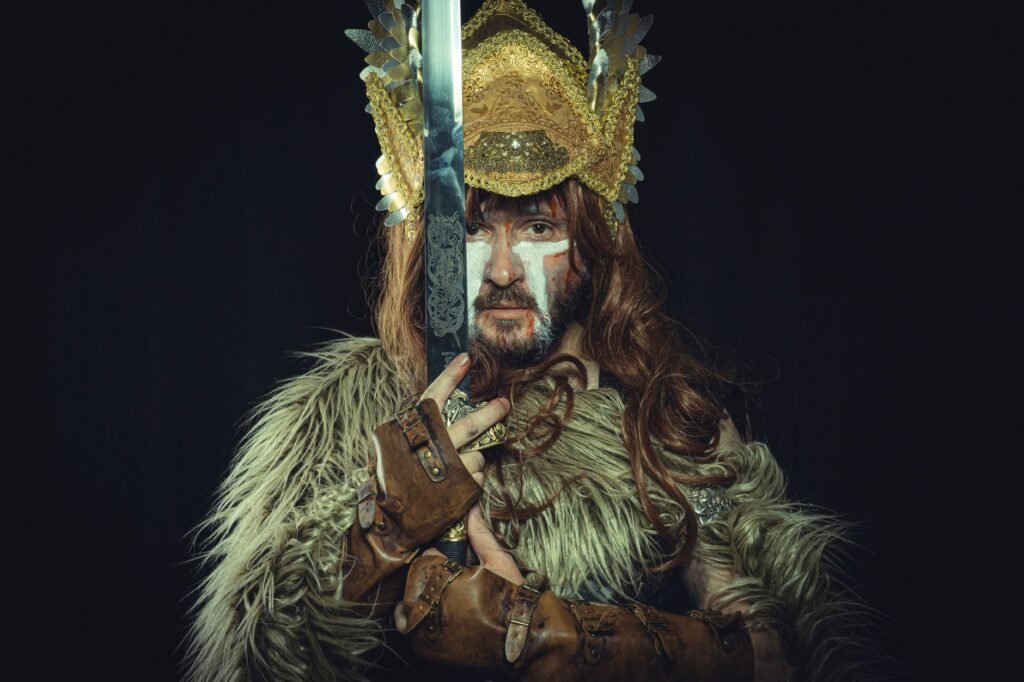
Dagda
Introduction
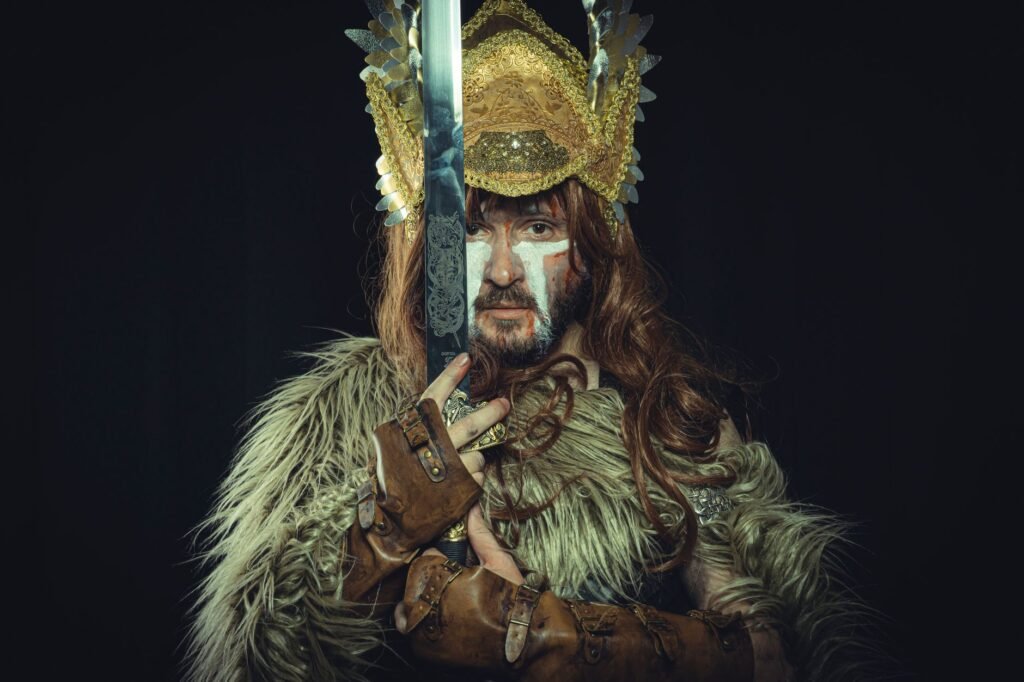
Dagda is one of the most important figures in Irish mythology. He appears in the medieval literary tradition as a powerful deity of the Tuatha Dé Danann, the supernatural race of gods and culture heroes who occupy a central place in the mythological history of Ireland. Often described as a father-like ruler, a master of abundance, wisdom, magic, and sovereignty, the Dagda stands among the best-known figures in the early Irish mythic corpus.
His role is significant not only because of his many powers, but also because he embodies several overlapping functions: fertility, kingship, druidic knowledge, hospitality, and control over life-giving and destructive forces. In modern scholarship, the Dagda is commonly regarded as one of the key deities of pre-Christian Ireland, although the surviving evidence comes mainly from medieval Christian manuscripts that preserve older mythological material in adapted form.
Origin and Meaning
The name Dagda is generally understood as an Old Irish title rather than a personal name in the strict sense. The most common interpretation connects it with the meaning “the good god” or “the great god”. The first element is often linked to dag- meaning “good” or “skillful,” while the second element may reflect dia (“god”) in an older form. However, the exact linguistic history is not entirely certain, and scholars have proposed different explanations.
Some medieval sources present the Dagda as Eochaid Ollathair, meaning “Eochaid the All-Father” or “great father,” emphasizing his paternal and sovereign character. This alternative name suggests that “Dagda” may function as an honorific title, describing his divine status and role rather than his original personal name.
Because the Irish mythological texts were written down centuries after the pre-Christian period, the etymology and original religious meaning of the name cannot be established with absolute certainty. Still, the title clearly conveys excellence, abundance, and divine authority.
Historical Context
The Dagda belongs to the mythological world of early Ireland, especially as preserved in texts from the medieval Irish literary tradition. These sources were composed by Christian scribes, but they often preserve older mythic material, genealogies, and pseudo-historical narratives about the pre-Christian past.
He is closely associated with the Tuatha Dé Danann, the “peoples of the goddess Danu” or, more cautiously, a supernatural tribe of divine beings. In the mythological cycles, they are portrayed as arriving in Ireland before the Milesians, representing a pre-human or semi-divine order. The Dagda appears as one of their most prominent leaders, sometimes acting as a king, sometimes as a druidic authority, and sometimes as a battlefield champion.
The surviving sources reflect a complex cultural setting in which Christian scribes attempted to reconcile native traditions with biblical and classical learning. As a result, the Dagda’s image can vary between texts: at times he appears majestic and noble, at others comic or earthy, even coarse. This mixture is one of the most distinctive features of Irish mythic literature.
Main Characteristics
The Dagda is usually depicted as a figure of immense power and broad competence. He is not a narrow specialist deity; instead, he combines many functions that are often divided among several gods in other mythologies.
Commonly Associated Traits
- Sovereignty and kingship
- Abundance and fertility
- Magic and druidic knowledge
- Protection and battle power
- Hospitality and generosity
- Control over weather and natural forces
- Authority over life, death, and plenty
He is frequently described as physically large, strong, and formidable. Some texts portray him as rustic, even humorous, but this does not diminish his status. Rather, it gives him a distinctly Irish mythological character: a god of power who is also deeply connected to food, land, and practical prosperity.
One of his most famous possessions is an enormous club or mace, often said to kill on one end and restore life on the other. This dual function symbolizes the Dagda’s command over destruction and renewal.
Family and Genealogy
The family relationships of the Dagda vary across sources, which is common in early Irish mythology.
Parents and Origins
In some traditions, the Dagda is identified as Eochaid Ollathair, “Eochaid the All-Father,” a title that emphasizes his paternal and origin-like status rather than naming specific parents. Clear and consistent information about his mother and father is not preserved in the principal mythic narratives.
Spouses
The Dagda is associated with several women in different traditions.
- The Morrígan: In some texts, especially the tale of the battle of Mag Tuired, the Dagda has a sexual and symbolic relationship with the war goddess Morrígan. Their encounter may reflect an alliance between sovereignty, fertility, and battle power.
- Boann: In one famous story, the Dagda fathered Aengus by Boann, the goddess associated with the River Boyne. This relationship is one of the most important in his mythological genealogy.
Children
The Dagda’s children include some major figures of Irish myth:
- Aengus Óg: A major god of love, youth, and poetic inspiration.
- In some traditions, other children are linked to him as well, though the details differ by source.
Genealogical Significance
The Dagda’s descendants help connect him to major divine lineages within Irish myth. His family ties emphasize themes of fertility, dynastic legitimacy, and the continuity of supernatural power.
Symbols
The Dagda is associated with several powerful symbols, many of which express his role as a god of abundance and sovereignty.
| Symbol | Meaning |
|---|---|
| Great club or mace | Power over life, death, and battle |
| Cauldron | Unending abundance, hospitality, nourishment |
| Harper’s instrument or harp | Music, seasonal order, emotional and magical control |
| Large appetite | Fertility, abundance, and the ability to consume and provide |
| Cloak and authority marks | Kingship and status |
The Cauldron of Plenty
One of the Dagda’s best-known objects is a cauldron from which no company ever goes away unsatisfied. This symbolizes inexhaustible hospitality and divine provision. In a society where feasting and status were closely linked, such an object would have had strong cultural resonance.
The Harp
The Dagda is also associated with a harp that can regulate the seasons and influence human emotion. This highlights his power not only over physical abundance but also over cosmic and social harmony.
The Club
His famous club is described in some traditions as being so heavy that it required a cart for transport. Its dual capacity to slay and revive makes it one of the most striking symbolic weapons in Irish mythology.
Sacred Animals
Irish mythological sources do not always assign fixed animal companions to the Dagda in the way that some other deities are linked to particular beasts. However, certain animal associations can be inferred from his functions and stories.
Boar
The boar is often relevant in Irish heroic and divine contexts, symbolizing strength, abundance, and martial force. While not uniquely the Dagda’s animal, it fits his character as a god of plenty and power.
Cattle
Cattle are central to early Irish wealth and kingship, and the Dagda’s identity as a provider and protector of abundance naturally connects him with cattle symbolism.
Horses
As a figure sometimes linked to sovereignty and leadership, the Dagda also belongs within the broader Irish sacred landscape where horses represent status, mobility, and power. His alternate name Eochaid may itself suggest a horse association through the root ech (“horse”), though interpretation is cautious and debated.
Sacred Plants
The surviving sources do not strongly preserve a distinct sacred plant for the Dagda. However, Irish myth frequently connects divine or heroic figures to the fertility of the land, so vegetation symbolism is relevant to his role.
Possible Associations
- Oak: Often associated broadly with strength, kingship, and endurance in Celtic symbolism.
- Sacred groves and trees: Although not uniquely tied to the Dagda, tree symbolism reflects his relationship to land and abundance.
- Seasonal growth: His harp and prosperity functions connect him indirectly to the renewal of nature.
Because direct textual evidence is limited, any specific plant association should be treated cautiously.
Sacred Places
The Dagda is linked to several important locations in Irish myth.
Brú na Bóinne
Perhaps the most famous site associated with him is Brú na Bóinne, the great prehistoric complex on the River Boyne in County Meath. In myth, this is strongly connected with the Dagda, the river goddess Boann, and the conception of Aengus.
The Boyne River
The River Boyne is central to stories involving the Dagda and his family. The river’s mythic importance reinforces the connection between the deity and fertility, sovereignty, and generative power.
Tara and Sovereignty Landscapes
Although not always directly attached to a single shrine, the Dagda belongs to the mythic landscape of royal and sacred centers, especially places associated with kingship, feasting, and divine authority such as Tara and other assembly sites in Irish tradition.
Mag Tuired
The battlefield of Mag Tuired is one of the major settings in which the Dagda appears. There he is involved in the conflict between the Tuatha Dé Danann and the Fomorians, a central mythic struggle in the Irish tradition.
Powers and Attributes
The Dagda’s powers are broad and multifaceted. He is often described as a god of all functions, especially those tied to leadership, fertility, and magical command.
Principal Domains
- Kingship and sovereignty
- Agricultural abundance
- Feasting and hospitality
- Magic and spellcraft
- Battle protection
- Seasonal and cosmic order
- Poetic and musical power
Meaning of His Powers
The Dagda’s attributes reflect a deeply integrated mythological role. He does not merely provide food; he ensures social order through generosity. He does not merely fight; he can restore life. He does not merely play music; he can influence the natural world. These qualities make him a figure of comprehensive divine authority.
In comparative terms, he resembles a “high god” or “father god,” though the surviving Irish sources do not present him in a rigidly theological system. Instead, he functions as a powerful mythic center around which many values gather.
Main Myths
The Battle of Mag Tuired
One of the most important narratives involving the Dagda is the Second Battle of Mag Tuired, in which the Tuatha Dé Danann confront the Fomorians. In this story, the Dagda plays a vital strategic and symbolic role. He is associated with military planning, magical action, and the broader restoration of order.
His relationship with the Morrígan in this context is especially significant. The tale presents them in a union that combines war, fertility, and sovereignty, linking the battle for Ireland with the renewal of the land.
The Union with Boann and the Birth of Aengus
A famous story tells how the Dagda fathered Aengus by Boann. To conceal the pregnancy from Boann’s husband, the Dagda is said to have caused time to stop or to have employed magical deception. This tale has multiple layers of meaning: it explains a divine genealogy, reinforces the Dagda’s magical resourcefulness, and connects him to the river and sacred site of the Boyne.
The Harp and the Seasons
Another well-known episode concerns the Dagda’s harp, often named Uaithne in later tradition. In some versions, enemies steal the harp, but the Dagda summons it with music. The harp then arranges itself to his hand and can also influence the seasons. This story illustrates his command over order, art, and natural cycles.
The Cauldron of Abundance
The Dagda’s cauldron is not always the subject of a single major narrative, but it is one of his defining mythic attributes. It symbolizes inexhaustible provision and the ideal of the hospitable lord who never leaves guests unfed.
Relationship with Other Mythological Figures
The Dagda’s importance is amplified by his interactions with other major characters.
The Morrígan
The Dagda’s relationship with the Morrígan is among the most discussed in Irish mythology. Their union symbolizes the interdependence of kingship, war, and fertility. The Morrígan’s prophetic and battle-oriented character complements the Dagda’s authority and life-giving power.
The Morrígan’s Sisters
In some traditions, the Morrígan is associated with other war figures, and the Dagda’s role in battle narratives brings him into the broader orbit of these deities. Details vary, however, and should not be overstated.
Aengus
Aengus, his son, is one of the most famous gods in the Irish tradition. The relationship between Dagda and Aengus highlights the generational transmission of divine power, especially through the Boyne and Brú na Bóinne complex.
The Fomorians
The Dagda’s conflict with the Fomorians places him in the mythic opposition between order and chaos, fertility and sterility, sovereignty and oppression. Yet Irish myth does not present these groups in a fully moralized way; rather, they are part of a complex supernatural geography.
Worship and Cult
Direct evidence for formal worship of the Dagda in pre-Christian Ireland is limited. Most of what is known comes from literature rather than archaeology or explicit ritual records.
Likely Cultic Roles
Scholars infer that the Dagda may once have had an important religious role connected to:
- Kingship rituals
- Seasonal festivals
- Hospitality and communal feasting
- Protection of the tribe or land
- Fertility and prosperity rites
Evidence and Limits
Because the earliest surviving accounts were written by Christian scribes, they do not preserve a clear liturgy or temple cult. As a result, any reconstruction of pre-Christian worship remains tentative. Still, the Dagda’s prominence suggests that he embodied values central to early Irish social and religious life.
The Role of Feasting
Feasting is one of the strongest cultural themes associated with the Dagda. In early Irish society, the right distribution of food symbolized legitimate rule. A deity whose cauldron never emptied would have represented ideal kingship and divine generosity.
Ancient Sources
The Dagda is known mainly from medieval Irish texts rather than from Greco-Roman authors. Important sources include:
Key Irish Sources
- Cath Maige Tuired (The Battle of Mag Tuired): One of the principal sources for the Dagda’s role in the conflict with the Fomorians.
- Dindshenchas texts: Place-lore narratives that connect him to sacred sites and landscapes.
- Lebor Gabála Érenn (The Book of the Taking of Ireland): A mytho-historical compilation that situates the Tuatha Dé Danann in Ireland’s legendary history.
- Sagas concerning Aengus and the Boyne: Various texts preserve the story of his relation to Boann and his son.
- Later manuscript traditions: These contain further references to his cauldron, harp, and club.
On Classical Authors
Unlike Greek and Roman gods, the Dagda is not described by Homer, Hesiod, Ovid, or Apollodorus. References to him are indigenous to the Irish textual tradition. This is important because it means his study depends primarily on Celtic philology, medieval manuscript criticism, and comparative mythology rather than classical literary sources.
Roman Equivalent
There is no exact Roman equivalent to the Dagda. Scholars sometimes compare him with a combination of Roman deities or divine functions, but such comparisons are only approximate.
Partial Comparisons
- Jupiter: For sovereignty and fatherly authority
- Dis Pater: In some older comparative frameworks, due to wealth and otherworld associations
- Ceres or Liber: In relation to fertility and abundance
- Apollo: Only in limited comparative senses, especially where music or seasonal order is concerned
These parallels should not be taken as equivalences. The Dagda belongs to a distinct Irish mythological system and should be understood on its own terms.
Influence on Modern Culture
The Dagda has become a familiar figure in modern retellings of Celtic mythology and Irish cultural history.
Literature and Scholarship
He appears frequently in:
- Academic studies of Celtic religion
- Retellings of Irish myths for general readers
- Fantasy literature inspired by Celtic themes
Games and Popular Media
The Dagda has also appeared or been referenced in:
- Role-playing games
- Fantasy video games
- Tabletop myth-based settings
- Web fiction and modern pagan-inspired storytelling
In these contexts, he is often portrayed as a powerful nature god, a wise king, or a magical warrior. Popular adaptations sometimes simplify his complex mythic identity, but they keep his essential associations with abundance, power, and wisdom.
Cultural Identity
For many readers and artists, the Dagda is an important symbol of Ireland’s mythological heritage. He appears in discussions of Celtic revivalism, neo-pagan practice, and national cultural memory, though these modern uses often differ significantly from medieval textual traditions.
Curiosities
- The Dagda is one of the few Irish mythic figures whose name literally suggests goodness or excellence.
- His massive club is famous for having opposite effects: one end can kill, the other can restore life.
- He is sometimes portrayed as a kind of “divine everyman,” combining majesty with earthy humor.
- His cauldron has made him a lasting symbol of hospitality and inexhaustible provision.
- The story of his son Aengus is tightly connected to the sacred landscape of the Boyne Valley.
- In some traditions, his harp can regulate the seasons, showing that music and cosmic order are linked in Irish myth.
- The Dagda is often seen as a father figure of the Tuatha Dé Danann, but the surviving sources do not give a single fixed genealogy.
Frequently Asked Questions
Who was Dagda in Irish mythology?
Dagda was a major deity of the Tuatha Dé Danann in Irish mythology, associated with kingship, abundance, magic, battle, and hospitality.
What does the name Dagda mean?
The name is generally understood to mean “the good god” or possibly “the great god,” though the exact etymology is debated.
What are Dagda’s main symbols?
His best-known symbols are a great club, a cauldron of plenty, and a harp associated with control over music and the seasons.
Was Dagda a god of war?
He was not only a war god, but he did have strong battlefield associations. His role was broader, including fertility, sovereignty, and protection.
Who were Dagda’s children?
His most famous child is Aengus. Different texts preserve different genealogical details, but Aengus is the best-attested descendant.
Is Dagda connected to the Morrígan?
Yes. Several traditions link the Dagda and the Morrígan, especially in the context of the Battle of Mag Tuired.
Was Dagda worshipped in temples?
There is no clear evidence of temples dedicated specifically to Dagda. Evidence for his worship is indirect and comes mainly from medieval literature.
Is Dagda the same as a Roman god?
No exact Roman equivalent exists. He is sometimes compared with Jupiter or other gods, but these are only partial analogies.
Conclusion
Dagda occupies a central place in Irish mythology as a powerful, many-sided divine figure. He is at once a father, king, magician, warrior, and provider. Through his cauldron, club, harp, and family relationships, he embodies the deep connection in early Irish thought between sovereignty, fertility, feasting, and sacred order.
Although the surviving evidence comes through medieval manuscripts rather than direct pagan records, Dagda remains one of the clearest windows into the mythic imagination of Ireland. His enduring presence in scholarship, literature, and popular culture reflects the lasting appeal of a deity who represents not a single domain, but the fullness of life itself.

Orin Vale has spent the better part of two decades tracing the threads that connect the world’s oldest stories — from the halls of Asgard to the banks of the Nile, from Olympus to the jungles of the Maya. What began as a childhood fascination with flood myths and trickster gods grew into years of independent study across comparative mythology and ancient religion, always chasing the same question: what did these stories mean to the people who first told them? Orin writes for readers who want more than trivia — the ones looking for the beliefs, fears, and truths that myths were built to carry.