Danu
Introduction
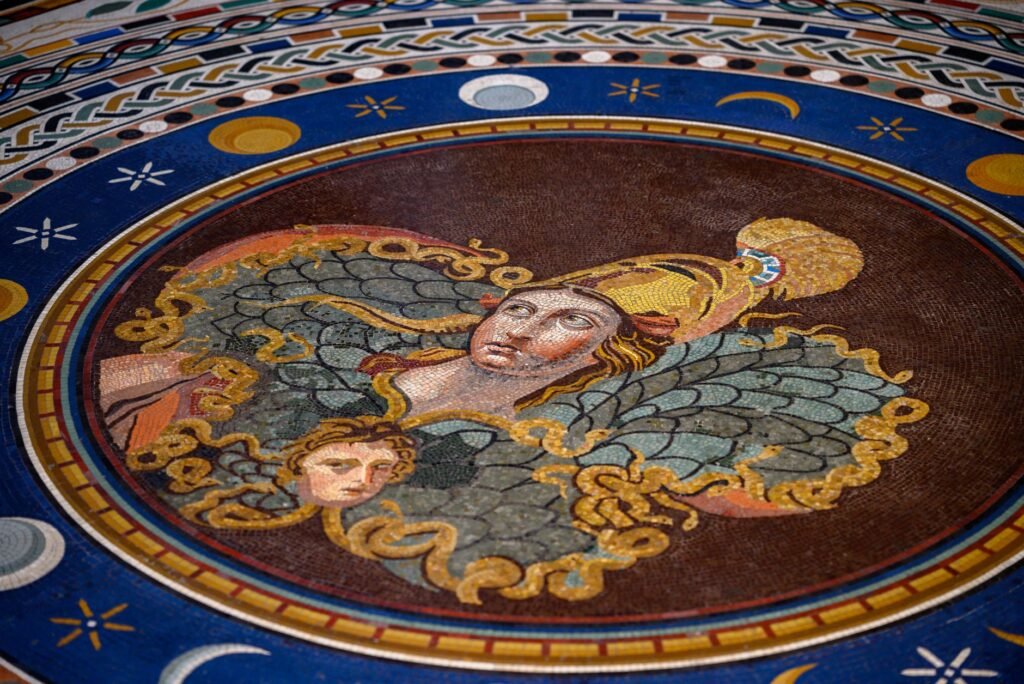
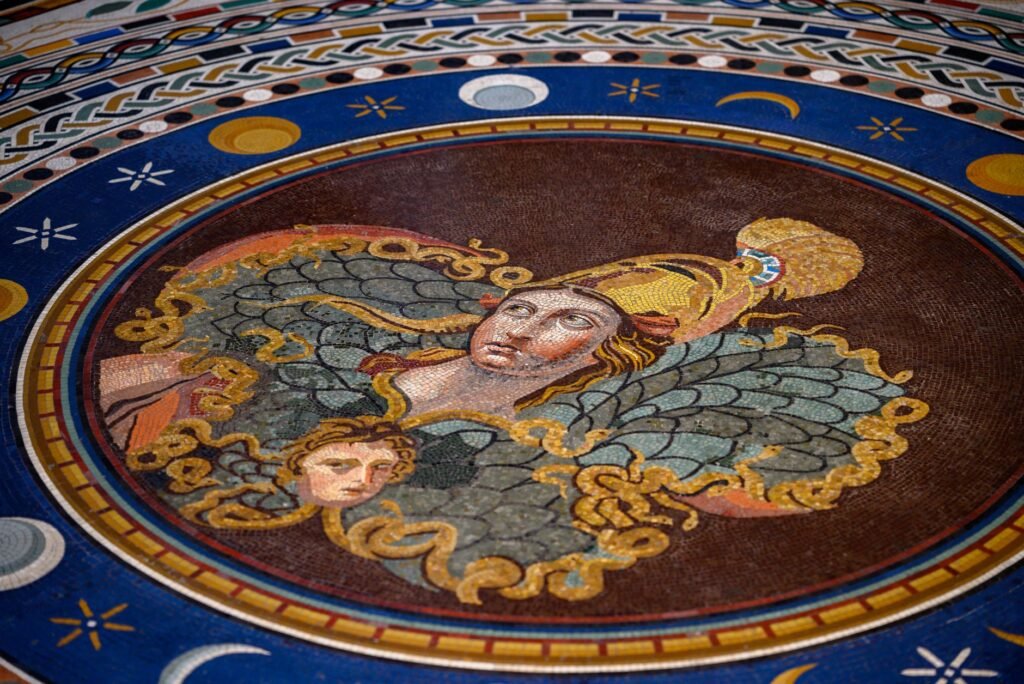
Danu is a name associated with several female divine figures in Indo-European mythology, most famously in the Irish tradition as a putative mother-goddess of the Tuatha Dé Danann, and in older Indo-Iranian contexts as a river or water deity linked to abundance, flow, and fertility. The figure is important not because there is a single universally agreed mythology of Danu, but because the name appears across related traditions in ways that suggest deep antiquity and broad symbolic meaning.
In Irish mythological studies, Danu is often treated as the ancestral mother of the Tuatha Dé Danann, the supernatural people who play a central role in medieval Irish literature. In Vedic and later Hindu tradition, a related name, Danu, appears as a primordial figure associated with waters and as the mother of the demon-like Danavas. In scholarship, the name is also discussed in relation to ancient river names such as the Danube, Don, Dniester, and Dnieper, which may preserve a very old Indo-European root connected with rivers and flowing water.
Because the evidence comes from different cultures and periods, Danu should be understood as a cluster of related mythic ideas rather than a single uniform deity with a fixed biography.
Origin and Meaning
The etymology of Danu is usually linked to an ancient Indo-European root associated with flowing water, rivers, and moisture. Linguists have connected the name with a Proto-Indo-European form often reconstructed as danu-, meaning something like “river” or “flowing water.” This proposed root appears in several river names across Europe and Asia.
Linguistic and historical significance
The name appears in different traditions in forms that are likely related but not identical in meaning:
- Irish Danu: generally interpreted as a divine maternal figure, though the medieval Irish texts do not clearly define her nature.
- Vedic Danu: a primordial mother of the Danavas, associated with waters and opposition to the gods in some mythic narratives.
- River names: many large rivers in Europe may preserve the same ancient root.
Related river-name evidence
Scholars often point to major rivers whose names resemble Danu:
| River name | Region | Possible relevance |
|---|---|---|
| Danube | Central and Eastern Europe | Often cited as preserving the ancient river root |
| Don | Russia | Related by linguistic comparison |
| Dniester | Eastern Europe | Possibly preserves the same river-name element |
| Dnieper | Eastern Europe | Often discussed in the same family of names |
This does not prove a single historical cult of Danu everywhere these names occur, but it does suggest that the name belongs to a very old layer of Indo-European religious language.
Historical Context
Danu appears in several cultural environments, and its meaning changes according to each tradition.
In Irish tradition
The Irish evidence comes mainly from medieval manuscripts written by Christian scribes who preserved older oral traditions. In these texts, the Tuatha Dé Danann are a supernatural race or people associated with divine power, wisdom, magic, and sovereignty. Danu herself is not extensively described in surviving Irish texts, and some scholars note that her role is inferred from the group’s name rather than directly narrated in myth.
In Indo-Iranian tradition
In the Rigveda and later Hindu literature, Danu is a primordial figure associated with waters and the mother of the Danavas. In these texts, the Danavas often appear as antagonists of the gods, especially the Devas. The mythic setting is different from the Irish one, but the name’s association with ancient waters and primordial generation is similar.
In comparative mythology
Danu is important in comparative studies because the name may preserve an archaic divine concept shared by early Indo-European-speaking peoples. Scholars caution, however, that comparison does not mean identity. The Irish and Vedic figures are not the same deity in a historical sense, and each tradition developed independently within its own religious world.
Main Characteristics
Because Danu is not described in a large number of surviving sources, her characteristics must be reconstructed carefully.
Commonly associated traits
Across traditions and scholarly interpretations, Danu is linked with:
- Motherhood
- Fertility
- Waters and rivers
- Primordial abundance
- Ancestry and descent
- Divine or semi-divine lineage
In Irish interpretation
In Irish mythology, Danu is usually understood as a maternal ancestor rather than an active narrative character. She is associated with the Tuatha Dé Danann, whose name is often interpreted as “the people of the goddess Danu” or “the people of the goddess Anu/Danu,” though the exact relationship between Danu and Anu is debated.
In Vedic interpretation
In Vedic literature, Danu is more clearly a primordial mother figure. She belongs to the mythic age of origins and is associated with the generation of hostile beings or forces opposed to divine order.
Family and Genealogy
Genealogy is one of the most uncertain aspects of Danu, especially in the Irish tradition.
Irish tradition
In Irish mythological literature:
- Danu is often treated as the eponymous mother of the Tuatha Dé Danann.
- Her children are not individually named as her offspring in a consistent surviving genealogy.
- Some modern discussions connect her with Anu, another divine female figure, but the relationship is not settled.
The Tuatha Dé Danann themselves are a complex group of deities or mythic beings, including figures such as Dagda, Brigid, Lugh, Nuada, and the Morrígan, depending on the text and tradition.
Vedic and Hindu tradition
In the Vedic and Puranic traditions:
- Danu is a daughter of Daksha in some later accounts.
- She is the mother of the Danavas, a class of beings often opposed to the gods.
- Some texts describe her as associated with the primordial waters.
Genealogical comparison
| Tradition | Status of Danu | Descendants |
|---|---|---|
| Irish | Maternal ancestor or divine eponym | Tuatha Dé Danann |
| Vedic/Hindu | Primordial mother | Danavas |
| Comparative Indo-European | Ancient river-linked divine figure | Not consistently specified |
Symbols
There is no universally fixed iconography for Danu, especially in the Irish tradition, where no ancient cult images survive.
Common symbolic associations
Danu is often linked with:
- Water
- Rivers
- Flow and fertility
- Motherhood
- Sacred land and sovereignty
- Abundance and nourishment
Possible symbolic colors and objects
No single color or ritual object is securely attested as exclusive to Danu. However, in modern reconstructions and symbolic interpretation, the following are often associated with her:
- Blue or green, for water and fertility
- Silver, for moonlike or flowing qualities
- Bells, bowls, or cauldrons, by broader association with feminine abundance in Celtic symbolism
These are interpretive associations rather than firmly documented ancient attributes.
Sacred Animals
Ancient sources do not provide a fixed list of sacred animals for Danu. Still, modern interpretations often connect her with animals associated with water, fertility, and liminality.
Commonly suggested symbolic animals
- Salmon: often linked with wisdom and sacred waters in Irish tradition
- Cows: associated with abundance, nourishment, and sovereignty in Celtic culture
- Swans: connected with otherworldly beauty and transformation
- Stag or deer: more generally linked with the wild sacred landscape
- Snakes or serpentine forms: in comparative symbolism, connected with flowing water and earth power
These associations should be treated as interpretive rather than directly attested as Danu’s exclusive animal symbols.
Sacred Plants
No plant is universally and securely identified as Danu’s own sacred plant. Nevertheless, several plants are often associated with her through broader Celtic or Indo-European symbolism.
Plants often linked by interpretation
- Oak: strength, endurance, sacred kingship
- Hazel: wisdom and sacred knowledge in Irish tradition
- Willow: water, flexibility, and feminine lunar symbolism
- Reeds and aquatic plants: direct association with rivers and marshes
- Rowan: protective and liminal in later Celtic folklore
Again, these are contextual associations. They reflect the landscape of divine femininity and sacred nature rather than a single formally documented cult plant for Danu.
Sacred Places
No ancient temple or sanctuary unquestionably dedicated to Danu is known from surviving evidence. However, sacred geography is important in understanding her symbolism.
River landscapes
Because the name Danu is linked to water and river names, rivers themselves are the most significant sacred places associated with the goddess or divine figure. In comparative terms, the Danube and related rivers are often discussed as linguistic and mythic echoes of the same ancient root.
Irish sacred landscape
In Irish tradition, divine figures are often connected with:
- Hills
- Mounds
- Wells
- Rivers
- Sacred territories
Danu is not tied to a single canonical site in the surviving texts, but the Tuatha Dé Danann are closely associated with the landscape of Ireland, especially the idea that sacred power is distributed through land, water, and ancestral places.
Vedic landscape
In the Vedic world, waters are themselves sacred. Danu’s association with the primordial waters places her within a cosmology where rivers, streams, and cosmic waters are central to creation and divine life.
Powers and Attributes
Danu’s powers differ according to the tradition in question, but several themes recur.
Core domains
- Motherhood and ancestry
- Waters, rivers, and fluid abundance
- Primordial creative force
- Connection to divine or semi-divine peoples
- Fertility and nourishment
- Otherworldly legitimacy and sacred origin
In Irish myth
Danu’s power is mostly implicit. She functions as an ancestral source of the Tuatha Dé Danann, implying authority over lineage, identity, and inherited sacred status. Her name signals the divine origin of a people who possess magical skill, sovereignty, and cultural knowledge.
In Vedic myth
Danu is more active as a mythic mother of beings who challenge the gods. Here her power is linked to primordial generation and the dangerous potency of the pre-cosmic or pre-ordered world.
Main Myths
The surviving myths connected with Danu vary significantly from one tradition to another.
Danu in Irish myth
Danu herself does not appear prominently in narrative episodes in the major mythological cycles. Instead, her name is embedded in the collective identity of the Tuatha Dé Danann.
The most important mythic idea is that this people:
- arrive in Ireland with extraordinary knowledge and powers,
- represent a supernatural or semi-divine race,
- and are later displaced by the Milesians in the mythic history of Ireland.
Danu functions as the ancestral figure behind their group identity.
Danu in Vedic and Hindu myth
In the Vedic and later Hindu traditions, Danu is a more explicit mythic mother. She is associated with the Danavas, and her descendants are frequently enemies of the gods. In some broader mythic patterns, this makes her part of the cosmic struggle between divine order and disruptive primordial forces.
Comparative significance of the myths
The myths surrounding Danu tend to emphasize:
- origin from waters,
- maternal generation,
- and a link between sacred ancestry and power.
Rather than a detailed story cycle, Danu represents a mythic source.
Relationship with Other Mythological Figures
Danu’s relationships depend heavily on cultural context.
In Irish tradition
Danu is associated with:
- The Tuatha Dé Danann: the divine people named after her
- Anu: sometimes treated as related or possibly conflated in scholarly debate
- Other Tuatha Dé Danann figures such as the Dagda, Brigid, Lugh, and the Morrígan, who belong to the same mythic family or people
There is no major Irish myth in which Danu is portrayed as having interpersonal conflict or rivalry. Her role is more genealogical and symbolic.
In Vedic tradition
Danu is linked to:
- The Danavas, her offspring
- The Devas, with whom the Danavas are often in conflict
- Other primordial maternal figures, in comparative terms
This makes her part of a broader mythic network involving generation, opposition, and cosmic struggle.
Scholarly caution
The temptation to merge all Danu figures into one universal goddess should be resisted. Similar names may point to a shared linguistic heritage, but the religious meanings are shaped by separate traditions.
Worship and Cult
Direct evidence for a historical cult of Danu is limited and varies by region and period.
Irish evidence
There is no clear archaeological or textual record of a well-defined cult center for Danu. Medieval Irish texts preserve mythological memory rather than detailed liturgy. If Danu was worshipped in pre-Christian Ireland, the surviving evidence does not allow precise reconstruction.
Possible forms of veneration
Modern neopagan and revival traditions may honor Danu as:
- a mother goddess,
- a patron of rivers and fertility,
- a symbol of ancestral Irish spirituality.
These modern practices are not the same as ancient worship, though they draw inspiration from the old material.
Vedic and later Hindu tradition
In the Vedic sphere, Danu is not among the most prominent deities of mainstream ritual worship. She appears more as a mythic ancestor or cosmological figure than as a major object of daily cult.
Ancient Sources
The evidence for Danu is scattered and indirect. Different sources contribute different pieces of the picture.
Irish sources
Important Irish mythological and historical texts include:
- Lebor Gabála Érenn (The Book of Invasions)
- Other medieval Irish narrative and genealogical materials referring to the Tuatha Dé Danann
These texts are essential, but they were written down long after the earlier oral traditions they preserve.
Vedic and later Indian sources
Relevant Indian sources include:
- the Rigveda, where Danu appears in early mythic contexts
- later Puranic literature, where she is described as a mother of the Danavas
Classical and comparative scholarship
While Danu is not a major figure in Greek or Roman literature, comparative scholars often discuss her alongside ancient hydronyms and Indo-European mythic structures. This work is interpretive and should be distinguished from primary-source testimony.
Roman Equivalent
There is no exact Roman equivalent of Danu.
If the name is considered in a comparative religious sense, scholars sometimes compare her to Roman or Italic figures associated with:
- fertility,
- waters,
- motherhood,
- or river divinity.
However, no Roman goddess matches Danu precisely in mythic identity or function. The Roman tradition has river gods and maternal deities, but these are not direct counterparts.
Influence on Modern Culture
Danu has had a notable afterlife in modern culture, especially through Celtic-inspired spirituality, fantasy literature, and popular mythology.
Modern spiritual and religious use
In contemporary pagan and neopagan contexts, Danu is often treated as:
- a mother goddess of the Celts,
- a symbol of feminine creative power,
- a river and earth deity,
- or a deity of ancestry and land.
Literature and fantasy
Modern authors of fantasy and myth-inspired fiction sometimes use Danu or the Tuatha Dé Danann as symbols of ancient magical Ireland. The name appears in works influenced by Celtic revivalism and modern mythic storytelling.
Games and media
Danu and the Tuatha Dé Danann have also appeared in:
- role-playing games,
- fantasy novels,
- video games,
- and other media drawing on Celtic mythology.
In these settings, the figure is often adapted freely and may differ significantly from the historical sources.
Cultural importance
Danu’s modern appeal lies in her flexibility. She can represent:
- the life-giving river,
- the mother of a mythic people,
- ancestral continuity,
- or the hidden depths of pre-Christian mythology.
Curiosities
- The name Danu is often discussed alongside major European rivers, suggesting that river worship or river naming may preserve extremely ancient religious language.
- In Irish tradition, Danu is famous partly because she is so obscure: her name is central, but her direct myths are few.
- The Tuatha Dé Danann are one of the most celebrated groups in Irish legend, yet the figure behind their name remains elusive.
- Some scholars emphasize Anu more than Danu in Irish material, while others treat the two as related or possibly conflated by later tradition.
- In comparative mythology, Danu is a good example of how a single divine name can survive in different forms, meanings, and religious systems.
- The figure illustrates the challenge of studying ancient myth: names may survive even when stories are fragmentary or transformed.
Frequently Asked Questions
1. Who is Danu in mythology?
Danu is a mythic female figure associated with Irish and Indo-Iranian traditions, usually linked to motherhood, waters, fertility, and ancestral origins.
2. Is Danu a Celtic goddess?
Danu is commonly described as a Celtic goddess in modern writing, especially in relation to the Tuatha Dé Danann. However, the surviving medieval Irish sources do not give a detailed direct portrayal of her, so this identification is partly reconstructed.
3. What does the name Danu mean?
The name is generally connected by scholars to an ancient root meaning river or flowing water.
4. Was Danu worshipped in ancient Ireland?
There is no definitive surviving evidence for a formal ancient cult of Danu, although she may reflect older pre-Christian religious ideas.
5. What are the Tuatha Dé Danann?
The Tuatha Dé Danann are a supernatural people in Irish mythology, often translated as the “people of the goddess Danu” or related through the same divine name tradition.
6. Is Danu the same as Anu?
Not necessarily. Some scholars connect them, while others treat them as distinct or only partially overlapping figures. The sources do not give a final answer.
7. Does Danu appear in Hindu mythology too?
Yes. In Vedic and Hindu traditions, Danu is a primordial mother figure associated with the Danavas and with older cosmic or watery forces.
8. Why is Danu important today?
Danu is important because she connects mythology, linguistic history, and comparative religion. She is also influential in modern Celtic-inspired spirituality and popular culture.
Conclusion
Danu is one of the most intriguing names in comparative mythology because she sits at the intersection of Irish legend, Indo-Iranian myth, and ancient river symbolism. Although the surviving evidence is fragmentary, the figure consistently evokes motherhood, waters, fertility, ancestry, and primordial divine power.
In Irish tradition, Danu is best known as the namesake or ancestral mother of the Tuatha Dé Danann. In Vedic tradition, she is a primordial mother linked to the Danavas and the ancient waters. Across both contexts, the name suggests a very old religious idea tied to flow, life, and origin.
Danu’s legacy lies not in a single unified story, but in the endurance of a divine name that has survived through centuries of myth, language, and reinterpretation.

Orin Vale has spent the better part of two decades tracing the threads that connect the world’s oldest stories — from the halls of Asgard to the banks of the Nile, from Olympus to the jungles of the Maya. What began as a childhood fascination with flood myths and trickster gods grew into years of independent study across comparative mythology and ancient religion, always chasing the same question: what did these stories mean to the people who first told them? Orin writes for readers who want more than trivia — the ones looking for the beliefs, fears, and truths that myths were built to carry.