Dian Cecht
Introduction
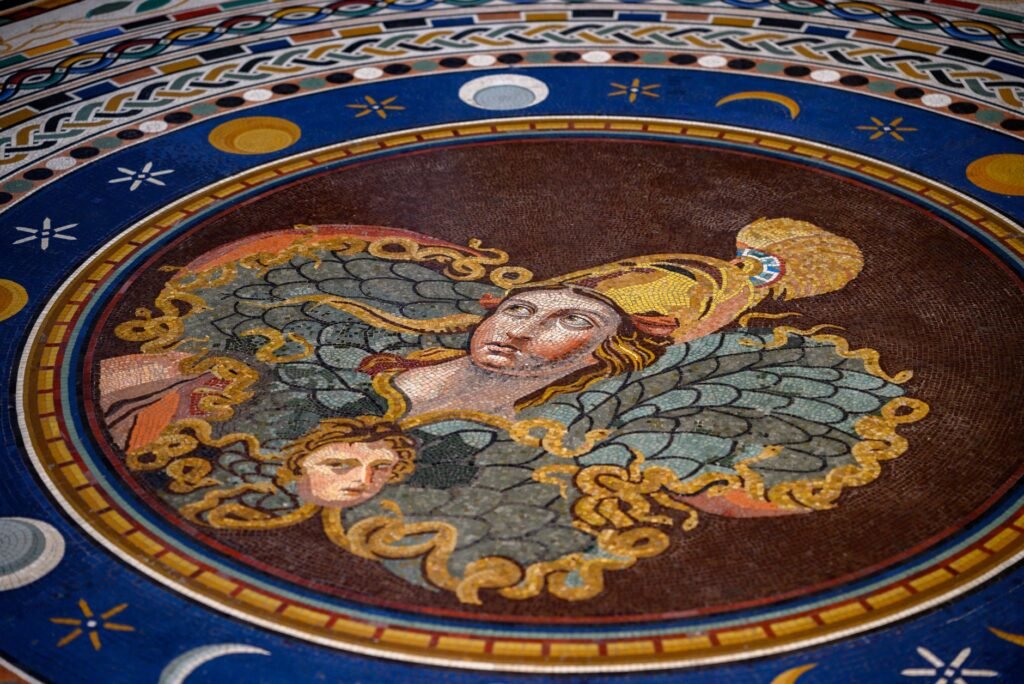
Dian Cecht is one of the most important healing deities in Irish mythology. Known as a divine physician of the Tuatha Dé Danann, he appears in medieval Irish literary tradition as a master of medicine, healing, and restorative craft. His stories place him at the center of several major mythological episodes, especially those involving the recovery of injured warriors and the preservation of the Tuatha Dé Danann as a people.
Although he is not as widely known outside Celtic studies as figures such as Lugh or the Dagda, Dian Cecht is significant because he represents a distinctly Irish conception of healing power: not merely the absence of illness, but the ability to restore life, replace what is lost, and even produce miraculous cures through knowledge and divine skill. In the Irish mythological cycle, he stands as both a benevolent healer and a sometimes severe, competitive figure whose actions can be morally ambiguous.
Origin and Meaning
The name Dian Cecht is generally understood in Old Irish tradition as a personal name associated with medical expertise, though its precise etymology is not entirely certain. The second element, Cecht, is often linked by scholars to healing, medicine, or a healing implement, but ancient sources do not provide a definitive explanation. The first element, Dian, is commonly interpreted as meaning “swift,” “keen,” or “ardent,” suggesting a sense of energetic or effective action.
Because the name comes down through medieval Irish manuscripts, its original pre-Christian form and full linguistic history remain difficult to reconstruct with certainty. What is clear is that later Irish tradition treated Dian Cecht as a divine physician whose name itself was already closely associated with healing.
Historical Context
Dian Cecht belongs to the mythological cycle of Irish literature, preserved mainly in medieval manuscripts composed by Christian scribes but drawing on older oral traditions. These stories were written in a period when Ireland had already been Christianized, yet they retained many pre-Christian mythic motifs, divine lineages, and heroic narratives.
The Tuatha Dé Danann, Dian Cecht’s divine community, are usually described as a supernatural people associated with skill, sovereignty, and otherworldly knowledge. Within this context, healing was not separated from magic, wisdom, or sacred craft. A physician in mythic Ireland could heal by knowledge, ritual, supernatural objects, and inherited power.
Dian Cecht reflects the broader Celtic idea that medicine was a high and specialized art. He is not simply a folkloric healer; he is a divine figure whose medical authority is embedded in the structure of the mythological world. His presence in the tales of war and restoration also shows that healing was seen as essential to kingship, survival, and cosmic order.
Main Characteristics
Dian Cecht is primarily characterized as:
- A divine physician and healer
- A member of the Tuatha Dé Danann
- A father of several other healers
- A figure associated with miraculous restoration
- A powerful but sometimes severe and competitive personality
In mythic episodes, he often acts after battle to heal the wounded of his own people. His most famous role is in the story of the Second Battle of Mag Tuired, where he restores wounded warriors and fashions a healing well or medical method that enables the Tuatha Dé Danann to continue fighting.
However, he is not always portrayed as purely compassionate. In some stories, he responds harshly to challenges or competition, especially from his son Miach, whose superior healing ability creates conflict within the family. This dual aspect—beneficent healer and jealous rival—makes Dian Cecht one of the more complex figures in Irish mythology.
Family and Genealogy
Traditions differ somewhat on Dian Cecht’s family connections, as is common in medieval Irish mythological material. The most stable and widely attested relationships are summarized below.
| Relationship | Name | Notes |
|---|---|---|
| Father | Ethniu or related figures in some traditions | The sources are not fully consistent; some genealogies are complex or unclear |
| Children | Oirmiach, Miach, Airmed, Etar or others depending on source | The best-known children in myth are Miach and Airmed |
| Grandchildren | Not prominently attested | No major genealogical cycle is centered on descendants |
Children
The most famous children of Dian Cecht are Miach and Airmed, both associated with healing. In the best-known narrative, Miach surpasses his father in medical knowledge by restoring the severed arm of the wounded king Nuada. Dian Cecht becomes enraged and kills Miach, after which Airmed laments and carefully gathers medicinal herbs from Miach’s grave. According to the tale, the herbs of the world were then scattered in confusion, explaining why human medicine remains incomplete.
This story gives Dian Cecht a complicated place in the family structure of Irish myth. He is both the source of healing knowledge and the figure whose jealousy prevents its full perfection.
Spouses
Irish sources do not consistently foreground a spouse for Dian Cecht in the way they do for some other mythic figures. His marital relations are not a major focus of the surviving narratives, and different genealogical traditions may vary.
Symbols
There is no single universally fixed set of symbols for Dian Cecht in the surviving medieval texts, but several objects and motifs are associated with him.
Commonly associated symbolic elements
- Healing well or bath: linked to restoration and purification
- Silver hand or restored limb: tied to the healing of Nuada
- Herbs and medicinal plants: associated especially with Airmed’s lore
- Spear or weapons of battle: indirectly connected through healing warriors after combat
- Sacred craft objects: reflecting the technical, specialized nature of healing
The well of healing is one of the most important symbolic images tied to Dian Cecht. In some versions of the myth, he and his children heal the wounded of the Tuatha Dé Danann by placing them in a restorative vat or well. This object symbolizes healing as immersion, transformation, and divine procedure.
Sacred Animals
The medieval sources do not preserve a strong and standardized list of sacred animals for Dian Cecht. Unlike deities more clearly linked to particular animals, his identity is defined more by medical action than by animal symbolism.
That said, in the broader world of Irish myth, animals often mark otherworldly power, and healing figures may be associated indirectly with:
- Cattle, as indicators of wealth, vitality, and prosperity
- Birds, as symbols of knowledge or messengers between realms
- Dogs, occasionally linked to healing or protection in Celtic tradition more broadly
These connections are interpretive rather than explicit. Any claim of a firmly established sacred animal for Dian Cecht should be treated cautiously.
Sacred Plants
The strongest plant connection in Dian Cecht’s mythic tradition comes through Airmed, his daughter. After Miach’s death, Airmed spreads or sorts the herbs of the world over his grave, and each herb corresponds to a different healing use. Dian Cecht, however, disrupts the process in some accounts, causing the knowledge to be lost to humanity.
Plants and healing lore
This episode makes herbs central to the mythic memory of Dian Cecht:
- Medicinal herbs represent complete healing knowledge
- Herb classification reflects the idea of ordered medical wisdom
- Loss of the herbs’ arrangement symbolizes the incompleteness of human medicine
Specific plants are not consistently named in the surviving tradition. The emphasis is not on one holy plant but on the totality of medicinal vegetation as a divine science.
Sacred Places
Dian Cecht is associated with several mythic locations, especially those connected to the Tuatha Dé Danann and their battles.
Important places in the tradition
| Place | Association |
|---|---|
| Mag Tuired | Site of the major battle in which Dian Cecht heals the wounded |
| The healing well or bath | Mythic site of restoration and medical intervention |
| Otherworldly lands of the Tuatha Dé Danann | General divine setting for his activity |
| Ireland’s mythic royal landscapes | Context for his healing of kings and warriors |
Mag Tuired
The Second Battle of Mag Tuired is the most important geographical setting in Dian Cecht’s surviving narrative tradition. This great conflict between the Tuatha Dé Danann and the Fomorians becomes the stage for his healing interventions. The place itself is a mythic battlefield rather than a historically identifiable site, though later tradition associated Mag Tuired with areas in western Ireland.
Healing waters
The idea of healing through water appears in some stories connected to Dian Cecht. Water is a common sacred medium in Celtic tradition, and in this context it becomes a vehicle of divine medical power.
Powers and Attributes
Dian Cecht’s powers center on healing, restoration, and medical expertise. His mythic role extends beyond simple cure.
Main powers and domains
- Healing wounds
- Restoring severed limbs
- Medical knowledge
- Herbal lore
- Treatment of warriors after battle
- Supernatural or miraculous restoration
- Punitive or destructive action when challenged
His best-known feat is the restoration of Nuada Airgetlám (“Nuada of the Silver Hand”). After Nuada loses his hand in battle, kingship becomes problematic because bodily wholeness was closely tied to sovereignty and legitimacy. Dian Cecht fashions a replacement hand so effective that Nuada can continue to rule. In some traditions, this replacement is silver; in others, the emphasis is on the restored functionality rather than the material itself.
Healing and kingship
Dian Cecht’s medicine is not merely personal care. It has political and cosmic consequences. By restoring a king, he helps preserve the right order of the Tuatha Dé Danann. Healing, in this sense, supports sovereignty and social stability.
Main Myths
Dian Cecht appears in several important mythological episodes. The most significant are summarized below.
Healing Nuada’s wound
One of Dian Cecht’s most famous acts is healing Nuada, whose hand is severed in battle. Since a king in early Irish myth should be physically whole, the injury has major consequences. Dian Cecht creates a replacement hand, allowing Nuada to remain connected to kingship.
Different traditions vary in how they describe the replacement. Some emphasize a silver prosthetic; others focus on its magical efficacy. The story highlights both the importance of bodily integrity and the extraordinary skill of the divine physician.
The healing of the wounded at Mag Tuired
During the battle against the Fomorians, Dian Cecht, together with his son and daughter, uses a healing system or bath to restore wounded Tuatha Dé Danann warriors. The myth describes a near-miraculous medical process in which the injured are placed in the healing medium and emerge renewed.
This story shows Dian Cecht as a battlefield physician on a grand scale. He is not just a doctor of individuals; he is a healer of a whole divine people.
The death of Miach
The most dramatic story involving Dian Cecht is the killing of his son Miach. Miach restores Nuada’s original flesh and bone more completely than the silver hand had done, surpassing his father’s work. Enraged by this challenge to his authority, Dian Cecht kills him.
The tale has several layers of meaning:
- It explains the fragmentation of complete medical knowledge
- It presents rivalry between generations of healers
- It shows that even divine skill may be limited by jealousy and violence
The herbs of Airmed
After Miach’s death, Airmed carefully arranges the medicinal herbs over his grave. She is said to know the healing properties of every herb, but Dian Cecht disrupts or scatters them. As a result, the full knowledge of herbal medicine is lost to humankind.
This is one of the most important mythic explanations for why human medicine is partial rather than complete. It also gives Dian Cecht a paradoxical role: he is the guardian of healing knowledge, yet also the reason it is not wholly available.
Relationship with Other Mythological Figures
Dian Cecht’s importance becomes clearer through his interactions with other figures in Irish myth.
Nuada
Dian Cecht’s relationship with Nuada is fundamental. By healing Nuada’s injury, he enables the king to remain active in the story of the Tuatha Dé Danann. Nuada is both a patient and a symbol of restored sovereignty.
Miach
The relationship with Miach is marked by competition and tragedy. Miach’s greater skill threatens Dian Cecht’s authority, leading to patricide in the mythic sense of a father destroying a more gifted son. This is one of the clearest examples of intergenerational conflict in Irish mythic medicine.
Airmed
Airmed is associated with herbal wisdom and lamentation. Her role contrasts with her father’s destructive jealousy. She preserves the memory of healing knowledge even though it is ultimately made inaccessible to ordinary people.
The Tuatha Dé Danann
Within the larger divine community, Dian Cecht functions as a specialist. He is not usually a ruler or warrior-king, but a crucial support figure whose skills make victory and survival possible.
The Fomorians
Dian Cecht’s main opposition is indirect: he works against the destructive power of the Fomorians by healing the Tuatha Dé Danann after battle. He is thus part of the mythic struggle between ordered divine society and chaotic hostile forces.
Worship and Cult
Unlike some gods of the ancient world, Dian Cecht has no clearly documented surviving cult in the form of temples, inscriptions, or securely identifiable ritual calendars. The medieval texts are literary sources, not straightforward records of living pre-Christian worship.
What can be said with caution
- He was remembered as a divine healer
- Healing lore may have been associated with sacred tradition or professional knowledge
- His name survived in mythological literature rather than in direct archaeological cult evidence
Because the sources are indirect, it is not possible to reconstruct a precise cult of Dian Cecht. Any claim of a standardized priesthood, shrine network, or formal festival would go beyond the evidence.
Ritual significance
Even without direct cult evidence, his stories imply that healing had sacred dimensions:
- medical treatment as a divine craft
- herbs as holy or inherited knowledge
- restoration of kings and warriors as matters of cosmic order
Ancient Sources
Dian Cecht is known mainly from medieval Irish literature preserved in manuscripts. He is not a figure from Greco-Roman literature, so the source base is different from that for classical gods.
Key sources and traditions
- The Second Battle of Mag Tuired: the most important narrative source for Dian Cecht
- The Lebor Gabála Érenn (Book of Invasions): provides broader mythological context for the Tuatha Dé Danann
- Sanas Cormaic (Cormac’s Glossary): useful for names and mythic references
- Other medieval Irish texts and later compilations that preserve fragments of mythic genealogy and healing lore
Because manuscripts often reflect editorial shaping by Christian scribes, scholars treat these texts critically. They preserve older material, but not in a fully transparent form. As a result, some details about Dian Cecht vary from source to source.
Roman Equivalent
Dian Cecht does not have a perfect Roman equivalent. If a comparison is necessary, he is sometimes loosely compared with Aesculapius or Apollo because of his connection to healing. However, these parallels are only approximate.
Why the comparison is limited
- Aesculapius is primarily a god of medicine and healing
- Apollo has broader associations, including healing, plague, and prophecy
- Dian Cecht is more specifically a mythic physician within the Tuatha Dé Danann cycle
Any Roman comparison should therefore be understood as functional rather than exact. Dian Cecht is best studied on his own terms within Irish tradition.
Influence on Modern Culture
Dian Cecht has a modest but growing presence in modern cultural discussions of Celtic mythology. He appears in:
- Books on Irish mythology
- Academic studies of Celtic religion
- Fantasy literature drawing on the Tuatha Dé Danann
- Role-playing games and mythology-based game settings
- Internet references, encyclopedias, and educational materials
He is less prominent in mainstream film and television than figures such as Cú Chulainn or the Dagda, but he often appears in works that explore healer archetypes, magical medicine, or the lost knowledge of herbs.
Modern significance
Modern readers are often drawn to Dian Cecht because he combines:
- ancient medical symbolism
- the mystery of lost herbal knowledge
- themes of family conflict
- the idea of healing as sacred power
This makes him a useful figure in contemporary retellings of Celtic myth, especially those interested in restorative magic and the ethics of knowledge.
Curiosities
- Dian Cecht is one of the few divine healers in Irish mythology whose name is strongly tied to medicine, even if the etymology is not fully certain.
- The story of Airmed’s herbs is often read as a mythic explanation for why medicine is powerful but incomplete.
- His narrative shows that in Irish myth, healing was inseparable from kingship, war, and sovereignty.
- Dian Cecht’s role is unusually technical for a deity; he behaves more like a mythic specialist than a general-purpose god.
- Some later interpreters have compared him to a divine surgeon because of his restoration of limbs and battlefield injuries.
- The conflict with Miach makes him one of the more morally ambiguous healer figures in world mythology.
- The mythic value of a silver hand reflects the broader symbolic importance of bodily wholeness in early Irish kingship traditions.
Frequently Asked Questions
Who was Dian Cecht?
Dian Cecht was the divine physician of the Tuatha Dé Danann in Irish mythology, known for healing wounds, restoring limbs, and possessing powerful medical knowledge.
What is Dian Cecht famous for?
He is best known for healing Nuada’s injured hand and for his role in the healing of the Tuatha Dé Danann after the Battle of Mag Tuired.
Was Dian Cecht a good or bad figure?
He is best understood as a complex figure. He is a great healer, but some myths portray him as jealous, severe, and willing to kill his son Miach when challenged.
Who were Dian Cecht’s children?
His most famous children are Miach and Airmed, both associated with healing and herbal knowledge. Other children are mentioned in some traditions, but these two are the most important.
What is the story of Airmed’s herbs?
After Miach’s death, Airmed arranged the world’s herbs over his grave, each one revealing a healing property. Dian Cecht disturbed or scattered them, and as a result the full knowledge of herbal medicine was lost.
Is Dian Cecht the same as Aesculapius?
No. There is no exact Roman equivalent. Aesculapius is sometimes used as a rough comparison because both are healing figures, but Dian Cecht belongs to a distinctly Irish mythological tradition.
Are there temples or archaeological remains dedicated to Dian Cecht?
No securely identified temples or archaeological cult sites are known for Dian Cecht. The evidence comes mainly from medieval literature rather than direct material remains.
Conclusion
Dian Cecht occupies a central place in Irish mythology as the divine healer of the Tuatha Dé Danann. His stories connect medicine with kingship, warfare, herbal lore, and the limits of human knowledge. Through his healing of Nuada, his battlefield restorations, and his tragic conflict with Miach, he emerges as a figure of great skill and deep complexity.
Although the surviving evidence comes mainly from medieval manuscripts rather than direct cult records, Dian Cecht remains one of the clearest mythic representations of healing in the Irish tradition. He embodies both the promise and the danger of sacred knowledge: the power to restore life, and the human tendency to distort or lose that power through rivalry and violence.

Orin Vale has spent the better part of two decades tracing the threads that connect the world’s oldest stories — from the halls of Asgard to the banks of the Nile, from Olympus to the jungles of the Maya. What began as a childhood fascination with flood myths and trickster gods grew into years of independent study across comparative mythology and ancient religion, always chasing the same question: what did these stories mean to the people who first told them? Orin writes for readers who want more than trivia — the ones looking for the beliefs, fears, and truths that myths were built to carry.