Ériu
Introduction
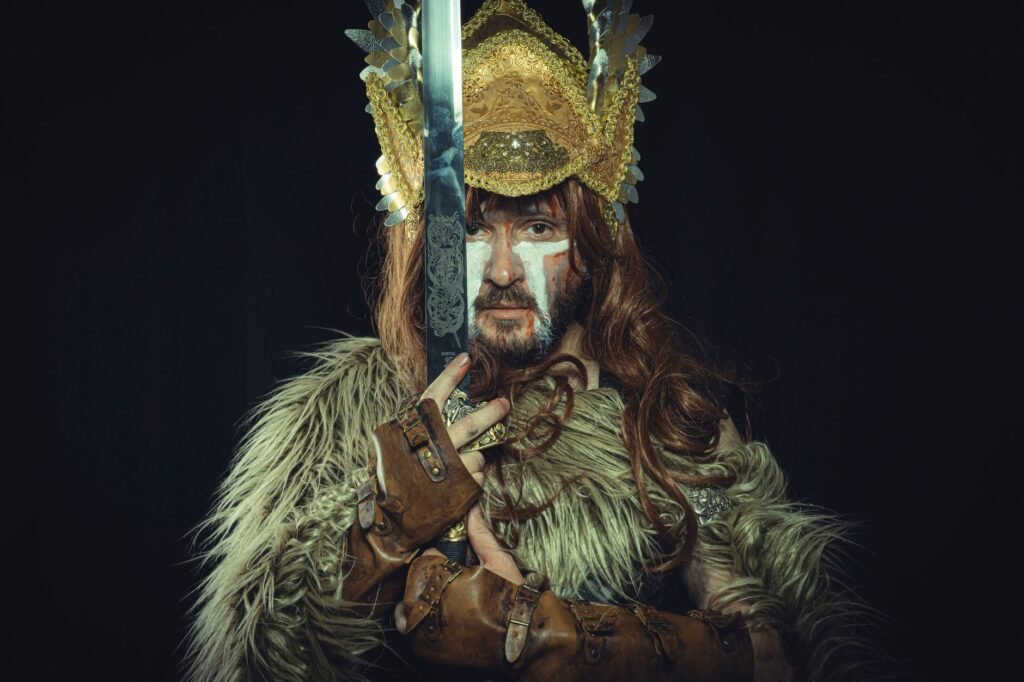
Ériu is one of the most important figures in Irish mythology and an enduring personification of Ireland itself. In early Irish tradition, she appears as a goddess or semi-divine ancestral figure associated with sovereignty, the land, and the identity of the island. Her name survives most famously in the modern Irish word for Ireland, Éire, and indirectly in the English poetic name Erin.
Although Ériu is not as widely known internationally as some other mythological deities, she occupies a central place in the literary imagination of medieval Ireland. She is one of the Tuatha Dé Danann, the supernatural people of the mythic past, and her role in the mythic settlement of Ireland links her to themes of kingship, territorial legitimacy, and sacred geography.
Origin and Meaning
The name Ériu is generally understood as the source of the modern Irish name Éire and the poetic English name Erin. In linguistic scholarship, the name is usually treated as belonging to the earliest layer of Irish ethnonymic and mythological tradition, although the precise prehistory of the name is not fully recoverable from surviving sources.
In medieval Irish literature, Ériu is presented not simply as a personal name but as a name with deep territorial significance. She is one of three sisters—Ériu, Banba, and Fódla—whose names are used poetically for Ireland. Of these, Ériu became the dominant name in Irish historical and literary usage.
Etymological significance
The name’s importance lies less in any single agreed etymology than in its cultural function:
- It is the mythic basis of the island’s principal native name.
- It belongs to a group of goddess-like personifications connected to sovereignty and land.
- It reflects a tradition in which the island itself is imagined as a living, female figure.
Because much of the evidence comes from medieval manuscript tradition rather than pre-Christian inscriptions, some details remain uncertain. What is clear is that Ériu was already understood by medieval Irish writers as foundational to the identity of the land.
Historical Context
Ériu belongs to the mythological and literary world preserved in medieval Irish manuscripts, especially texts that combine Christian-era writing with older oral traditions. These stories were written down centuries after the period they describe, and they often reflect a fusion of native myth, genealogical lore, learned poetic tradition, and Christian interpretation.
The mythic landscape of early Ireland
In early Irish myth, Ireland is not merely a setting but a sacred and socially ordered space. Its landscape is populated by:
- divine or semi-divine ancestors,
- local territorial powers,
- kings whose legitimacy depends on the land,
- and mythic invaders or settlers who represent successive ages of occupation.
Ériu appears within this framework as a figure tied to the island’s sovereignty and naming. Her story is connected to the arrival of the Milesians or Sons of Míl Espáine, the legendary ancestors of the Gaels in Irish origin narratives.
Religious and cultural context
Ériu’s character reflects older Indo-European patterns in which the land is feminized and closely associated with kingship. In such traditions, the ruler’s legitimacy may depend on a symbolic marriage or pact with a land goddess. Irish sovereignty tales often preserve this logic in transformed literary form.
Her importance also lies in the way Irish medieval culture preserved pre-Christian memory. Even though the texts were written by Christian scholars, they retained a strong sense that the island’s names, topography, and political identity were grounded in sacred antiquity.
Main Characteristics
Ériu is best understood as a personification of Ireland with divine or semi-divine attributes. She is not merely symbolic; in mythological narrative, she speaks, negotiates, and participates in foundational events.
Key attributes
- Sovereignty: She is associated with the legitimacy of rule over Ireland.
- Land identity: She represents the island as a living being.
- Naming power: Her name becomes the primary designation for Ireland.
- Mythic ancestry: She belongs to the Tuatha Dé Danann, the great mythic race of early Irish tradition.
- Poetic and territorial significance: She is one of several female figures whose names embody the island in literature.
Comparative role
Ériu resembles other sovereignty goddesses found in Celtic and wider mythological traditions. She is not always depicted as a warrior or a goddess of battle; rather, her power is often expressed through kingship, abundance, and rightful rule. The emphasis is on her connection to the land and the people who claim it.
Family and Genealogy
The genealogical details of mythological figures in Irish tradition vary by source, and Ériu is no exception. The surviving texts present different formulations, reflecting the fluidity of medieval Irish mythic genealogy.
Parentage
In most traditions, Ériu is one of the daughters of Delbáeth and Ernmas. These figures belong to the mythological genealogy of the Tuatha Dé Danann.
Siblings
Ériu is commonly listed among three sisters:
| Sister | Literary role | Significance |
|---|---|---|
| Ériu | Eponymous figure for Ireland | Became the dominant native name |
| Banba | Poetic name for Ireland | Survives as a literary and folkloric form |
| Fódla | Poetic name for Ireland | Another archaic designation of the island |
These three figures often appear together in origin narratives and are all associated with the island as a whole.
Spouses and descendants
Different sources give different accounts of Ériu’s family relationships, and some details are obscure. In the surviving tradition, the emphasis is much more on her territorial and symbolic role than on a settled domestic genealogy. If spouses or descendants are mentioned in particular texts, they are not as central to her mythic profile as her role in the naming of Ireland.
Symbols
Ériu does not have a universally fixed iconography in the way later saints or classical gods do, but several symbolic associations recur in the tradition.
Common symbolic associations
- The land of Ireland itself
- Kingship and sovereignty
- Female personification of the island
- The name Éire / Erin
- Mythic abundance and territorial blessing
Symbolic interpretation
In Irish sovereignty mythology, a goddess-like figure may symbolize the rightful union between land and ruler. Ériu therefore functions as a symbol of:
- political legitimacy,
- cultural continuity,
- and the sacred inheritance of the island.
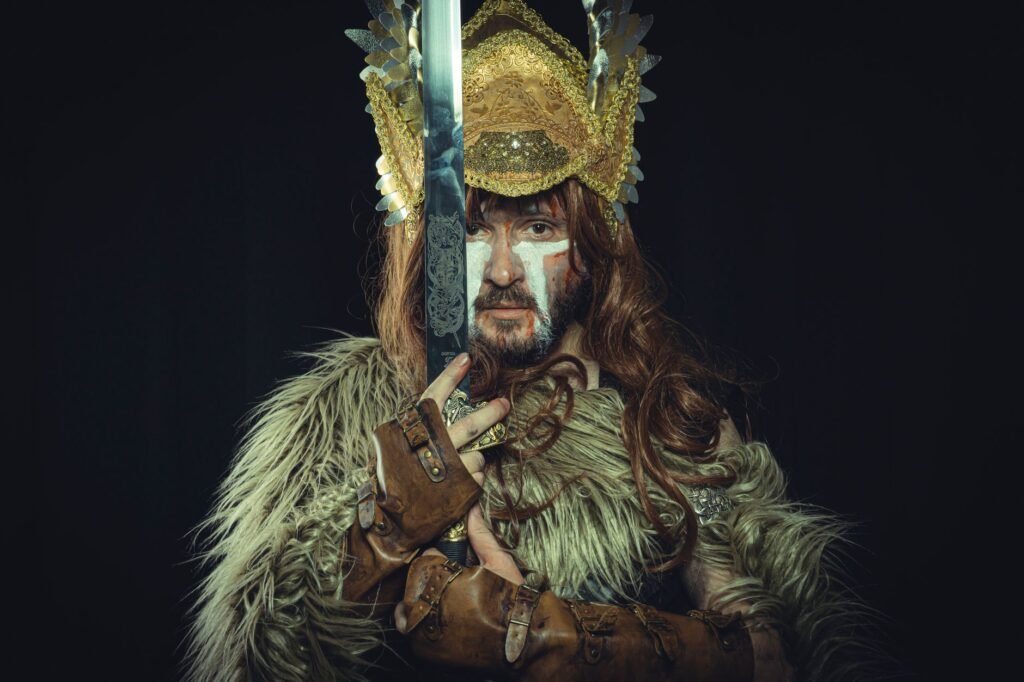
Because medieval texts do not provide a standard set of physical emblems for her, any modern visual depiction of Ériu is largely interpretive rather than anciently fixed.
Sacred Animals
No specific animal is universally and securely identified as sacred to Ériu in the surviving sources. Unlike deities from some other traditions, Ériu is not consistently linked to a particular animal in the literature.
Indirect associations
That said, in broader Irish mythological symbolism, animals connected to sovereignty, fertility, and the land may appear in adjacent traditions. However, such associations cannot be confidently assigned to Ériu alone without risking overstatement.
For an encyclopedia-style account, the most accurate conclusion is that no distinct sacred animal for Ériu is firmly attested in the primary sources.
Sacred Plants
Similarly, there is no widely accepted ancient plant specifically and securely tied to Ériu in the surviving medieval material. Irish mythic tradition often links divine or territorial figures with plants, trees, or landscape features, but the evidence for Ériu is not precise enough to establish a unique botanical emblem.
Broader vegetation symbolism
Ériu is better understood through the symbolism of the land itself:
- fertile ground,
- pasture,
- and the generative power of Ireland as a sacred territory.
If a plant is later associated with Erin or Ireland in poetic tradition, that is more a matter of national symbolism than firmly documented ancient cult.
Sacred Places
Ériu is connected not to a single shrine or temple but to the island of Ireland as a whole. Her sacred geography is territorial rather than localized.
Important locations in the mythic narrative
The key setting in which Ériu appears is the land of Ireland during the arrival of the Milesians. Certain places in mythic historiography are especially important:
- Hill of Uisneach: Often treated as a symbolic center of Ireland in myth and tradition.
- Tara: The royal and political center of high kingship in later Irish memory.
- The coastlands of Ireland: Particularly in the foundational narratives of arrival and settlement.
Territorial rather than monumental sanctity
There is no surviving evidence of a classical-style temple dedicated to Ériu. Her sacred presence is embodied in:
- the island’s name,
- the land’s sovereignty,
- and the mythological legitimacy of possession.
In other words, the entire island can be understood as her sacred place.
Powers and Attributes
Ériu’s powers are not described in the language of magical feats so much as in the language of mythic authority and territorial presence.
Main powers and domains
- Sovereignty over Ireland
- Naming and identity
- Land fertility and legitimacy
- Mythic sanction of rule
- Personification of the island
Functional significance
Ériu’s “power” is primarily political and cosmological. When she names Ireland, that act is more than symbolic; it establishes a lasting relationship between the island and its mythic past. In sovereignty myths, such a naming can imply acceptance, blessing, and the right order of things.
She also functions as a witness to the transition between mythic eras. The arrival of new settlers or rulers does not erase her significance; rather, it confirms her centrality by making her the figure whose name endures.
Main Myths
The most important myth involving Ériu is the foundational story of the naming and possession of Ireland.
The coming of the Milesians
In a common version of the story, the Milesians arrive in Ireland and encounter the Tuatha Dé Danann. The three sisters—Ériu, Banba, and Fódla—each ask that the island be named after them. This request reflects their authority over the land.
When the Milesians seek to establish their rule, Ériu gives her name to the island, or at least receives the promise that the island will be called by her name. This is why Ireland in Irish is Éire.
Significance of the myth
This story is important for several reasons:
- It explains the island’s name through myth.
- It presents Ireland as a land with preexisting sacred owners.
- It legitimizes the Gaelic order by linking it to older divine sovereignty.
- It preserves the memory of competing territorial names.
The three sisters motif
The appearance of Ériu alongside Banba and Fódla is not accidental. The three sisters may reflect a literary pattern in which the island’s identity is distributed among several related figures. Ériu emerges as the most enduring of the three, but the others remain important as poetic names and as signs of the land’s layered mythic past.
Relationship with Other Mythological Figures
Ériu’s relationships are shaped by the mythic politics of Ireland’s origin narratives.
With Banba and Fódla
Her closest mythological companions are her sisters Banba and Fódla. Together they form a triad that personifies Ireland. Their shared role suggests:
- collective sovereignty,
- multiple names for one land,
- and the plurality of early Irish territorial memory.
With the Tuatha Dé Danann
Ériu belongs to the Tuatha Dé Danann, the supernatural community that occupies a central position in Irish myth. In many traditions, they represent a divine or magical prehuman population displaced by later settlers. Ériu’s role within this group reinforces her connection to the sacred antiquity of the land.
With the Milesians
The Milesians are the later mythic newcomers whose arrival marks a new phase in Ireland’s legendary history. Ériu’s encounter with them is foundational because it links older divine possession to the naming of the island under the ancestry of the Gaels.
With kings and rulers
Ériu’s sovereignty function means that she stands in an indirect relationship with Irish kingship. She is not usually a companion to one named historical king, but she embodies the principle that a ruler’s authority must accord with the land.
Worship and Cult
Unlike some deities from the ancient Mediterranean world, Ériu does not have a clearly documented temple cult, priesthood, or surviving ritual calendar. The evidence does not support claims of a formal ancient cult in the strict sense.
What can be said with confidence
- Ériu appears in literary texts rather than in clearly attested archaeological cult records.
- Her role is linked to mythic sovereignty and territorial identity.
- Medieval Irish writers preserved her in the context of origin stories and poetic naming traditions.
Possible ritual significance
While direct evidence is lacking, sovereignty figures in Celtic tradition may have been associated with:
- inauguration rites,
- royal legitimacy,
- symbolic unions between ruler and land,
- and ceremonial acts that affirmed territorial claim.
Such practices are well known in comparative mythological studies, but they should not be attributed to Ériu with certainty unless specifically attested.
Ancient Sources
Ériu is known mainly from medieval Irish sources rather than from Greek or Roman writers. The key texts belong to the Irish literary tradition.
Important source types
- The Lebor Gabála Érenn (Book of the Taking of Ireland): The most important source for the mythic settlement narratives in which Ériu appears.
- Medieval Irish genealogical and historical compilations: These preserve her lineage and connections to the Tuatha Dé Danann.
- Irish poetic and prose tradition: These works sustain the names Ériu, Banba, and Fódla as literary personifications of Ireland.
Classical authors
Classical Greek and Roman authors such as Homer, Hesiod, Apollodorus, Pausanias, and Ovid do not provide direct accounts of Ériu. Her tradition is indigenous to Ireland and is preserved in the medieval vernacular record.
Historical caution
Because the surviving narratives are medieval, they should not be read as straightforward records of pre-Christian religion. They are better understood as literary and learned reconstructions of an older mythic inheritance.
Roman Equivalent
Ériu has no exact Roman equivalent. However, she can be compared in a broad thematic sense to Roman personifications such as:
- Roma, the personified city and state,
- Tellus or Terra, figures associated with the earth and fertility,
- and some aspects of sovereignty and civic identity embodied in Roman state symbolism.
These comparisons are only partial. Ériu is specifically a mythological embodiment of the island of Ireland and a figure within Gaelic origin tradition. She is not a direct adaptation of a Roman deity.
Influence on Modern Culture
Ériu’s strongest modern influence is linguistic and national rather than purely religious.
In language and national identity
- Éire is the official Irish-language name for Ireland.
- Erin became a poetic English name for Ireland, especially in literature and nationalist discourse.
- The mythic figure of Ériu contributes to the symbolic female personification of the nation.
In literature and art
Ériu appears or is alluded to in:
- Irish nationalist poetry,
- historical fiction,
- visual art depicting Ireland as a female figure,
- and modern retellings of Celtic mythology.
In popular culture
Modern fantasy literature, role-playing games, and media inspired by Celtic myth sometimes draw on Ériu, Banba, and Fódla as sources for place names, character names, or mythic atmosphere. In these contexts, she often functions as a symbol of ancient Ireland rather than as a fully developed character.
Broader cultural impact
Ériu’s legacy is especially visible in the way Ireland’s identity is imagined. The country’s native name, literary symbolism, and mythic self-understanding all bear traces of her tradition.
Curiosities
- Ériu is one of the few mythic figures whose name became the standard name of a nation.
- The three sisters Ériu, Banba, and Fódla represent a rare case of multiple personified names for one land.
- The English poetic name “Erin” comes from the same tradition.
- Her importance is greater in literary and national symbolism than in any known temple cult.
- She is often treated as a goddess, but the surviving evidence is mediated through medieval manuscripts, not direct pagan liturgy.
- Her story shows how myth can preserve historical identity through naming rather than through biography.
Frequently Asked Questions
Who was Ériu?
Ériu was a mythological figure in early Irish tradition, usually understood as a goddess or personification of Ireland.
Why is Ériu important?
She is important because her name became the Irish-language name of Ireland, Éire, and because she represents sovereignty and territorial identity.
Is Ériu the same as Erin?
Yes, in a historical-linguistic sense. Erin is an English poetic form derived from Ériu through the Irish name Éire.
Was Ériu a goddess?
She is commonly described as a goddess or goddess-like figure, but the surviving sources present her mainly through mythological and literary tradition rather than through formal cult evidence.
Who were Ériu’s sisters?
Her sisters were Banba and Fódla, who are also personifications of Ireland in Irish mythology.
What myth is Ériu most famous for?
She is most famous for the story in which the island of Ireland is named after her during the legendary arrival of the Milesians.
Did Ériu have a temple or shrine?
No secure evidence survives for a temple or formal shrine dedicated specifically to Ériu.
What is Ériu’s legacy today?
Her legacy lives on in the name Éire, in the poetic name Erin, and in the broader mythic image of Ireland as a female figure.
Conclusion
Ériu is a foundational figure in Irish mythology, history, and cultural identity. As a personification of Ireland and a sovereign presence within the mythic past, she connects the island’s name, territory, and kingship to a deeply rooted legendary tradition. Her story is preserved primarily in medieval Irish literature, where she stands alongside Banba and Fódla as one of the land’s ancient names and divine embodiments.
Although much about Ériu belongs to the realm of myth rather than verifiable history, her influence is unmistakable. She remains central to the symbolic understanding of Ireland, not only as a goddess of old tradition but also as a living reminder of how myth can shape language, identity, and national memory.

Orin Vale has spent the better part of two decades tracing the threads that connect the world’s oldest stories — from the halls of Asgard to the banks of the Nile, from Olympus to the jungles of the Maya. What began as a childhood fascination with flood myths and trickster gods grew into years of independent study across comparative mythology and ancient religion, always chasing the same question: what did these stories mean to the people who first told them? Orin writes for readers who want more than trivia — the ones looking for the beliefs, fears, and truths that myths were built to carry.