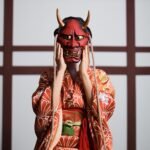
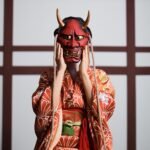
Ame-no-Uzume
Ame-no-Uzume, also known as Ame-no-Uzume-no-Mikoto, is a major deity in Japanese mythology associated with dawn, mirth, dance, and the power to draw others out of concealment. She is best known for the dramatic myth in which her laughter and performance lure the sun goddess Amaterasu out of a cave, restoring light to the world. Because of that story, Ame-no-Uzume occupies an important place in Shinto tradition as a divine figure connected with joy, ritual performance, artistic expression, and the renewal of cosmic order.
Her significance extends beyond a single myth. Over time, Ame-no-Uzume became linked with kagura and other forms of sacred dance, as well as with shrine traditions, performance culture, and fertility symbolism. In Japanese religious history, she is an example of a kami whose importance rests not only on lineage but also on action: she changes the course of a myth through wit, courage, and embodied performance.
Origin and Meaning

The name Ame-no-Uzume is usually written in Japanese as 天宇受売命 or related variants, though classical sources preserve different spellings. The first element, ame, generally means “heaven” or “heavenly.” The remainder of the name is more difficult to explain with certainty. Scholars have proposed different etymologies for uzume, and no single interpretation is universally accepted.
Commonly discussed possibilities include:
- a connection with the idea of boldness, exuberance, or joyful performance
- an association with opening, revealing, or uncovering
- a possible older ritual or linguistic term whose original meaning is no longer fully transparent
As with many early Japanese divine names, the precise origin is uncertain because the myths were recorded relatively late, and the written forms reflect both native tradition and the conventions of classical Chinese writing used to transcribe Japanese names.
The figure herself likely emerged from a long process of local ritual and mythic development before being integrated into the national mythic framework recorded in the Kojiki and Nihon Shoki in the 8th century.
Historical Context
Ame-no-Uzume belongs to the Shinto mythological world, especially the cosmogonic and ancestral narratives preserved in early Japanese court chronicles. The key textual sources, compiled in the early 8th century, reflect the religious and political environment of the early Japanese state, when imperial genealogy, sacred legitimacy, and the ordering of the pantheon were deeply intertwined.
In that context, myths did more than entertain. They helped explain:
- the divine ancestry of the imperial line
- the relationship between heaven and earth
- the ritual foundations of kingship
- the importance of correct ceremony in maintaining harmony
Ame-no-Uzume’s role in the Amaterasu cave myth is especially important because it connects ritual performance with the restoration of cosmic order. The story has been read as a mythic explanation for the power of dance, laughter, and public ritual to overcome withdrawal, darkness, and social disruption.
Historically, she also became associated with various forms of entertainment and ceremonial performance, including kagura, a sacred dance tradition in Shinto contexts. In that sense, Ame-no-Uzume sits at the intersection of religion, art, and communal life.
Main Characteristics
Ame-no-Uzume is typically characterized by several interrelated traits:
- Joy and laughter: she is the deity of mirth, amusement, and lively expression.
- Dance and performance: she is strongly associated with ritual dance and theatrical display.
- Courage and audacity: in the cave myth, she acts with fearless irreverence.
- Liminal power: she often appears at boundaries, especially between darkness and light, concealment and revelation, or seriousness and play.
- Fertility and vitality: in some traditions, her physicality and performative energy connect her with fecundity and the renewal of life.
She is not usually depicted as a solemn or remote deity. Instead, she represents the divine power of movement, spontaneity, and expressive action. Her importance lies less in abstract authority than in the ability to influence events through ritualized performance.
Family and Genealogy
Ame-no-Uzume appears in Japanese myth as part of the broader heavenly lineage of kami. Her genealogy varies somewhat by source and by later interpretation.
Commonly Given Relationships
- Spouse: Sarutahiko Ōkami in many later traditions, especially in stories related to the descent of Ninigi.
- Children: One well-known child is Ame-no-Uzume-no-Mikoto herself in some traditions there is no child; rather, the lineage is sometimes traced through other associated deities. In later religious genealogies, she is sometimes credited with descendants linked to performance or shrine lineages.
- Connections to heavenly deities: She is part of the circle of kami around Amaterasu, Takami-Musubi, and Izanagi/Izanami in different mythic sequences.
Notes on Genealogical Variance
Because the early sources are not identical, family relationships are not always presented in the same way. In some traditions she is treated primarily as a standalone deity of performance; in others, her marriage to Sarutahiko becomes central. As a result, her genealogy should be understood as tradition-dependent, not fixed in a single canonical form.
Symbols
Ame-no-Uzume is associated with symbols that reflect her role in ritual performance and revelry.
| Symbol | Meaning |
|---|---|
| Mirror | Revealing truth, drawing out hidden presence, and restoring light |
| Dance implement | Sacred movement, ceremony, and embodiment |
| Sake | Merriment, conviviality, and ritual loosening of tension |
| Bare or exposed body in the myth | Shock, comedy, fertility symbolism, and the breaking of fear |
| Drum or rhythmic instruments | Processional and ritual energy, especially in kagura traditions |
The mythic exposure of her body in front of the heavenly assembly is one of the most famous elements of her story. It should not be read only in sensational terms; in religious and symbolic context, it can indicate transgression used for a sacred purpose, a dramatic act that provokes life-giving laughter and response.
Sacred Animals
Ame-no-Uzume is not strongly centered on a single sacred animal in the way some deities are. However, certain animals appear in her mythic and symbolic orbit.
Associated Animals
- Monkey: In some traditions, the monkey appears as a figure of lively mischief or ritual accompaniment, and it may be connected indirectly to performance and crowd response.
- Birds: Since her myth concerns dawn and the return of light, birds can symbolically evoke waking, calling, and renewed life.
- Serpent imagery in wider fertility contexts: Not as a primary symbol of Ame-no-Uzume herself, but sometimes present in related ritual environments involving vitality and renewal.
Because sacred animal associations vary by shrine and later custom, it is safest to say that Ame-no-Uzume is not defined by a single fixed animal emblem. Her strongest symbolism lies in human performance rather than zoological iconography.
Sacred Plants
There is no universally recognized sacred plant uniquely and exclusively tied to Ame-no-Uzume across all traditions. Nonetheless, certain plants appear in Shinto ritual and mythic settings that resonate with her cult.
Frequently Relevant Ritual Plants
- Sakaki: a sacred evergreen often used in Shinto offerings and purification rites.
- Bamboo: associated in broader Japanese ritual with purity, resilience, and festive decoration.
- Rice and rice products: important in offerings and in fertility-linked cultic settings.
These plants are not necessarily exclusive emblems of Ame-no-Uzume, but they appear within the ritual world in which she is honored. Her connection is therefore contextual rather than botanical.
Sacred Places
Ame-no-Uzume is venerated at several shrines, often through her association with performance, protection, and the crossing of boundaries.
Notable Sacred Sites
- Sarutahiko Shrine traditions: because of her association with Sarutahiko, she is often honored in connection with shrines dedicated to him.
- Ame-no-Uzume worship at performance-related shrines: some shrines and local cults honor her as a patron of dance and entertainment.
- Ise and the Amaterasu mythic landscape: while Ise Shrine is primarily associated with Amaterasu, Ame-no-Uzume’s place in the cave myth links her symbolically to the same sacred cosmos.
- Regional shrines and local cult centers: various local shrines in Japan honor her under different names or with specific ritual emphasis.
Important Mythic Location
The most famous setting is the cave of Ama-no-Iwato in the cave myth. This location is not just a story place; it functions as a mythic threshold where darkness, withdrawal, and restoration are enacted in narrative form.
Powers and Attributes
Ame-no-Uzume’s powers are best understood as ritual and symbolic rather than martial or sovereign.
Core Domains
- Dawn and revelation
- Dance and sacred performance
- Laughter and joy
- Exorcistic or disruptive ritual action
- Fertility and vitality
- Communication with deities through movement and ceremony
Distinctive Attributes
Her most striking attribute is the ability to produce transformation through performance. In the cave myth, she does not fight Amaterasu’s seclusion with force. Instead, she uses laughter, spectacle, and rhythm to alter the emotional and spiritual climate around the cave. This is why she is often seen as a deity of artistic power and ceremonial efficacy.
In a broader religious sense, she embodies the idea that ritual enactment can change reality.
Main Myths
The central myth involving Ame-no-Uzume is one of the best-known stories in Japanese mythology.
The Cave of Ama-no-Iwato
In the classic version, the sun goddess Amaterasu retreats into a cave after conflict with her brother Susanoo, plunging the world into darkness. The other kami gather and attempt to persuade her to come out. Ame-no-Uzume performs a provocative and comic dance, creating noise and excitement. Her behavior causes the assembled deities to laugh loudly. Curious about the commotion, Amaterasu peeks out, and at that moment the gods reveal a mirror to her. Distracted and drawn forward, she emerges, and light returns to the world.
Key elements of the myth
- Crisis: the loss of light threatens cosmic order
- Collective ritual: the gods act together
- Ame-no-Uzume’s dance: the decisive performative act
- Laughter: a communal force that helps break isolation
- Mirror revelation: self-recognition and restoration
- Return of light: the reestablishment of balance
The story is foundational for understanding the role of performance in Shinto culture and Japanese myth more broadly.
The Marriage to Sarutahiko
Another important episode links Ame-no-Uzume with Sarutahiko Ōkami, a powerful earth or road deity. In some traditions, she is sent or drawn toward him when the heavenly descent of Ninigi is being organized. Their relationship has been interpreted in several ways:
- as a marriage of heavenly and earthly forces
- as a symbolic union of path-guidance and performance
- as a mythic explanation for shrine lineages or ritual mediation
This myth reinforces her role as a deity who bridges realms and enables movement between them.
Relationship with Other Mythological Figures
Ame-no-Uzume interacts with several major Japanese deities.
Amaterasu
Her most famous relationship is with Amaterasu, the sun goddess. Ame-no-Uzume helps restore Amaterasu’s presence to the world. Without her intervention, the mythic cosmos remains in darkness. Their relationship highlights complementary powers: withdrawal and revelation, stillness and movement, hidden radiance and public performance.
Susanoo
Susanoo’s disruptive behavior is part of the background to the cave myth. Ame-no-Uzume does not confront him directly in the same manner as a warrior deity, but his actions set the stage for her defining role. Their interaction is indirect yet essential.
Sarutahiko
Sarutahiko becomes her most important partner in later mythic tradition. He is often portrayed as a guide or road deity, and their union suggests a symbolic combination of guidance and ceremonial force.
Ninigi
Ame-no-Uzume also has a functional relationship with Ninigi, the heavenly grandson whose descent to earth marks a major point in imperial myth. She helps facilitate the divine transition from heaven to the terrestrial realm.
Worship and Cult
Ame-no-Uzume has been honored in Shinto practice, especially in contexts related to performance, protection, and ritual vitality.
Forms of Worship
- Kagura dance: sacred dance performed at shrines, often linked conceptually to Ame-no-Uzume as its divine exemplar.
- Festival performance: dances, music, and comic display may invoke her spirit.
- Offerings: sake, food offerings, and ritual implements may be presented in shrine settings.
- Purification and celebration: she is associated with ceremonies that clear obstruction and restore harmony.
Cultic Significance
Ame-no-Uzume’s worship demonstrates how Shinto can integrate entertainment and sacred action. She is not a deity of passive contemplation but of active participation. Her cultic presence is especially important where communities use music, dance, and laughter to mark renewal or invoke blessing.
Regional and Professional Associations
She has also been linked with:
- performers
- dancers
- comic entertainers
- ritual specialists
- shrine communities celebrating the power of expressive arts
Ancient Sources
The principal early sources for Ame-no-Uzume are the classic Japanese chronicles.
Major Primary Sources
- Kojiki (712)
- Nihon Shoki (720)
These works preserve the most influential versions of the cave myth and related genealogies. Because they are court-sponsored compilations, they reflect both religious tradition and political ideology.
Later Traditional and Scholarly Context
Later Japanese commentaries, shrine traditions, and folklore collections expanded or interpreted her role, but the foundational narratives come from these early texts. Unlike Greek or Roman mythology, Ame-no-Uzume is not found in Homer, Hesiod, Apollodorus, Pausanias, or Ovid; those authors belong to a different mythological tradition. For Japanese mythology, the equivalent central sources are the Kojiki and Nihon Shoki.
Roman Equivalent
Ame-no-Uzume does not have a precise Roman equivalent. Her functions overlap only loosely with a range of Roman deities and ritual concepts.
Possible partial parallels include:
- Bacchic or Dionysian elements in the sense of ecstasy, performance, and release
- Festive or theatrical deities connected with dance and revelry
- Fertility and liminal goddesses associated with transition and renewal
However, no Roman goddess matches her role exactly. The closest comparison is functional rather than direct: she resembles a sacred performer whose ritual action restores order, but she remains distinctly Japanese in origin and significance.
Influence on Modern Culture
Ame-no-Uzume continues to appear in modern Japanese and international culture, especially where creators draw on Shinto myth.
Areas of Influence
- Literature: retellings and myth-inspired fiction often reference her cave dance.
- Manga and anime: Japanese popular media frequently adapts Shinto figures, including Ame-no-Uzume, either directly or by allusion.
- Video games: she appears in myth-based game franchises, often as a support, light, or trickster-type character.
- Theater and dance: her myth remains influential in discussions of ritual performance and Japanese traditional arts.
- Visual art: artists continue to reinterpret her as a symbol of vitality, feminine expression, and ceremonial power.
Her modern presence is helped by the dramatic clarity of her myth. The image of a deity dancing a dark world back into light remains culturally resonant and visually powerful.
Curiosities
- Ame-no-Uzume is often considered one of the most theatrical kami in Japanese mythology.
- Her myth has been interpreted as a foundational story for the power of comedy and performance in sacred space.
- The cave episode is sometimes read as an explanation for the role of mirror imagery in Japanese religious symbolism.
- She is associated with the idea that laughter can be spiritually effective, not merely socially pleasant.
- In some modern retellings, she is portrayed as a clever trickster figure, though classical texts emphasize ritual efficacy more than mischief alone.
- Her story is one of the clearest examples in world mythology of a deity using artistic action to solve a cosmic crisis.
- Different local traditions may emphasize her marriage, her dance, or her shrine associations more strongly than the cave myth itself.
Frequently Asked Questions
Who is Ame-no-Uzume?
Ame-no-Uzume is a Japanese kami associated with dawn, dance, laughter, and ritual performance. She is best known for helping lure Amaterasu out of a cave and restore light to the world.
What is Ame-no-Uzume famous for?
She is famous for her energetic dance and comic display in the cave myth, where her performance causes the other gods to laugh and helps bring the sun goddess back into the open.
Is Ame-no-Uzume a goddess of fertility?
She is often linked with fertility, vitality, and life-renewal, although her primary identity is as a deity of dance, mirth, and ritual performance.
What are the main sources for Ame-no-Uzume?
The main early sources are the Kojiki and Nihon Shoki, the two foundational Japanese chronicles from the 8th century.
Does Ame-no-Uzume have a Roman equivalent?
No exact Roman equivalent exists. She can only be compared loosely with Roman concepts related to festivity, performance, or fertility.
Is Ame-no-Uzume worshipped today?
Yes. She remains part of Shinto tradition and is honored in some shrines and ritual performances, especially those connected with dance and sacred entertainment.
Why is the mirror important in her myth?
The mirror helps draw Amaterasu out of the cave by reflecting her presence back to her. It symbolizes revelation, self-recognition, and the return of light.
Is Ame-no-Uzume the same as Uzume?
Yes, “Uzume” is a shortened form commonly used in modern references, but the full name Ame-no-Uzume-no-Mikoto is more formal and traditional.
Conclusion
Ame-no-Uzume is one of the most memorable figures in Japanese mythology because she embodies the transformative power of performance. Through dance, laughter, and dramatic presence, she restores light to the world and demonstrates that ritual expression can have cosmic significance. Her stories reveal important dimensions of Shinto thought: the value of harmony, the efficacy of ceremony, and the sacred force of joyful action.
As both a mythic heroine and a ritual prototype, Ame-no-Uzume continues to influence religion, art, and popular culture. Her legacy lies in the enduring idea that movement, humor, and performance are not marginal to sacred life, but central to it.

Orin Vale has spent the better part of two decades tracing the threads that connect the world’s oldest stories — from the halls of Asgard to the banks of the Nile, from Olympus to the jungles of the Maya. What began as a childhood fascination with flood myths and trickster gods grew into years of independent study across comparative mythology and ancient religion, always chasing the same question: what did these stories mean to the people who first told them? Orin writes for readers who want more than trivia — the ones looking for the beliefs, fears, and truths that myths were built to carry.