Each Uisge
Introduction
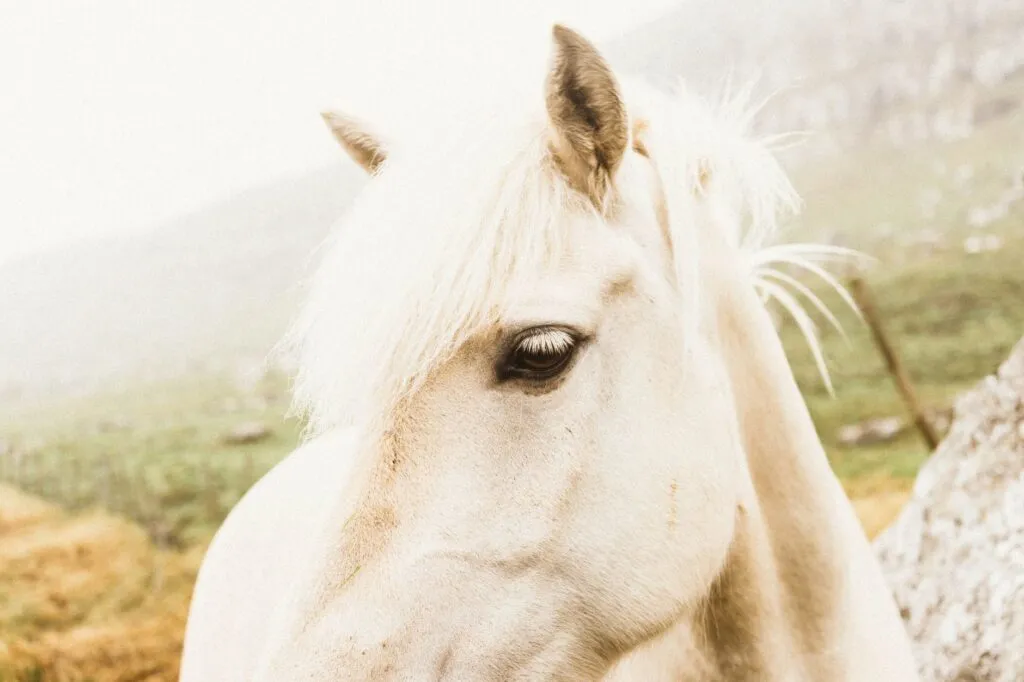
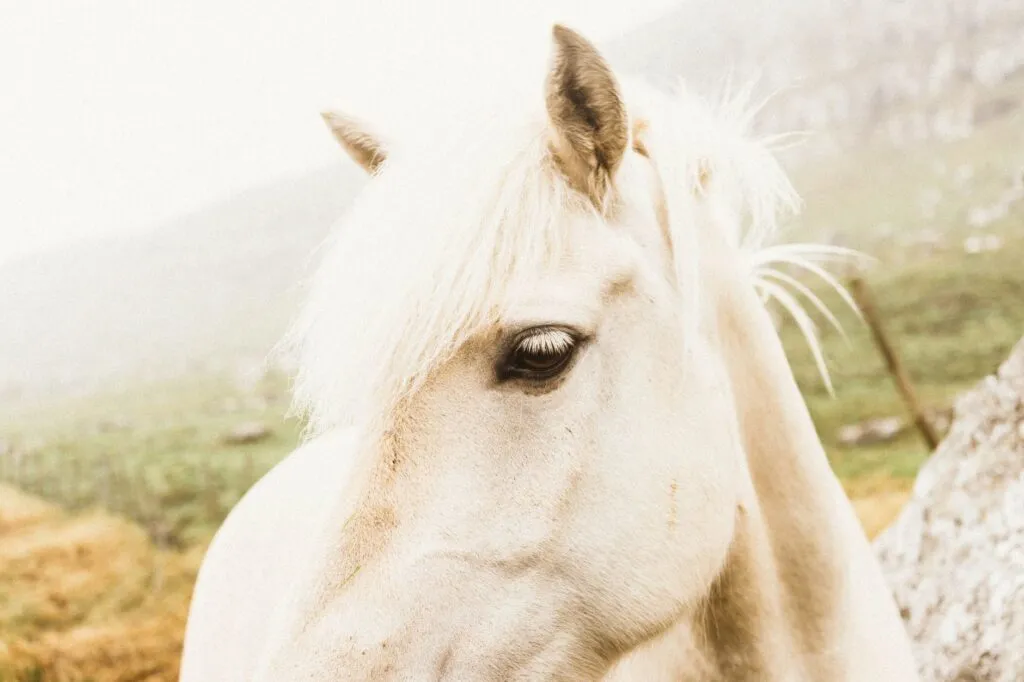
Each Uisge (also spelled each-uisge, each uisge, or, in Anglicised forms, kelpie in some contexts) is a water spirit from Gaelic folklore, especially associated with the Scottish Highlands and islands. The name is usually translated as “water horse”, and the creature is one of the most dangerous beings in Celtic folklore. Unlike the more widely known kelpie, which is often described in broad folkloric terms, the Each Uisge is usually presented in Highland tradition as a far more deadly and explicitly predatory lake or sea horse that lures humans to ride it before drowning and devouring them.
The Each Uisge occupies an important place in the study of Scottish myth and oral tradition because it reflects both the perilous relationship between people and water in a landscape of lochs, rivers, and sea inlets, and the broader Celtic imagination in which supernatural animals embody danger, temptation, and the boundary between the human world and the otherworld.
Origin and Meaning
The name Each Uisge comes from Scottish Gaelic:
- each = horse
- uisge = water
So the phrase literally means “water horse.”
The term is closely related to other Gaelic and Celtic water-being names. In Irish tradition, similar forms appear in stories of water horses and other aquatic monsters, though local traditions vary. The English word kelpie is often used as a near-synonym, but the relationship between the two terms is not always uniform across sources. In some folklore collections, Each Uisge is distinguished from the kelpie by being even more dangerous and more closely tied to salt water or deep freshwater lochs, while in other accounts the names are used loosely or interchangeably.
As with many folk creatures, the name does not point to a single fixed origin story. It emerged from oral tradition rather than a single written source, and its meaning has been preserved through folklore, local storytelling, and later antiquarian collection.
Historical Context
Each Uisge belongs to the wider corpus of Gaelic supernatural belief, a tradition shaped by oral transmission, rural life, and close contact with a harsh natural environment. In the Highlands and Islands, lochs, rivers, bogs, and sea lochs were part of daily life and also sources of real danger. Stories of water horses likely functioned partly as cautionary tales, warning against approaching unfamiliar waters, riding strange horses, or ignoring local dangers.
Historically, Gaelic-speaking communities maintained a rich body of beliefs about:
- fairies and the sìth
- water spirits
- shape-shifting beings
- supernatural cattle, horses, and hounds
- omens, charms, and protective practices
The Each Uisge is best understood within that cultural world rather than as an isolated “monster.” It is a liminal being: part horse, part spirit, and strongly tied to water, a realm often imagined in Celtic traditions as an entrance to the otherworld.
The creature’s presence in folklore also reflects practical concerns. Horses were essential to transport and labour, while unfamiliar pools, currents, and lochs could be deadly. A supernatural predator that resembled a horse offered a vivid symbolic explanation for disappearances and drownings.
Main Characteristics
The Each Uisge is usually described as a shape-shifting water horse. In many tales, it appears as a beautiful horse on the shore, inviting or allowing a person to mount it. Once ridden, it carries the victim into deep water and drowns them. In some versions, it then consumes the body, leaving only the liver or entrails to float to the surface.
Common features
| Feature | Description |
|---|---|
| Form | Usually horse-shaped; sometimes can change form |
| Habitat | Lochs, rivers, sea lochs, and coastal waters |
| Behaviour | Lures humans, especially riders |
| Threat | Drowning, devouring victims, carrying them underwater |
| Appearance | Often beautiful, glossy, or unusually attractive |
| Nature | Supernatural, predatory, and deceptive |
Identifying traits
- Exceptional beauty or strength: it may appear more magnificent than an ordinary horse.
- Water affinity: it is associated with deep water and can move between land and water.
- Deceptive attractiveness: it may entice people who are lonely, greedy, overconfident, or curious.
- Violent endings: victims are usually drowned; some stories add cannibalistic details.
In many folklore traditions, the creature’s attractiveness is an essential part of its danger. It does not merely attack; it seduces. This makes the Each Uisge a classic example of a mythic being whose beauty masks lethal intent.
Family and Genealogy
Unlike gods or heroic figures, the Each Uisge generally does not have a stable genealogy. It is not usually presented with parents, spouse, or offspring in the way that deities in mythic genealogies are.
That said, folklore sometimes places the Each Uisge in a broader family of similar beings:
- Kelpies
- Water horses
- Other fae or sìth beings
- Local aquatic spirits and monsters
Different traditions may treat it as:
- a distinct type of supernatural creature,
- a regional name for a kelpie-like being,
- or one manifestation among several water-dwelling spirits.
Because the traditions are oral and locally varied, family relationships are not a major feature of the creature’s identity. Its significance lies more in its function than in its lineage.
Symbols
The Each Uisge is associated with symbols that emphasize its liminal, dangerous nature.
Common symbolic associations
- Horse: power, movement, freedom, but also untamed danger
- Water: the unknown, depth, transformation, death
- Blackness or darkness: nocturnal threat, concealment, the uncanny
- Bridles and saddles: control, capture, and the illusion of mastery
- Shorelines: boundary spaces between worlds
The horse is an especially important symbol in Celtic cultures. Horses were admired for speed and strength, and in myth they often carried heroic or regal associations. The Each Uisge subverts that positive symbolism by turning the horse into a killer. In that sense, it is a distortion of a noble animal into a predator.
Water, meanwhile, symbolizes both life and danger. A spirit of water embodies the paradox of sustenance and destruction. The Each Uisge thus operates as a symbolic reminder that the source of life can also be a source of death.
Sacred Animals
Because the Each Uisge itself is an animal-spirit hybrid, it is not typically connected to a broad sacred-animal cult. However, several animals are relevant to its folklore context.
Horse
The horse is the creature’s defining form. In Gaelic tradition, horses were culturally significant and often linked with status, transport, and supernatural force. The Each Uisge weaponizes that significance.
Cattle and livestock
Some water-spirit traditions in the Celtic world involve the theft of cattle or the safeguarding of herds. While this is not the central theme of the Each Uisge, it belongs to a broader pastoral environment in which livestock and water both mattered greatly to survival.
Birds and fish
In some local water-spirit stories, birds or fish may signal a supernatural presence, though this is not a universal feature of Each Uisge tradition. Any such associations are highly local and should be treated cautiously.
Sacred Plants
There is no universally recognized plant specifically sacred to the Each Uisge in the way that certain plants are associated with deities in classical myth. Nevertheless, some plants appear in the broader folklore environment around water spirits and protective magic.
Plants commonly associated with Gaelic folk belief
- Rowan: often used for protection against supernatural beings
- Reed: associated with marshes, lochs, and watery margins
- Rushes and sedges: part of wetland landscapes where water spirits are imagined
- Willow: sometimes linked with water, liminality, and enchantment in European folklore
The most relevant plant in practical folklore is rowan, which was widely believed in Scottish tradition to protect against harmful fairy beings and witchcraft. Although not exclusive to the Each Uisge, it could function as a protective charm in a world where such spirits were thought to be real dangers.
Sacred Places
The Each Uisge is not linked to temples or built sanctuaries. Its “sacred places” are instead natural locations, especially bodies of water.
Common habitats
- Lochs
- Rivers
- Sea lochs
- Coastal inlets
- Pools and deep water holes
In many tales, the creature is associated with a specific body of water near a community, making the place itself both familiar and threatening. The setting is often a place where people would plausibly travel with horses, cattle, or boats.
Place as boundary
The shoreline matters symbolically because it marks the line between:
- land and water
- human order and supernatural danger
- safety and the unknown
This boundary quality is central to the mythic logic of the Each Uisge. The creature often appears precisely where boundaries can be crossed.
Powers and Attributes
The Each Uisge is chiefly known for a set of supernatural powers and attributes centered on deception and predation.
Main powers
- Shape-shifting: in some versions it can alter its appearance
- Enchantment: it can attract human riders
- Immersion: it can enter water with its victim
- Supernatural strength: it may outrun or overpower an ordinary horse
- Transformation by touch or disguise: certain stories emphasize its ability to conceal its true nature
Domains of influence
- Water hazards
- Drowning deaths
- Liminal spaces
- Fear of strangers and deception
- The moral danger of overconfidence
In folklore terms, the Each Uisge is not a benevolent guardian of water but a predatory inhabitant of it. Its domain is dangerous water, especially deep water that cannot easily be controlled or escaped.
Main Myths
There is no single canonical myth of the Each Uisge comparable to major literary myths about the Olympian gods. Instead, it appears in a cluster of similar folk narratives. These stories vary by region and collector, but they usually follow a recognizable pattern.
The lure-and-drown narrative
The most common story type goes as follows:
- A person encounters a magnificent horse near water.
- The horse appears tame, friendly, or unusually appealing.
- The person mounts it, often because it seems safer or better than an ordinary horse.
- The creature runs toward the water.
- The rider is carried into the loch, river, or sea and drowned.
- In some variants, only a remnant of the body is recovered.
The disguise motif
In some stories, the Each Uisge may present itself in a more human-like or altered form, though this is less consistent than its horse shape. The important element is deception: the creature is not what it appears to be.
The survival motif
A smaller number of stories emphasize how a victim survives by using wit, prayer, protective charms, or by avoiding the temptation to ride the horse. These narratives reinforce practical moral lessons:
- do not trust appearances,
- do not handle unknown animals carelessly,
- respect dangerous water.
Folklore function
Such tales may have served several purposes:
- explaining drownings
- warning children and travelers
- dramatizing the dangers of lochs and shorelines
- preserving traditional knowledge through memorable storytelling
Relationship with Other Mythological Figures
The Each Uisge is related to a broader network of Celtic and Gaelic supernatural beings.
Kelpie
The most frequent comparison is with the kelpie. In modern usage, the kelpie is often treated as the better-known Scottish water horse. However, folklore sources do not always agree on whether the kelpie and the Each Uisge are identical, overlapping, or distinct.
A common summary is:
- Kelpie: a general term for a water horse or river spirit
- Each Uisge: often a more dangerous, more specifically aquatic form, sometimes linked to lochs or sea waters
This distinction is useful but should not be overstated, because local traditions differ.
Sìth and fairies
The Each Uisge is sometimes considered part of the wider fairy world or adjacent to it. Like many fairy beings, it is associated with deception, liminality, and the ability to harm humans who stray too far from normal bounds.
Other Celtic water beings
It belongs conceptually alongside:
- Irish water horses
- lake monsters in Celtic tradition
- other shape-shifting water spirits
The creature is thus part of a pan-Celtic pattern in which water is populated by dangerous supernatural beings.
Worship and Cult
There is no evidence of formal worship of the Each Uisge in the sense of a cult, priesthood, shrine, or ritual devotion comparable to that of major ancient gods. It is a figure of folklore and belief, not a deity with an established religious cult.
Possible ritual and practical responses
In Scottish folk practice, people may have used:
- protective charms
- rowan crosses or rowan sprigs
- spoken blessings
- avoidance rituals around dangerous waters
- caution with horses and strangers
These practices were not necessarily directed specifically at the Each Uisge but at harmful supernatural forces in general. The folk response was often preventative rather than devotional.
Social function
The absence of worship is important. The Each Uisge is feared, not venerated. It represents a threat to be avoided, outwitted, or symbolically controlled through tradition and protective custom.
Ancient Sources
Unlike figures from Greek or Roman mythology, the Each Uisge does not appear in Homer, Hesiod, Ovid, or other classical authors. It belongs to Gaelic oral tradition, and the main evidence comes from later folklore collections, local traditions, and antiquarian recordings.
Types of sources
- Folklore collections from the Scottish Highlands
- Oral tales recorded in the 19th and 20th centuries
- Comparative studies of Celtic folklore
- Local tradition and regional storytelling
Because the creature comes from oral culture, source comparisons are crucial. Different collectors may record different versions of the same story, and some details may reflect the collector’s interpretation rather than a fixed “original” myth.
Important caution
Any claim about a single ancient authority for the Each Uisge would be misleading. The creature is best approached through folklore studies rather than through classical mythography.
Roman Equivalent
There is no direct Roman equivalent to the Each Uisge.
The Romans had numerous water deities and spirits, such as river gods and nymphs, but these are not accurate counterparts. The Each Uisge is not a benevolent divine river presence; it is a predatory folkloric water horse.
If one seeks a rough analogy, it would be to other water-dwelling or shape-shifting beings in European folklore, not to a specific Roman god. Any Roman comparison should therefore be treated as approximate and limited, not as an equivalence.
Influence on Modern Culture
The Each Uisge has had a quieter modern cultural presence than some better-known monsters, but it remains influential in discussions of Scottish folklore and fantasy storytelling.
In literature and folklore studies
It appears in:
- retellings of Scottish legends
- collections of Celtic folklore
- academic studies of fairy belief and water spirits
- fantasy novels inspired by Gaelic myth
In art and popular imagination
Modern depictions often emphasize:
- a dark, elegant horse emerging from water
- a ghostly or mist-shrouded shoreline
- the atmosphere of danger and enchantment
In games and fantasy media
The creature’s name and concept occasionally appear in:
- role-playing games
- folklore-based bestiaries
- fantasy settings inspired by Celtic tradition
Its appeal lies in the combination of beauty and menace. The image of a magnificent horse that is actually a water-dwelling predator is vivid, adaptable, and cinematic.
Broader cultural role
The Each Uisge also contributes to the international recognition of Scottish mythic heritage. Even when audiences do not know the name, they often recognize the underlying motif of the dangerous water horse, a figure that has become part of global fantasy vocabulary.
Curiosities
- The Each Uisge is often considered more dangerous than the kelpie in some folklore summaries, though this is not universally agreed.
- The creature’s beauty is part of the trap; it is not merely monstrous, but seductively normal or extraordinary.
- Folklore about water horses may have been especially effective in communities where horses and waterways were both essential to daily life.
- In some tellings, the Each Uisge leaves behind only the liver of its victim, a detail that intensifies the story’s horror.
- The creature is a good example of a folklore being that is local in origin but globally recognizable through its core motif.
- The story type likely worked as both entertainment and a safety warning.
- The name is straightforward Gaelic, but its spelling varies widely in English-language sources.
Frequently Asked Questions
What is an Each Uisge?
An Each Uisge is a Scottish Gaelic water spirit, usually described as a dangerous supernatural horse that lives in lochs, rivers, or coastal waters.
Is the Each Uisge the same as a kelpie?
Not always. Some sources treat the terms as closely related or even interchangeable, while others distinguish the Each Uisge as a more dangerous or more explicitly water-dwelling form.
What does the name mean?
The name means “water horse” in Gaelic.
What does the Each Uisge do to humans?
In the best-known stories, it tempts people to ride it and then carries them into deep water, where it drowns and sometimes devours them.
Where does the Each Uisge live?
It is usually associated with lochs, rivers, sea lochs, and other dangerous bodies of water in Scottish Gaelic tradition.
Is the Each Uisge worshipped as a god?
No. It is a folkloric spirit or monster, not a deity with a known cult or formal worship.
Are there ancient written sources about the Each Uisge?
No classical ancient authors describe it. Knowledge of the creature comes mainly from later Scottish folklore records and oral tradition.
Why was the Each Uisge important in folklore?
It likely served as a warning about the dangers of water, the risks of trusting appearances, and the power of supernatural forces in everyday life.
Conclusion
The Each Uisge is one of the most striking figures in Scottish Gaelic folklore: a beautiful but deadly water horse that embodies the danger of rivers, lochs, and sea margins. Its stories combine practical warning, symbolic depth, and the imaginative richness of oral tradition. Although it has no temple, priesthood, or classical canon, the Each Uisge remains important as a cultural and mythological expression of the Highland relationship with water, landscape, and the unseen world.
As a creature of deception, liminality, and predation, it continues to fascinate modern readers and researchers. Its enduring legacy lies in the way it transforms an ordinary animal into a supernatural threat, reminding us that folklore often preserves deep human responses to the natural world through memorable and powerful images.

Orin Vale has spent the better part of two decades tracing the threads that connect the world’s oldest stories — from the halls of Asgard to the banks of the Nile, from Olympus to the jungles of the Maya. What began as a childhood fascination with flood myths and trickster gods grew into years of independent study across comparative mythology and ancient religion, always chasing the same question: what did these stories mean to the people who first told them? Orin writes for readers who want more than trivia — the ones looking for the beliefs, fears, and truths that myths were built to carry.