Ladon
Introduction
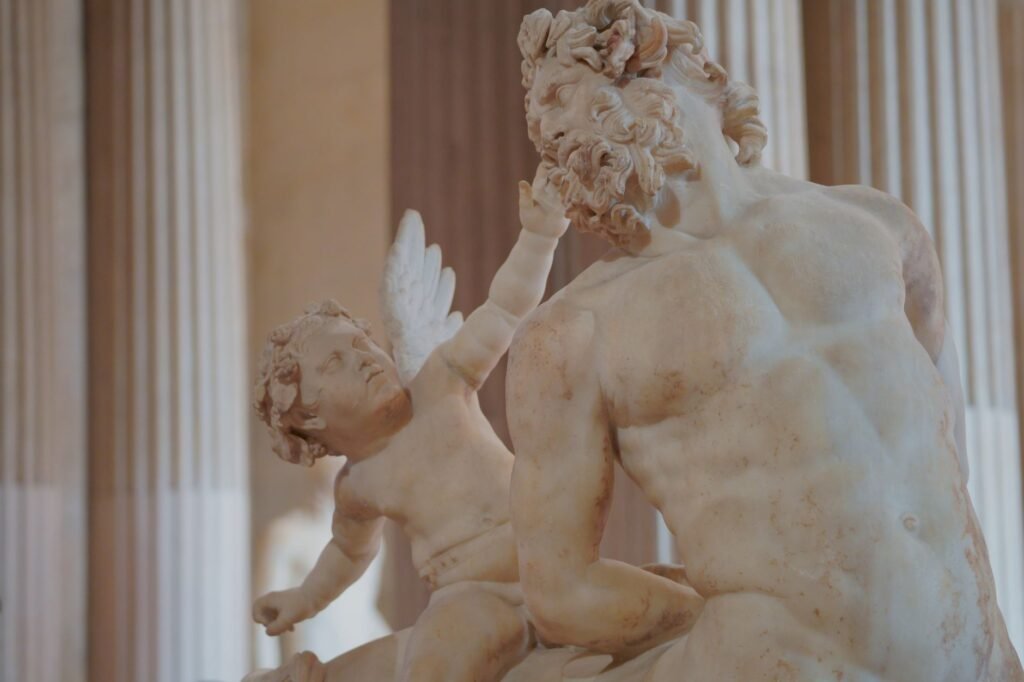
Ladon is a figure from Greek mythology best known as the many-headed serpent or dragon that guarded the golden apples in the Garden of the Hesperides. In later retellings, Ladon became one of the most recognizable mythic guardians in the ancient world: a creature of immense size, vigilant in duty, and bound to a sacred task that made him both fearsome and symbolic.
Ladon is important for several reasons. He appears in myths connected to Heracles, the Hesperides, Atlas, and the divine boundary between mortals and immortals. He also illustrates a recurring theme in Greek mythology: the presence of monstrous guardians at the edges of the world, protecting treasures, sacred places, or divine gifts. In art and literature, Ladon became a model for serpent-like protectors and a symbol of watchfulness, danger, and the difficulty of obtaining what is divinely kept.
Origin and Meaning
The etymology of Ladon is not completely certain. Ancient Greek sources preserve the name as Λάδων (Ládōn), but the deeper linguistic origin remains unclear. Scholars have proposed that it may be connected to Greek or pre-Greek place-names and myths, rather than to a fully transparent Greek root.
The name is also associated with a river in Arcadia called Ladon, which suggests that the mythic figure may have taken his name from a local landscape feature or, conversely, that the river was later explained through myth. As with many Greek mythological names, the direction of borrowing is not always certain.
A useful point of caution is that ancient traditions do not always describe Ladon in exactly the same way. In some accounts he is a serpent, in others a dragon, and in still others a multi-headed monster. The name therefore belongs to a mythic tradition broader than any single fixed image.
Historical Context
Ladon belongs to the mythic landscape of ancient Greek religion and heroic legend, especially the cycle of stories around Heracles. These myths were not merely entertainment. They helped Greeks explain sacred geography, divine order, the origin of ritual boundaries, and the dangers involved in approaching things belonging to the gods.
The Garden of the Hesperides was imagined as a distant, almost unreachable place at the edge of the world. Such borderlands are common in Greek myth: they mark the transition from the familiar human sphere into a realm of wonder, peril, and divine ownership. Ladon, as the guardian of the garden, belongs to this symbolic geography.
The myth also reflects a wider Mediterranean and Near Eastern pattern in which a serpent or dragon guards a precious object, such as fruit, immortality, or a sacred spring. Greek mythology adapted this pattern into its own heroic narratives, especially the labors of Heracles.
Main Characteristics
Ladon’s most important characteristics vary by source, but several traits recur:
- Guardian role: He protects the golden apples of the Hesperides.
- Serpentine form: He is usually described as a serpent or dragon.
- Multiple heads: Some later traditions give him many heads, emphasizing his terrifying nature.
- Liminal position: He stands at the edge of the world, guarding a sacred threshold.
- Defeat by Heracles: In some versions, Heracles kills Ladon to seize the apples.
Ladon is not generally portrayed as a mindless beast. He is a functional guardian within a divine setting. His role is not simply to fight but to prevent access. In this sense, he represents the mythic obstacle that must be overcome before heroic success can be achieved.
Key identifying features
| Feature | Description |
|---|---|
| Type | Serpent, dragon, or serpent-dragon |
| Function | Guardian of the golden apples |
| Setting | Garden of the Hesperides |
| Associated hero | Heracles |
| Symbolic meaning | Vigilance, boundary protection, sacred limitation |
Family and Genealogy
Ladon’s genealogy is one of the most inconsistent aspects of his myth. Ancient authors and later mythographers do not agree on his parents or relatives.
Common traditions
Different sources make Ladon the child of different divine or monstrous parents:
- Ceto and Phorcys: In some mythic genealogies, monstrous beings such as sea deities or primordial powers are linked to Ladon.
- Typhon and Echidna: Another common tradition places him among the offspring of these famous monster parents.
- Gaia: Some later or alternative traditions connect Ladon to Earth itself, either directly or through broader chthonic associations.
Children and descendants
Ladon is not usually credited with children in the major surviving myths. His role is that of guardian rather than progenitor. In some later interpretive traditions, especially in poetic or symbolic treatments, he may be linked to the broader family of dragons and serpents that populate Greek myth, but these are not consistent genealogical claims.
Spouses
No standard spouse is firmly established for Ladon in the major classical sources. Unlike gods and heroes with elaborate family networks, Ladon is primarily defined by function rather than domestic relationships.
Symbols
Ladon is associated with symbols that reflect his role as guardian of a sacred and valuable object.
Common symbolic associations
- Serpent form: The serpent symbolizes watchfulness, danger, and hidden power.
- Dragon imagery: Dragons in Greek myth often represent guarded wealth or forbidden access.
- Golden apples: As the object he protects, the apples are the central emblem of his myth.
- Thresholds and boundaries: Ladon symbolizes the border between the mortal and divine worlds.
- The circle or coil: Serpentine coiling suggests endless vigilance and enclosure.
The golden apples themselves are especially important. They are not ordinary fruit but divine treasures associated with the Hesperides and, in some traditions, with marriage, immortality, or sacred reward. Ladon’s role gives the apples their mythic value by making them difficult to obtain.
Sacred Animals
Because Ladon is himself a serpent or dragon, he is most often associated with reptilian and chthonic animal symbolism rather than with a separate sacred animal list.
Associated animals
- Snakes: The primary animal association; snakes in Greek thought could represent earth power, danger, healing, and sacred protection.
- Dragons: A broader mythological category used for large serpent-like guardians.
- Birds of prey in some symbolic readings: These are not directly central to Ladon’s myth, but in iconographic traditions they can appear in scenes of struggle between elevated and chthonic powers.
Symbolic significance
Snakes in Greek religion could be ambivalent. They were not always evil. They could protect homes, sanctuaries, and tombs, and were linked to earth deities and renewal. Ladon reflects this ambivalence in extreme form: he is dangerous, but he is also a legitimate guardian.
Sacred Plants
There is no universally established plant sacred to Ladon in the same way that some deities or heroes are linked to specific flora. However, the myth of the golden apples makes fruit and orchard imagery central to his symbolic sphere.
Important plant associations
- Apple trees: The most important plant motif connected to Ladon, because they produce the apples he guards.
- Golden apples: Mythic fruit associated with divine property, fertility, and reward.
- Garden vegetation: The Hesperides’ garden is imagined as lush, protected, and distant.
In ancient literature, the apples may stand for more than literal fruit. They can signify a divine prize, a test of skill, or an object of desire that is inaccessible without extraordinary effort. The plant symbolism is therefore tied to the myth’s larger theme of guarded abundance.
Sacred Places
Ladon is most strongly associated with the Garden of the Hesperides, a remote and enchanted place located at the edge of the world.
The Garden of the Hesperides
This is Ladon’s primary sacred place. It is a mythical garden where the Hesperides, nymphs of the evening or western edge, tend a tree bearing golden apples. Ladon serves as guardian of this tree or the orchard surrounding it.
Other locations connected to Ladon
Because Greek myth often localizes stories differently, Ladon can also be connected indirectly with:
- The western limits of the world
- Mount Atlas in some later traditions involving Atlas and the Hesperides
- Arcadia, through the river Ladon, though this is more a namesake than a secure mythic residence
- Sites of Heracles’ labors, especially those that retell the eleventh labor
Geographic symbolism
The garden is not just a place but a mythic boundary. It belongs to a zone beyond ordinary human settlement, reinforcing the idea that Ladon’s presence marks a sacred edge.
Powers and Attributes
Ladon’s powers are generally those of a dragon-like guardian rather than a god with independent divine authority.
Main attributes
- Physical strength: He is capable of resisting intrusion into the garden.
- Vigilance: His central attribute is constant watchfulness.
- Protective function: He prevents theft or unauthorized access.
- Terrifying presence: His form itself serves as a deterrent.
Areas of influence
Ladon does not rule over an abstract domain in the way a god does. His “power” lies in his role within a mythic system:
- protection of sacred goods
- enforcement of divine boundaries
- preservation of inaccessible treasures
- testing the heroism of Heracles and other figures
Some later literary and artistic traditions exaggerate his monstrous aspects, making him a more formidable opponent. In all cases, his defining attribute is guardianship.
Main Myths
The myth of Ladon is most closely associated with Heracles’ eleventh labor, but there are related traditions worth noting.
The golden apples of the Hesperides
The central myth concerns the golden apples in the Garden of the Hesperides. Depending on the version, Heracles either:
- kills Ladon outright,
- tricks or bypasses him,
- or avoids direct combat by having another figure obtain the apples for him.
Ancient versions differ on the exact sequence of events. In some accounts, Heracles asks Atlas to retrieve the apples while he temporarily bears the sky. In such versions, Ladon may not be killed at all. In others, he is slain by Heracles’ arrows.
Death and transformation
In later mythological and poetic traditions, Ladon’s death is sometimes linked to heavenly transformation or memorialization. One widespread later idea is that defeated figures may become stars or constellations, though the details vary and are not equally attested across all sources.
The labor of Heracles
Ladon’s most enduring narrative function is to test Heracles. The hero’s success in obtaining the apples demonstrates strength, cunning, and endurance. Ladon is therefore not a side character but an essential component of the labor’s structure. Without the guardian, the apples would not represent a heroic challenge.
Relationship with Other Mythological Figures
Ladon interacts mainly with a small number of mythological figures, but those relationships are significant.
Heracles
Heracles is Ladon’s most famous opponent. In the eleventh labor, the hero seeks the golden apples, and Ladon stands in his way. Their relationship is adversarial and highly symbolic: the human hero confronts the divine guardian at the edge of the world.
The Hesperides
The Hesperides are the nymphs who tend the garden. They are not usually enemies of Ladon, and in some versions they are part of the same protected sphere. Ladon guards what they cultivate or preserve.
Atlas
Atlas is involved in some versions of the apple quest. While he is not Ladon’s direct counterpart, his role in retrieving the apples highlights the garden’s complex protective structure. Ladon and Atlas together reinforce the remoteness and difficulty of the task.
Zeus and the divine order
Although Ladon is not usually said to oppose Zeus directly, his existence belongs to a world ordered by higher divine authority. He serves a function within that order rather than rebelling against it.
Monster lineages
Because some traditions make Ladon an offspring of monstrous divine parents, he also belongs to a broader family of mythic adversaries that includes hydras, serpents, and other guardians. This places him in the larger Greek imagination of primeval danger.
Worship and Cult
There is no strong evidence for a widespread independent cult of Ladon comparable to major Olympian gods. He is primarily a mythic being rather than an object of formal worship.
Possible ritual and cultural significance
Even without a dedicated cult, Ladon’s myth may have had ritual and symbolic resonance in several ways:
- Heracles cults: Because Ladon appears in the labors of Heracles, he indirectly belongs to the hero’s religious and artistic afterlife.
- Boundary symbolism: Serpentine guardians often appear in sanctuaries, household protection, and tomb contexts in Greek religion.
- Localized traditions: The river Ladon and place-based myths may reflect regional religious memory.
Offerings and festivals
No major festival is securely identified as a festival of Ladon. Any offerings associated with him would likely have been indirect, through Heracles or the sanctuaries where related myths were represented.
Ancient Sources
Ladon is mentioned or implied in several ancient sources, though not always with the same details.
Important classical and late antique sources
- Hesiod: The genealogical tradition around monsters and divine offspring provides background for figures like Ladon, even when not always named in surviving summaries.
- Apollodorus, Bibliotheca: One of the most important mythographic sources for Heracles’ labors and the golden apples.
- Pausanias, Description of Greece: Valuable for local traditions, geographical connections, and interpretive myth.
- Ovid, Metamorphoses: Later literary retellings preserve and reshape mythic material involving Heracles and related transformations.
- Hyginus, Fabulae: Offers brief mythographic summaries of episodes involving dragon guardians and heroic labors.
Source variation
Ancient sources disagree on several points:
| Issue | Variation |
|---|---|
| Form | Serpent, dragon, or many-headed monster |
| Fate | Killed by Heracles or bypassed in other versions |
| Parentage | Different monster lineages depending on source |
| Relationship to constellations | Present in some later traditions, absent in earlier ones |
This variation is typical of Greek mythology, which was never a single fixed canon.
Roman Equivalent
Ladon does not have a direct Roman equivalent in the way Zeus corresponds to Jupiter or Hera to Juno. However, Roman writers inherited and adapted the Greek myth of the golden apples and the guardian serpent.
In Roman literature, Ladon may be preserved as part of the Greek mythological tradition rather than replaced by a Roman deity. The figure appears in Latin poetic and mythographic contexts as a dragon or serpent guarding divine fruit. Thus, Ladon is better understood as a Greek mythological being incorporated into Roman literary culture than as a Roman god with an independent identity.
Influence on Modern Culture
Ladon has had a lasting influence on modern depictions of dragons, guardians, and mythic quests.
Literature and scholarship
Modern retellings of Greek mythology often mention Ladon in accounts of the Hesperides and Heracles’ labors. In scholarly writing, Ladon is discussed as an example of the guardian dragon motif common in world mythology.
Art
In visual art, Ladon has been depicted as:
- a single serpent winding around the garden
- a multi-headed dragon confronting Heracles
- a symbolic serpent in garden scenes
Artists interested in classical subjects often use Ladon to emphasize the dramatic tension between hero and monster.
Games, comics, and fantasy media
Modern fantasy media frequently borrows from Greek myth, and Ladon’s image contributes to the standard “dragon guarding treasure” archetype. He may appear directly in:
- role-playing games
- fantasy novels
- video games
- comics and myth-inspired animation
Even when not named explicitly, his narrative pattern is widely echoed in modern storytelling.
Popular culture significance
Ladon’s importance today lies less in independent fame and more in his contribution to the enduring image of the dragon as a keeper of treasure or sacred access. The myth remains influential because it combines adventure, danger, and the promise of reward.
Curiosities
- Ladon is sometimes treated less as a villain and more as a necessary guardian performing a sacred duty.
- The golden apples he protects may symbolize not only wealth but also divine favor, fertility, or immortality.
- Ancient traditions place the Hesperides at the far west, a direction often linked with sunset, mystery, and the edge of the known world.
- Ladon’s myth helped shape later European ideas of the dragon guarding treasure, a motif that persists in fantasy literature.
- Some later artistic traditions turned him into a constellation-like or heavenly figure, though this is not uniformly found in early sources.
- The river Ladon in Arcadia shares the name, showing how myth and geography often influenced one another in ancient Greece.
Frequently Asked Questions
Who was Ladon in Greek mythology?
Ladon was the serpent or dragon who guarded the golden apples in the Garden of the Hesperides.
Was Ladon a god?
No. Ladon is generally considered a mythological monster or guardian creature, not an Olympian or major deity.
Did Heracles kill Ladon?
In some ancient traditions, yes. In others, Heracles obtained the apples without killing Ladon, so the myth varies by source.
Why was Ladon important?
Ladon was important because he guarded a divine treasure and represented the challenge of reaching sacred or forbidden things.
What did Ladon guard?
He guarded the golden apples of the Hesperides, which were kept in a distant mythical garden.
Was Ladon a dragon or a serpent?
Ancient sources and later traditions describe him variously as a serpent, dragon, or serpent-like monster. The exact form is not fixed.
Does Ladon have a Roman equivalent?
Not really. Roman writers generally kept him as part of the Greek mythological tradition rather than replacing him with a Roman deity.
Are there any temples to Ladon?
There is no well-attested independent cult or major temple dedicated specifically to Ladon.
Conclusion
Ladon is one of the most memorable guardian figures in Greek mythology. Though not a major god or hero, he plays a crucial role in one of the best-known heroic narratives: Heracles’ quest for the golden apples of the Hesperides. As a serpent or dragon set at the edge of the world, Ladon embodies the ancient mythic idea that divine treasures must be protected by formidable barriers.
His enduring legacy lies in his symbolic power. Ladon represents vigilance, sacred boundary, and the obstacle that gives value to a quest. Through ancient literature, art, and later fantasy traditions, he has remained an influential image of the guardian monster—terrifying, meaningful, and inseparable from the hero’s journey.

Orin Vale has spent the better part of two decades tracing the threads that connect the world’s oldest stories — from the halls of Asgard to the banks of the Nile, from Olympus to the jungles of the Maya. What began as a childhood fascination with flood myths and trickster gods grew into years of independent study across comparative mythology and ancient religion, always chasing the same question: what did these stories mean to the people who first told them? Orin writes for readers who want more than trivia — the ones looking for the beliefs, fears, and truths that myths were built to carry.