Oni
Introduction

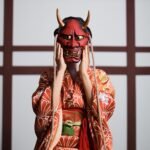
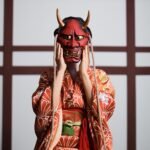
Oni are among the most recognizable beings in Japanese folklore: fearsome supernatural creatures commonly translated as demons, ogres, trolls, or devils, though none of these English terms fully captures their cultural meaning. In stories, visual art, festival traditions, theater, and popular culture, oni appear as dangerous, chaotic, or punitive beings, but their role is more complex than simple monstrosity. They can symbolize calamity, punishment, disease, envy, resentment, or the destructive side of human nature. At the same time, oni also serve as protectors in some ritual contexts, especially in festivals designed to drive away misfortune.
The image of the oni has evolved over many centuries. Early Japanese usage did not always refer to horned red monsters; the concept developed through contact with continental ideas, Buddhist cosmology, local beliefs, and artistic convention. Today, oni remain a major presence in Japanese culture, instantly recognizable through their horns, sharp teeth, tiger-skin loincloths, iron clubs, and threatening expressions.
Origin and Meaning
The word oni is written with the kanji 鬼, a character shared with Chinese and East Asian traditions. In Chinese, the related character referred broadly to spirits of the dead or ghosts. In Japan, the term underwent a gradual semantic shift. Early Japanese texts used oni for invisible or uncanny presences, including spirits, monsters, and nonhuman beings, rather than the fixed horned figure familiar today.
Scholars generally agree that the meaning of oni changed over time under the influence of:
- Chinese cosmology and terminology
- Buddhist ideas of hell beings and punishers
- Indigenous Japanese beliefs about malevolent forces
- Folk imagination and visual representation
The modern image of oni as horned, colored, and muscular is largely a product of medieval and early modern Japanese culture. Different periods and regions also gave the term broader or narrower meanings. In some contexts, oni could refer to a dead person’s spirit, a hidden presence, a mountain being, or a demonic force.
Historical Context
The development of oni is closely tied to the religious and cultural history of Japan. They emerge from a blending of beliefs rather than from a single origin.
Early and Classical Japan
In early Japanese literature, oni were not yet standardized as visual monsters. Texts such as the Nihon Shoki and later court literature reflect a world in which the supernatural included spirits, curses, and strange beings. The concept of a malevolent unseen force was important in a society where illness, disaster, and social disorder were often understood through religious and cosmological frameworks.
Buddhist Influence
Buddhism played a major role in shaping oni imagery. Buddhist cosmology included infernal beings, guardians of hell, and punitive figures associated with the afterlife. These ideas influenced Japanese representations of punishment, sin, and karmic retribution. Oni came to be associated with hell scenes, especially as attendants who tormented the wicked.
Medieval and Edo Period Development
By the medieval period, artistic and literary portrayals had become more concrete. Oni appeared in emaki picture scrolls, Noh and Kyogen drama, and religious painting. They were often shown as gigantic, ugly, violent beings inhabiting mountains, borders, caves, or hell.
During the Edo period, the oni image was popularized further through prints, theater, storytelling, and festival customs. This period helped standardize many features now considered typical:
- horns
- wild hair
- red, blue, or black skin
- tiger-skin garment
- iron club, often called a kanabō
Main Characteristics
Oni are not a single fixed species in folklore, but several overlapping traditions share common traits. Their appearance and behavior vary by source.
Common Physical Features
Typical oni are depicted as:
- large or giant-sized
- muscular and imposing
- horned
- wild-haired
- sharp-toothed or fanged
- clawed
- colored red, blue, black, or sometimes green
- wearing a tiger-skin loincloth or other animal skin
- carrying a metal club
These features are visual conventions that became especially influential in art and popular imagination. Not every oni is described this way in older sources.
Behavioral Traits
Oni are often portrayed as:
- violent and aggressive
- cannibalistic or man-eating
- disruptive of order
- associated with punishment, disease, or disaster
- feared for abduction, assault, or destruction
- vulnerable to exorcism, prayer, ritual, or cleverness
Yet oni are not always purely evil. In some stories they can be tricked, redeemed, transformed, or even used symbolically as guardians against other evil forces.
Moral and Symbolic Role
In Japanese culture, oni often represent the dangers of uncontrolled emotion and social transgression. They may embody:
- anger
- greed
- jealousy
- resentment
- vengeance
- pollution or impurity
- untamed natural forces
This symbolic flexibility explains why oni can appear in both frightening and protective contexts.
Family and Genealogy
Unlike gods in genealogical myth cycles, oni do not have a single universal family tree. Their ancestry depends on the story, region, or religious framework.
No Unified Genealogy
Most oni are not presented as members of one divine lineage. Instead, they belong to a broad category of supernatural beings. Some are:
- transformed humans
- spirits of the dead
- demons of hell
- mountain beings
- shape-shifters
- beings born from curses or negative karma
Oni in Specific Tales
In individual legends, an oni may have parents, spouses, or offspring, but these details are not consistent across traditions. Some famous oni-like figures, such as Shuten Dōji or Ibaraki Dōji, are treated as singular legendary monsters rather than members of a coherent family line.
Relationship to Humans
A recurring theme in folklore is the boundary between human and oni. In some stories, a human becomes an oni through:
- extreme anger or grief
- demonic possession
- sin accumulated through karma
- living in isolation or on the margins of society
This blurred boundary is one reason oni are so culturally significant: they can function as “othered” versions of human behavior and emotion.
Symbols
Oni are associated with a distinctive set of symbols, many of which vary by era and region.
| Symbol | Meaning |
|---|---|
| Horns | Wildness, danger, nonhuman power |
| Tiger-skin loincloth | Martial ferocity; links to directional symbolism in traditional cosmology |
| Iron club (kanabō) | Physical strength, coercive force, punishment |
| Red skin | Aggression, heat, intense emotion, danger |
| Blue or black skin | Darkness, coldness, evil, hidden menace |
| Fanged mouth | Predation, carnivorous threat |
| Straw ropes or ritual barriers in festivals | Exorcism and protection |
The Kanabō
The kanabō, a heavy iron club, is one of the best-known oni symbols. The phrase “oni ni kanabō” means something like “giving an iron club to an oni,” referring to making an already powerful person even stronger. It remains a common Japanese proverb.
Directional Symbolism
In some traditional contexts, oni are linked with the northeast, a direction considered inauspicious in East Asian cosmology and sometimes called the “demon gate” or kimon. This association helped shape both the image of oni and architectural or ritual methods intended to block harmful forces.
Sacred Animals
Strictly speaking, oni do not have sacred animals in the way some deities do. However, several animals are symbolically associated with them through folklore and ritual convention.
Tigers
The most famous animal linked to oni is the tiger. Tiger-skin garments and the tiger’s association with the inauspicious northeast made it a recurring oni symbol. In Japanese popular imagery, the pairing of oni and tiger is especially strong.
Bulls
Some oni-related figures or hell guardians are associated with oxen or bulls, especially in scenes of the underworld or in processions connected with punishment and judgment. However, this is more a feature of broader Buddhist demonography than of oni alone.
Ogres and Animal Traits
Oni are also described with animal-like qualities rather than linked to one specific sacred beast. Their claws, fangs, and physical power place them in a hybrid category between human, animal, and spirit.
Sacred Plants
Oni are not strongly associated with sacred plants in the manner of some deities or ritual cults. Still, a few plant-related traditions are relevant.
Holly and Protective Plants
In Japanese seasonal customs, certain plants are used to repel harmful spirits, including oni. Holly is especially notable in some regions because its prickly leaves are thought to deter evil.
Beans in Setsubun
While not a sacred plant in the strict sense, soybeans are central to the festival of Setsubun, when people throw roasted beans to drive out oni. The ritual phrase often recited is:
“Oni wa soto! Fuku wa uchi!”
(“Demons out! Good fortune in!”)
This is one of the most enduring oni-related customs in Japan.
Sacred Places
Oni are associated less with fixed sanctuaries than with liminal, dangerous, or uncanny places.
Mountains
Mountains are common settings for oni legends. In Japanese folklore, mountains often mark the boundary between the human world and the supernatural. Many oni are believed to dwell in remote highlands, caves, or abandoned regions.
Hell and the Underworld
In Buddhist-influenced traditions, oni are strongly tied to the realm of punishment after death. They may serve as guards, tormentors, or executioners in hell scenes. This association is especially clear in visual art and religious storytelling.
The Demon Gate
The kimon, or northeast direction, is not a sacred place in the modern sense, but it is a crucial spatial concept in oni symbolism. Buildings and temples may be oriented or protected to block this direction, reflecting the belief that harmful forces can enter from there.
Legendary Sites
Some famous oni legends are attached to specific mountains, bridges, or palaces, especially in tales about heroic warriors defeating demons. These locations often become part of local cultural memory and tourism.
Powers and Attributes
Oni are usually portrayed as possessing exceptional physical power and a range of supernatural capacities.
Common Powers
Depending on the story, oni may have:
- immense strength
- resilience and durability
- magical or shapeshifting abilities
- ability to cause fear or disease
- role as punishers of the wicked
- invisibility or hidden movement
- resistance to ordinary weapons
Domains of Influence
Oni are commonly connected with:
- punishment
- disaster
- violence
- impurity
- mountain spaces
- the underworld
- seasonal exorcism and boundary protection
Not All-Consuming Evil
Some sources treat oni less as metaphysical evil and more as disruptive beings with a specific domain. They are agents of danger, but not always the ultimate source of it. In this sense, oni belong to a broader Japanese pattern in which the supernatural is not always divided into absolute good and absolute evil.
Main Myths
Many of the best-known oni stories come from medieval literature and later retellings.
Shuten Dōji
One of the most famous oni legends is that of Shuten Dōji, a powerful demon leader said to have lived on Mount Oe and terrorized the capital. In the tale, he is defeated by heroes under the command of Minamoto no Yorimitsu. The story appears in multiple versions and became highly influential in later theater and art.
Ibaraki Dōji
Ibaraki Dōji is another celebrated oni figure, often associated with the gate of Rashōmon in Kyoto. In one well-known story, the warrior Watanabe no Tsuna cuts off the oni’s arm. The tale survives in varying forms, and details differ by source.
Oni and Setsubun
A major mythic pattern is the ritual expulsion of oni at the new seasonal cycle. At Setsubun, oni symbolize misfortune and are driven away so that good fortune may enter. This is not a single mythic narrative but a ritualized reenactment of protection.
Oni and the Reversal of Fortune
Folktales often feature humans who defeat oni through cleverness rather than strength. This reflects a recurring moral pattern: brute force alone is not enough, and social intelligence, ritual purity, or divine support may prevail.
Relationship with Other Mythological Figures
Oni interact with a wide range of Japanese mythological and religious figures.
Buddhist Guardians and Hell Beings
Oni are often linked with Buddhist hell attendants and punitive beings. However, they are not identical to all such figures. Some are more like generic demons, while others perform specific infernal roles.
Tengu
Oni are sometimes compared with tengu, another major class of Japanese supernatural beings. Both can inhabit remote places and threaten humans, but tengu are often associated more with mountains, arrogance, and martial or ascetic power, while oni are usually more directly demonic or destructive.
Yokai
In modern scholarship and popular culture, oni are often included among yokai, the broad category of supernatural creatures, monsters, and strange phenomena in Japanese folklore. This classification is useful, though historical usage varied.
Human Heroes
Oni are commonly opposed by heroic warriors, monks, or ritual specialists. These stories reinforce the role of oni as tests of courage, morality, and spiritual discipline.
Worship and Cult
Oni are generally not worshiped as gods in the usual sense. However, they are deeply embedded in ritual practice.
Exorcism and Protection
Many customs involving oni are designed to repel them rather than honor them. These include:
- bean-throwing at Setsubun
- chanting protective formulas
- using sacred ropes or boundary markers
- placing talismans or protective images
- performing purification rituals
Festival Uses
In some local festivals, oni are dramatized as part of a protective or agricultural cycle. A costumed oni may be chased away, symbolizing the expulsion of evil and the renewal of communal order.
Ambivalent Ritual Role
In certain traditions, oni-like figures can function as protectors by frightening away worse harm. This ambivalence is characteristic of many folk religions: the same figure may be dangerous in one context and protective in another.
Ancient Sources
Because oni are a developing folkloric category, there is no single “founding text” equivalent to the origin stories of some deities. Still, several important classical and premodern sources are relevant.
Major Sources and Traditions
| Source | Relevance |
|---|---|
| Nihon Shoki | Early references to uncanny beings and supernatural forces |
| Konjaku Monogatari Shū | Medieval tale collection with numerous demon and spirit stories |
| The Tale of the Heike | Includes supernatural and warrior-related folklore motifs |
| Otogizōshi | Popular medieval narratives, including oni tales |
| Noh and Kyogen plays | Dramatic portrayals of oni and transformed beings |
| Emaki scrolls | Visual tradition that shaped oni iconography |
| Buddhist texts and sermons | Influence on hell imagery and moral punishment |
Important Scholarly Caution
Because oni are folklore figures rather than a single god or hero, references in older sources may not always use the term in the same way. A text translated as describing an “oni” may in fact refer to a ghost, demon, ogre, or invisible spirit, depending on context.
Roman Equivalent
There is no exact Roman equivalent to oni. The closest adaptations in translation are terms such as demon, ogre, devil, or monster, but each is imperfect.
Why No Perfect Match Exists
Roman religion and mythology did not contain a being identical to the Japanese oni. The nearest comparisons would be broad categories such as:
- daimones in the Greek-Roman sense of spirits
- underworld tormentors
- monstrous enemies in myth
However, these parallels are only approximate. Oni are better understood on their own cultural terms as a Japanese folkloric and religious category shaped by local history.
Influence on Modern Culture
Oni have remained extraordinarily influential in modern Japan and beyond.
Literature and Art
Modern writers and artists continue to use oni as symbols of danger, otherness, or inner conflict. They appear in:
- children’s books
- horror fiction
- manga
- graphic art
- contemporary painting and illustration
Cinema and Television
Oni imagery is common in Japanese film and television, especially in fantasy, horror, and period drama. The visual shorthand of horns, skin color, and clubs makes oni instantly recognizable to audiences.
Games and Anime
Oni are frequent in:
- video games
- tabletop role-playing games
- anime
- collectible card games
- fantasy adaptations
They are often reimagined as powerful bosses, antiheroes, or folkloric enemies. Some modern works soften or reinterpret oni, giving them comic, tragic, or protective qualities.
Global Popularity
Outside Japan, oni have become familiar through global fandoms and cultural export. Their popularity is partly due to their striking design and partly because they sit at the intersection of mythology, horror, and fantasy.
Curiosities
- The phrase oni ni kanabō is a common proverb about overwhelming strength.
- Oni are strongly associated with Setsubun, when people throw beans to drive bad luck away.
- The modern oni image is much more standardized than older textual references, which were often less visually specific.
- Red and blue oni are especially common in modern depictions, though other colors also appear.
- In some children’s stories and modern cartoons, oni are portrayed humorously rather than terrifyingly.
- The image of oni can overlap with ideas about outsiders, mountain people, or socially marginal groups in historical interpretation, though such readings must be handled carefully and do not apply uniformly.
- Some local festivals in Japan use oni costumes not to glorify demons but to dramatize purification and renewal.
Frequently Asked Questions
What are oni in Japanese folklore?
Oni are supernatural beings in Japanese folklore often described as demons, ogres, or trolls. They are usually associated with destruction, punishment, misfortune, and fear.
Are oni always evil?
Not always. Although oni are commonly portrayed as dangerous, they can also function as protectors in ritual contexts or symbolize the removal of evil through exorcism.
What do oni look like?
They are often shown with horns, wild hair, sharp teeth, colored skin, tiger-skin garments, and an iron club. However, older sources do not always describe them this way.
What is the meaning of the oni in Setsubun?
At Setsubun, oni represent bad fortune or evil influences. Families and communities throw roasted soybeans while chanting “Oni wa soto! Fuku wa uchi!” to drive them away and invite good luck.
Are oni the same as yokai?
Oni are often categorized as a type of yokai, but the terms are not identical. Yokai is a broad modern category for supernatural beings, while oni refers to a more specific tradition with changing historical meanings.
Where do oni live?
In folklore, oni may dwell in mountains, caves, remote places, or the underworld. They are also symbolically linked to the northeast direction, considered inauspicious in traditional cosmology.
Do oni come from Buddhist tradition?
Buddhist ideas strongly influenced oni imagery, especially their association with hell and punishment. However, oni also draw on older Japanese beliefs and folk traditions.
Is there a Roman equivalent to oni?
No exact Roman equivalent exists. Translations such as demon or ogre are only approximate and do not fully capture the Japanese concept.
Conclusion
Oni are one of the most enduring and versatile figures in Japanese mythology and folklore. Their history shows how religious ideas, social fears, ritual practices, and artistic conventions can merge into a powerful cultural symbol. From early references to unseen spirits to the familiar horned monsters of modern media, oni have continually changed while remaining central to Japanese imagination.
Their significance lies not only in their fearsome appearance but also in what they represent: disorder, punishment, impurity, transformation, and the fragile boundary between human life and the supernatural. Whether appearing in legends, festivals, theater, or popular entertainment, oni continue to embody a rich and layered tradition that remains relevant in both historical study and contemporary culture.

Orin Vale has spent the better part of two decades tracing the threads that connect the world’s oldest stories — from the halls of Asgard to the banks of the Nile, from Olympus to the jungles of the Maya. What began as a childhood fascination with flood myths and trickster gods grew into years of independent study across comparative mythology and ancient religion, always chasing the same question: what did these stories mean to the people who first told them? Orin writes for readers who want more than trivia — the ones looking for the beliefs, fears, and truths that myths were built to carry.