What Does the Scarab Beetle Symbolize in Egyptian Mythology?
Introduction
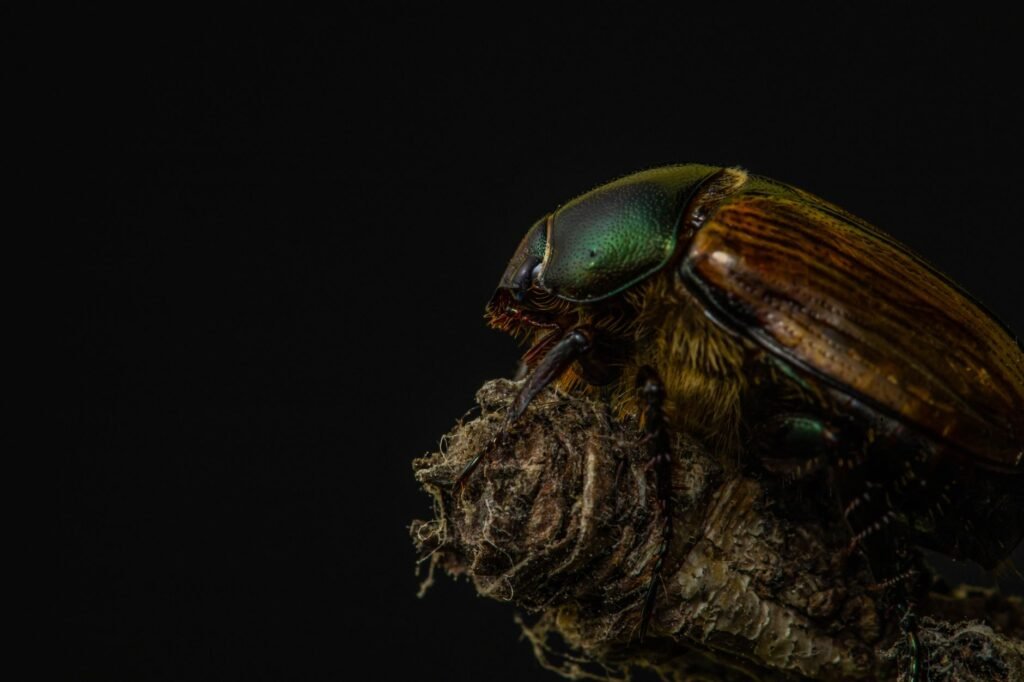
The scarab beetle is one of the most recognizable symbols of ancient Egypt. In Egyptian mythology, the scarab symbolized rebirth, transformation, the cyclical nature of life, protection, and the rising sun. Its image appears on amulets, seals, tomb objects, temple reliefs, and funerary equipment, making it one of the most enduring motifs in Egyptian religious art.
To ask what does the scarab beetle symbolize in Egyptian mythology is to enter a rich network of beliefs about creation, the afterlife, and divine order. The scarab was not treated merely as an insect. It was linked to the god Khepri, a manifestation of the sun god associated with the dawn and with the sun’s daily renewal. Because the beetle appears to push a ball of dung across the ground, the Egyptians connected this action with the sun’s movement across the sky and with the self-generating power of life.
The symbol survived long after the pharaonic period and remains central in modern interpretations of Egyptian religion and art.
Origin and Meaning
The English word scarab comes from Latin scarabaeus, meaning a beetle. In ancient Egyptian, the sacred beetle was generally represented by the word ḫpr or related forms, which are associated with the idea of becoming, coming into being, or transformation. This linguistic connection is important, because the beetle was not symbolically linked only to an animal form; it was tied to a conceptual world in which existence itself was understood as a process of becoming.
The beetle most often depicted in Egyptian art resembles the dung beetle, especially species of the genus Scarabaeus. Egyptians observed the beetle rolling a ball of dung, and they interpreted this natural behavior through religious symbolism. The ball was compared to the sun’s journey, and the beetle’s emergence from the ground or from the ball suggested self-generation and renewal.
Key meaning of the scarab in Egyptian thought
- Creation and becoming
- Solar renewal
- Daily rebirth of the sun
- Protection in life and death
- Resurrection and regeneration
- Transformation of the soul
The scarab’s symbolic power came from the combination of natural observation, religious imagination, and theological association with solar deities.
Historical Context
The scarab became prominent in Egyptian culture during the Middle Kingdom and remained important throughout the New Kingdom and later periods. Scarab amulets were already in use in the First Intermediate Period and Middle Kingdom, and by the New Kingdom they were widely produced in large numbers.
Egyptian religion was deeply concerned with cosmic order, or ma’at, and with the preservation of life after death. The scarab fit perfectly into this worldview because it expressed the idea that life does not end in destruction but can be renewed.
Why the scarab mattered historically
Ancient Egypt was an agricultural civilization shaped by the annual flooding of the Nile, a natural cycle of loss and return. The scarab symbol spoke to this rhythm of death and renewal. It also reflected the solar cycle: the sun rises each morning, reaches its height, disappears, and returns again.
The scarab became especially important in funerary religion. Egyptians believed that the dead required protection, divine favor, and the possibility of rebirth in the afterlife. Scarab amulets were therefore placed in tombs, worn by the living, and sometimes inscribed with names or prayers.
Historical uses of the scarab
| Period | Main use | Significance |
|---|---|---|
| Middle Kingdom | Amulets and seals | Protection and identity |
| New Kingdom | Funerary scarabs, heart scarabs | Rebirth, judgment, divine assistance |
| Late Period and beyond | Continued amuletic use | Popular religious symbol and protective charm |
Main Characteristics
The scarab beetle in Egyptian mythology is characterized less by biological accuracy than by symbolic function. It is usually shown in a stylized form, with a rounded body and clearly marked legs.
Most important attributes
- Solar association: linked with the sun at dawn
- Self-generation: connected to the idea of coming into being
- Protective power: used as an amulet against harm
- Funerary significance: related to resurrection and safe passage into the afterlife
- Administrative use: scarab seals were used to mark objects and documents
The image of the scarab often appears on a flat base that could be carved with inscriptions, a practical feature that made it useful as a seal. This dual role—symbolic and functional—helped the scarab spread widely across Egyptian society.
Family and Genealogy
Unlike anthropomorphic gods such as Osiris, Isis, or Horus, the scarab beetle is not usually treated as a deity with a detailed family genealogy. Instead, it is an animal symbol closely associated with divine powers, especially Khepri.
Associated divine relationships
- Khepri: the god most closely identified with the scarab and the rising sun
- Ra: the solar deity often linked with Khepri in broader solar theology
- Atum: in some theological traditions, connected with the setting sun or with the broader solar cycle
- Osiris: in funerary contexts, the scarab’s regenerative symbolism complements Osirian resurrection beliefs
Because the scarab is a symbol rather than a family-based mythic figure, it does not have children, spouses, or descendants in the usual mythological sense. Its “genealogy” is theological rather than familial: it belongs to the solar and funerary religious system of ancient Egypt.
Symbols
The scarab was itself a symbol, but it was also connected to a wider symbolic language.
Sacred symbols associated with the scarab
| Symbol | Meaning |
|---|---|
| Sun disk | Solar life, divine power, daily renewal |
| Wings | Protection, transcendence, movement into the afterlife |
| Hieroglyphs for ḫpr | Becoming, transformation, emergence |
| Ankh | Life |
| Djed pillar | Stability, endurance, resurrection |
| Name inscriptions on scarabs | Identity, authority, protection |
Meaning of scarab colors and materials
Ancient scarabs were made from a range of materials, including steatite, glazed faience, stone, and precious substances in elite contexts. The choice of material could affect symbolic and social meaning.
- Green or blue-green faience often suggested fertility, regeneration, and life.
- Stone conveyed permanence and durability.
- Precious materials indicated status and special ritual importance.
The colors themselves were not always standardized across all periods, but green and blue-green are especially significant in Egyptian symbolism more broadly because they evoke vegetation, renewal, and the life-giving forces of the Nile.
Sacred Animals
The scarab beetle is itself the sacred animal in question, but Egyptian religious symbolism often placed animals in a larger sacred landscape.
Symbolic significance of the scarab as an animal
The scarab beetle was sacred because of what its natural behavior seemed to reveal:
- It rolls a ball of dung, which Egyptians associated with the sun’s movement.
- It appears to emerge from the ground, suggesting spontaneous generation.
- Its life cycle and metamorphosis reinforced the idea of transformation.
Egyptians were not practicing modern entomology. Their interpretation was symbolic, theological, and observational. The beetle became sacred because it embodied a cosmic principle.
Other animals connected by symbolism
Although not “sacred animals” in the same sense, some other creatures shared related meanings:
- Falcons: associated with solar and royal power
- Bulls: fertility and strength
- Crocodiles: power and danger
- Cats: protection and domestic well-being
- Snakes: renewal and cosmic forces
These animals belonged to the broader symbolic world of Egyptian religion, where the scarab held a particularly prominent place.
Sacred Plants
There is no single sacred plant uniquely and universally linked to the scarab beetle in Egyptian mythology. However, the beetle’s symbolism of rebirth and renewal connects it conceptually to plants associated with life, growth, and regeneration.
Plants that share related symbolism
- Papyrus: linked with Lower Egypt, vitality, and flourishing life
- Lotus: associated with rebirth, the sun, and emergence from water
- Date palm: often connected to endurance and life cycles
- Grain and cereals: linked to death and renewed growth in agricultural religion
The lotus is especially relevant because it opens with the sun and closes at night, making it a strong emblem of solar rebirth. While not a scarab-specific plant, it belongs to the same symbolic field.
Sacred Places
The scarab was not restricted to one sacred site, but its importance can be seen across Egypt’s religious centers.
Important places connected to scarab symbolism
| Place | Relevance |
|---|---|
| Heliopolis | Major solar cult center; linked to creation theology |
| Thebes | Important religious center where solar and funerary beliefs intersected |
| Memphis | Powerful administrative and religious hub; scarabs used in elite and official contexts |
| Tombs in the Valley of the Kings and other necropolises | Scarab amulets used in burial practice |
| Temples throughout Egypt | Scarab imagery appears in ritual and decorative contexts |
Why these places matter
The scarab is tied to both solar religion and funerary religion, so its sacred geography is broad. Heliopolis is especially important because of its association with the sun god and creation theology. Funerary sites, meanwhile, reveal the scarab’s role in helping the dead achieve renewal.
Powers and Attributes
The scarab beetle symbolized several interconnected powers in Egyptian mythology and religion.
Main powers and attributes
- Creation
- Self-renewal
- Resurrection
- Solar movement
- Protection
- Transformation
- Emergence from darkness
- Continuity of life
These are not “powers” in a magical fantasy sense alone. They reflect a religious logic in which natural processes reveal divine truths.
Theological significance
The scarab is especially important because it represents a paradox: life emerging from apparent lifelessness. The beetle’s association with buried matter, transformation, and emergence made it a powerful image for the journey of the soul and the rebirth of the sun.
Main Myths
The scarab is not the protagonist of a single, fixed myth in the way that Osiris or Isis are. Instead, its meaning arises from theological associations and recurring religious images.
The sun’s daily rebirth
The most important mythic idea connected with the scarab is the daily rising of the sun. Khepri, in scarab form, is often understood as the morning sun that brings creation into renewed existence. The beetle’s action of rolling the dung ball was analogized to the sun’s movement across the sky.
Self-creation and emergence
Another major theme is self-generation. In some Egyptian concepts, the scarab suggested a being that appears to create itself or emerge anew. This idea fits into broader creation theology, where divine beings bring order out of undifferentiated existence.
Funerary rebirth
In funerary religion, the scarab becomes part of the mythic passage from death to renewed life. The heart scarab is especially important. Inscribed with a spell from the Book of the Dead—often identified as Spell 30B—it was placed on the mummy to help prevent the heart from testifying against the deceased during judgment.
Main mythic functions of the heart scarab
- Protect the dead from spiritual harm
- Silence the heart if necessary during judgment
- Support the deceased’s successful transition into the afterlife
- Symbolize rebirth and moral balance
Relationship with Other Mythological Figures
The scarab is best understood in relation to other Egyptian divine figures rather than as an independent deity.
Khepri
Khepri is the closest divine counterpart to the scarab. He represents the morning sun and the process of becoming. In some texts and images, Khepri is depicted as a man with a scarab head or as a scarab beetle itself.
Ra
Ra, the major sun god, is closely related to the scarab through solar theology. Khepri may be understood as the dawn aspect of the sun, while Ra represents the broader solar cycle. The two are often complementary rather than separate in modern descriptions, though ancient theology could vary by period and region.
Osiris
Osiris is central to death and resurrection. The scarab’s rebirth symbolism complements Osiris’s role as ruler of the afterlife and symbol of regenerated life.
Atum
Atum, sometimes associated with the setting sun or primordial creation, also belongs to the theological framework in which the scarab functions. In some traditions, solar deities are conceptualized as different forms across the day.
Worship and Cult
The scarab was not worshipped as an independent god in the same manner as a temple deity. Instead, it was revered through amulets, inscriptions, ritual objects, and imagery.
Forms of use and devotion
- Amulets worn by the living
- Funerary amulets placed on mummies
- Heart scarabs used in burial rites
- Scarab seals for administration and identity
- Temple and tomb decoration
Ritual and protective function
Scarabs were thought to protect the bearer from harm and to assist in transition between life and death. They were frequently inscribed with names, prayers, or royal messages. Some commemorative scarabs, especially in the New Kingdom, recorded royal achievements and could be distributed widely.
Festivals
There is no single major festival dedicated solely to the scarab beetle that is universally attested across ancient Egypt. However, the symbol participated in broader solar and funerary ritual life, especially ceremonies honoring the sun and rites for the dead.
Ancient Sources
The scarab beetle is known primarily through archaeology, inscriptions, tomb art, and religious texts rather than through the works of classical Greek or Roman authors.
Egyptian primary sources
- Pyramid Texts: early funerary texts containing solar and rebirth ideas
- Coffin Texts: Middle Kingdom funerary spells with development of afterlife theology
- Book of the Dead: includes spells associated with heart scarabs and judgment
- Temple inscriptions and iconography: show Khepri and solar symbolism
- Amulets and scarab seals: archaeological evidence for widespread use
Classical authors
Classical writers such as Herodotus, Diodorus Siculus, and Plutarch discussed Egyptian religion in broad terms, but they did not provide detailed, reliable mythological accounts of the scarab comparable to Egyptian textual sources. Their testimony is useful as a later external perspective, but it should be treated cautiously.
Roman Equivalent
There is no exact Roman equivalent to the scarab beetle as a religious symbol.
Closest Roman adaptations
- Protective amulets in Roman Egypt sometimes continued Egyptian scarab traditions
- Solar symbolism could be absorbed into wider Greco-Roman religious ideas
- Beetle imagery did not have the same mythological centrality in Roman religion
In Roman Egypt, the scarab remained a recognizably Egyptian symbol, even when used in a Roman imperial context. It was not replaced by a single Roman counterpart.
Influence on Modern Culture
The scarab beetle remains one of the most persistent symbols associated with ancient Egypt in modern culture.
Areas of influence
- Literature: used as a sign of mystery, antiquity, and hidden power
- Cinema and television: often appears in stories about tombs, curses, and ancient magic
- Games: common as a collectible item, magic artifact, or enemy motif
- Art and jewelry: widely reproduced in Egyptian-inspired designs
- Fashion and design: used as a decorative emblem with exotic and historical associations
Modern misunderstandings
Modern popular culture sometimes treats scarabs as purely magical or sinister objects. In reality, their Egyptian meaning was more balanced and profound: they represented life, renewal, protection, and cosmic order, not simply superstition or horror.
Curiosities
Interesting lesser-known facts
- Scarabs were sometimes used as official seals, not only as amulets.
- Some scarabs carried the names of kings and queens, making them important historical evidence.
- The so-called heart scarab was often larger than ordinary scarab amulets.
- Scarab imagery became so widespread that it functioned almost like a visual language of protection and legitimacy.
- The symbolic link between the beetle and the sun is a powerful example of Egyptian observation turned into theology.
- The scarab was one of the most common portable religious objects in ancient Egypt.
Frequently Asked Questions
1. What does the scarab beetle symbolize in Egyptian mythology?
It symbolizes rebirth, transformation, the rising sun, protection, and the cycle of life and death.
2. Why was the scarab beetle sacred in ancient Egypt?
Egyptians observed its behavior, especially the rolling of dung balls, and connected it with the sun’s movement and the idea of self-creation and renewal.
3. Which god is associated with the scarab?
The scarab is most closely associated with Khepri, the god of the morning sun and becoming.
4. What is a heart scarab?
A heart scarab is a funerary amulet placed on the dead, often inscribed with a spell to protect the deceased during judgment in the afterlife.
5. Was the scarab worshipped as a god?
Not usually as an independent god. It was primarily a sacred symbol and amuletic form associated with divine powers, especially Khepri.
6. What materials were scarabs made from?
They were made from materials such as stone, steatite, faience, and sometimes precious materials for elite or ritual use.
7. Did all ancient Egyptians interpret the scarab in exactly the same way?
No. The basic symbolism was widely shared, but meanings could vary by period, region, and religious context.
8. Why is the scarab still famous today?
Because it became one of the most enduring symbols of ancient Egypt, widely recognized in archaeology, museum collections, jewelry, and popular culture.
Conclusion
The scarab beetle is one of the most important symbols in Egyptian mythology because it condenses several core Egyptian ideas into a single image: creation, solar renewal, protection, and rebirth after death. Its association with Khepri and the rising sun gave it cosmic significance, while its use in amulets and funerary practice made it deeply personal and practical.
As a symbol, the scarab reflects the ancient Egyptian view that life is cyclical rather than linear and that transformation is part of the natural and divine order. For this reason, the scarab remains not only a famous artifact of Egyptian civilization but also a lasting expression of one of its central spiritual truths: from apparent ending can come renewal.

Orin Vale has spent the better part of two decades tracing the threads that connect the world’s oldest stories — from the halls of Asgard to the banks of the Nile, from Olympus to the jungles of the Maya. What began as a childhood fascination with flood myths and trickster gods grew into years of independent study across comparative mythology and ancient religion, always chasing the same question: what did these stories mean to the people who first told them? Orin writes for readers who want more than trivia — the ones looking for the beliefs, fears, and truths that myths were built to carry.