Introduction
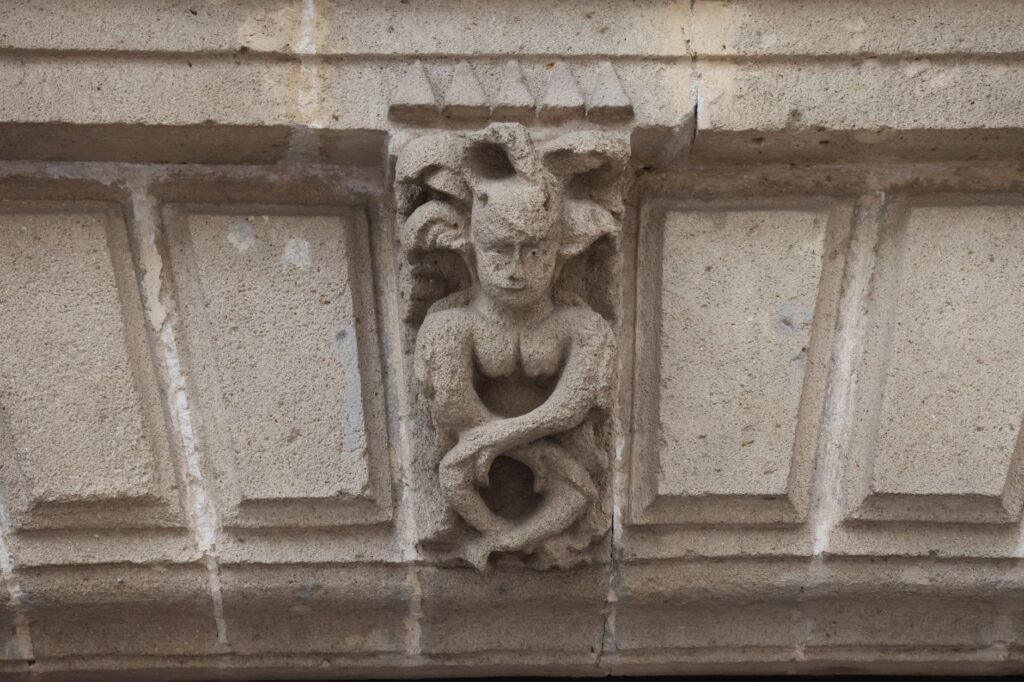
Sheela na Gig is the name given to a distinctive group of carved female figures, most often found on medieval churches and other buildings in Ireland and Britain. Usually shown naked and displaying exaggerated vulvas, these figures have generated intense debate among historians, archaeologists, art historians, and folklorists. Their meaning is uncertain and may have varied by region, period, and context.
Sheela na Gigs are important because they sit at the intersection of religion, folk belief, medieval art, and cultural memory. They are among the most discussed examples of symbolic sculpture in the British Isles, yet they remain difficult to interpret with confidence. Some scholars connect them with medieval moral warning, fertility symbolism, protective magic, or survivals of earlier traditions; others argue that many later interpretations reflect modern assumptions more than medieval evidence.
Origin and Meaning
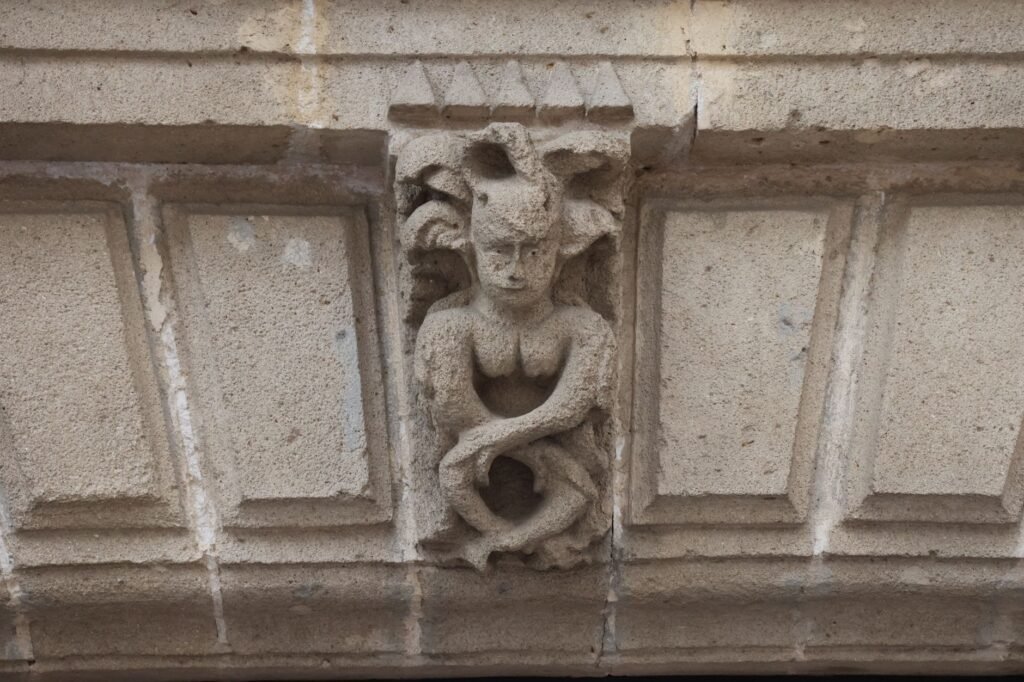
The origin of the term Sheela na Gig is not fully settled. The expression is modern in scholarly use, and its etymology has been widely debated. Proposed explanations have included:
- an Irish-language derivation involving a female name
- a phrase connected with the display or exposure of the body
- links to vernacular terms whose original meanings are now uncertain
No single etymology is universally accepted. The term itself is largely used today as a label for the carvings, rather than as proof of a medieval original name or a single coherent tradition.
Historically, the carvings appear in medieval and later contexts, especially from the 12th century onward, though dating is often difficult because many examples have been relocated, restored, or damaged. The figures are found mainly in Ireland, but also in parts of England, Scotland, and Wales, and related sculptures occur more widely in European Romanesque art.
Historical Context
Sheela na Gigs belong to the broad world of medieval architectural sculpture. In that period, churches and other buildings were often decorated with carved figures that combined religious instruction, symbolic warnings, moralizing imagery, and local artistic conventions. The same buildings that contained biblical scenes, saints, and decorative motifs could also include grotesques, monsters, and ambiguous human forms.
Their cultural context is complex:
- Christian medieval Europe used visual art to teach, warn, and symbolize moral truths.
- Romanesque sculpture often featured unusual or shocking imagery.
- Folk traditions in Ireland and Britain preserved beliefs about apotropaic power, fertility, and the protection of thresholds.
- Later antiquarian and nationalist interpretation shaped modern debates about what the figures meant and how old they were.
A major difficulty is that many Sheela na Gigs survive in altered settings. Some were moved from original sites, reused in walls, or placed where they may not originally have been intended. This complicates any attempt to define a single historical function.
Main Characteristics
Sheela na Gigs are generally identified by a set of visual traits. Although not every carving shows all of them, common features include:
- a naked female body
- a prominently displayed vulva
- a gaunt, thin, or angular body
- a head that is disproportionately large or crude
- hands pulling open the vulva or pointing to it
- exaggerated facial expressions that may seem grimacing, staring, or mask-like
- sometimes prominent breasts, though these are not universal
- occasionally a seated, squatting, or crouching posture
The style varies considerably. Some are rough and schematic, while others are more finely carved. In some cases, the sexual display is explicit; in others, it is more symbolic or stylized.
Scholars generally distinguish Sheela na Gigs from other related motifs such as:
- grotesques
- corbels
- green men
- Romanesque female exhibitionist figures
- protective images placed near doors and windows
However, boundaries between these categories are not always clear, and classification can vary by author.
Family and Genealogy
Sheela na Gig is not a goddess or mythological person with a known genealogy in the way that figures from classical or indigenous mythological systems are. There are no reliable historical traditions identifying parents, spouses, children, or descendants.
That said, later folklore and modern interpretation have sometimes attempted to place Sheela na Gig within broader genealogical or mythic frameworks. These proposals should be treated cautiously, because they are usually speculative and not supported by direct medieval evidence.
In scholarly terms, Sheela na Gig is best understood as a type of figure or motif, not as a single named character with a documented family line.
Symbols
The symbolism of Sheela na Gigs is one of the most contested aspects of their study. Different interpretations have emphasized different symbolic elements.
Common symbolic readings
| Symbol or feature | Common interpretation | Notes |
|---|---|---|
| Exposed vulva | Fertility, birth, sexuality, or apotropaic power | Meaning likely varied by context |
| Naked body | Vulnerability, sin, mortality, or raw life force | Could be moralizing or protective |
| Grimacing face | Grotesque warning or demonic association | Not all figures appear threatening |
| Threshold placement | Protection of entrances | Common in apotropaic traditions |
| Emphatic gesture | Display, warning, or invitation | Interpretations differ widely |
A central issue is that a symbol can carry more than one meaning. In medieval culture, sexual imagery could signify fertility, sin, protection, comic excess, or bodily truth, depending on where and how it was used.
Sacred Animals
There are no universal sacred animals associated with Sheela na Gigs in the way that some deities have established animal companions. However, some carvings appear near animals, and broader medieval symbolism can connect female exhibitionist figures with animal imagery such as:
- dogs, often associated with domestic life or protection
- serpents, linked to temptation, danger, or wisdom in Christian symbolism
- lions, common in medieval protective and royal iconography
- birds, sometimes associated with soul, movement, or liminality
These associations are not specific to Sheela na Gig alone and should not be treated as fixed religious attributes. Where animals appear, they likely reflect the wider symbolic language of the building or artistic program.
Sacred Plants
No plant is securely and uniquely tied to Sheela na Gigs. Unlike many mythological figures, they are not associated with a clearly documented sacred flora.
Nevertheless, scholars sometimes mention plants in relation to medieval fertility and folk belief, especially in the broader context of apotropaic practice. Commonly discussed plants in medieval symbolic culture include:
- ivy
- oak
- holly
- yew
- herbs used in protection or healing
These connections are general to medieval and folk traditions rather than specific to Sheela na Gigs. Any plant symbolism attached to a particular carving would depend on its local setting and surrounding iconography.
Sacred Places
Sheela na Gigs are most strongly associated with churches, abbeys, castles, and other medieval structures, particularly in Ireland. They are often found in liminal or architectural boundary positions, such as:
- doorways
- windows
- corbels
- portals
- tower walls
- reused stones in later buildings
Notable geographical distribution
| Region | Presence of Sheela na Gigs | Notes |
|---|---|---|
| Ireland | Strongest concentration | Many examples survive, though some are relocated |
| England | Numerous examples | Often linked to Romanesque church sculpture |
| Scotland | Fewer examples | Some uncertain or fragmentary cases |
| Wales | Limited evidence | A smaller number of related carvings |
| Continental Europe | Related motifs exist | Not always called Sheela na Gigs |
Because many carvings have been moved from original sites, their current locations do not always reflect their original placement or purpose. Still, their frequent association with entrances has encouraged interpretations emphasizing protection and boundary symbolism.
Powers and Attributes
Since Sheela na Gig is not a deity in a conventional mythological sense, it is better to speak of functions or attributed powers rather than divine powers. Proposed attributes include:
- apotropaic protection: warding off evil, illness, or misfortune
- fertility symbolism: linked by some scholars to birth and generative force
- moral warning: representing lust, sin, or the dangers of bodily excess
- threshold guardianship: protecting liminal spaces such as doors and windows
- embodiment of mortality and decay: the body as a reminder of transience
These functions are not mutually exclusive. A single carving could have been understood differently by different viewers over time.
Main Myths
There are no ancient myths about Sheela na Gig in the way that there are myths about classical gods or heroes. Instead, the figure is surrounded by later stories, local legends, and interpretive traditions.
Common interpretive narratives
Fertility charm
- Some later traditions and modern writers have viewed the image as a fertility figure or birth symbol.
- This idea is attractive because of the explicit display of the vulva, but direct medieval evidence is limited.
Warning against lust
- Another influential reading sees Sheela na Gig as a moralizing figure.
- In this view, the grotesque body exposes the ugliness of uncontrolled sexuality.
Protective image
- Some researchers argue that the open vulva functioned as an apotropaic sign, repelling evil.
- The placement on buildings supports this possibility, though it does not prove it.
Survival of pre-Christian tradition
- Earlier scholarship sometimes suggested that the carvings preserve a pagan goddess or prehistoric fertility cult.
- This theory remains controversial and is not widely accepted as a general explanation.
Because no single mythic cycle explains all examples, the carvings are best approached as a heterogeneous artistic and cultural category rather than a unified myth.
Relationship with Other Mythological Figures
Sheela na Gig is often compared with figures from several traditions, though such comparisons should be made carefully.
Comparable figures and motifs
- Mother goddesses: sometimes invoked in theories about fertility, but direct links are unproven.
- Medieval grotesques: especially other carved figures used for moral or protective purposes.
- Exhibitionist female figures in Romanesque art: close formal parallels exist across Europe.
- Folkloric hags and witches: later associations reflect gendered symbolism and fear of female sexuality.
- The Green Man and other threshold figures: both are often linked to architectural liminality, though they are iconographically different.
Sheela na Gigs also stand in contrast to conventional saint imagery. Their explicit bodily display, in a Christian architectural setting, has led scholars to ask whether they functioned as a contradiction, a warning, or a protective inversion of sacred norms.
Worship and Cult
There is no solid evidence of a formal cult of Sheela na Gig comparable to the organized worship of saints or deities. Surviving evidence does not show a standardized liturgy, priesthood, or temple-based devotion.
However, several kinds of practice have been proposed:
- ritual protection of entrances or buildings
- local belief in the power of carved images
- popular reverence or fear, possibly accompanied by touch or veneration
- association with fertility customs, though this is often speculative
It is important to distinguish between documented historical practice and later romantic or folkloric reconstruction. While people may have interacted with these carvings in meaningful ways, the exact nature of that interaction is often unknown.
Ancient Sources
There are no classical ancient sources such as Homer, Hesiod, or Ovid that mention Sheela na Gig by name. The figure is not part of Greco-Roman mythology.
For historical study, the most relevant sources are:
- medieval church architecture
- Romanesque sculpture
- Irish and British antiquarian records
- local parish histories
- modern archaeological and art-historical scholarship
Primary evidence often comes from the carvings themselves, together with documentary records describing their locations or later removal. Because many examples were not carefully recorded when first noticed, the source base is uneven.
Important source types
| Source type | Value | Limitations |
|---|---|---|
| Surviving carvings | Direct visual evidence | Often damaged, moved, or restored |
| Antiquarian drawings | Preserve lost details | May reflect artistic interpretation |
| Parish records | Help identify original contexts | Usually incomplete |
| Archaeological surveys | Improve dating and classification | Dating remains uncertain for many examples |
| Folklore collections | Show later meanings | Not proof of medieval intent |
Roman Equivalent
There is no direct Roman equivalent to Sheela na Gig.
That said, several Roman and late antique traditions may be relevant in a broader comparative sense:
- applied architectural grotesques
- protective images at thresholds
- female figures used in symbolic or magical contexts
- Romanesque inheritance from classical and post-classical artistic traditions
Some scholars have suggested that the motif may draw on long European traditions of exposed female imagery, but this does not establish a single Roman prototype. Any Roman connection should be regarded as part of a wider artistic background rather than a direct equivalent.
Influence on Modern Culture
Sheela na Gig has become a powerful modern cultural symbol, especially in Ireland and among scholars of medieval art, feminism, and folk religion. The figure appears in:
- academic books and museum exhibitions
- Irish heritage and tourism materials
- feminist reinterpretations of female power and sexuality
- novels and poetry
- visual art, sculpture, and performance
- music and album imagery
- popular media referencing pagan or medieval symbolism
Modern interest often emphasizes themes of:
- female sexuality and bodily autonomy
- protection and threshold symbolism
- the tension between sacred and profane
- the survival of ambiguous premodern imagery
At the same time, modern uses of Sheela na Gig can sometimes simplify or overstate the evidence. Claims that the figures prove an ancient goddess cult or a universal fertility religion are not generally supported by current scholarship.
Curiosities
- The figures are often called “grotesques,” but many scholars prefer the more specific term Sheela na Gig for Irish examples.
- Some carvings were hidden, damaged, or removed during later periods when explicit imagery was considered inappropriate.
- A number of Sheela na Gigs survive only because they were reused in later buildings.
- Their meaning may have changed over time, with a carving that began as one thing later acquiring another interpretation.
- Despite their notoriety, the figures are not uniformly obscene in medieval terms; medieval viewers may have understood them within a broader symbolic system.
- The term is most strongly associated with Ireland, yet similar figures appear in Britain and continental Europe.
- Sheela na Gigs have become important in debates about how to interpret gender, sexuality, and sacred art in the Middle Ages.
Frequently Asked Questions
What is a Sheela na Gig?
A Sheela na Gig is a carved female figure, usually medieval, that prominently displays the vulva. These figures are most often found on churches and other historic buildings in Ireland and Britain.
Are Sheela na Gigs pagan fertility goddesses?
There is no consensus that they are pagan fertility goddesses. That interpretation has been popular in some older scholarship and modern writing, but many specialists caution that the evidence is insufficient.
Why were Sheela na Gigs placed on churches?
The exact reason is uncertain. Proposed explanations include moral warning, protective magic, and symbolic treatment of sexuality or sin. Their placement on churches does not point to a single agreed meaning.
Where can Sheela na Gigs be found?
They are found mainly in Ireland, with additional examples in England, Scotland, Wales, and related forms elsewhere in Europe. Many are on medieval churches, though some have been moved from their original locations.
What does the name Sheela na Gig mean?
The meaning of the name is disputed. Several etymologies have been proposed, but none is universally accepted. The term is used today primarily as a scholarly and popular label for the carvings.
Are all Sheela na Gigs the same?
No. They differ in style, size, date, carving quality, and likely meaning. Some are clearly explicit; others are more ambiguous or degraded by time and weathering.
Do Sheela na Gigs have a single origin?
No single origin has been proven. They may reflect a combination of local traditions, medieval sculpture, Christian symbolism, and broader European visual motifs.
Conclusion
Sheela na Gig remains one of the most intriguing and debated subjects in the study of medieval sculpture. These carved female figures are significant not because their meaning is fully known, but because they reveal how complex and layered historical imagery can be. They stand at the crossroads of art history, religious symbolism, folklore, and cultural interpretation.
Their enduring fascination lies in their ambiguity. Sheela na Gigs are at once startling, humorous, unsettling, and enigmatic. Whether read as warnings, protectors, fertility symbols, or simply as part of the rich visual language of medieval buildings, they continue to challenge modern assumptions about gender, sacred art, and the medieval imagination.

Orin Vale has spent the better part of two decades tracing the threads that connect the world’s oldest stories — from the halls of Asgard to the banks of the Nile, from Olympus to the jungles of the Maya. What began as a childhood fascination with flood myths and trickster gods grew into years of independent study across comparative mythology and ancient religion, always chasing the same question: what did these stories mean to the people who first told them? Orin writes for readers who want more than trivia — the ones looking for the beliefs, fears, and truths that myths were built to carry.