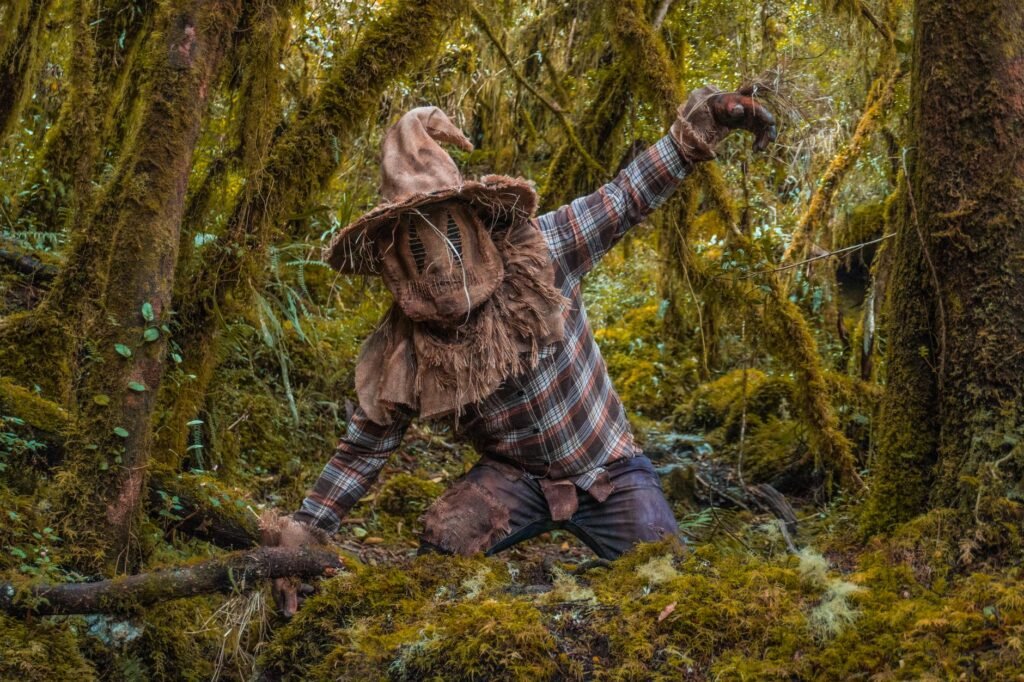
Sluagh
The Sluagh are figures from Scottish and Irish folklore associated with the restless dead, airborne spirits, and ominous host-like processions. In many traditions, they appear as a dangerous supernatural crowd moving through the night, often linked with the souls of those who cannot rest peacefully. Because the term varies by region and source, sluagh can refer to a host, army, swarm, or assembly of spirits rather than a single individual being.
Their importance lies in the way they express deep folkloric ideas about death, fear, the boundary between the living and the dead, and the social memory of catastrophe. The sluagh also illustrate how Gaelic-speaking cultures imagined the dead not only as isolated ghosts, but as part of collective and often hostile supernatural gatherings.
Origin and Meaning
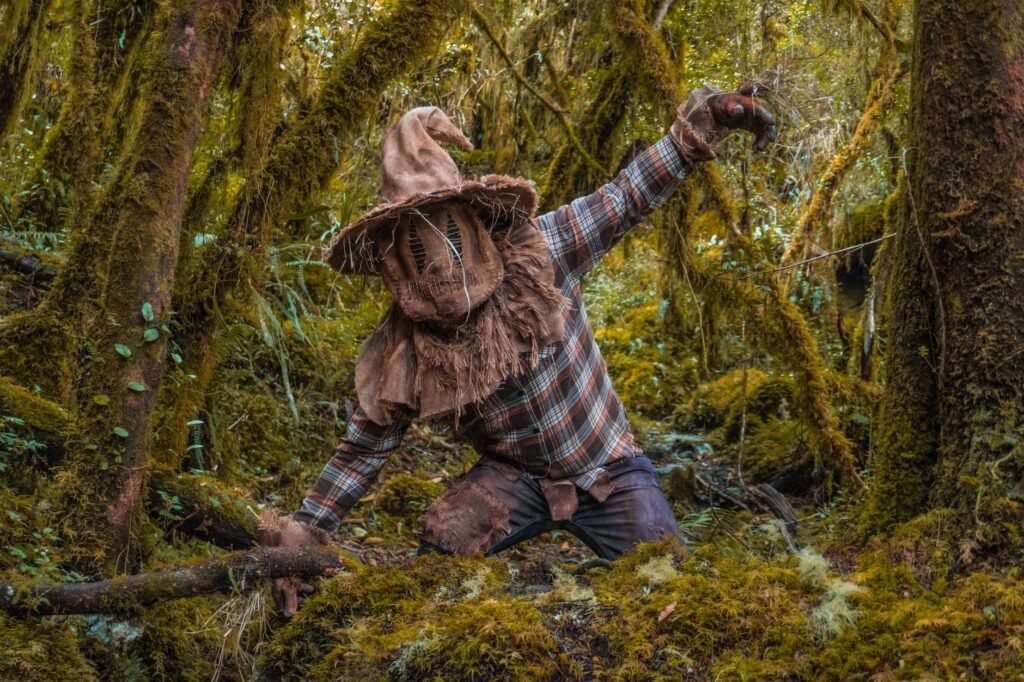
The word sluagh comes from Gaelic and is generally understood to mean a host, army, multitude, or crowd. In Scottish Gaelic and Irish usage, it could describe a group of people in a broad sense, but in folklore it developed a more specific supernatural meaning.
The etymology is connected to the older Celtic-language idea of a massed assembly or host. In folklore contexts, the term came to designate a company of dead or otherworldly beings, especially those said to travel in the air or at night. Different regional traditions and later folklore collectors recorded different nuances, so the exact meaning is not uniform across all Gaelic areas.
In English-language writing, the term is often rendered as the Sluagh, as if it were a named supernatural class. However, traditional usage is more flexible and can be collective rather than singular.
Historical Context
The folklore of the Sluagh belongs to the wider world of Gaelic supernatural belief, especially in Scotland and Ireland. These traditions were shaped by a mixture of pre-Christian cosmology, Christian influence, oral storytelling, and local interpretations of death and the afterlife.
Cultural setting
In many rural communities, death was not imagined as a distant abstraction. It was a presence that touched daily life through burial customs, mourning practices, prayers for the dead, and stories about restless spirits. Within this setting, the Sluagh helped explain frightening nocturnal experiences, unusual winds, sudden sounds, or the sense that a large invisible presence was passing overhead.
Folkloric environment
The Sluagh are often discussed alongside other Gaelic beings such as:
- fairies or the daoine sìth
- the fetch
- wandering dead
- household spirits
- night terrors and spirit-ridden processions
They are not always classified the same way in every source. Some traditions place them within the fairy world, while others present them more clearly as the dead. This ambiguity is typical of folklore, where categories often overlap.
Christian influence
As Christianity spread and became dominant, older ideas about the dead and the otherworld were often reinterpreted in moral terms. Spirits that once may have been understood as simply uncanny could become associated with sin, punishment, or dangerous wandering souls. The Sluagh, in later accounts, can reflect this Christianized fear of the unrestful dead.
Main Characteristics
Although details vary, the Sluagh are usually described through a cluster of recurring traits.
Common features
- Collective rather than individual: the Sluagh are typically a host, not one spirit.
- Airborne movement: they are often imagined flying or sweeping through the night air.
- Noisy or unsettling presence: they may be associated with eerie sounds, wind, or rustling.
- Dangerous to the living: they are not benign ancestors; contact with them can bring illness, fear, or spiritual harm.
- Linked to the dead: many traditions connect them with souls that did not receive proper rest.
- Nighttime activity: they are most often encountered after dark.
Visual description
Descriptions of the Sluagh are not always detailed, which is itself significant. Folklore often emphasizes their motion and menace more than their appearance. Some accounts portray them as a dark mass or spectral flight. Others focus on the feeling of a host passing by rather than a clearly seen form.
Behavior
The Sluagh are frequently described as:
- stealing or harming souls
- passing over houses and settlements
- carrying the dead or the dying
- attacking vulnerable people, especially those near death
- appearing as part of a supernatural procession
In some stories, they are attracted to the dying, especially if a person is not protected by ritual or prayer.
Family and Genealogy
Unlike gods or heroic ancestors, the Sluagh are not usually given a fixed genealogy. Folklore does not present them as a family in the strict sense, and most traditions do not name parents, children, spouses, or dynastic relations.
Related beings rather than relatives
Instead of a family tree, the Sluagh are better understood through relationships of type and function:
- They may be linked to souls of the dead
- They may overlap with fairy hosts
- They may be connected to wandering spirits
- In some traditions, they may include the dead of people who were denied burial or remembrance
Collective identity
Because they are a host, their “identity” is communal. They belong to the category of a supernatural swarm or company. This makes them different from mythic beings with named lineages, and it also explains why genealogical details are generally absent from the sources.
Symbols
The Sluagh are not typically associated with a standardized set of sacred symbols in the way that deities are. Nevertheless, several recurring images and motifs are important.
Common symbolic associations
| Symbol or motif | Meaning in folklore |
|---|---|
| Night air or wind | The unseen movement of spirits |
| Flight | The supernatural mobility of the dead or fairy host |
| Darkness | Danger, death, and hidden presence |
| Crowds or hosts | Collective power, disorder, or massed dead |
| Thresholds and windows | Vulnerable points between house and outside world |
Meaning of the host
The central symbol is the host itself. A host of the dead suggests not only haunting but also social memory: a great number of souls moving together evokes war, plague, famine, or unquiet burial grounds. The image is powerful because it turns death into a communal phenomenon rather than a private one.
Sacred Animals
The Sluagh are not associated with a single sacred animal in any consistent or canonical way. However, folklore and later retellings sometimes connect them with creatures that share their qualities of darkness, scavenging, flight, or omen-bearing.
Animals linked by analogy
- Birds: especially nocturnal or ominous birds, because of the Sluagh’s airborne nature
- Wolves or wild hounds: by association with the hunt, pursuit, and death
- Crows and ravens: common folkloric symbols of death and battlefields
These are associations by similarity, not established cultic symbols. Different local traditions may emphasize different creatures, and no universal animal companion of the Sluagh is known from the major source tradition.
Sacred Plants
There are no universally established sacred plants of the Sluagh. Nevertheless, Gaelic folk practice often used protective plants against harmful spirits, and these protective traditions help explain the Sluagh’s place in folk belief.
Protective herbs in broader tradition
Plants commonly used in Celtic and Gaelic folk protection include:
- rowan
- mugwort
- broom
- yarrow
- hawthorn in certain protective contexts
These plants were not specifically “for the Sluagh” in a formal religious system, but they appear in the broader pattern of warding off dangerous supernatural forces. In that sense, they belong to the folklore surrounding the Sluagh even when not directly named in every account.
Sacred Places
The Sluagh are not tied to temples or shrines in the way of organized deities. Their places are instead landscapes of transition, memory, and vulnerability.
Associated locations
- Crossroads: traditional liminal spaces in folk belief
- Burial grounds: especially if the dead are restless
- House thresholds: windows, chimneys, and doors as points of entry
- Open night sky: the medium through which the host moves
- Remote moors and wild ground: places often associated with the uncanny in Gaelic tradition
Regional setting
The strongest associations are with Scotland and Ireland, especially in Gaelic-speaking regions where oral folklore preserved many stories of the dead and fairies. The Sluagh are not limited to one exact site. Instead, they are understood as traveling presences that may pass over many places.
Powers and Attributes
The Sluagh are generally described as dangerous spirits with powers related to movement, haunting, and influence over human souls.
Main attributes
- Aerial travel: they move through the air or across the night sky
- Host-like force: their power lies in quantity and momentum
- Soul-harming potential: they may take, disturb, or endanger souls
- Association with death: especially near the dying or the unburied
- Fear-inducing presence: they embody dread, invisibility, and fatal proximity
Function in folklore
The Sluagh often serve explanatory roles in traditional belief:
- explaining sudden illness or death
- accounting for a frightening night encounter
- marking the boundary between ordinary life and spiritual danger
- reinforcing rituals of protection, prayer, and respectful burial
In this sense, they are not merely monsters. They are part of a moral and cosmological system in which the dead must be treated properly, or they may return in disturbing forms.
Main Myths
There is no single standardized myth cycle of the Sluagh comparable to the Greek epics or the Norse sagas. Instead, their lore survives through many localized stories and ethnographic records.
Typical narrative patterns
1. The passing host
One of the best-known patterns describes a person hearing or sensing a great invisible host passing overhead at night. The event may be accompanied by wind, murmuring, or fear. Such a tale often ends with the warning that the listener should not look too closely, call out, or disturb the procession.
2. The attack on the dying
In some traditions, the Sluagh are said to hover near a house where someone is near death. Their presence may threaten the soul of the dying person, making prayers and protective acts necessary.
3. The restless dead
Another common theme links the Sluagh to souls who have not found rest. This may include the improperly buried, the socially excluded, or those who died under troubling circumstances. The host form turns individual restlessness into collective wandering.
Why these myths matter
These stories emphasize three major concerns:
- the fragility of human life
- the importance of ritual care for the dead
- the danger of crossing into unseen spiritual realms
Because the folklore is oral and regionally diverse, no single authoritative version can be treated as definitive.
Relationship with Other Mythological Figures
The Sluagh are best understood through comparison with other figures in Gaelic and broader European folklore.
With the fairies
In some traditions, the Sluagh are treated as part of the fairy world or closely aligned with it. However, they are usually more sinister than the ambiguous or varied fairy beings found in folk narrative. They are especially dangerous to the vulnerable and the dying.
With the dead
Many accounts make the Sluagh resemble a mass of spirits or souls. This association with the dead is central. They are not necessarily the honored ancestors of a clan; rather, they often represent the restless or displaced dead.
With death-omen figures
The Sluagh may be compared to other omen-bearing supernatural processions found in European folklore, such as the Wild Hunt in Germanic tradition or various ghostly cavalry and aerial hosts elsewhere. The comparison is useful, though it should not be overstated: each tradition has its own history and meaning.
Worship and Cult
There is no evidence of a formal cult, temple worship, or stable liturgical practice dedicated to the Sluagh in the way one would find for an organized religion’s gods.
What existed instead
The folkloric response to the Sluagh was mainly protective practice:
- prayers for the dead
- care in burial and mourning
- avoidance of nighttime danger
- use of charms or protective plants
- domestic rituals to secure the house against harm
Folk belief rather than worship
It is more accurate to speak of appeasement, avoidance, or protection than worship. In the surviving tradition, the Sluagh are feared rather than honored. The human goal is to keep them away, not to invite their presence.
Ancient Sources
There are no surviving ancient classical sources that discuss the Sluagh in the way Greek or Roman writers discuss their own gods. The Sluagh belong primarily to Gaelic folklore recorded in later historical periods.
Important source types
Because the tradition is largely oral, the most useful sources are:
- folklore collections from Scotland and Ireland
- ethnographic accounts from the 19th and early 20th centuries
- Gaelic-language material preserved in oral tradition
- later scholarly studies of Celtic belief
Classical authors
Writers such as Homer, Hesiod, Apollodorus, Pausanias, and Ovid do not provide sources for the Sluagh specifically. Their works are important for Greco-Roman mythology, but they are not relevant primary sources for this Gaelic subject.
Scholarly caution
When reading about the Sluagh, it is important to distinguish between:
- original folk testimony
- later literary retellings
- modern fantasy adaptations
- comparative mythology
These layers are often mixed together in popular writing, but they are not equivalent.
Roman Equivalent
There is no direct Roman equivalent to the Sluagh.
Closest parallels
If a comparison is needed for explanatory purposes, the nearest Roman concepts would be broad and imperfect, such as:
- manes or restless dead
- lemures, as dangerous wandering spirits
- ghostly hosts or nocturnal apparitions in Roman folklore
However, these are only analogies. The Sluagh are rooted in Gaelic belief and should not be collapsed into Roman categories.
Influence on Modern Culture
The Sluagh have gained renewed visibility through modern fantasy, role-playing games, folklore revival, and popular interest in Celtic-themed supernatural beings.
Literary and artistic influence
In modern fiction, the Sluagh often appear as:
- ghostly flocks or swarms
- dangerous fairy hosts
- undead air spirits
- antagonists in dark fantasy settings
Writers and artists are drawn to the concept because it is evocative, flexible, and atmospheric. The idea of a vast invisible host works well in horror and fantasy.
Games and media
The Sluagh or slugh-like beings appear in some:
- tabletop role-playing games
- video games with Celtic or supernatural themes
- fantasy novels and comics
- television and film inspired by folklore
Modern reinterpretation
Modern depictions often simplify or reinvent the original folklore. Some portray the Sluagh as demon-like creatures, while others emphasize their role as souls of the dead. These versions may be imaginative, but they should not be mistaken for the historical folk tradition.
Curiosities
Lesser-known facts
- The Sluagh are often more important in folklore as a collective presence than as a single defined being.
- Their danger is frequently tied to liminal moments, especially death and nighttime travel.
- In some tellings, they are attracted to open windows or house entrances, reflecting concern about spiritual intrusion.
- The word itself can mean simply host or multitude, showing how ordinary language became supernaturalized.
- Because folklore records vary, the Sluagh can appear as a fairy host, a host of the dead, or an airborne spirit swarm depending on region and narrator.
- Their stories often survive in oral tradition rather than in a single canonical text.
Frequently Asked Questions
What are the Sluagh?
The Sluagh are a supernatural host from Scottish and Irish folklore, usually associated with the restless dead, fairy-like beings, or dangerous nocturnal spirits.
Are the Sluagh the same as ghosts?
Not exactly. They are often linked to the dead, but they usually appear as a collective host rather than as individual ghosts. Different traditions describe them in different ways.
Where do the Sluagh come from?
They come from Gaelic folklore traditions in Scotland and Ireland. Their name is Gaelic and refers to a host or multitude.
Are the Sluagh evil?
Folklore generally presents them as dangerous or feared rather than morally “evil” in a simple sense. They are best understood as harmful or threatening supernatural beings.
How were the Sluagh avoided or defended against?
Traditional protection could include prayer, careful burial practices, household safeguards, and protective folk customs. Specific methods varied by region.
Do the Sluagh have a leader?
Not in the same way many mythic groups do. Folklore usually emphasizes the Sluagh as a massed host rather than a structured army with a named ruler.
Are the Sluagh mentioned in ancient classical texts?
No. They are part of Gaelic folklore and are documented mainly through later oral-tradition records and folklore collections.
Why are the Sluagh still discussed today?
They remain relevant because they represent a powerful folklore image of collective death, haunting, and the border between the living and the unseen world. They also continue to influence modern fantasy and horror.
Conclusion
The Sluagh occupy a distinctive place in Scottish and Irish folklore as a collective host of the dead or otherworldly beings. Their significance lies not in a fixed mythology with clear genealogies or temples, but in the flexibility of oral tradition, where they embody fear of the night, the vulnerability of the dying, and the persistence of the restless dead.
As a folkloric concept, the Sluagh reveal how Gaelic communities understood spiritual danger, burial, and the presence of unseen forces in everyday life. Their legacy continues in modern literature and fantasy, where they remain compelling symbols of motion, mass haunting, and the eerie collective power of the dead.

Orin Vale has spent the better part of two decades tracing the threads that connect the world’s oldest stories — from the halls of Asgard to the banks of the Nile, from Olympus to the jungles of the Maya. What began as a childhood fascination with flood myths and trickster gods grew into years of independent study across comparative mythology and ancient religion, always chasing the same question: what did these stories mean to the people who first told them? Orin writes for readers who want more than trivia — the ones looking for the beliefs, fears, and truths that myths were built to carry.