Greek mythology
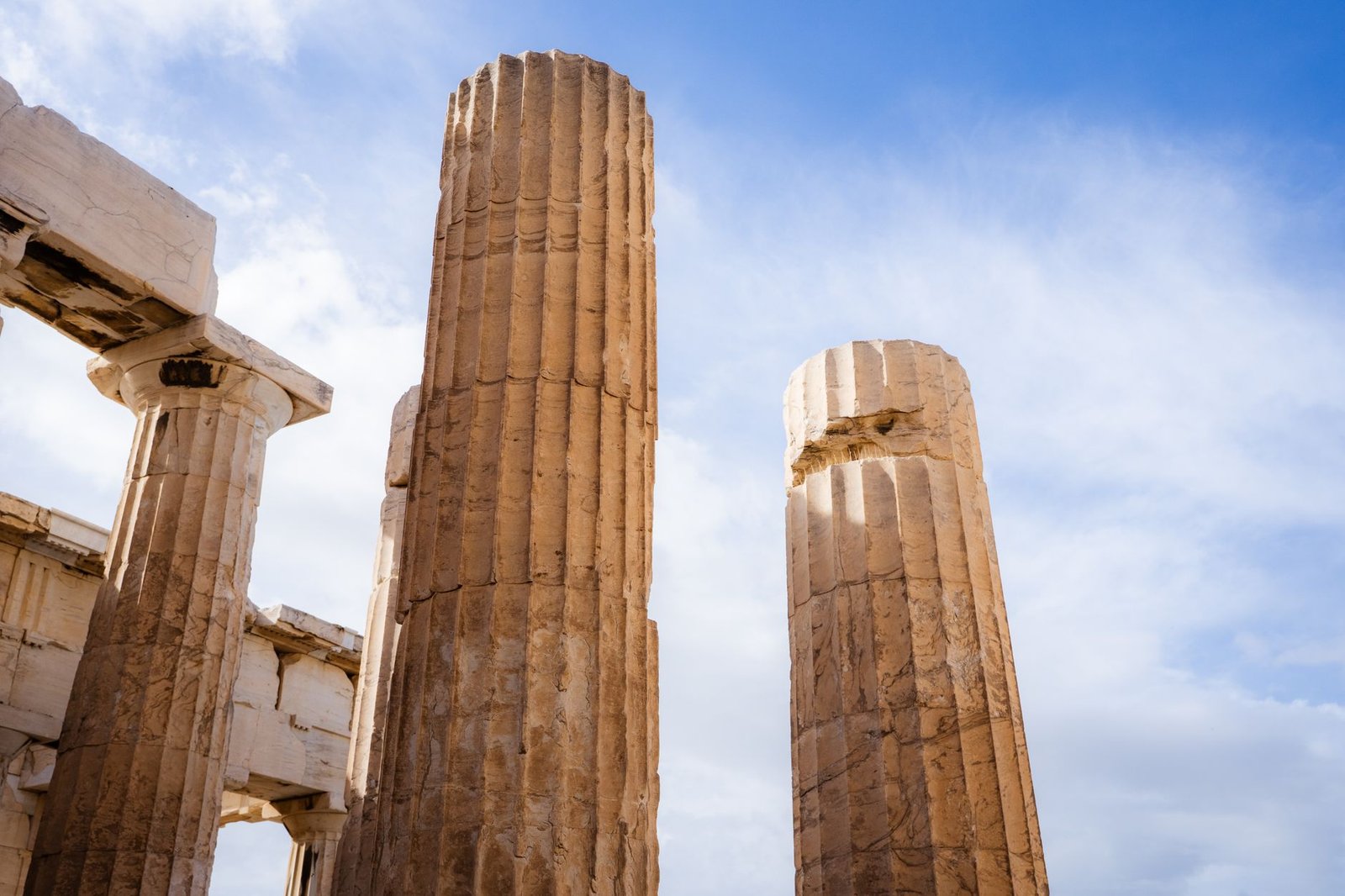
Why Is Dionysus Sometimes Left Out of the Twelve Olympians?
Dionysus doesn’t always appear among the Twelve Olympians because Greek tradition was never one fixed list. His unusual birth, wild worship, and shifting role in different regions made him both an outsider and an essential god.
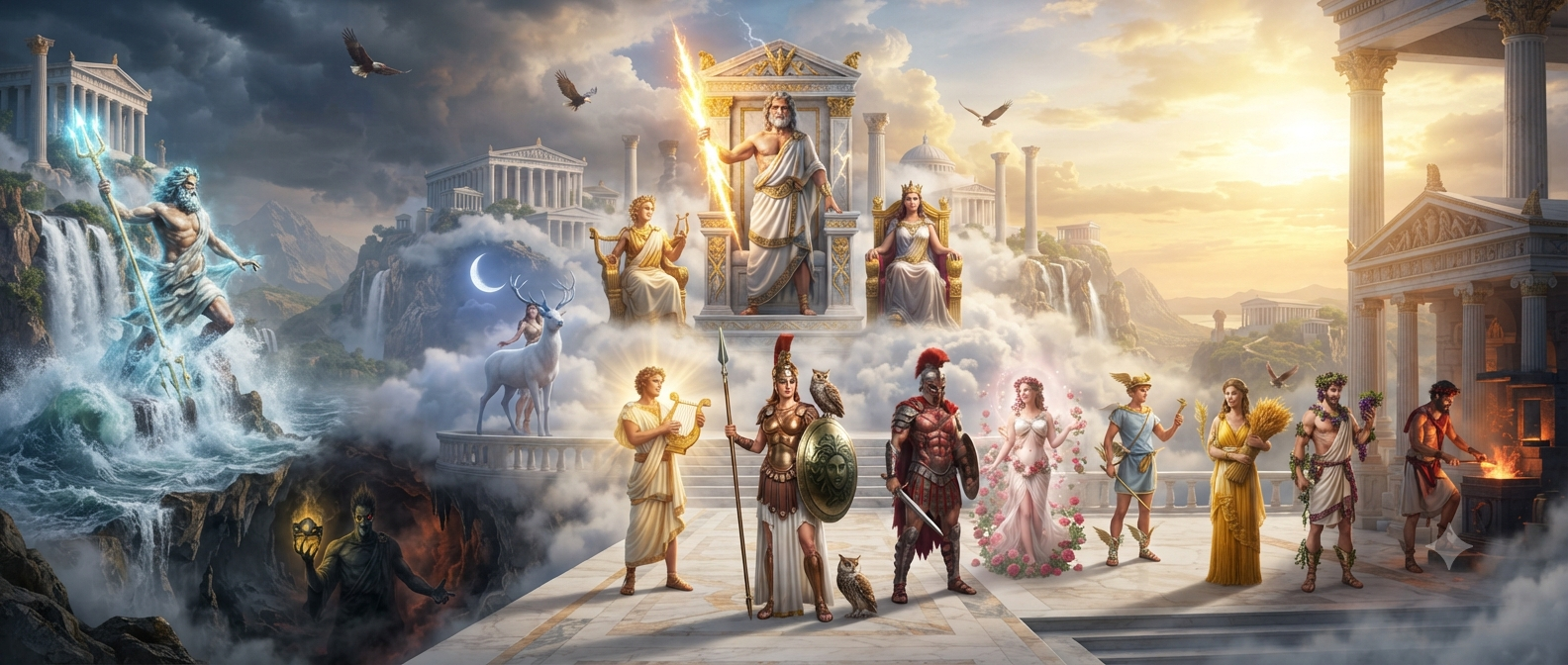
Greek Gods and Goddesses: The Complete Guide
Greek mythology’s pantheon spans several generations, from the formless primordial forces at the very beginning of creation, through the Titans ...
Eye of Horus vs. Eye of Ra: Key Differences Explained
The difference between the Eye of Horus and the Eye of Ra lies in their divine associations: one symbolizes Horus’s restored, protective power, while the other embodies Ra’s solar force and often its destructive aspect. Exploring their origins, meanings, and uses in ancient Egyptian belief reveals why these two sacred eyes are related, yet never interchangeable.

What Is the Tyet Knot in Egyptian Mythology?
The tyet knot is an ancient Egyptian symbol of protection, healing, and rebirth, closely linked to Isis and especially prominent in funerary religion. This concise emblem, whose origins may lie in everyday knots or ritual textiles, invites a deeper look at how Egyptians transformed ordinary forms into sacred power.
What Is the Atef Crown in Egyptian Mythology?
The Atef crown is a distinctive headdress in Egyptian mythology, most closely associated with Osiris and the themes of afterlife, kingship, and resurrection. This article explains its symbolic components, historical development, and appearance in temple and tomb art, revealing why it became such a powerful sign of divine authority and renewal.
What Is the Uraeus in Egyptian Mythology?
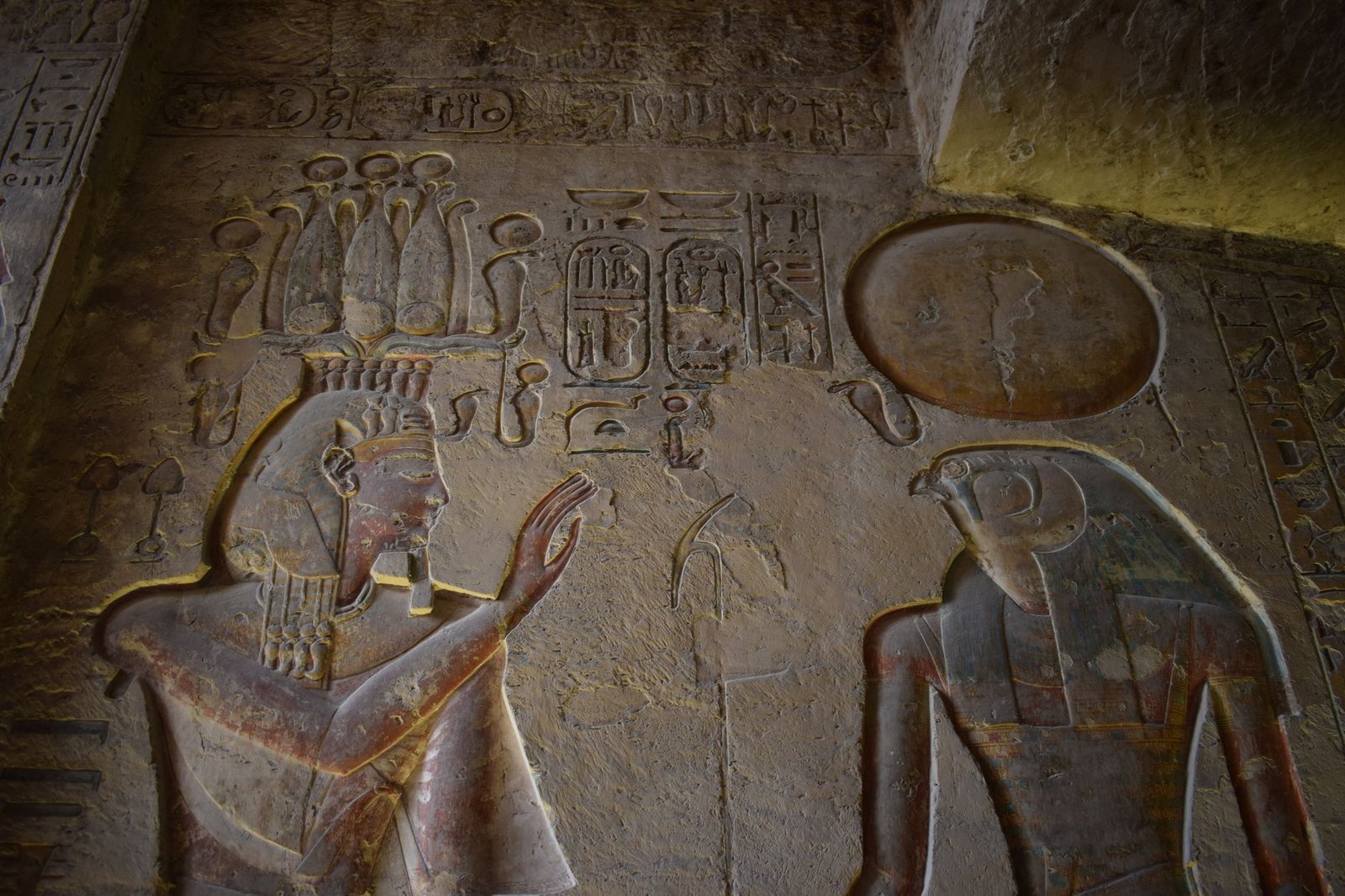
The uraeus in Egyptian mythology is the rearing cobra emblem associated with divine authority, royal protection, and the power to repel enemies, most often linked to the goddess Wadjet and the pharaoh’s crown. Its long history in art and ritual reveals how one small image came to express legitimacy, sacred power, and the close bond between rulers and the gods.
Who Is Ra in Egyptian Mythology? Sun God Explained
Ra is one of the central gods of ancient Egyptian mythology, revered as the sun deity, creator, and guardian of cosmic order. This article explores how who is ra in egyptian mythology became a question tied to kingship, daily renewal, and shifting religious traditions that shaped Egypt for thousands of years.
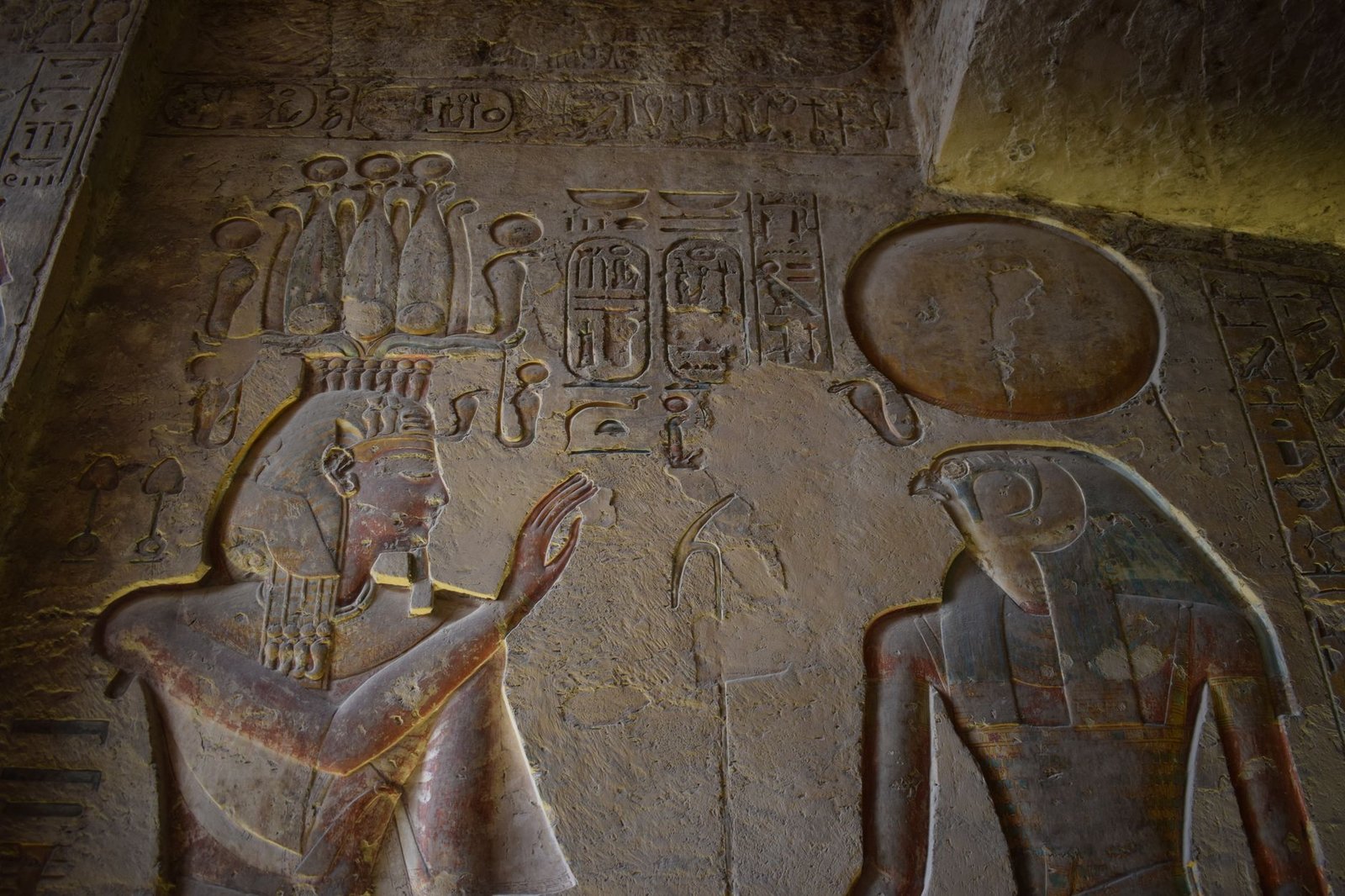
Who Is Horus in Egyptian Mythology? God of the Sky
Who is Horus in Egyptian mythology? He is a multifaceted sky god, falcon deity, and divine heir of Osiris and Isis, closely tied to kingship, protection, and the restoration of order. Across Egypt’s long religious history, Horus took on different forms and meanings, from the avenging rival of Seth to the enduring symbol behind the Eye of Horus.
Who Is Thoth in Egyptian Mythology? The Egyptian God
Who is Thoth in Egyptian mythology? He is the ancient Egyptian god of writing, wisdom, measurement, and sacred speech, but also a moon deity, mediator, and divine recorder whose functions changed across history. Understanding Thoth reveals how the Egyptians linked knowledge, cosmic order, and authority, and why he remained central to both ritual and intellectual life.
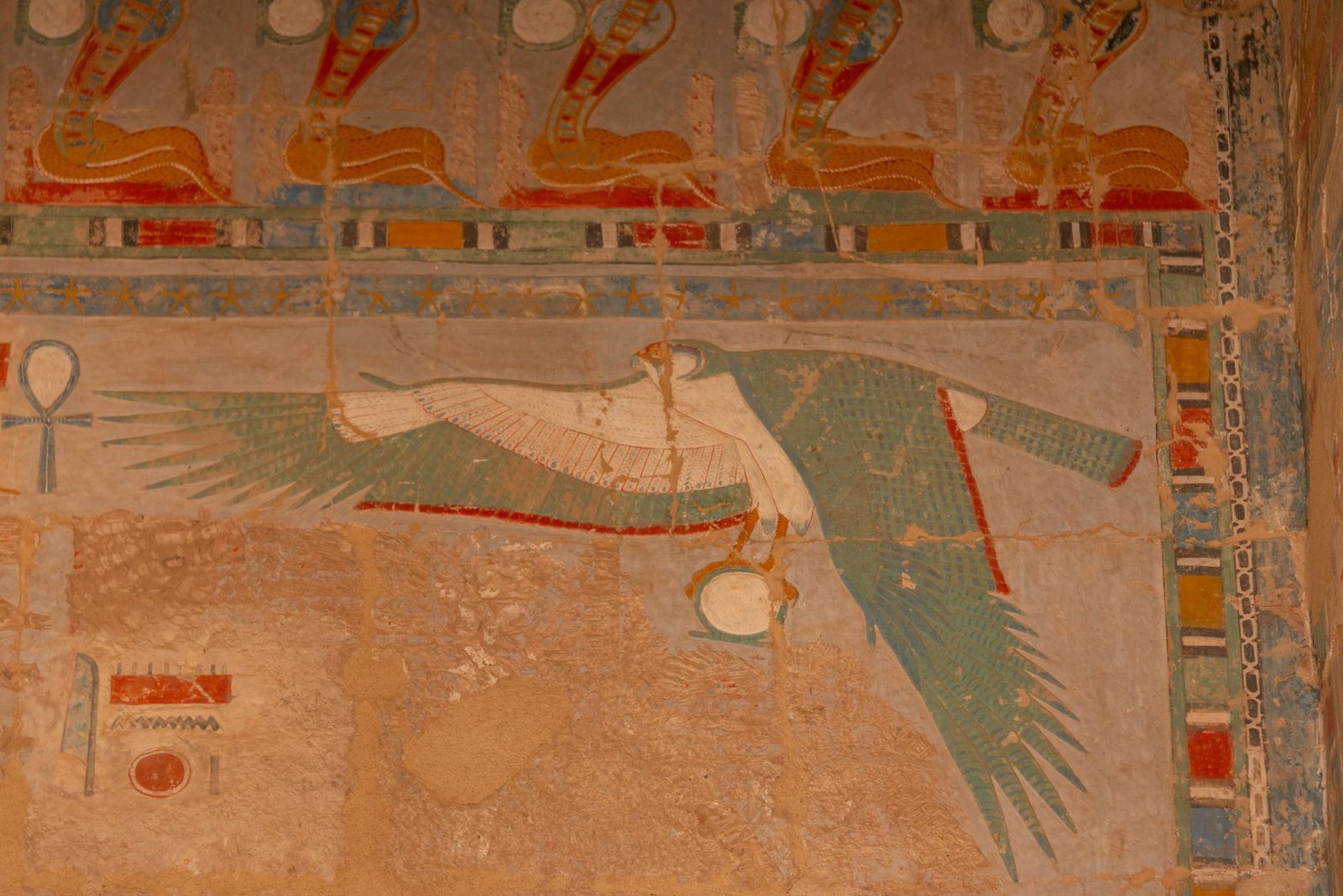
Who Is Nekhbet in Egyptian Mythology? Meaning and Role
Nekhbet, the vulture goddess of Upper Egypt, was a major protective deity who embodied royal authority, maternal guardianship, and the divine unity of the Egyptian state. This excerpt explores who is nekhbet in Egyptian mythology, tracing her links to El Kab, her role beside Wadjet, and the enduring symbolism that made her a constant presence in kingship and temple art.