Who Is Thoth in Egyptian Mythology?
Introduction
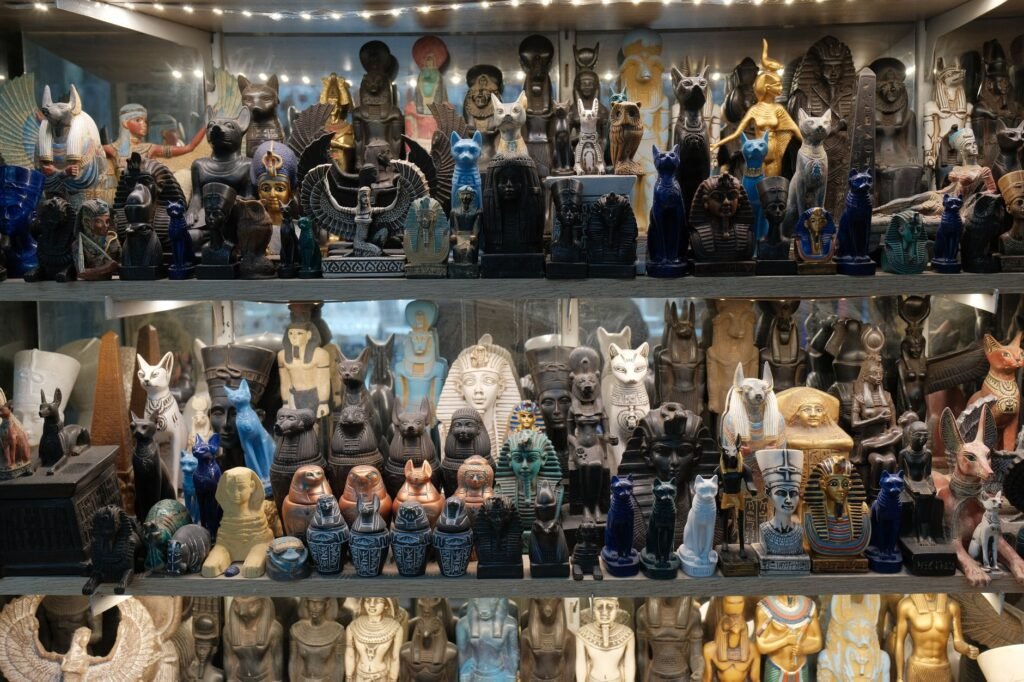
Thoth is one of the most important deities in ancient Egyptian mythology. He was widely regarded as the god of writing, wisdom, measurement, calculation, language, and the regulation of time. In religious and mythological texts, Thoth often appears as a divine mediator, a recorder of events, and an expert in sacred knowledge. His role made him essential not only in myth, but also in the practical and intellectual life of ancient Egypt, where scribes, priests, and scholars looked to him as a patron.
Because Thoth appears across a long span of Egyptian history and in many different contexts, he is not a simple or fixed figure. He could be a moon god, a divine scribe, a messenger, a healer, and a cosmic judge. Different traditions emphasize different aspects of his character, but nearly all present him as a deity of intelligence, order, and sacred speech. For this reason, asking who is Thoth in Egyptian mythology opens a window onto the Egyptian understanding of knowledge, balance, and divine authority.
Origin and Meaning
The name “Thoth” is a Greek rendering of the Egyptian deity Ḏḥwty or Djehuty, a form generally connected with the ibis. The exact etymology is not fully certain, and scholars have debated the linguistic development of the name. In ancient Egyptian writing, his name is associated with the ibis bird, one of his principal sacred animals.
Thoth’s cult is very ancient. He appears in Egyptian sources from early periods and remains prominent into the Greco-Roman era. Over time, his identity expanded and absorbed multiple functions. He may originally have been a local lunar or avian deity associated with a specific region, and later became a major national god of wisdom and writing. Like many Egyptian gods, he was not defined by a single origin story so much as by accumulated religious tradition.
Historical Context
Thoth belongs to the religious world of ancient Egypt, where gods were closely connected to natural forces, cosmic order, kingship, and learned institutions. Egyptian religion was not based on a single canon but on many overlapping local traditions, temple practices, and literary texts. Thoth’s importance reflects the value Egyptians placed on record-keeping, calendrical precision, ritual correctness, and cosmic balance.
He was especially important to scribes. In a civilization where administration, religious texts, legal documents, and monumental inscriptions were central to state and temple life, the god of writing naturally occupied a high position. Scribes often invoked Thoth at the beginning of writing projects or in contexts involving knowledge and formal speech.
Thoth also played a major role in funerary belief. Egyptian religion placed great emphasis on judgment after death, and Thoth was commonly represented as the divine recorder who noted the result of the weighing of the heart. This role reflects a broader cultural concern with truth, order, and moral accountability.
During the later periods of Egyptian history, especially under Greek and Roman rule, Thoth was identified with Hermes in a process of cultural interpretation. This association helped shape the later image of Hermes Trismegistus, a syncretic figure important in late antique philosophy, astrology, and esoteric literature.
Main Characteristics
Thoth is usually described as:
- God of writing and scribes
- God of wisdom and knowledge
- Divine mediator and messenger
- Master of calculation and measurement
- Regulator of time and calendars
- Lunar deity
- Recorder in the judgment of the dead
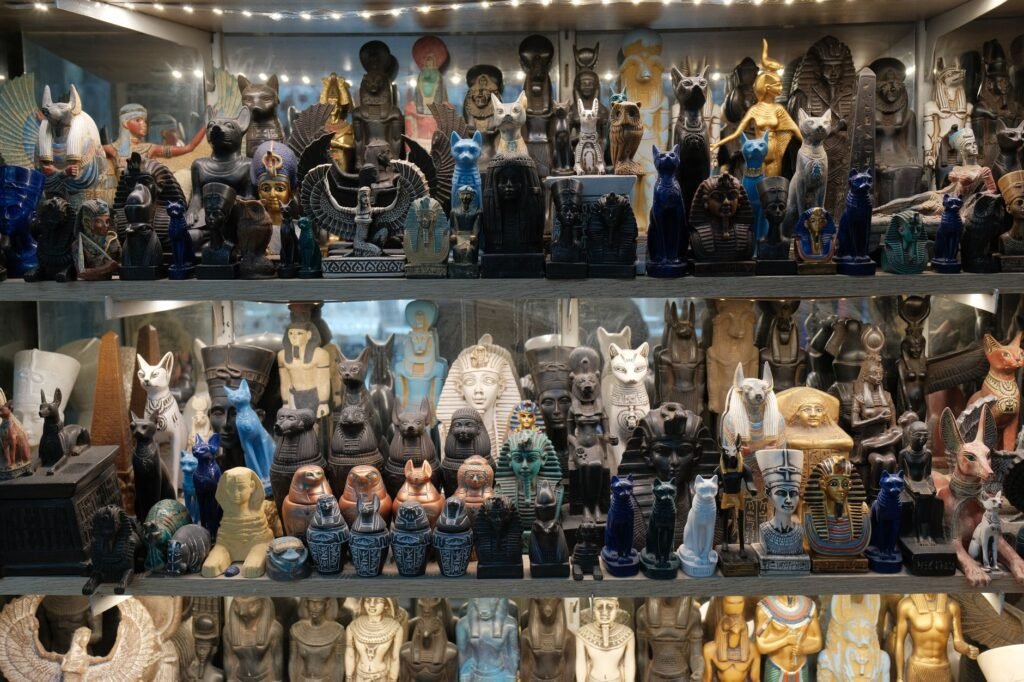
He is often shown in Egyptian art as either:
- a man with the head of an ibis, or
- a baboon
The ibis-headed form is the most recognizable. In some contexts, especially in connection with the moon and wisdom, the baboon form also appears.
Thoth is generally portrayed as calm, intelligent, and precise rather than emotionally driven. He is not usually a warrior god or a creator god in the broadest sense, though he participates in creation myths through speech, knowledge, and mediation. His strength lies in order, calculation, language, and mediation between opposing forces.
Family and Genealogy
Thoth’s family relationships vary by tradition, which is common in Egyptian mythology.
Commonly Associated Relationships
| Relationship | Details |
|---|---|
| Consort | Often linked with Seshat, goddess of writing and measurement, though this pairing is not universal. In some traditions, he is associated with Maat or other goddesses depending on context. |
| Children | Different traditions attribute various offspring to him, but these accounts are not consistent. |
| Parents | His parentage is not fixed across Egyptian sources. |
| Divine role | More often defined by function than by family lineage. |
Because Egyptian gods were often understood through local cults and theological systems, Thoth’s genealogy is less standardized than that of deities such as Osiris, Isis, Horus, or Hathor. In many texts, his authority comes not from ancestry but from office: he is the divine scribe and keeper of sacred knowledge.
Symbols
Thoth is associated with several symbols that reflect his functions.
Major Symbols
- Ibis
- Baboon
- Writing palette and reed pen
- Moon disk or lunar crescent
- Ankh in some iconographic settings
- Stylus and scrolls
- Measuring tools, especially in relation to sacred architecture and ritual order
Symbolic Meaning
- Ibis: linked to wisdom, precision, and likely the elegant shape of the bird’s beak, which resembles a writing tool
- Baboon: connected to lunar cycles, dawn, and the sacredness of vocal expression
- Writing tools: represent literacy, administration, and divine language
- Moon: reflects Thoth’s role in measuring time and regulating calendars
In Egyptian art and temple decoration, these symbols visually identify Thoth and communicate his intellectual and cosmic functions.
Sacred Animals
Thoth’s sacred animals are among his most important identifying features.
The Ibis
The ibis is Thoth’s best-known animal form. Ancient Egyptians associated the bird with writing and wisdom, and it became a visual emblem of the god. The ibis’s long curved beak may have suggested the shape of a reed pen, reinforcing Thoth’s connection to scribal work.
The Baboon
Thoth also appears as a baboon, especially in connection with the moon and with temple settings. Sacred baboons were kept or honored in some Egyptian religious centers. The baboon’s vocal behavior and posture may have contributed to its divine significance. In some contexts, the baboon form expresses Thoth’s role as an observer, a mediator, or a lunar being.
Symbolic Significance
| Animal | Meaning |
|---|---|
| Ibis | Writing, wisdom, precision, divine order |
| Baboon | Moon, speech, sacred alertness, ritual presence |
Sacred Plants
Unlike some Egyptian gods, Thoth is not strongly associated with a single sacred plant in the surviving sources. No plant functions for him as centrally as the ibis does.
That said, plants used in scribal and temple contexts may appear indirectly in relation to his cult, especially in offerings and ritual settings. In Egyptian religious culture more broadly, papyrus was closely connected to writing, administration, and knowledge. Because Thoth is the god of writing, papyrus has an obvious symbolic relevance, even if it is not always described as his exclusive sacred plant.
In short, the evidence for a specific sacred plant of Thoth is limited, and any stronger claim should be made cautiously.
Sacred Places
Thoth was worshipped in several places, but he is most strongly associated with Hermopolis, known in Egyptian as Khemenu.
Hermopolis
Hermopolis was a major cult center of Thoth. It became especially important in later Egyptian religion and in Greek interpretations of Egypt. The city’s theological significance was tied to Thoth’s role as a cosmic and intellectual deity.
Other Cult Centers
Thoth was also honored in other regions, including temple complexes where he appeared in theological scenes, ritual texts, and processions. In many temples, he functioned as part of a wider divine system rather than as the sole focus of worship.
Important Locations
- Hermopolis (Khemenu): chief cult center
- Temple complexes throughout Egypt: where he served as divine scribe and ritual authority
- Funerary contexts: especially in tomb texts and judgment scenes
Because Egyptian religion was highly local, Thoth’s presence in sacred geography was widespread, even when one city was especially associated with him.
Powers and Attributes
Thoth’s powers and responsibilities were extensive. He was not merely a god of writing in a narrow sense, but a divine guarantor of order through knowledge.
Main Domains
- Writing and literacy
- Language and speech
- Wisdom and counsel
- Measurement and mathematics
- Astronomy and calendrical time
- Judgment and truth
- Magic and sacred formulas
- Mediation between gods
Key Attributes
Thoth is often credited with helping establish the structure of the world through naming, measuring, and organizing. In Egyptian thought, words and names had real power, and Thoth was one of the divine masters of this power.
He also:
- recorded verdicts in the afterlife
- aided deities in disputes
- protected order against chaos
- regulated lunar and calendrical cycles
- preserved sacred knowledge in temple traditions
Main Myths
Thoth appears in many Egyptian myths, though the details vary between texts and periods.
The Contendings of Horus and Set
One of Thoth’s best-known roles is in the mythological cycle concerning the struggle between Horus and Set. In these traditions, Thoth often acts as a counselor, mediator, or divine official who helps resolve conflict. His function is not usually that of a combatant, but of an intelligent arbiter.
The Eye of Ra
In solar mythology, Thoth sometimes appears in stories involving the Eye of Ra. In some accounts, he helps restore a goddess or maintain cosmic order after conflict. These narratives emphasize his role as healer, restorer, and mediator.
The Moon and Time
Because Thoth is connected with the moon, some myths explain lunar phases or the regulation of days through his activity. He is associated with measurement of time and with the organization of the calendar, reflecting the Egyptian need to align ritual life with cosmic cycles.
The Creation of Language and Sacred Speech
In broader theological traditions, Thoth is linked to the power of speech and divine words. While Egyptian creation myths differ significantly, Thoth often appears as one who supports creation through language, writing, and the formal expression of divine will.
The Judgment of the Dead
In funerary religion, Thoth is a key figure in the weighing of the heart. He records the result of the judgment, helping determine whether a deceased person is justified. This role made him essential to Egyptian ideas about moral order and the afterlife.
Relationship with Other Mythological Figures
Thoth interacts with many deities and his relationships are central to his mythic function.
With Maat
Thoth is closely linked to Maat, the goddess of truth, justice, order, and cosmic balance. His work as recorder and measurer supports the principle of maat. Although they are different deities, they share complementary roles in preserving order.
With Ra
Thoth often serves Ra, the sun god, or participates in solar theology. He may assist Ra in maintaining cosmic harmony, managing divine conflicts, or restoring balance after disorder.
With Horus
Thoth is a supporter of Horus in the struggle with Set in some versions of the myth. He may act as advisor, healer, or mediator.
With Set
Thoth is not usually depicted as a direct enemy of Set, but rather as a figure who helps resolve the consequences of Set’s disruptive actions. In this way, he stands on the side of order against chaos.
With Seshat
Seshat, goddess of writing and measurement, is often paired with Thoth in modern summaries because their functions overlap. In Egyptian temple art and ritual contexts, both can appear associated with recording and measurement. Their exact relationship differs by source and is not standardized.
With Isis and Osiris
In funerary and Osirian contexts, Thoth supports the system of judgment and restoration surrounding Osiris. He may appear as a witness, record-keeper, or cosmic official.
Worship and Cult
Thoth was worshipped in temples and through scribal and funerary practice, though he was not always the central deity of a mass cult in the way some major gods were.
Forms of Worship
- offerings in temples
- prayers by scribes and priests
- ritual recitations
- inclusion in funerary spells and tomb decoration
- invocation in acts of writing and measurement
Priestly and Scribal Significance
Scribes had a special relationship with Thoth. Because writing was sacred and administrative life depended on skilled literacy, Thoth became a patron of learned elites. Invoking Thoth was both a religious act and a professional gesture.
Festivals and Ritual Contexts
Specific festivals dedicated solely to Thoth are less well documented in surviving sources than festivals for some other gods. However, he certainly participated in larger temple calendars, lunar observances, and ritual acts tied to the measurement of time.
Offerings
Offerings to Thoth likely included the standard Egyptian cult offerings: food, drink, incense, and ritual recitations. In symbolic terms, instruments of writing and learned devotion would also be appropriate offerings to a god of knowledge.
Ancient Sources
Thoth appears throughout Egyptian religious literature, but direct classical references also shaped his later reputation.
Egyptian Sources
Important Egyptian sources include:
- Pyramid Texts
- Coffin Texts
- Book of the Dead
- temple inscriptions
- mythological narratives such as the Contendings of Horus and Set
These sources show Thoth as divine scribe, mediator, and cosmic official.
Classical and Greco-Roman Sources
Classical authors did not preserve Egyptian religion exactly as Egyptians understood it, but they often identified Egyptian gods with Greek counterparts.
Relevant ancient authors include:
- Herodotus, who discusses Egyptian religion and customs
- Plutarch, especially in On Isis and Osiris, where Egyptian theology is interpreted through a philosophical lens
- later Greco-Egyptian writings connected to Hermes Trismegistus
Caution on Interpretation
Greek and Roman authors often interpreted Thoth through Hermes. While this is historically important, it is not identical to the original Egyptian conception. Modern readers should distinguish between Egyptian evidence and later classical reinterpretation.
Roman Equivalent
Thoth’s main Roman equivalent was Mercury, through the Greek intermediary Hermes. In Hellenistic and Roman Egypt, Thoth was commonly identified with Hermes, especially because both gods were associated with writing, communication, mediation, and intelligence.
This syncretism led to the figure of Hermes Trismegistus, “Thrice-Great Hermes,” a late antique synthesis of Greek Hermes and Egyptian Thoth. Hermes Trismegistus became highly influential in astrology, alchemy, philosophy, and esoteric traditions.
However, it is important to note that the Roman Mercury is not a perfect equivalent. The Roman identification reflects interpretatio graeca and interpretatio romana, not a simple one-to-one substitution.
Influence on Modern Culture
Thoth has remained influential far beyond ancient Egypt.
Literature and Scholarship
He appears frequently in modern studies of mythology, religion, and the history of writing. The name “Thoth” is often used as a symbol of ancient wisdom or hidden knowledge in literature and popular nonfiction.
Occult and Esoteric Traditions
Through Hermes Trismegistus, Thoth influenced Renaissance Hermeticism, alchemy, and later occult traditions. In these contexts, he became associated with secret wisdom, magical language, and cosmic principle.
Fiction, Film, and Games
Thoth appears or is referenced in:
- fantasy novels
- role-playing games
- video games
- comics
- films and television series inspired by Egyptian mythology
These depictions often emphasize his wisdom, magical powers, or association with ancient secrets, though they may not follow historical sources closely.
Art and Popular Symbolism
Modern art frequently uses the ibis-headed figure of Thoth as a visual shorthand for knowledge, mystery, and antiquity. He is sometimes presented as an emblem of scholarship, writing, or divine intelligence.
Curiosities
- Thoth is one of the few Egyptian gods strongly associated with both the moon and writing.
- In the afterlife, he is often shown acting like a divine clerk, recording the outcome of judgment.
- The Greek identification of Thoth with Hermes helped shape one of the most influential esoteric figures in Western history: Hermes Trismegistus.
- Thoth’s image as an ibis-headed man is among the most recognizable forms in all Egyptian art.
- Some modern readers assume Thoth was only a “god of wisdom,” but his functions were broader and included timekeeping, speech, measurement, and cosmic order.
- Egyptian religion often treated divine knowledge as practical and ritual, not merely philosophical, and Thoth embodies that idea.
- His cult demonstrates how closely the Egyptians linked literacy with sacred power.
Frequently Asked Questions
Who is Thoth in Egyptian mythology?
Thoth is the ancient Egyptian god of writing, wisdom, measurement, language, time, and divine record-keeping. He also played a major role in myth, magic, and the judgment of the dead.
What animal represents Thoth?
Thoth is most commonly represented by the ibis, and sometimes by the baboon. These animals symbolized wisdom, vigilance, and lunar associations.
Was Thoth a moon god?
Yes, in many traditions Thoth had a lunar aspect. He was connected with the moon’s cycles and with time measurement, though his identity was broader than that of a moon god alone.
What did Thoth do in the afterlife?
In funerary belief, Thoth recorded the result of the weighing of the heart and helped determine the fate of the dead. He served as a divine scribe and witness in judgment scenes.
Who was Thoth’s wife or consort?
Different traditions vary. Thoth is sometimes associated with Seshat, goddess of writing and measurement, though this relationship is not fixed across all sources.
Is Thoth the same as Hermes?
Not exactly. Ancient Greeks and Romans often identified Thoth with Hermes and Mercury, and later with Hermes Trismegistus, but Thoth remains a distinct Egyptian deity with his own traditions.
Where was Thoth worshipped?
His main cult center was Hermopolis in Middle Egypt, though he was honored widely across Egypt in temples, rituals, and funerary texts.
Conclusion
Thoth is one of the defining gods of Egyptian mythology because he represents the power of knowledge made sacred. As divine scribe, lunar deity, mediator, and guardian of order, he stood at the intersection of religion, administration, and cosmic law. His presence in myths, temple life, and funerary belief shows how deeply the ancient Egyptians valued writing, measurement, truth, and balanced judgment.
Understanding who Thoth is in Egyptian mythology means understanding more than a single god. It means seeing how an ancient civilization imagined intelligence, language, and order as divine forces. Through his enduring image as the ibis-headed god of wisdom, Thoth remains one of the most recognizable and intellectually significant figures in the Egyptian religious tradition.

Orin Vale has spent the better part of two decades tracing the threads that connect the world’s oldest stories — from the halls of Asgard to the banks of the Nile, from Olympus to the jungles of the Maya. What began as a childhood fascination with flood myths and trickster gods grew into years of independent study across comparative mythology and ancient religion, always chasing the same question: what did these stories mean to the people who first told them? Orin writes for readers who want more than trivia — the ones looking for the beliefs, fears, and truths that myths were built to carry.