What Is the Uraeus in Egyptian Mythology?
Introduction
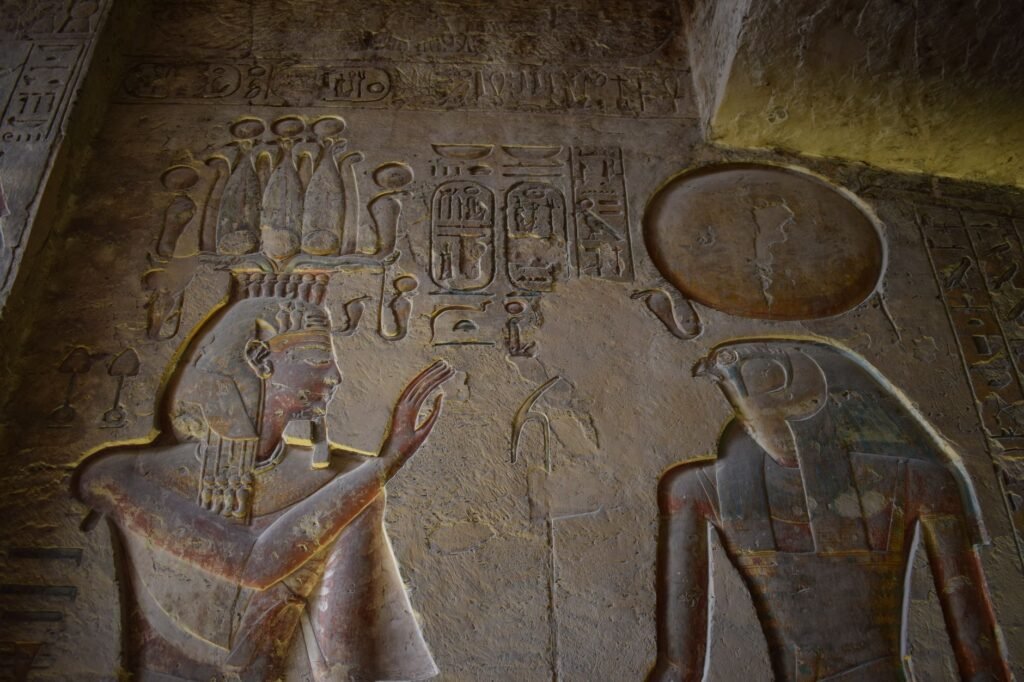
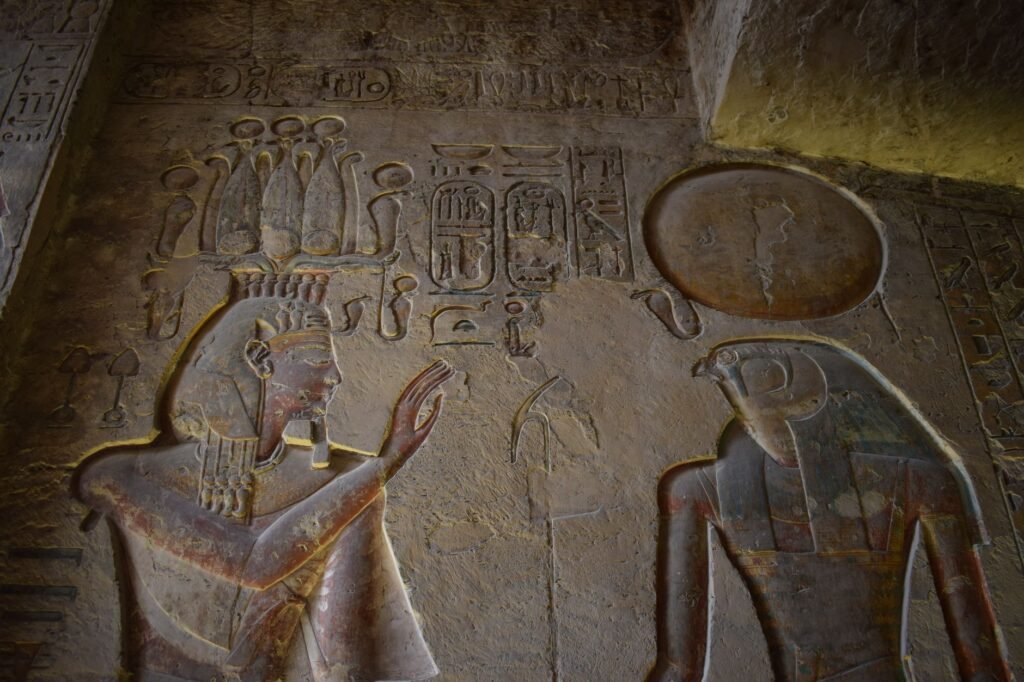
The uraeus is one of the most recognizable symbols in ancient Egyptian religion and kingship. It is usually depicted as a rearing cobra, often shown on the brow of a god, goddess, or pharaoh. In Egyptian mythology, the uraeus was not merely decorative. It represented divine authority, royal protection, and the power to strike enemies.
The image appears on crowns, temple reliefs, amulets, and funerary objects across many centuries of Egyptian history. Because of its close association with kingship, the uraeus became a powerful visual shorthand for legitimacy, sacred power, and the link between the ruler and the gods.
Origin and Meaning
The word uraeus comes from Greek usage, itself derived from Egyptian terms for the cobra, especially the sacred serpent associated with kingship and protection. In scholarship, the term commonly refers to the raised cobra emblem worn on the forehead.
In ancient Egyptian thought, the uraeus was linked primarily to the goddess Wadjet, the protective deity of Lower Egypt. Wadjet was often represented as a cobra or as a woman with a cobra’s head. Over time, the cobra became a symbol of her protective function.
The historical origin of the uraeus is very old. It appears in some of the earliest phases of Egyptian state formation and becomes especially prominent in the Old Kingdom and later. Its development reflects the merging of religion, monarchy, and visual symbolism in ancient Egypt.
Basic meaning of the uraeus
| Aspect | Meaning |
|---|---|
| Form | Upright or rearing cobra |
| Core function | Protection |
| Political meaning | Royal legitimacy and sovereignty |
| Religious meaning | Divine power and sacred authority |
| Mythic association | Goddess Wadjet, and later other protective goddesses |
Historical Context
The uraeus must be understood within the broader context of ancient Egyptian religion, where images were believed to have real power. Symbols were not simply representational; they could embody divine forces and participate in ritual life.
Egyptian kingship was considered sacred. The pharaoh was not only a political leader but also a cosmic maintainer of order, known as ma’at. The uraeus on the royal brow signaled that the king was protected by divine forces and empowered to repel chaos.
The symbol also reflects the ancient Egyptian tendency to combine animal imagery, divine identity, and political authority. The cobra was feared and respected for its venom and its defensive posture, making it a fitting emblem of warning and protection.
Over time, the uraeus became standard in royal iconography. It appears:
- on royal crowns
- on divine headdresses
- on temple walls
- on funerary masks and coffins
- on jewelry and amulets
In some periods, especially after the unification of Upper and Lower Egypt, the uraeus could be shown alongside other symbols of rule, including the vulture associated with Nekhbet, the goddess of Upper Egypt. Together, cobra and vulture represented the Two Lands.
Main Characteristics
The most common form of the uraeus is a cobra shown upright with a flared hood. This posture conveys alertness, aggression, and readiness to defend.
Identifying features
- Upright position: Usually rearing or poised to strike
- Hood displayed: A clear sign of threat and warning
- Placement on the brow: Especially on crowns or divine headgear
- Association with fire or breath: In some mythic texts, the cobra’s power is described as fiery or destructive toward enemies
- Protective orientation: It faces outward, as though guarding the wearer
The uraeus is not a single goddess in all contexts. In different traditions, it could be associated with Wadjet, but also with other fierce protective goddesses such as Sekhmet or Bastet, depending on the setting and period.
Common visual contexts
| Context | Typical meaning |
|---|---|
| Pharaoh’s crown | Sovereignty and divine protection |
| God’s headdress | Divine authority and guardianship |
| Funerary objects | Protection in the afterlife |
| Amulets | Personal safety and magical defense |
| Temple decoration | Sacred guardianship of holy space |
Family and Genealogy
Because the uraeus is primarily a symbol rather than an independent mythological personage, it does not have a fixed genealogy in the way many gods do. However, its religious identity is closely tied to divine figures.
Main divine associations
- Wadjet: The most important association; often considered the cobra deity behind the uraeus
- Nekhbet: Frequently paired with Wadjet in royal symbolism, though Nekhbet is a vulture goddess rather than a serpent goddess
- Ra: In some mythic and theological traditions, the uraeus is linked to the solar god’s protective power
- Sekhmet: A fierce goddess who could embody the destructive and protective force of the royal eye
- Bastet: In some contexts, a gentler feline form associated with protection may coexist with cobra imagery
Because Egyptian mythology often treated divine identities as fluid and overlapping, the uraeus could be linked to different divine figures depending on the period, location, and ritual purpose.
Symbols
The uraeus is itself a symbol, but it also belongs to a broader network of Egyptian sacred imagery.
Key symbolic meanings
- Protection: Its primary meaning
- Royal legitimacy: Proof of divine favor
- Vigilance: The cobra watches and strikes
- Retribution: It can destroy enemies of gods and king
- Solar power: Sometimes linked with the heat and intensity of the sun
- Ma’at: Supports cosmic and political order
Related symbols
| Symbol | Association |
|---|---|
| Cobra | Wadjet, protection, kingship |
| Vulture | Nekhbet, Upper Egypt, maternal guardianship |
| Double crown | Unification of Upper and Lower Egypt |
| Sun disk | Solar divinity and royal power |
| Scepter | Authority and rule |
| Ankh | Life and divine blessing |
The cobra’s posture is essential to its symbolism. A rearing serpent is active rather than passive, signaling imminent action. In this sense, the uraeus is not merely a mark of status but an image of power in motion.
Sacred Animals
The primary sacred animal associated with the uraeus is the cobra, especially the Egyptian cobra (Naja haje), though ancient art does not always require zoological precision.
Why the cobra mattered
The cobra was significant because it:
- lived in the Egyptian environment
- was dangerous and respected
- could defend itself with a striking posture
- appeared to embody both menace and protective force
In Egyptian symbolism, animals often represented qualities rather than literal species traits alone. The cobra’s ability to stand upright and defend itself made it an ideal emblem for divine and royal protection.
Other animals appear only indirectly through related goddesses:
- Vulture: associated with Nekhbet
- Lioness: associated with fierce solar goddesses such as Sekhmet
- Cat: associated with protective domestic and divine powers in some traditions
Symbolic significance of the cobra
| Animal trait | Symbolic meaning |
|---|---|
| Venom | Lethal power |
| Raised hood | Warning and defense |
| Silent movement | Hidden danger and watchfulness |
| Sudden strike | Divine punishment of enemies |
Sacred Plants
There is no single sacred plant uniquely and universally tied to the uraeus in the way the cobra is tied to it. However, the uraeus appears within broader Egyptian sacred imagery where plants often symbolize rebirth, fertility, and divine order.
Plants often seen in related religious contexts
- Papyrus: Associated with Lower Egypt and used in royal symbolism
- Lotus: Linked with rebirth, creation, and the sun
- Date palm: Sometimes associated with renewal and abundance
These plants are relevant not because they define the uraeus, but because they appear in the same religious and royal visual world. On temple reliefs and decorative objects, the uraeus may appear amid floral and vegetal motifs that frame divine authority and cosmic renewal.
Sacred Places
The uraeus is not tied to one single sacred site, but it is connected to major centers of worship and kingship in ancient Egypt.
Important locations
- Buto (Per-Wadjet): Traditionally associated with Wadjet, the cobra goddess of Lower Egypt
- Memphis: A major political and religious center where royal ideology was expressed
- Thebes: Important in New Kingdom royal and temple religion
- Heliopolis: A major solar center where royal and cosmic theology developed
- Royal burial sites in the Valley of the Kings and other necropolises, where protective imagery was essential
Temple and funerary use
The uraeus was especially important in:
- temples, where it guarded sacred spaces
- tombs, where it protected the dead and the royal afterlife
- palaces, where it marked royal sovereignty
Because ancient Egyptians believed sacred images could act as real forces, placing the uraeus on a temple wall or funerary object was a form of magical and religious protection.
Powers and Attributes
The uraeus is best understood as a protective and legitimizing force.
Main powers
- Defending the ruler
- Repelling enemies
- Enforcing divine order
- Marking sacred authority
- Guarding entrances and thresholds
- Protecting the dead in the afterlife
The uraeus could also be linked with the idea of the royal eye, a powerful and sometimes dangerous divine aspect that punishes disorder. In Egyptian theology, protective force and destructive force were often two sides of the same divine power.
Common attributes
| Attribute | Explanation |
|---|---|
| Protective | Shields gods, kings, and the dead |
| Fierce | Capable of destroying enemies |
| Regal | Sign of kingship and divine status |
| Solar | Sometimes connected with the sun’s heat and brilliance |
| Boundary-keeping | Protects thresholds and sacred spaces |
Main Myths
The uraeus does not belong to one single myth in the way a major deity might, but it is involved in several mythic patterns.
1. The protective cobra of the king
One major theme is that the cobra guards the pharaoh. The uraeus appears on royal crowns as a divine weapon or guardian, ready to attack those who threaten the king or the state.
2. The Eye of Ra
In solar theology, the fierce protective goddess often called the Eye of Ra can take the form of a cobra or be associated with cobra imagery. This divine eye may punish enemies and restore order when threatened. Different texts and periods present the Eye of Ra in different forms, including lioness and cobra aspects.
3. The creation and legitimation of kingship
The uraeus is closely connected with the idea that the king rules by divine sanction. In this sense, its “myth” is part of the larger Egyptian story of how order is maintained against chaos.
4. Funerary protection
In tomb and coffin imagery, the uraeus can protect the deceased, especially rulers, during the journey to the afterlife. It may appear as part of apotropaic decoration designed to ward off danger.
Because Egyptian mythological traditions are diverse, no single narrative explains all uses of the uraeus. Rather, it participates in a network of stories about divine protection, kingship, and cosmic order.
Relationship with Other Mythological Figures
The uraeus is deeply relational in Egyptian religion. It often works in tandem with other divine symbols and beings.
Wadjet
Wadjet is the most direct divine counterpart of the uraeus. She is the cobra goddess of Lower Egypt and one of the oldest protective deities in the Egyptian tradition.
Nekhbet
Nekhbet, the vulture goddess of Upper Egypt, is often paired with Wadjet in royal iconography. Together they symbolize the unification and protection of the Two Lands.
Ra
The solar god Ra is often linked to the uraeus through the concept of the Eye of Ra, a powerful manifestation that protects or punishes.
Pharaoh
The king is the most important human recipient of the uraeus’s protection. The uraeus on the royal forehead marks the pharaoh as divinely protected and authorized.
Other gods and goddesses
- Sekhmet: fierce protective power, sometimes overlapping with cobra symbolism
- Bastet: protective power in a different and often more benevolent aspect
- Isis: occasionally connected to protective royal and magical functions
- Horus: as a kingship god, often indirectly linked to uraeus symbolism through royal iconography
Relationship summary
| Figure | Relationship to the uraeus |
|---|---|
| Wadjet | Primary divine association |
| Nekhbet | Paired protective symbol of kingship |
| Ra | Solar context and Eye of Ra |
| Pharaoh | Main bearer of the emblem |
| Sekhmet | Fierce protective parallel |
| Bastet | Protective parallel in some contexts |
Worship and Cult
The uraeus itself was not usually worshiped as a separate deity. Instead, it formed part of the cult of the gods and the ritual ideology of kingship.
Ritual functions
The uraeus appears in:
- coronation and royal investiture imagery
- temple rituals affirming divine protection
- funerary rites for kings and elite individuals
- magical and protective amuletic practices
Offerings and devotional use
There is no standard “uraeus cult” with its own offerings in the way a major temple god would have. However, worship directed toward Wadjet or related protective deities could include:
- incense
- food offerings
- ritual recitations
- protective inscriptions
- dedication of amulets and votive objects
Role in festivals and royal ceremonies
Royal festivals and temple processions may have featured imagery of the king wearing the uraeus. Since Egyptian religion closely linked kingship and ritual, the symbol was an active part of public sacred performance.
The uraeus also had a protective role in the ceremonial presentation of the pharaoh, reinforcing the idea that the ruler was not merely human but embedded in divine power.
Ancient Sources
The uraeus is visible across a wide range of ancient Egyptian sources, especially in art and inscriptions. Because it is a visual symbol, much of its evidence comes from archaeology rather than long mythological narratives.
Egyptian primary sources
- Temple reliefs and wall inscriptions
- Royal statuary and crowns
- Funerary texts, including coffin texts and the Book of the Dead
- Pyramid Texts, where protective and royal divine imagery appears
- Amulets and jewelry
- Royal regalia and ceremonial objects
Classical sources
Greek and Roman authors sometimes describe Egyptian religion in broad terms, though not always with precise understanding of the uraeus specifically.
- Herodotus discusses aspects of Egyptian religion and customs
- Diodorus Siculus provides general accounts of Egypt
- Plutarch offers interpretive reflections on Egyptian deities
- Strabo and other classical writers describe Egypt’s religious landscape
These authors are useful as secondary ancient witnesses, but the strongest evidence for the uraeus comes from Egyptian visual and textual material itself.
Roman Equivalent
There is no exact Roman equivalent to the uraeus.
Roman religion had snakes and protective imagery, and it also used symbols of authority and divine favor, but none matched the uraeus precisely as a royal forehead emblem tied to Egyptian sovereignty.
When Egyptians lived under Roman rule, the uraeus continued to appear in Egyptian-style religious and funerary art. In that context, it remained distinctly Egyptian, even if interpreted by outsiders through more general ideas of divine protection.
Influence on Modern Culture
The uraeus has remained a powerful symbol in modern culture because of its visual distinctiveness and association with ancient Egyptian mystery and royal authority.
Areas of modern influence
- Museum displays of Egyptian crowns, masks, and temple art
- Books and documentaries on ancient Egypt
- Films and television featuring pharaonic iconography
- Video games set in ancient Egypt or inspired by its mythology
- Fashion and jewelry, where cobra motifs are used for dramatic effect
- Graphic design and tattoos, where the rearing cobra suggests power and protection
The uraeus is often used in popular culture as a generalized “Egyptian” symbol, sometimes without distinction between Wadjet, royal regalia, and broader serpent imagery. Modern artists frequently borrow its shape because it communicates authority and danger instantly.
Curiosities
- The uraeus is often shown in a raised, striking posture, but real cobras do not “strike” continuously in the way artistic depictions suggest. The image is symbolic rather than zoologically exact.
- In some royal crowns, the uraeus appears alone; in others, it forms part of a larger set of insignia.
- The symbol could be understood as both protective and aggressive. In Egyptian religion, protection often required the ability to destroy enemies.
- The uraeus was not limited to one period. It remained relevant for centuries, adapting to different dynasties and theological ideas.
- In Egyptian art, the symbol’s placement on the brow is significant. The forehead is the seat of vision, intention, and authority, making it a natural site for divine protection.
- The uraeus sometimes appears in connection with solar theology, showing how serpent imagery could cross from earthbound animal symbolism into cosmic religious meaning.
Frequently Asked Questions
What is the uraeus in Egyptian mythology?
The uraeus is the upright cobra emblem associated with ancient Egyptian kingship, divine protection, and sacred authority. It is most closely linked with the goddess Wadjet.
Was the uraeus a god or a symbol?
It was primarily a symbol, though it was closely tied to protective goddesses, especially Wadjet. In some contexts, it functioned almost like a divine presence.
Why was a cobra used as the uraeus?
The cobra was chosen because it was a powerful, dangerous, and protective animal. Its raised hood and defensive posture made it an effective symbol of vigilance and royal defense.
Where was the uraeus placed?
It was usually placed on the forehead of gods, goddesses, and pharaohs, especially on crowns and headdresses.
What did the uraeus protect?
The uraeus protected the pharaoh, sacred spaces, temples, and the dead. It was believed to repel enemies and harmful forces.
Is the uraeus the same as Wadjet?
Not exactly. Wadjet is the goddess most closely associated with the uraeus, but the uraeus itself is the cobra emblem that represents her protective power.
Did other cultures use a similar symbol?
Other ancient cultures used snakes and protective emblems, but the uraeus is a distinctively Egyptian symbol with its own religious meaning and royal function.
Why is the uraeus important today?
It is important because it reveals how the ancient Egyptians connected religion, kingship, and visual symbolism. It also remains one of the most recognizable signs of ancient Egyptian civilization.
Conclusion
The uraeus is far more than a decorative cobra. In Egyptian mythology and royal ideology, it was a potent emblem of protection, divine legitimacy, and the power to maintain order against chaos. Closely linked with Wadjet and with the sacred authority of the pharaoh, the uraeus stood at the intersection of religion, politics, and art.
Its long history across Egyptian civilization shows how enduring and adaptable sacred symbols could be. Whether appearing on a crown, a temple wall, or a funerary object, the uraeus announced that divine power was present and vigilant. For this reason, it remains one of the most important symbols in the study of ancient Egyptian mythology and culture.

Orin Vale has spent the better part of two decades tracing the threads that connect the world’s oldest stories — from the halls of Asgard to the banks of the Nile, from Olympus to the jungles of the Maya. What began as a childhood fascination with flood myths and trickster gods grew into years of independent study across comparative mythology and ancient religion, always chasing the same question: what did these stories mean to the people who first told them? Orin writes for readers who want more than trivia — the ones looking for the beliefs, fears, and truths that myths were built to carry.