Horus
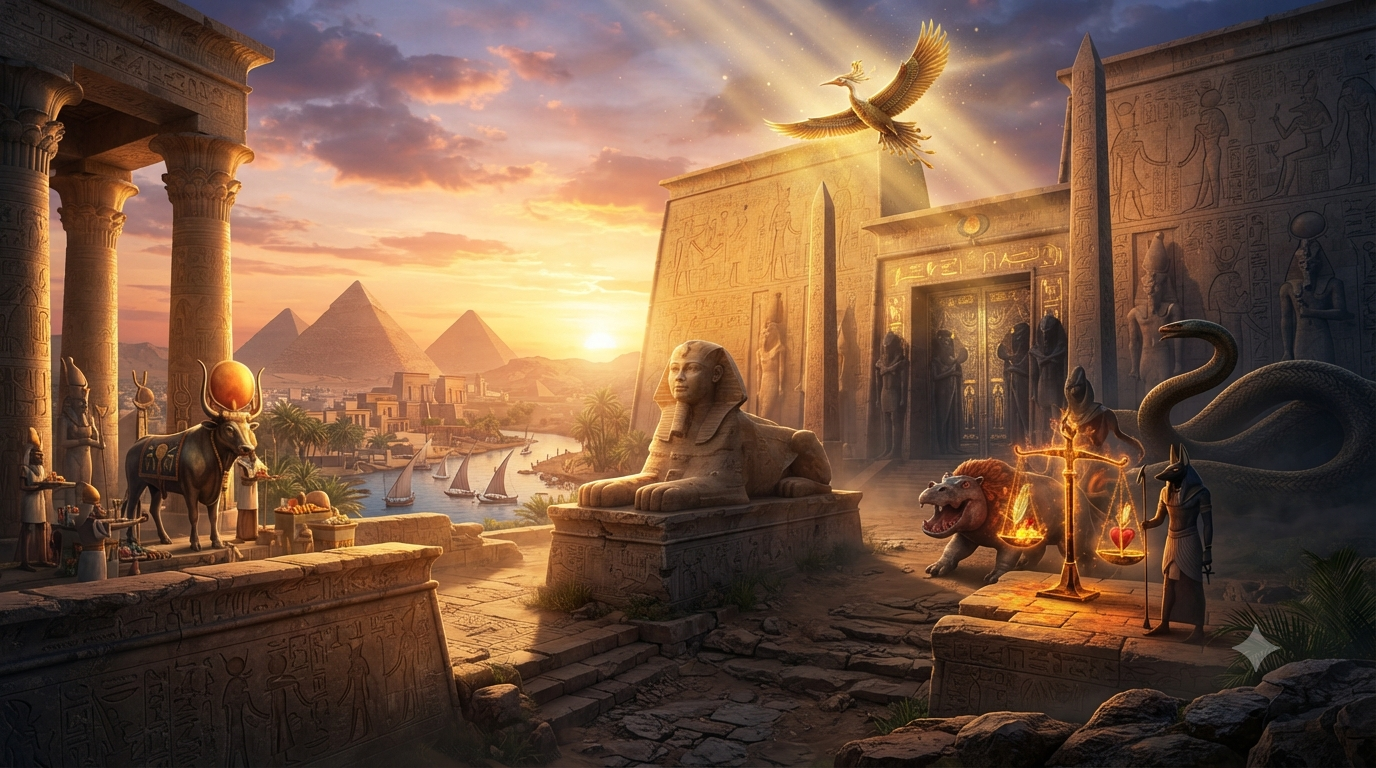
Egyptian Creatures and Monsters: The Complete Guide to Ancient Egypt’s Mythical Beasts and Sacred Animals
Egyptian mythology populated the space between gods and mortals with a distinct cast of creatures: monstrous guardians who judged and ...
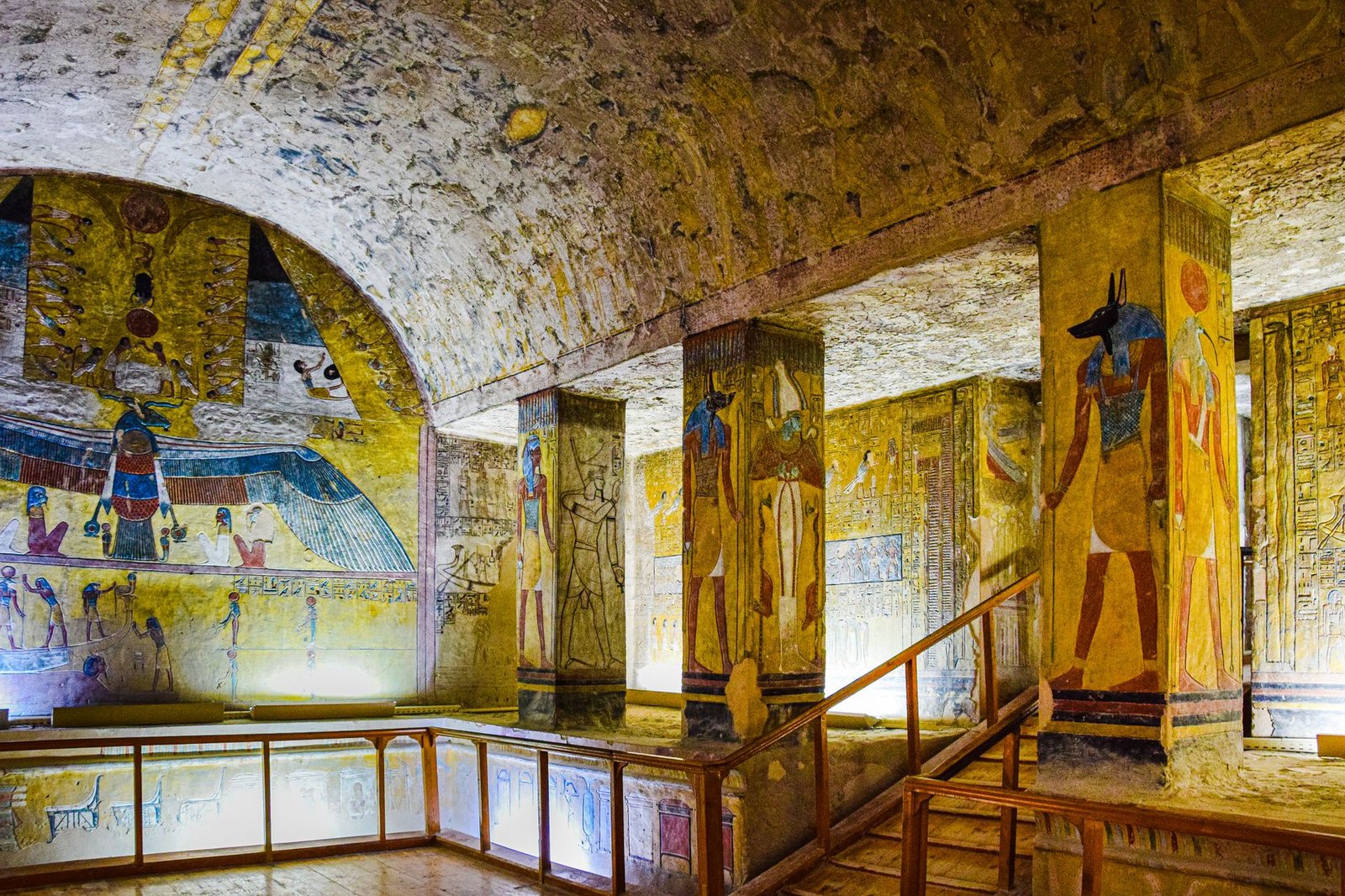
Eye of Horus in Egyptian Mythology: Meaning and Origins
The Eye of Horus in Egyptian mythology is a powerful symbol of healing, protection, royal authority, and restored wholeness, rooted in the story of Horus’s injured eye and its divine repair. Its long history in amulets, funerary art, and temple imagery reveals how a single emblem came to embody both personal wellbeing and cosmic order.
Eye of Horus vs. Eye of Ra: Key Differences Explained
The difference between the Eye of Horus and the Eye of Ra lies in their divine associations: one symbolizes Horus’s restored, protective power, while the other embodies Ra’s solar force and often its destructive aspect. Exploring their origins, meanings, and uses in ancient Egyptian belief reveals why these two sacred eyes are related, yet never interchangeable.
What Is the Nemes Headdress in Egyptian Mythology?
The **Nemes headdress** is the striped royal headcloth most closely associated with pharaohs in ancient Egypt, where it signaled kingship, divine authority, and sacred legitimacy. In Egyptian mythology, it appears not as a deity but as a powerful emblem linking the ruler to Horus, Ra, and the afterlife, inviting a closer look at its ritual meaning.
Egyptian Symbols: The Complete Guide to Ancient Egypt’s Sacred Signs and Their Meanings
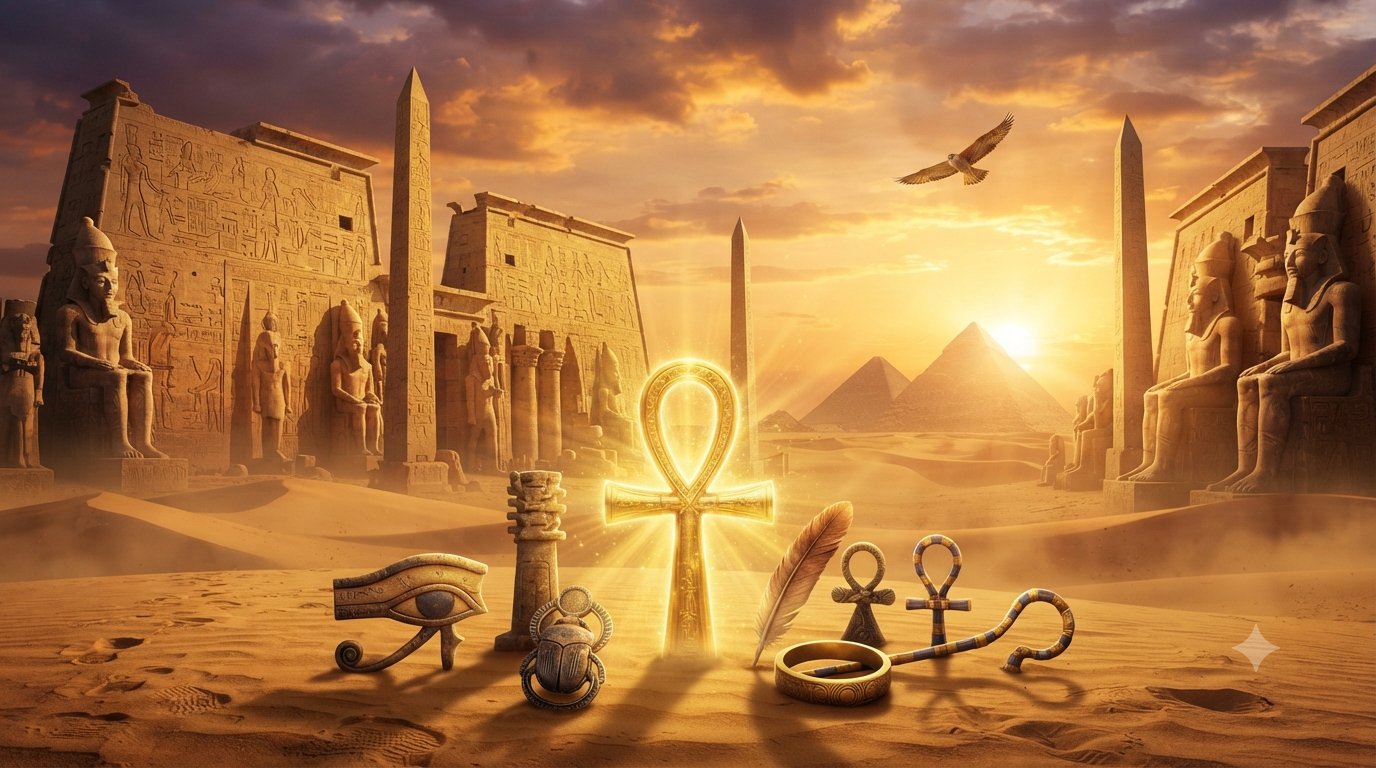
Ancient Egypt communicated its deepest religious beliefs through images long before most of its population could read a single hieroglyph. ...
Who Is Osiris in Egyptian Mythology? Meaning and Role
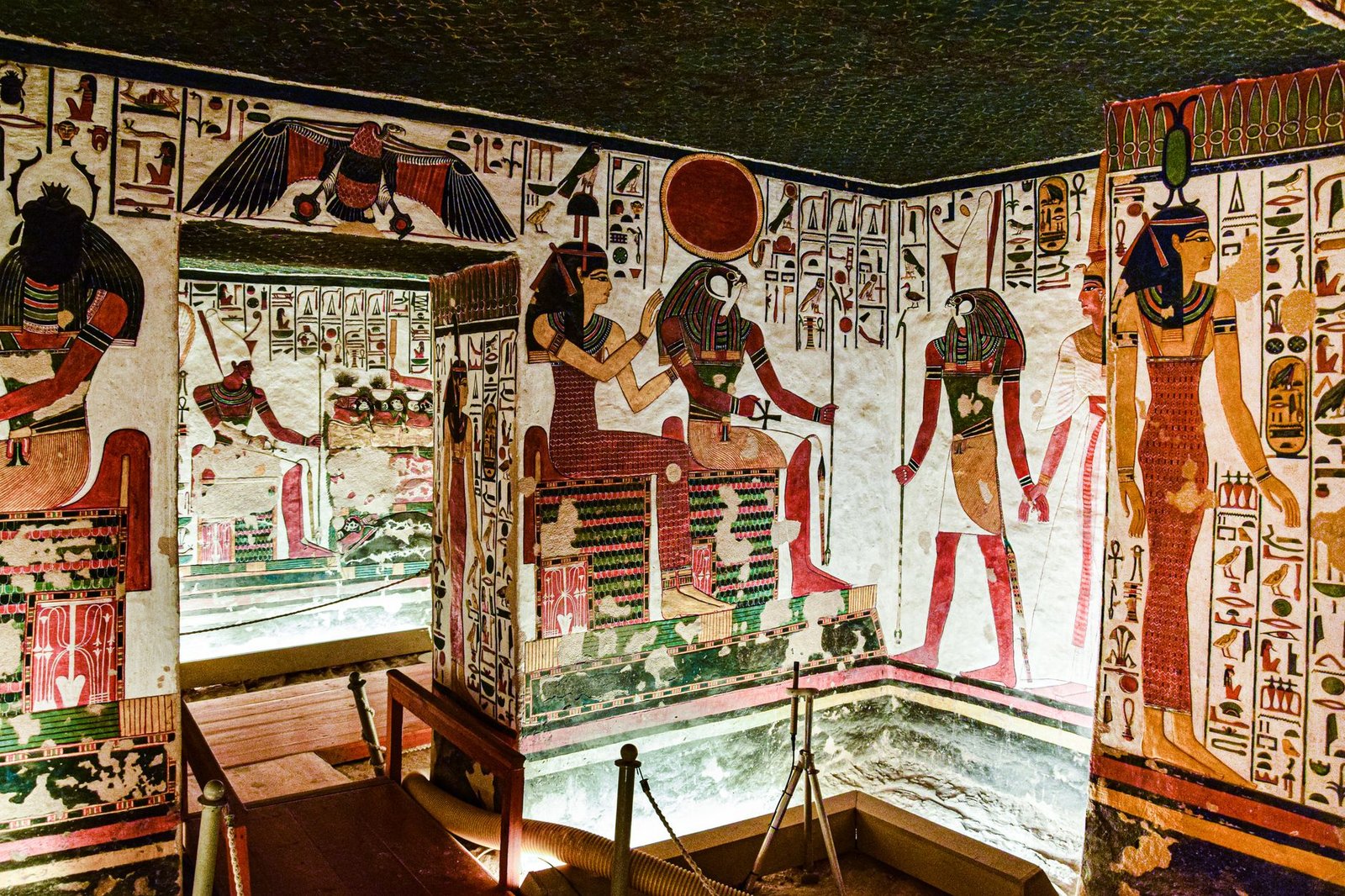
Osiris is a central figure in Egyptian mythology, revered as the god of death, resurrection, fertility, kingship, and the afterlife. His story of death and renewal shaped ancient Egyptian funerary beliefs, royal authority, and ideas about how ordered life could return after destruction.
Who Is Isis in Egyptian Mythology? Meaning and Role
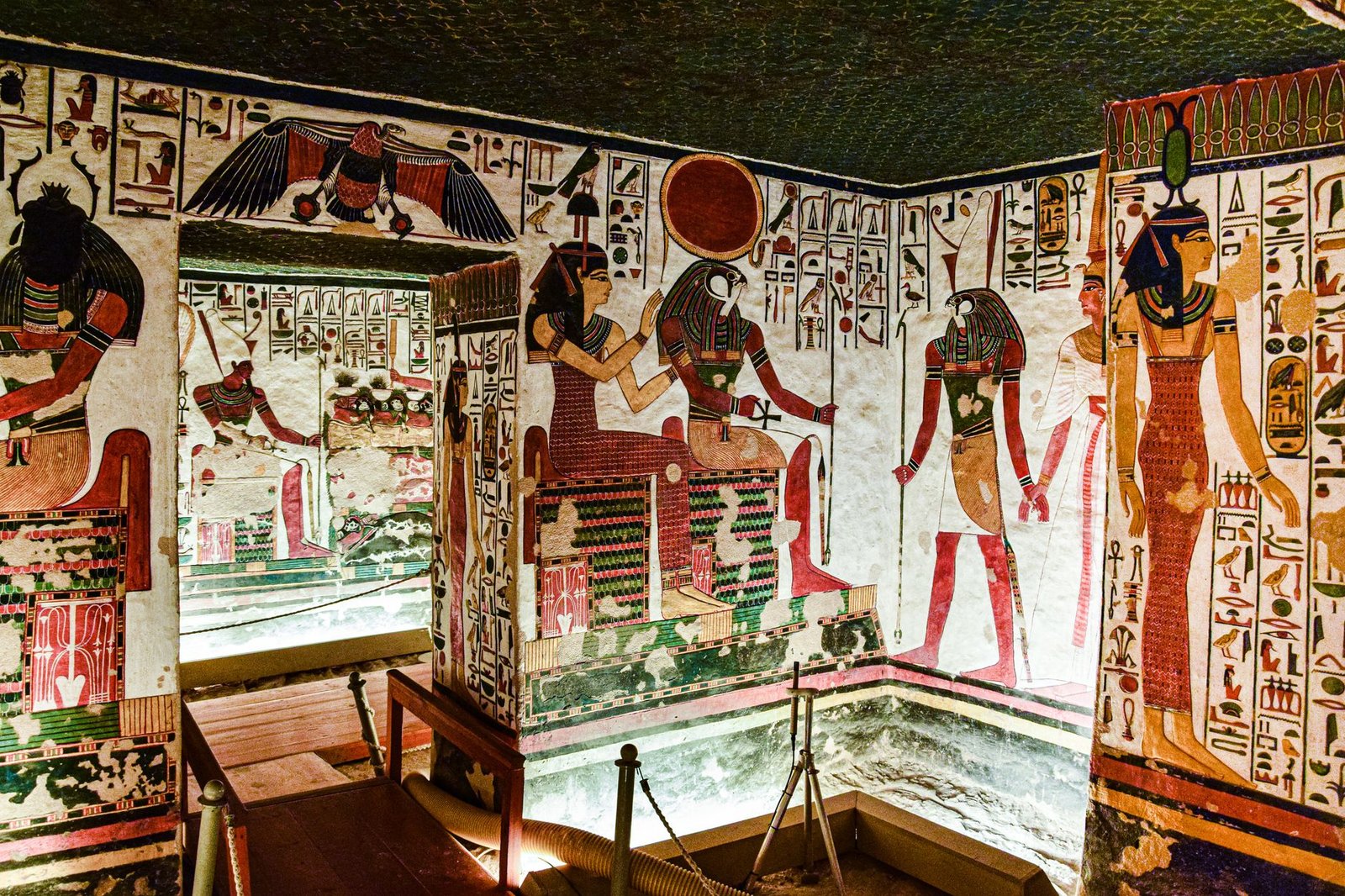
Isis is a central goddess in Egyptian mythology, known as a divine mother, magician, mourner, and protector whose power was tied to kingship, rebirth, and the afterlife. Her name, linked to the throne, hints at a long religious history that transformed her from a royal figure into a widely revered universal deity.
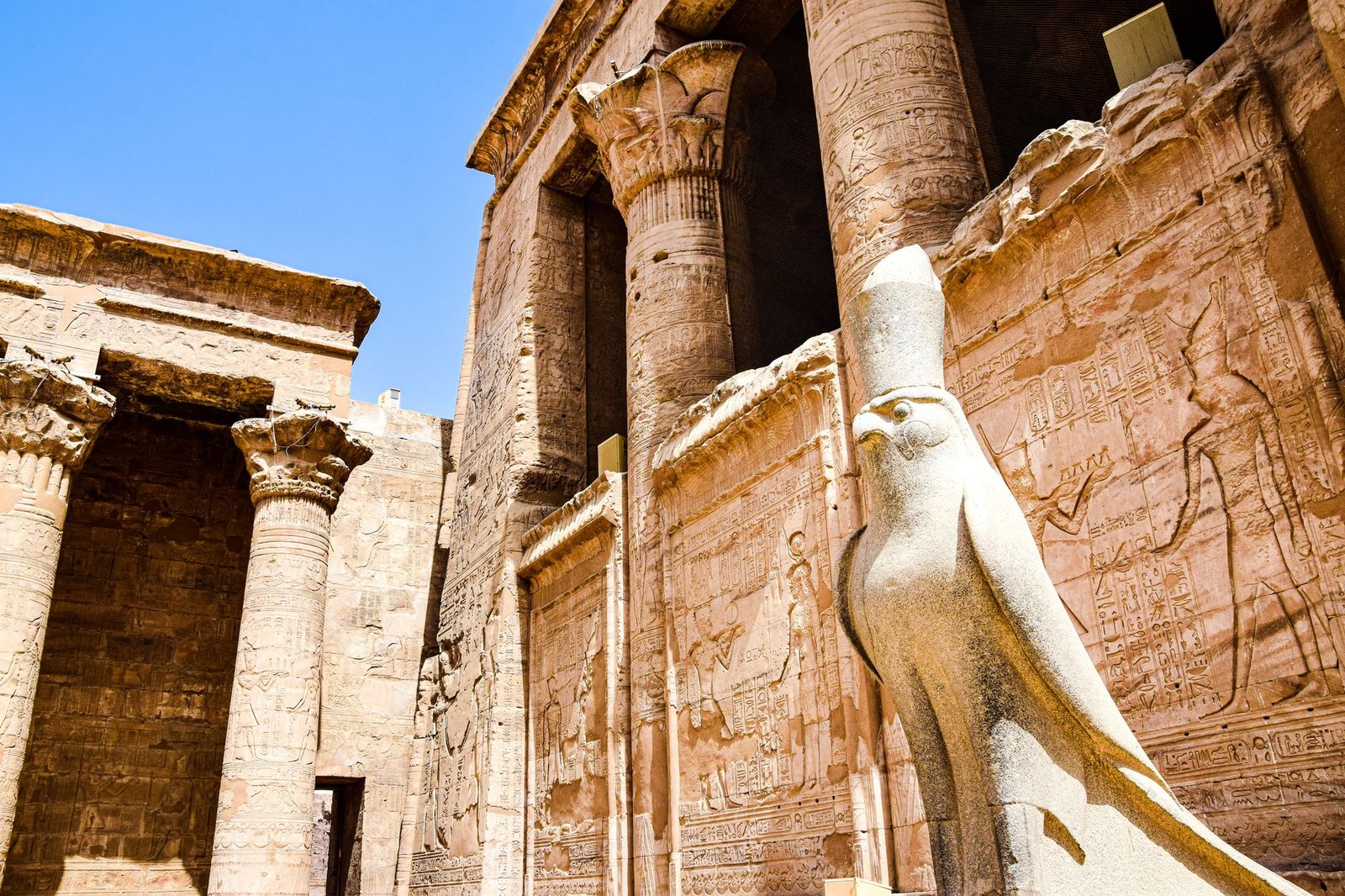
Who Are the Four Sons of Horus in Egyptian Mythology?
The four sons of Horus in Egyptian mythology—Imsety, Hapy, Duamutef, and Qebehsenuef—were protective deities closely tied to burial rites, canopic jars, and the preservation of the dead. Their roles reveal how ancient Egyptians connected bodily protection, divine guardianship, and the hope of rebirth, making them essential figures in funerary religion.
How Many Gods and Goddesses Did Ancient Egyptians Worship?
The ancient Egyptians worshipped a vast and changing array of divine beings, so the question how many gods and goddesses did the ancient Egyptians worship has no single exact answer. This article explains how scholars identify hundreds of named deities, from major national gods to local and specialized figures, and why that flexible religious system shaped Egyptian life for millennia.