Why So Many Monsters Descend from Typhon and Echidna
Introduction
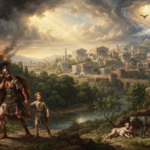
In Greek mythology, few genealogies are as ominous as that of Typhon and Echidna, the monstrous pair often described as the parents of many fearsome beings. Their children include some of the most famous threats faced by Greek heroes: the Nemean Lion, the Lernaean Hydra, Cerberus, Orthrus, the Chimera, and, in some traditions, the Sphinx, the Caucasian Eagle, and other monsters.
The question of why so many monsters descend from Typhon and Echidna is important because it reveals how the Greeks organized chaos, danger, and the unfamiliar within genealogy. Instead of treating monsters as isolated horrors, myth often placed them into a family tree. That family tree gave order to fear. Typhon and Echidna became symbolic ancestors of monstrosity itself.
This article explains their origins, roles, family connections, associated symbols, major myths, and their lasting cultural influence.
Origin and Meaning
Etymology of Typhon and Echidna
The names Typhon and Echidna have ancient Greek roots, though their precise etymologies are not always certain.
- Typhon is commonly associated with smoke, storm, and upheaval. Ancient and modern scholars often connect the name with ideas of blazing heat, whirling wind, or destructive disturbance, but the exact linguistic origin remains debated.
- Echidna in Greek means “viper” or “sea snake” in many contexts, a fitting name for a serpent-like monster.
Historical Origin
The first major literary source for their genealogy is Hesiod’s Theogony, composed in the Archaic period. Hesiod presents Typhon and Echidna as monstrous beings linked to the forces that oppose divine order. In later mythographic and poetic traditions, they became the stock parents of many monsters.
Their lineage is not always uniform across sources. Some traditions emphasize Typhon and Echidna as the direct ancestors of nearly all major monsters, while others assign certain creatures different parents. This variation is typical of Greek mythology, which developed through multiple local and literary traditions rather than a single canonical version.
Historical Context
Monster Genealogy in Greek Myth
Greek myth frequently explains the world by arranging beings into family relationships. Gods, heroes, rivers, winds, and monsters can all be genealogically connected. This did more than provide a narrative framework: it expressed the Greek tendency to classify the cosmos.
Within this framework, Typhon and Echidna represent a monstrous branch of the divine family tree. They are not merely random beasts; they embody a recurring mythic idea that disorder produces disorder.
Religious and Cultural Background
In Greek religious thought, order was often understood in contrast to chaos. The Olympian gods represented hierarchy, civic stability, and cosmic structure. Monsters, by contrast, lived at the edges:
- in caves
- in mountains
- in remote forests
- under the earth
- near sea margins or other liminal spaces
Typhon and Echidna fit this pattern. They symbolize dangerous forces beyond the reach of ordinary society. Their offspring are usually localized threats, each requiring a hero to defeat it. In this sense, the descendants of Typhon and Echidna help dramatize the Greek idea that civilization advances by confronting and overcoming chaos.
Main Characteristics
Typhon
Typhon is typically described as one of the most terrifying beings in Greek mythology.
Common features include:
- enormous size
- many heads or serpentine limbs in some accounts
- fire and smoke
- a voice of mixed animal sounds
- association with storms and earthquakes
- extreme hostility to the Olympian gods
He is often portrayed as a cosmic enemy, a being so powerful that even Zeus had to struggle against him.
Echidna
Echidna is usually described as a hybrid creature:
- part woman, part serpent
- living in a hidden or underground place
- a producer of monstrous offspring
- often immortal or long-lived in some traditions
Unlike Typhon’s violent cosmic scale, Echidna often appears as a more mysterious, cave-dwelling mother of monsters.
Why Their Offspring Matter
The abundance of monsters descending from Typhon and Echidna serves several mythic functions:
They personify inherited danger.
Their children are dangerous because monstrosity is treated as a family trait.They create a shared origin for heroic trials.
Many heroes defeat descendants of this pair, linking diverse stories into a larger mythic pattern.They mark the world’s untamed zones.
Their offspring often inhabit boundaries between civilization and wilderness.They help explain the continuity of evil in myth.
Even when one monster is slain, another appears from the same source.
Family and Genealogy
Parents of Typhon and Echidna
Ancient sources vary.
- Hesiod presents Typhon as a child of Gaia and Tartarus.
- Echidna is sometimes described as a child of Phorcys and Ceto, both sea deities associated with monstrous offspring.
- In some later accounts, the parentage of Echidna differs or is left unclear.
Children Attributed to Typhon and Echidna
The list of their offspring varies widely by source. The following table summarizes major figures commonly assigned to them in one or more ancient traditions.
| Creature | Usual Role | Notes on Sources |
|---|---|---|
| Orthrus | Two-headed watchdog | Commonly named as their child |
| Cerberus | Guard dog of the Underworld | Parentage varies by source |
| Lernaean Hydra | Multi-headed serpent | Frequently linked to them |
| Nemean Lion | Invulnerable lion | Often included in later genealogies |
| Chimera | Fire-breathing hybrid beast | Commonly attributed to them |
| Sphinx | Riddle-bearing monster | Attribution varies |
| Caucasian Eagle | Tormentor of Prometheus | Sometimes included |
| Colchian Dragon | Guardian of the Golden Fleece | Attributed in some traditions |
| Ladon | Dragon of the Hesperides | Parentage varies |
Spouses and Descendants
Typhon and Echidna are usually treated as partners. Their union is a mythic pairing of complementary forms of danger:
- Typhon: storm, force, and cosmic violence
- Echidna: hidden, serpentine, and reproductive monstrosity
They are not usually presented as the parents of heroic lineages. Instead, they generate the creatures heroes must defeat. This makes them a negative mirror of the divine families that produce gods and culture heroes.
Symbols
Common Symbolic Associations
Typhon and Echidna are not worshipped through a formal symbolic system in the way major gods were, but myth consistently associates them with certain signs and images.
| Symbol | Meaning |
|---|---|
| Serpent | Chthonic power, danger, renewal, hidden life |
| Fire | Typhon’s destructive force, volcanic or storm imagery |
| Storm winds | Chaos and divine disorder |
| Caves and abysses | Hidden, subterranean, liminal spaces |
| Multiple heads | Excess, unnatural proliferation, hard-to-defeat danger |
Color Associations
Ancient sources do not provide a standardized color scheme. In later art and interpretation, monsters related to Typhon and Echidna are often imagined in dark, red, or earthy tones, but these are artistic conventions rather than fixed ancient rules.
Sacred Animals
Typhon and Echidna are not associated with sacred animals in the religious sense, but several animals are symbolically linked to them.
Serpents
The serpent is central. It represents:
- chthonic power
- danger hidden in the earth
- immortality or renewal
- ambivalence, since snakes can also appear in divine or protective contexts
Dogs
Their offspring Orthrus and Cerberus are monstrous dogs. Dogs in Greek myth can be guardians, but here they are transformed into terrifying threshold creatures.
Birds of Prey
In some traditions, the Caucasian Eagle that torments Prometheus is linked to Typhon and Echidna. The eagle expresses relentless punishment and divine surveillance.
Lions
The Nemean Lion is sometimes included among their descendants. Lions usually symbolize royal power, but in this case that strength is turned against humanity.
Sacred Plants
There are no universally accepted sacred plants specifically tied to Typhon and Echidna in ancient worship. However, certain plants appear indirectly in stories involving their descendants or the places they inhabit.
Notable Associations
- Reeds and marsh plants: often appear in wetland settings like Lerna, the home of the Hydra.
- Thorns and wild vegetation: may symbolize hostile, untamed landscapes.
- Laurel and olive, while important in Greek religion generally, are more connected to other deities and heroes than to Typhon and Echidna.
Because no stable plant cult is associated with them, any plant symbolism should be treated as contextual rather than canonical.
Sacred Places
Typhon and Echidna are associated less with temples than with dangerous, remote locations.
Important Mythic Locations
| Place | Association |
|---|---|
| Mount Etna | Later tradition places Typhon beneath the volcano |
| Cilicia | One tradition situates Typhon there |
| Arima | Mentioned in some ancient sources as a place connected to Typhon |
| Lerna | Home of the Hydra |
| Nemea | Home of the Nemean Lion |
| Underworld | Associated with Cerberus and other chthonic figures |
| Remote caves and wastelands | Typical dwelling places for Echidna |
Why Place Matters
These locations are not random. In Greek mythology, monsters are often tied to frontier spaces:
- volcanic regions
- marshes
- caves
- mountain passes
- the far west or far east
- underground realms
Such places stand outside the settled polis, making them suitable settings for creatures born of disorder.
Powers and Attributes
Typhon’s Powers
Typhon is one of the few beings in Greek myth who can threaten Zeus directly. His powers include:
- tremendous physical strength
- storm and wind imagery
- fire and volcanic association
- resistance to divine rule
- overwhelming scale
Echidna’s Attributes
Echidna’s power is more indirect but equally important. She is associated with:
- reproduction of monsters
- serpentine cunning
- hidden lairs
- endurance or immortality in some versions
Why Their Line Matters
Typhon and Echidna are not merely powerful individuals. Their greatest mythic function is generative. They are sources of monster lineages. In narrative terms, they explain why the world keeps producing creatures that require heroic intervention.
This may be the core reason so many monsters descend from them: the myths needed an ancestral explanation for a wide range of threats, and Typhon and Echidna became the perfect pair to serve that role.
Main Myths
Typhon’s War Against Zeus
One of the central myths involving Typhon is his confrontation with Zeus. In Hesiod’s version, Typhon challenges divine authority after the defeat of the Titans. Zeus ultimately prevails, often with the help of thunder and lightning, and Typhon is imprisoned or subdued.
This myth matters because Typhon represents the last major revolt against Olympian order. His defeat establishes Zeus’s supremacy.
Echidna and the Monster Line
Echidna appears more often as a mother than as a combatant. She is a source of dangers such as:
- Cerberus, guardian of Hades
- Orthrus, the two-headed watchdog
- the Hydra, killed by Heracles
- the Chimera, slain by Bellerophon
Why Heroes Keep Fighting Their Children
The descendants of Typhon and Echidna populate heroic myth because they provide structured tests of strength, intelligence, and courage. Each monster often corresponds to a distinct heroic challenge:
- Heracles faces the Hydra and the Nemean Lion
- Bellerophon defeats the Chimera
- Heracles also captures Cerberus
- Jason and the Argonautic tradition involve monstrous guardians
- Oedipus confronts the Sphinx in some traditions, though her parentage varies
These stories reinforce the idea that the monsters are not isolated but belong to a shared mythic ecosystem.
Relationship with Other Mythological Figures
With Zeus
Typhon is one of Zeus’s greatest enemies. Their battle symbolizes the triumph of ordered kingship over chaotic force.
With Gaia
In some versions, Gaia is Typhon’s mother. This connects him to the earth itself, making him a natural power rather than an artificial one.
With Tartarus
Tartarus as a parent or source emphasizes Typhon’s connection to the deepest underworld and primordial darkness.
With Phorcys and Ceto
Echidna’s association with sea deities or monster-bearers links her to a broader family of chthonic and marine danger.
With Heroes
Typhon and Echidna are indirectly linked to many heroes through their children. The heroes’ victories are celebrated precisely because the monsters are so well connected and so numerous.
Worship and Cult
Was There Worship of Typhon and Echidna?
There is no strong evidence of widespread formal worship of Typhon and Echidna as deities in the Greek religious sense. They are best understood as mythic monsters, not objects of regular cult.
Ritual and Religious Context
That said, they are important in a broader religious landscape where monsters, chthonic powers, and liminal beings had meaning. Greek ritual often acknowledged dangerous forces indirectly through:
- purification
- boundary rites
- sacrifices to gods who protect against evil
- local traditions about underworld powers
Typhon in Later Religious Traditions
In some later ancient and Near Eastern-influenced interpretations, Typhon was associated with destructive cosmic forces and sometimes linked in broader symbolic systems to adversarial beings. However, these later identifications should not be projected uncritically onto early Greek myth.
Ancient Sources
Major Classical Authors
Several ancient authors are essential for understanding Typhon and Echidna.
| Author | Work | Relevance |
|---|---|---|
| Hesiod | Theogony | Early account of Typhon, Echidna, and monstrous genealogies |
| Homer | Iliad, Odyssey | Alludes to monstrous and chthonic figures, though not always directly |
| Apollodorus | Bibliotheca | Important mythographic summary of monsters and their lineages |
| Pausanias | Description of Greece | Valuable for local traditions and cultic geography |
| Ovid | Metamorphoses | Roman-era retelling and transformation of mythic material |
| Hyginus | Fabulae | Later mythographic compilation preserving alternative versions |
Importance of Source Variation
Different authors assign different parentage to monsters. For example:
- the Sphinx is sometimes a child of Typhon and Echidna, sometimes not
- Cerberus and Orthrus are more consistently linked to them
- the Hydra’s genealogy can vary across traditions
This variability reflects the oral and regional nature of Greek myth.
Roman Equivalent
There is no single Roman equivalent to Typhon and Echidna as a pair. Roman mythology generally absorbed them as part of Greek tradition rather than replacing them with a native counterpart.
Roman Reception
- Typhon remained Typhon in Latin literature.
- Echidna also retained her Greek name in most contexts.
- Roman authors such as Ovid and Hyginus transmitted their stories, helping preserve them for later readers.
Roman mythic culture often emphasized comparable figures of chaos or monstrous threat, but not as a direct substitute for this pair.
Influence on Modern Culture
Typhon and Echidna continue to influence modern storytelling because they embody the idea of a monstrous bloodline.
Literature
They appear in retellings of Greek myth, fantasy novels, and scholarly works on comparative mythology. Their children often receive more attention than they do, but the pair remains important as a source of monster genealogy.
Cinema and Television
Modern adaptations of Greek myth, especially those focused on heroes like Heracles, Perseus, or Jason, frequently include monsters traced back to Typhon and Echidna, whether or not the ancestry is mentioned explicitly.
Games
Role-playing games, strategy games, and fantasy franchises often draw on their monsters:
- dragons
- hydra-like enemies
- giant serpents
- underworld guardians
The name Typhon itself is often reused for powerful boss characters, storms, or elemental threats.
Art and Popular Culture
Artists are drawn to the pair because they represent the boundary between humanity and the monstrous. Echidna’s half-woman, half-serpent form is especially memorable in visual media.
Curiosities
- Typhon is sometimes called the “father of monsters,” though this is a thematic title rather than a strict ancient formula.
- Echidna’s identity is more complex than many modern retellings suggest. She is not always described in the same way across sources.
- Some monster genealogies overlap or conflict. Greek myth does not maintain a single family tree.
- The children of Typhon and Echidna often guard thresholds: underworld gates, treasure, sacred spaces, or impossible routes.
- Their lineage helps explain recurring monster patterns in Greek stories: multi-headed beasts, serpent monsters, and guardian creatures.
- The pair are examples of “monstrous reproduction” in myth, where disorder seems to generate more disorder.
- Their family tree is one reason Greek mythology feels interconnected. A single monstrous couple can link many of the best-known legends.
Frequently Asked Questions
1. Why are so many monsters said to descend from Typhon and Echidna?
Because Greek myth often uses genealogy to explain repeated patterns. Typhon and Echidna became the symbolic source of monstrous beings, allowing authors to group many dangerous creatures under one mythic family.
2. Are all monsters in Greek mythology their children?
No. Only some are attributed to them, and the parentage of certain creatures varies by source. Greek mythology has no single fixed canon.
3. Who are the most famous children of Typhon and Echidna?
The most famous include Cerberus, Orthrus, the Hydra, the Chimera, and the Nemean Lion. In some traditions, the Sphinx and Caucasian Eagle are also included.
4. Did Typhon and Echidna really exist in ancient religion?
They were mythological beings, not historical persons. They belong to the religious and literary imagination of ancient Greece.
5. Why is Echidna sometimes called the mother of monsters?
Because many traditions portray her as the mother of several infamous beasts. This role is central to her mythic identity.
6. What is Typhon’s main role in myth?
Typhon is best known as a cosmic enemy of Zeus and a symbol of violent, chaotic power.
7. Do Typhon and Echidna have temples or major cult centers?
Not in the way major gods did. Their significance is primarily mythological rather than cultic.
8. Why are they important today?
They remain important because they help explain how Greek mythology organizes fear, chaos, and heroic conflict through genealogy and story structure.
Conclusion
The reason so many monsters descend from Typhon and Echidna lies in the logic of Greek myth itself. These figures function as ancestral embodiments of chaos, danger, and the untamed world. By making them the parents of many famous beasts, ancient storytellers created a powerful mythic system in which monstrosity is both genealogical and symbolic.
Typhon represents overwhelming destructive force, while Echidna represents hidden, serpentine danger and reproduction. Together, they form one of mythology’s most enduring monster families. Their descendants populate some of the most famous heroic tales in Greek literature, and their legacy continues in modern retellings of myth, fantasy, and popular culture.
In short, Typhon and Echidna are important not only because they are monstrous, but because they explain why Greek myth is so full of monsters at all.

Orin Vale has spent the better part of two decades tracing the threads that connect the world’s oldest stories — from the halls of Asgard to the banks of the Nile, from Olympus to the jungles of the Maya. What began as a childhood fascination with flood myths and trickster gods grew into years of independent study across comparative mythology and ancient religion, always chasing the same question: what did these stories mean to the people who first told them? Orin writes for readers who want more than trivia — the ones looking for the beliefs, fears, and truths that myths were built to carry.