Introduction
Sekhmet is one of the most powerful and complex goddesses in ancient Egyptian mythology. She was primarily associated with war, divine retribution, plague, and healing, and she occupied a central place in the religious imagination of ancient Egypt for more than two millennia. Her name and image evoke both destruction and protection: she could unleash terrifying force against enemies of the sun god, but she was also invoked to prevent disease and restore balance.
Understanding who Sekhmet is in Egyptian mythology requires looking beyond the modern image of a lion-headed goddess of war. In ancient Egypt, divinity was often dual in nature. A force that could destroy could also preserve, and Sekhmet embodies that principle clearly. She is among the best-known feline deities in the Egyptian pantheon and remains important today in the study of ancient religion, royal ideology, medicine, and temple ritual.
Origin and Meaning
The name Sekhmet is usually understood as deriving from the Egyptian root sḫm, meaning “powerful” or “mighty.” Her name is often translated as “The Powerful One” or “She Who Is Powerful.” This meaning reflects her character as a fierce and overwhelming divine force.
As with many ancient Egyptian deities, the precise development of Sekhmet’s cult is difficult to trace in full detail. She appears prominently in textual and artistic evidence from the New Kingdom onward, though her underlying associations with leonine power and the desert may be older. In Egyptian religion, lion symbolism was closely tied to royal authority, solar power, and dangerous protective strength. Sekhmet belongs to this wider symbolic world.
Her identity was also shaped by her relationship to other lioness goddesses, especially Bastet, Mut, and Wadjet, whose roles sometimes overlap or shift depending on time, place, and theological context. Egyptian theology was not fixed in the way modern systems often are; deities could be local, national, merged, or interpreted differently across centuries.
Historical Context
Sekhmet emerged within the religious and political framework of ancient Egypt, where gods were linked to kingship, cosmic order, and the maintenance of ma’at—the principle of truth, balance, and stability. In this context, a goddess of destructive power was not a contradiction. She was necessary.
Egyptian kings were expected to protect the land from chaos, foreign enemies, and disorder. Sekhmet became an important divine model of royal violence. She could be represented as the king’s formidable agent in battle or as the sun god’s “Eye,” a dangerous feminine force sent to punish rebellion and maintain cosmic order.
Her prominence increased in state cults, especially during the New Kingdom and later periods, when monumental temple religion flourished. Pharaohs, especially those who wanted to emphasize military strength and divine legitimacy, associated themselves with Sekhmet’s protective ferocity. She was also deeply connected with healing and medical practice, particularly in temple contexts where priests and ritual specialists sought to counter illness and harmful forces.
Because Egypt’s religious tradition developed over many centuries, Sekhmet’s role varied across time and region. In some traditions she was strongly martial; in others, she was more clearly a healing goddess or a member of a divine family centered on Thebes.
Main Characteristics
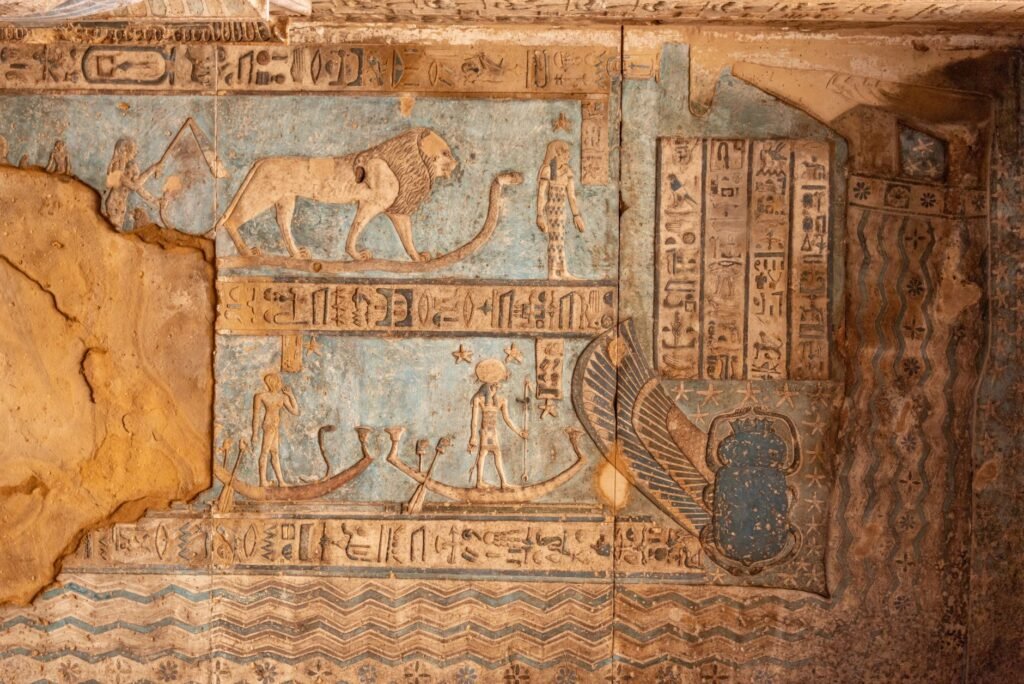
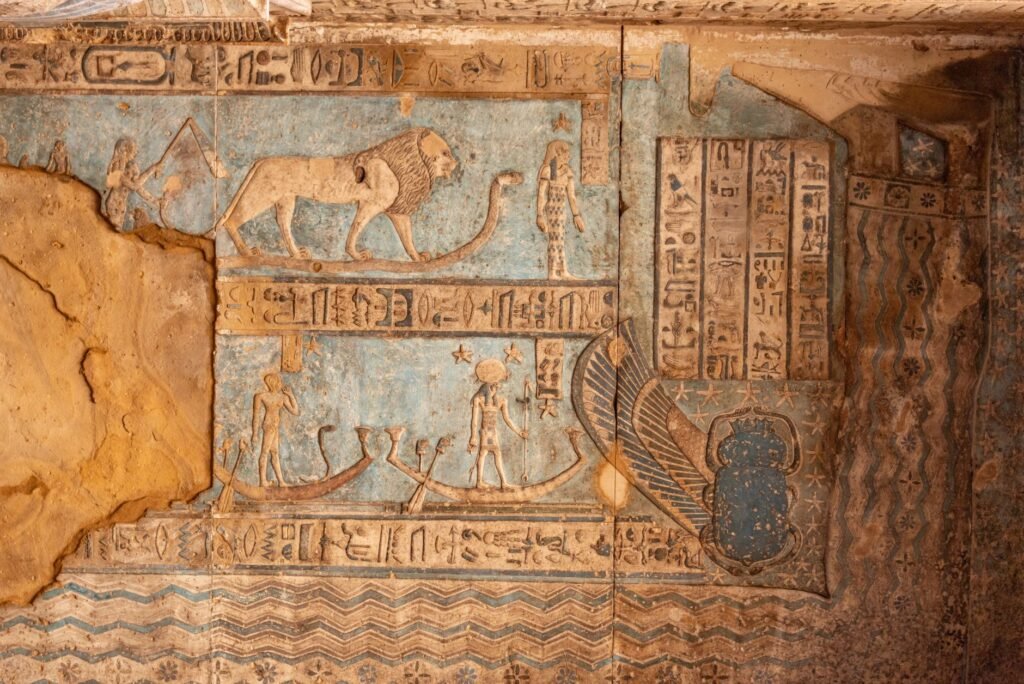
Sekhmet is usually depicted as a woman with the head of a lioness, or sometimes in fully lion-headed form. Her iconography is one of the most recognizable in Egyptian art. She often wears a solar disk crowned with a uraeus (cobra), emphasizing her connection to the sun and royal power.
Her essential traits include:
- Fierceness and aggression
- Divine protection
- Military power
- Plague and disease
- Healing and restoration
- Solar connection
- Royal legitimacy
She is not merely “evil” or destructive in a simple sense. In Egyptian thought, she was a necessary instrument of divine justice. She could punish those who threatened cosmic order, but she also had the power to protect the righteous and to drive away harmful forces.
Sekhmet’s dual nature is important. She was feared because she was dangerous, but she was also honored because that danger could be controlled through ritual and appealed to for protection. This balance between threat and remedy is one of the defining features of her mythology.
Family and Genealogy
Sekhmet’s genealogy varies somewhat according to theological tradition. In many sources, she is identified as a daughter of the sun god Ra. She is frequently counted among the so-called Eye of Ra goddesses, who act as the sun god’s powerful feminine counterpart.
She is often linked with:
- Ra as father or source of divine power
- Ptah as consort in some traditions
- Nefertum as a son in Theban and Memphite theological frameworks
However, Egyptian divine family relations were not always consistent across periods or cult centers. Sekhmet is also sometimes integrated into a larger theological grouping with Mut and Bastet. In Thebes, she could be one of the manifestations or aspects of the divine feminine connected to kingship and solar authority.
In some late sources and scholarly reconstructions, she is associated with the Memphite triad:
| Figure | Relationship | Notes |
|---|---|---|
| Ptah | Husband or consort | Major creator god of Memphis |
| Sekhmet | Wife / divine partner | Linked with healing and war |
| Nefertum | Son | Associated with lotus and rejuvenation |
This relationship is especially important in Memphite theology, though local traditions could differ.
Symbols
Sekhmet’s symbols reflect both her ferocity and her sacred authority. The most important are:
| Symbol | Meaning |
|---|---|
| Lioness head | Strength, aggression, royal power, solar heat |
| Solar disk | Connection to Ra and solar divinity |
| Uraeus cobra | Protective and kingly power |
| Ankh | Life and vitality, especially in healing contexts |
| Sceptre or staff | Divine authority |
| Red color association | Blood, fire, destructive heat, danger |
Her lioness form is central. Lions were seen as powerful desert predators, and in Egyptian symbolism they represented both danger and protection. Sekhmet’s gaze, like the blazing sun, could be lethal.
The solar disk on her head is especially significant. It shows that she is not simply a wild animal goddess but a major solar deity integrated into state religion. The uraeus adds another layer of protection and deadly force, echoing the royal serpent that defends the pharaoh.
Sacred Animals
Sekhmet’s sacred animal is the lioness, and by extension the lion. In Egyptian religion, lions were among the most potent symbols of power.
Symbolic significance of the lioness
- Protective ferocity: A lioness defends her territory and cubs aggressively.
- Solar heat: The scorching power of the sun was often imagined in lion-like terms.
- Royal authority: Egyptian rulers were expected to embody controlled strength.
- Desert danger: The lioness reflects the wild edge of the inhabited world.
Other animals can appear in her broader symbolic sphere, but the lioness is by far the most important and consistent. Unlike some deities whose iconography changes dramatically, Sekhmet’s lioness identity remains stable across many periods.
Sacred Plants
No single plant is universally and exclusively sacred to Sekhmet in the way that some plants are tied to particular gods in later traditions. However, several plants are relevant in her cultic and symbolic environment.
Relevant plants and associations
- Lotus: Sometimes associated with renewal and solar rebirth, especially through family connections such as Nefertum.
- Papyrus: A general symbol of life and Lower Egypt, appearing in temple and royal iconography.
- Medicinal herbs: Linked to healing rituals and temple medicine in which Sekhmet played a role.
Because Sekhmet is tied to healing as well as destruction, the plant world around her is best understood through medicine and ritual purification rather than through a single sacred species. Ancient Egyptian temple healing relied on a combination of spells, offerings, fumigation, and herbal knowledge.
Sacred Places
Sekhmet was worshipped in many parts of Egypt, but several places are especially significant.
Memphis
Memphis was one of the most important cult centers associated with Sekhmet, especially in connection with Ptah and Nefertum. As a major political and religious city, Memphis provided an important setting for her role as a goddess of power and healing.
Thebes
In Thebes, Sekhmet was closely associated with the local religious landscape and with royal ideology. The New Kingdom in particular elevated Theban temple religion, and Sekhmet appears prominently in this context.
Karnak
The temple complex of Karnak is especially famous for its numerous statues of Sekhmet, many of which were commissioned during the reign of Amenhotep III. These statues reflect her importance as a protective and potentially dangerous divine force within temple ritual.
Other sacred sites
Sekhmet was also honored in several other locations, especially where royal and temple cults emphasized healing, protection, and solar power. Because Egyptian deities were often worshipped locally as well as nationally, her sacred geography was broad rather than limited to one city.
Powers and Attributes
Sekhmet’s powers span multiple domains, which is one reason she remains such a significant figure in Egyptian mythology.
Her main areas of influence include:
- War and battle
- Punishment of enemies
- Disease and plague
- Healing and medicine
- Protection of kings
- Solar heat and fire
- Restoration of order
- Divine wrath
Her association with plague is especially important. In Egyptian thought, disease could be seen as a manifestation of divine anger or dangerous cosmic imbalance. Sekhmet could send illness, but she could also remove it. This paradox made her a key figure in ritual healing.
She was also invoked as a protectress. Just as a fierce lioness keeps threats away from her territory, Sekhmet could guard temples, royal spaces, and the vulnerable against hostile forces.
Main Myths
Sekhmet’s most famous myth is the story of the Destruction of Mankind. This narrative survives in various forms and is often interpreted as a cautionary tale about the dangers of divine anger.
The Destruction of Mankind
In the myth, Ra becomes angered by humanity’s disobedience or rebellion. He sends the Eye of Ra in the form of Sekhmet to punish humankind. Sekhmet carries out the destruction with terrifying enthusiasm. In some versions, she becomes so bloodthirsty that she cannot stop killing.
To prevent the complete annihilation of humanity, Ra devises a plan involving red-colored beer or an intoxicating liquid that resembles blood. Sekhmet drinks it, becomes drunk, and her fury subsides. The surviving world is saved.
This myth is important for several reasons:
- It explains Sekhmet’s destructive nature.
- It shows the need to restrain divine wrath.
- It links her to solar theology.
- It illustrates the Egyptian concern with balance and excess.
Other mythic roles
Sekhmet also appears as:
- A protector of the sun god in the daily cosmic struggle
- A defender of the king against enemies
- A healer capable of reversing the effects of her own rage
- A goddess active in temple ritual and divine punishment
Different texts and ritual traditions emphasize different aspects of her personality. Some stress her as a terrible avenger; others focus on her as a medicine-giving or disease-averting deity.
Relationship with Other Mythological Figures
Sekhmet’s relationships with other deities are central to understanding her place in Egyptian mythology.
Ra
Sekhmet is most famously connected to Ra, the sun god. As one of his eyes, she acts as his active force in the world. This relationship explains her solar aspect and her role as executor of divine judgment.
Bastet
Sekhmet is often contrasted with Bastet, another feline goddess. Bastet is typically more associated with domestic life, protection, music, and fertility, while Sekhmet represents ferocity and warfare. In some interpretive traditions, they can be seen as complementary expressions of feline divine power: one tame and benevolent, the other fierce and dangerous.
Mut
Sekhmet was sometimes linked with Mut, the powerful mother goddess of Thebes. Both are major feminine divine figures associated with royal legitimacy and protection.
Ptah and Nefertum
In Memphite theology, Sekhmet forms part of a divine family with Ptah and Nefertum. This association reflects the flexible and regionally varied nature of Egyptian religion.
The pharaoh
Sekhmet’s relationship to the king is especially important. The pharaoh was expected to harness her power in battle and ritual, but not be consumed by it. She could protect the king’s rule and legitimate the use of force against chaos.
Worship and Cult
Sekhmet was worshipped in formal temple settings, royal ritual, and healing contexts. Her cult was especially significant among priests, physicians, and the court.
Ritual functions
Her worship could include:
- Offerings of food and drink
- Incense and purification rites
- Protective spells
- Healing rituals
- Festival observances
- Votive dedications
Because she was associated with disease, priests and healers sought to calm her through ritual. In some texts and later traditions, she is addressed with formulas meant to avert illness and secure protection.
Amenhotep III and Sekhmet statues
One of the most remarkable expressions of her cult comes from the reign of Amenhotep III, who commissioned a very large number of Sekhmet statues. These statues are among the most famous objects in Egyptian archaeology and suggest a major ceremonial and protective role for the goddess in royal and temple contexts.
Scholars often interpret this large-scale production as connected to:
- royal protection
- solar theology
- healing rites
- memorial temple activity
- the containment of dangerous divine power
Festivals and liturgical tradition
The exact details of her festivals are not always fully preserved, and practices varied by temple and period. However, her cult likely involved ritual care designed to appease her wrath and harness her beneficial power.
Ancient Sources
Sekhmet is documented in Egyptian sources rather than in Greek literary classics, though later Greco-Roman authors and interpreters discussed Egyptian deities in broad terms. The most important ancient evidence includes:
- Temple inscriptions
- Pyramid Texts
- Coffin Texts
- The Book of the Dead
- Mythological and hymnic texts
- Medical and magical papyri
- Temples from the New Kingdom and later
Because Egyptian religion was written in hieroglyphic and related scripts, much of what is known about Sekhmet comes from archaeological and textual interpretation rather than from a single authoritative narrative.
Classical authors such as Herodotus, Diodorus Siculus, and Plutarch provide useful but indirect information about Egyptian religion. Their accounts, however, should be treated cautiously because they often interpret Egyptian gods through Greek categories and may simplify local traditions.
Unlike gods such as Zeus or Athena, Sekhmet does not have a major role in Homer or Hesiod. Her tradition is primarily Egyptian, and modern knowledge depends heavily on Egyptian primary sources and archaeology.
Roman Equivalent
Sekhmet does not have a perfect Roman equivalent. Roman religion generally did not absorb her into a single direct counterpart in the way Greek and Roman gods often correspond.
That said, she could be loosely compared to certain Roman concepts of:
- Bellona, the Roman goddess of war
- Nemesis, in her role as divine retribution
- Salus, in healing and protection contexts
These comparisons are only approximate. Roman religion had its own structure, and Sekhmet remained distinct when encountered in Egyptian and Greco-Roman Egypt. In syncretic religious settings, Egyptian deities were sometimes identified with classical figures, but no fully standard Roman equivalent for Sekhmet exists.
Influence on Modern Culture
Sekhmet continues to attract attention in modern literature, art, museum displays, video games, and popular writing about ancient Egypt. Her striking lioness-headed form makes her one of the most visually memorable deities in the Egyptian pantheon.
Areas of modern influence
- Museum exhibitions and archaeology: Sekhmet statues, especially from Karnak, are important museum objects.
- Fantasy literature: She appears or is referenced in works inspired by Egyptian mythology.
- Video games: Egyptian gods, including Sekhmet, often appear as characters or symbolic influences.
- Comics and graphic novels: Her image is used to represent power, vengeance, and ancient mysticism.
- Contemporary art and design: Her lioness form and solar imagery are widely adapted.
In modern culture, Sekhmet is often reduced to a simple “war goddess,” but scholarly work emphasizes her broader identity as a deity of controlled divine power, healing, and kingship.
Curiosities
- Sekhmet is sometimes described as a goddess whom priests had to calm, because her destructive power could not be ignored.
- Her mythology illustrates a recurring Egyptian theme: the same force that harms can also heal.
- The large number of Sekhmet statues from Amenhotep III’s reign is one of the most striking examples of a deity being represented on a massive scale in royal temple art.
- Her lioness head makes her one of the most visually distinct Egyptian gods, second only to a few other highly iconic forms.
- She is often paired conceptually with Bastet as a kind of “two sides of feline divinity,” though this is a modern interpretive framework rather than a single ancient doctrine.
- In some ritual contexts, Sekhmet was important not because she caused plague, but because she could prevent it.
- The myth of the destruction of humankind is one of the clearest examples of divine intoxication in ancient Egyptian storytelling.
Frequently Asked Questions
Who is Sekhmet in Egyptian mythology?
Sekhmet is an ancient Egyptian lioness goddess associated with war, plague, healing, royal power, and divine punishment. She is usually seen as a fierce solar deity and one of the most powerful figures in the Egyptian pantheon.
Why is Sekhmet important?
She is important because she represents the dangerous but necessary force that maintains cosmic order. She also played a major role in temple religion, royal ideology, and healing practices.
Is Sekhmet a good or evil goddess?
She is neither purely good nor purely evil. Egyptian mythology generally presents her as a powerful force that can destroy enemies, but also protect and heal when properly honored.
What animal is Sekhmet associated with?
Sekhmet is associated with the lioness. Her lion-headed form symbolizes ferocity, protection, solar heat, and royal power.
Was Sekhmet connected to healing?
Yes. Although she could bring disease, she was also invoked to remove it. This dual role made her important in temple medicine and protective ritual.
Who were Sekhmet’s parents?
In many traditions, Sekhmet is considered a daughter of Ra, the sun god. However, Egyptian divine genealogy varies by source and region.
Did Sekhmet have a husband?
In Memphite theology, she is often paired with Ptah as consort. In other traditions, divine relationships may differ or remain less clearly defined.
What is Sekhmet’s most famous myth?
Her most famous myth is the Destruction of Mankind, in which she is sent by Ra to punish humans and is eventually pacified through intoxication.
Conclusion
Sekhmet is one of the most formidable and significant deities in Egyptian mythology. She embodies the power of the sun at its most intense, the violence of war, the danger of disease, and the possibility of healing. Her lioness form, solar symbols, and association with royal authority made her a central figure in both myth and cult.
Far from being a simple goddess of destruction, Sekhmet represents a deeply Egyptian idea: power must be both feared and controlled. She protects by threatening, heals by overpowering chaos, and enforces balance through divine force. For that reason, she remains one of the most enduring and fascinating figures in the study of ancient Egypt.

Orin Vale has spent the better part of two decades tracing the threads that connect the world’s oldest stories — from the halls of Asgard to the banks of the Nile, from Olympus to the jungles of the Maya. What began as a childhood fascination with flood myths and trickster gods grew into years of independent study across comparative mythology and ancient religion, always chasing the same question: what did these stories mean to the people who first told them? Orin writes for readers who want more than trivia — the ones looking for the beliefs, fears, and truths that myths were built to carry.