Who Is Renenutet in Egyptian Mythology?
Renenutet is an important goddess in ancient Egyptian religion, associated primarily with nourishment, the harvest, fertility, and protection. She was especially connected with grain, granaries, and the life-sustaining power of food. In some traditions, she also functioned as a protective deity over children and destiny, reflecting the broader Egyptian idea that what sustains life also preserves it.
Although she was not among the most universally famous Egyptian deities, Renenutet held a significant place in the religious imagination of ancient Egypt. Her role touches agriculture, household well-being, royal legitimacy, and divine guardianship. She appears in temple inscriptions, funerary texts, and later theological developments, where she is sometimes linked with other goddess figures and with the concept of the ren, or name, which in Egyptian thought was a vital aspect of a person’s identity.
Origin and Meaning

The name Renenutet is commonly understood to be connected with the Egyptian verb rnn, meaning “to nourish,” “rear,” or “raise.” Her name is often translated along the lines of “the nourisher,” “she who nurtures,” or “the fostering one.” This fits her role as a goddess of sustenance and the bounty of the harvest.
In Egyptian religious language, names were not merely labels; they carried theological meaning. Renenutet’s name reflects her identity as one who provides, sustains, and ensures growth. She is also associated in some contexts with the word ren, meaning “name,” though scholars distinguish between her etymology and broader symbolic links to naming, destiny, and identity.
Her origins are ancient and rooted in early Egyptian agricultural religion. She is attested from early periods and became especially prominent in later texts and temple traditions. Like many Egyptian deities, her role developed over time, absorbing local and theological meanings.
Historical Context
Renenutet emerged in a civilization where agriculture was the basis of survival and state power. The Nile flood made farming possible, and deities associated with harvest, fertility, and storage were central to daily life and ritual practice. Grain was not only food but also wealth, tax revenue, and a symbol of cosmic order.
Her importance increased in a society that depended on:
- reliable harvests
- protected storage of grain
- seasonal cycles
- divine support for fertility and prosperity
Renenutet was especially relevant in communities that managed large granaries and agricultural estates. Grain had to be protected from spoilage, theft, and pests, so a protective goddess of nourishment naturally fit this environment.
She also appears in contexts related to royalty and divine kingship. In Egypt, the prosperity of the land was tied to the health of the ruler and the favor of the gods. A goddess who nourished and protected could therefore be associated with state ideology as well as household life.
Main Characteristics
Renenutet is most often described as a nurturing and protective goddess. She embodies both abundance and guardianship. Unlike warlike deities or purely celestial gods, her power is practical and life-giving.
Principal traits
- Nourisher of the living: She provides sustenance and supports growth.
- Protector of grain and harvests: She safeguards the food supply.
- Guardian of granaries: She helps preserve stores of grain.
- Fertility deity: She is linked with fertility of the land and possibly human fertility.
- Protective goddess: In some contexts she watches over children and households.
- Linked with fate and destiny: Later traditions connect her with the destiny of individuals, especially through the notion of nursing and naming.
Iconographically, Renenutet is often represented as a cobra-headed woman or as a cobra. The serpent form is important because snakes in Egyptian symbolism could represent protection, danger, renewal, and divine power. Her appearance as a serpent does not imply malevolence; rather, it signals a powerful guardian presence.
Family and Genealogy
Renenutet’s family relationships are not fixed in a single canonical genealogy. Egyptian mythology rarely functions like a single unified family tree; instead, gods may have different origins or relationships depending on the local cult center and period.
Different sources associate her in varying ways:
- She is sometimes treated as a daughter of Ra or a manifestation connected to solar theology.
- In some traditions, she is linked with Shai, the god of destiny.
- She may be paired or connected with Meskhenet, the goddess of birth and fate.
- She is also associated with divine mothers and protective goddesses in broader theological groupings.
Because ancient Egyptian religion was highly regional and fluid, these relationships should be understood as theological associations rather than fixed genealogical facts. There is no single universally accepted myth in which her parents or offspring are consistently identified.
Symbols
Renenutet’s symbols reflect nourishment, abundance, and serpent power.
| Symbol | Meaning |
|---|---|
| Cobra or serpent | Protective power, divine authority, renewal |
| Grain and harvest imagery | Sustenance, prosperity, fertility |
| Granary associations | Preservation of food and wealth |
| Nursing imagery | Care, growth, maternal protection |
| Wadjet-style protective elements | Life and safeguarding, in some iconographic overlap |
Symbolic significance
The cobra was a potent royal and divine symbol in Egypt. Associated with protective force, it could ward off danger. In Renenutet’s case, the serpent form emphasizes her role as a vigilant guardian of nourishment. Grain, meanwhile, is the material basis of life, making it an especially appropriate emblem for a goddess tied to sustenance.
Sacred Animals
Renenutet is most closely associated with the cobra and, more broadly, with serpents.
Why the serpent mattered
In ancient Egypt, snakes had complex meanings. They could be feared as dangerous creatures, but they also represented:
- protection
- rebirth and renewal through shedding skin
- hidden divine power
- guardianship of sacred spaces
Renenutet’s serpent form is not identical to that of every other snake goddess, but it belongs to a recognizable Egyptian pattern in which snake deities can defend, nourish, or embody sacred potency. She is sometimes compared with other cobra goddesses, though each deity had distinct local and theological functions.
Sacred Plants
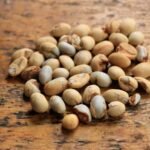
The plant most closely connected with Renenutet is grain, especially cereal crops such as wheat and barley.
Importance of grain
In ancient Egypt, grain was central to:
- food production
- taxation
- storage in granaries
- offerings to gods and the dead
- measuring wealth and survival
Because Renenutet governed nourishment and agricultural abundance, grain naturally became one of her primary associated symbols. While there is no widely attested sacred tree or flower uniquely and exclusively tied to her in the way some deities are linked to specific plants, grain itself functions as her essential plant emblem.
Sacred Places
Renenutet was worshipped in several locations, and her cult was connected with agricultural and temple settings rather than one universally dominant city.
Important associated places
- Faiyum region: In later periods, Renenutet was especially associated with agricultural fertility in this region.
- Temple estates and granaries: Her worship was practical and often linked to storage and provisioning.
- Wadi el-Natrun and agricultural zones: Some traditions connect her with fertile land and protected production areas.
- Local temples throughout Egypt: She appears in various local cultic contexts rather than a single central sanctuary.
Cultic environment
Her sacred space was often not a grand mythic mountain or a famous cosmological temple alone, but the working landscape of Egypt itself: fields, harvest sites, storehouses, and temples that managed economic surplus. This practical sacred geography reflects her function as a goddess of real sustenance.
Powers and Attributes
Renenutet’s powers center on preservation, fertility, and protection.
Core domains
- Nourishment
- Harvest and grain
- Fertility of the land
- Protection of food supplies
- Childcare and nurturing
- Prosperity and abundance
- Possibly destiny and name-related life force
Attribute overview
| Domain | Description |
|---|---|
| Agriculture | Supports crop growth and harvest success |
| Storage | Guards granaries and food reserves |
| Fertility | Encourages productive land and life |
| Protection | Defends against loss, spoilage, and harm |
| Maternal care | Symbolizes nurturing and raising |
| Destiny | In some later associations, linked to life course and identity |
Her role is therefore both physical and symbolic. She nourishes bodies through food and sustains social order through the preservation of wealth and life.
Main Myths
Renenutet does not have a single famous myth cycle comparable to the stories of Osiris, Isis, or Horus. Instead, she appears in a range of religious contexts that reveal her functions.
Key mythic and theological themes
1. The goddess of nourishment
Renenutet is often understood as a divine force behind the availability of food. Rather than a dramatic narrative, this role is expressed through hymns, temple texts, and agricultural symbolism.
2. Protector of the harvest
She is linked with the safe storage and distribution of grain. In mythic terms, this makes her a guardian against famine and loss.
3. Association with naming and destiny
In some traditions, her name and function are connected to the broader Egyptian concern with the ren or name, one element of a person’s spiritual identity. This association is more theological than narrative.
4. Protective serpent goddess
As a cobra deity, she belongs to the wider Egyptian idea of divine serpents that protect sacred and royal spaces.
Later theological development
In later Egyptian thought, Renenutet could be interpreted in more abstract ways, becoming a symbolic embodiment of providence, fertility, and life-sustaining order rather than merely a local agricultural goddess.
Relationship with Other Mythological Figures
Renenutet’s relationships with other gods and goddesses vary by text and period.
Common associations
- Shai: Sometimes connected with destiny. Shai represented the fate or allotted span of life, and Renenutet may appear alongside him in discussions of a person’s life course.
- Meskhenet: A goddess of birth and destiny, often linked to the beginnings of life. Both deities can overlap in ideas of nurturing and defining a person’s path.
- Ra: In solar theology, Renenutet may be related to or encompassed by Ra’s creative and sustaining power.
- Wadjet: Another cobra goddess and royal protector. The two share serpent symbolism but are not the same deity.
- Isis: Sometimes compared with Renenutet because both can have protective and maternal aspects, though Isis has a far broader mythological profile.
Distinctions from similar deities
It is important not to collapse Renenutet into every other mother or serpent goddess. Ancient Egyptian religion often placed multiple protective female divinities side by side, each with her own domain. Renenutet remained especially tied to grain, nourishment, and agricultural security.
Worship and Cult
Renenutet was worshipped through offerings and rituals tied to agricultural prosperity and household welfare. Her cult was likely strongest where grain storage and harvest protection mattered most.
Forms of worship
- offerings of grain and food
- prayers for good harvests
- temple rituals linked to abundance
- household reverence for protection and nourishment
- invocation in agricultural settings
Festival and ritual context
Specific universally attested festivals dedicated solely to Renenutet are not as well documented as those of major state gods. However, she was undoubtedly part of the seasonal rhythm of Egyptian religion, especially during harvest and storage cycles. Her cult would have aligned naturally with thanksgiving, provisioning, and protection of supplies.
Offerings
Offerings would have suited her nature:
- bread
- beer
- grain
- produce
- incense in temple settings
- libations
These offerings were not merely symbolic. In Egyptian religion, ritual food helped sustain divine presence, while also reaffirming the reciprocity between humans and gods.
Ancient Sources
Renenutet is known mainly from Egyptian texts rather than from Greek or Roman authors. She appears in religious inscriptions, temple scenes, and funerary literature.
Types of ancient sources
- Temple inscriptions
- Funerary texts
- Hymns and liturgical compositions
- Relief scenes in temple and tomb contexts
- Administrative and cultic references tied to agriculture
Scholarly note
Unlike Greek gods such as Zeus or Athena, Renenutet is not a major figure in classical Greek mythology, so authors like Homer or Hesiod do not discuss her. Knowledge of her comes primarily from Egyptian sources and later Egyptological interpretation.
Examples of source contexts
- texts connected with harvest and nourishment
- protective religious formulas
- divine lists in temple theology
- funerary references to nourishment and sustenance in the afterlife
Because Egyptian religion preserved many local and changing traditions, source evidence must be read carefully. Different periods emphasize different aspects of her identity.
Roman Equivalent
Renenutet does not have a strict Roman equivalent in the sense that she was fully merged with one specific Roman goddess.
Partial parallels
She can be loosely compared to:
- Ceres, as a goddess of grain and agriculture
- Ops, as a Roman deity of plenty and resources
- Fortuna, in limited contexts of sustenance and fate
However, these are only approximate analogies. None fully captures the Egyptian combination of serpent imagery, nourishment, protective power, and agricultural guardianship that defines Renenutet. In Roman Egypt, interpretations of local gods often became syncretic, but Renenutet retained her distinct Egyptian identity.
Influence on Modern Culture
Renenutet is not as widely represented in modern popular culture as Isis, Anubis, or Osiris, but she has gained attention in modern scholarship, museum contexts, fantasy writing, and discussions of lesser-known Egyptian deities.
Areas of modern interest
- Egyptology and museum interpretation
- Reference works on ancient religion
- Fantasy literature and role-playing games inspired by Egyptian mythology
- Online encyclopedias and educational media
- Art inspired by serpent goddesses and ancient symbolism
Cultural significance today
Modern interest in Renenutet often comes from a broader attempt to understand the full complexity of Egyptian religion beyond its most famous gods. She is important for showing that ancient Egyptian belief was not only about kingship and the afterlife, but also about everyday survival, food security, and the divine care of ordinary life.
Curiosities
Here are a few lesser-known facts about Renenutet:
- She is one of the Egyptian deities most clearly linked with grain storage, a practical and economically crucial role.
- Her serpent form gives her a frightening appearance, yet her function is fundamentally benevolent and protective.
- She is sometimes discussed alongside gods and goddesses of fate and identity, showing how Egyptian religion linked nourishment with the shaping of a life.
- Her name itself reflects the Egyptian emphasis on nurturing and raising.
- She demonstrates how ancient Egyptian gods could have both local agricultural roles and broader theological meanings.
- Unlike many famous Egyptian deities, she is best understood through a combination of textual evidence and functional interpretation, rather than through a single grand myth.
Frequently Asked Questions
1. Who is Renenutet in Egyptian mythology?
Renenutet is an Egyptian goddess of nourishment, fertility, harvest, and protection, especially associated with grain and granaries.
2. What does the name Renenutet mean?
Her name is generally linked to an Egyptian root meaning “to nourish” or “to rear,” reflecting her role as a nurturer and sustainer.
3. What animal is Renenutet associated with?
She is most often associated with the cobra or serpent, a symbol of protective divine power in ancient Egypt.
4. Was Renenutet a major Egyptian goddess?
She was important, especially in agricultural and protective contexts, though she was not as globally famous as Isis, Osiris, or Ra.
5. Did Renenutet have a husband or children?
Ancient sources do not provide a single fixed genealogy for her. Her relationships vary depending on the tradition and theological context.
6. What was Renenutet the goddess of?
She was the goddess of harvest, grain, nourishment, fertility, and protection, especially in relation to food storage and prosperity.
7. Is Renenutet the same as Wadjet?
No. Both are cobra goddesses and share protective symbolism, but they are distinct deities with different roles and associations.
8. Where was Renenutet worshipped?
She was worshipped in various places across Egypt, especially in agricultural regions and temple settings linked to grain and provisioning.
Conclusion
Renenutet occupies a distinctive place in Egyptian mythology as a goddess of nourishment, harvest, and protection. Her importance lies not only in sacred symbolism but also in the practical realities of ancient Egyptian life, where food, storage, and agricultural success were essential to survival.
She reflects a central Egyptian principle: divine power was present not only in cosmic creation and royal ideology, but also in the daily provision of bread, grain, and care. As a cobra goddess and nourisher, Renenutet embodies both protection and sustenance. Her legacy reveals the richness of Egyptian theology and the deep religious significance attached to the natural cycles that sustained civilization.

Orin Vale has spent the better part of two decades tracing the threads that connect the world’s oldest stories — from the halls of Asgard to the banks of the Nile, from Olympus to the jungles of the Maya. What began as a childhood fascination with flood myths and trickster gods grew into years of independent study across comparative mythology and ancient religion, always chasing the same question: what did these stories mean to the people who first told them? Orin writes for readers who want more than trivia — the ones looking for the beliefs, fears, and truths that myths were built to carry.