Who Is Hapi in Egyptian Mythology?
Introduction
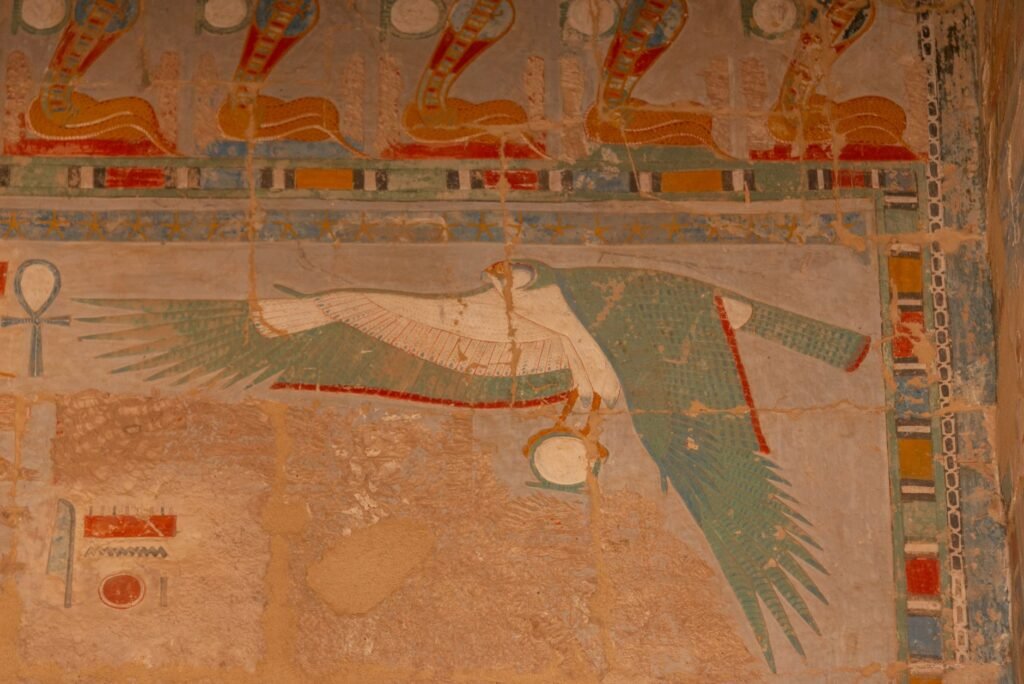
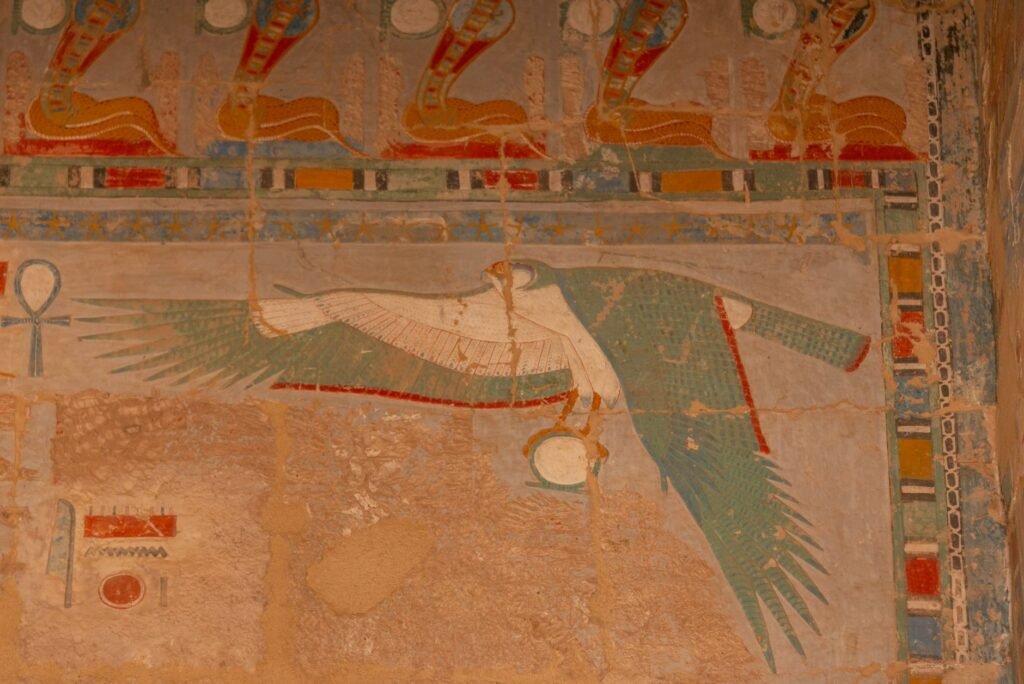
Hapi is one of the most important deities in ancient Egyptian religion, especially in connection with the Nile River and the life-giving floods that sustained Egyptian civilization. When people ask who is Hapi in Egyptian mythology, the answer depends partly on context, because ancient Egypt knew more than one divine figure with this name or a similar one. The best-known Hapi was the god of the annual Nile inundation, a benevolent force linked to fertility, abundance, and the renewal of life.
Hapi mattered deeply because the Nile flood determined agriculture, prosperity, and survival in Egypt. In a land where rainfall was scarce, the river’s seasonal rise was not merely a natural event; it was a sacred pattern understood as part of cosmic order. Hapi became a symbol of that sustaining power.
Origin and Meaning
The name Hapi is usually transliterated from ancient Egyptian as ḥˁpy. Scholars generally connect the name with the idea of abundance or the flooding river, but the precise etymology is not entirely certain. Ancient Egyptian religion often preserved divine names whose exact linguistic development is difficult to reconstruct with confidence.
It is important to distinguish this deity from two other uses of the same name:
- Hapi, the Nile god, associated with fertility and floodwater.
- Hapi, one of the Four Sons of Horus, the protector of the lungs in funerary religion.
- In some contexts, similar spellings may refer to separate or related concepts depending on period and translation.
The Nile deity Hapi is the figure most commonly meant in discussions of Egyptian mythology. He should not be confused with the funerary god of the same name.
Historical Context
Hapi emerged within the broader religious world of ancient Egypt, where gods embodied natural forces, political authority, and moral order. The Nile’s yearly flood was one of the central experiences of Egyptian life. Each year, waters deposited rich silt across the floodplain, making agriculture possible and supporting food production across the kingdom.
Because the flood seemed both predictable and vital, Egyptians interpreted it as a divine blessing. Hapi personified the river’s fertility-bringing power. He was not primarily a creator god, a sun god, or a royal god in the strict sense, but rather a life-sustaining presence that linked the land, the people, and the divine order.
Hapi’s importance increased in periods when agricultural stability was closely tied to centralized administration. Pharaohs and temple institutions depended on the Nile’s regularity, and Hapi’s cult reflected this dependence. In hymns and ritual texts, he appears as the one who nourishes Egypt, fills granaries, and brings joy to the land.
Main Characteristics
Hapi is usually depicted as a large, androgynous or effeminate figure with a rounded belly and pendulous breasts, emphasizing nourishment and plenty rather than athletic power or royal dignity. This visual style is deliberate: his body symbolizes abundance, fertility, and maternal generosity.
Key characteristics of Hapi include:
- Association with the Nile flood
- Provider of fertility and agricultural abundance
- Bringer of nourishment and prosperity
- Personification of natural abundance rather than a warrior deity
- Linked to both Upper and Lower Egypt
In some representations, he carries offerings or plants, and he may be shown tying together emblems that symbolize the unification of Egypt. His iconography often reflects the idea that the Nile’s waters were not destructive, but beneficent when properly balanced.
Family and Genealogy
Unlike gods with elaborate divine families, Hapi does not have a universally agreed-upon genealogy. Ancient sources do not consistently identify his parents, spouse, or children. This is common for personifications of natural forces in Egyptian religion.
What is known
- Hapi is often treated as a self-standing divine force rather than a member of a major family cycle.
- Some texts associate him with other river or fertility deities, but not through a fixed genealogical system.
- In the later theological imagination, he could be integrated into broader cosmic networks, yet these relationships vary by place and time.
Because the surviving evidence is fragmentary, any precise family tree for Hapi would be speculative. Unlike Osiris, Isis, or Horus, he is not usually known for a well-defined mythic household.
Symbols
Hapi’s symbols are closely tied to abundance, water, and fertility. His imagery is especially rich in tomb art and temple decoration.
Common symbols associated with Hapi
| Symbol | Meaning |
|---|---|
| Lotus and papyrus plants | Upper and Lower Egypt, renewal, fertility |
| Full belly and breasts | Nourishment, abundance, life-giving capacity |
| Water jars or streams | The Nile flood and its beneficial waters |
| Offering trays | Provision, prosperity, divine generosity |
| Tying together lotus and papyrus | Unity of the Two Lands |
| Blue or green tones in artistic context | Water, growth, regeneration |
A particularly important symbolic image is Hapi joining the lotus of Upper Egypt and the papyrus of Lower Egypt. This act represented political and cosmic unity. In Egyptian thought, the Nile did not merely support life; it also helped maintain the harmony of the kingdom.
Sacred Animals
Hapi is not strongly defined by one sacred animal in the way that some Egyptian gods are linked to a specific creature. However, he is sometimes associated with animals that express fertility, abundance, or water.
Animals sometimes connected with Hapi
- Frogs: linked broadly with fertility, wet conditions, and renewal in Egyptian symbolism.
- Hippopotamuses: associated with the Nile environment, though also dangerous and linked to other deities in different contexts.
- Crocodiles: connected to the river itself, but not uniquely Hapi’s animal.
- Fish: often part of Nile abundance imagery.
These associations are contextual rather than exclusive. Hapi was not defined by animal embodiment as strongly as deities such as Sobek or Thoth in ibis form. His imagery is more botanical and anatomical than zoological.
Sacred Plants
Plants are central to Hapi’s symbolism because they represent the agricultural gifts made possible by the Nile flood.
Important plants associated with Hapi
- Papyrus: emblem of Lower Egypt, marsh growth, and flourishing river life.
- Lotus: emblem of rebirth, beauty, and the renewal of life.
- Grains and cereal crops: visual shorthand for the fertility created by the flood.
- Reed plants: part of the Nile marsh landscape and symbolic of life emerging from water.
The pairing of papyrus and lotus is especially significant. Together, they convey the unity of Egypt and the balance between regions, as well as the idea that Hapi’s waters sustain all forms of growth.
Sacred Places
Hapi was not confined to a single famous cult center in the same way as some major deities. His sacred presence was tied to the Nile itself, making him inherently pan-Egyptian. Nonetheless, several places and settings are especially relevant.
Important locations associated with Hapi
- The Nile River and its floodplains: his primary “dwelling place.”
- Temple contexts throughout Egypt: where Hapi could appear in hymns and ritual scenes.
- Nilometers: measuring devices for the river’s rise, used in religious and administrative life.
- Tomb chapels and funerary monuments: where his imagery signaled abundance in the afterlife.
Since Hapi was connected to the annual inundation, his sacred geography extended wherever the river reached. In that sense, his cult was woven into the entire landscape of Egypt.
Powers and Attributes
Hapi’s power was not based on conquest or divine combat. His domain was the nourishing flood that made civilization possible.
Hapi’s main powers and responsibilities
- Bringing the annual Nile inundation
- Fertilizing the soil
- Supporting crops and harvests
- Ensuring food abundance
- Maintaining prosperity and stability
- Symbolizing cosmic balance between dry land and water
- Supporting the unity of Upper and Lower Egypt
In hymns, Hapi is often praised for filling Egypt with life, feeding both humans and gods. The flood was not simply water; it was a visible sign of divine favor. Hapi therefore stands at the intersection of nature, economy, religion, and kingship.
Main Myths
Hapi does not have a large cycle of narrative myths comparable to the stories of Osiris or Isis. Instead, his significance is found in hymns, ritual language, and symbolic representation.
Important themes in Hapi-related mythology
1. The Beneficent Flood
The central “myth” of Hapi is the annual inundation of the Nile. The flood was understood as a divine event that renewed life and restored fertility. This was not a single story with a fixed plot but a recurring sacred reality.
2. Nourisher of the Land
In temple hymns, Hapi is praised as the one who causes grain to grow, fills storehouses, and enables Egypt to thrive. The river’s rise was seen as the arrival of divine nourishment.
3. Unifier of Egypt
Hapi’s imagery joining lotus and papyrus expresses political and mythic unity. His waters flow through both regions, making him a symbol of national cohesion.
4. Provider in the Afterlife
In funerary texts and tomb scenes, Hapi’s abundance is extended into the next world. The dead hoped for a blessed existence where food and water would never run out. Hapi’s imagery supported that hope.
Because ancient Egyptian religion often expressed myth through ritual and iconography rather than long narrative epics, Hapi’s role is best understood through repeated themes rather than one canonical story.
Relationship with Other Mythological Figures
Hapi interacted with many gods indirectly through shared functions and symbolic overlap.
Related deities and figures
| Deity | Relationship to Hapi |
|---|---|
| Osiris | Both connected with fertility, renewal, and life through death; Osiris also linked to agricultural regeneration |
| Isis | Associated with nourishment and magical protection; sometimes shares maternal symbolism |
| Khnum | In some traditions, Khnum shapes or releases the Nile waters at the source |
| Sobek | River and water deity, but more closely associated with crocodiles and forceful power |
| Ra | Solar order complements the agricultural cycle supported by Hapi |
| Pharaoh | Royal authority depended on Hapi’s flood; kings were expected to maintain order and secure prosperity |
Hapi was not usually portrayed in conflict with other gods. Instead, he functioned as part of a cooperative sacred system. In Egyptian theology, harmony and balance mattered more than dramatic opposition in many cases.
Worship and Cult
Hapi was honored in ways that reflected the practical importance of the Nile. Worship was less about a centralized temple cult and more about seasonal observance, offerings, hymns, and ritual attention to the flood.
Forms of worship and veneration
- Hymns to the Nile expressing gratitude for the inundation
- Offerings of food and drink, especially in temple and funerary settings
- Ritual recognition of the river’s rise
- Administrative and priestly monitoring of flood levels
- Festive celebration when the flood was favorable
The annual flood was a moment of communal concern and religious significance. A healthy inundation meant prosperity; a weak flood could lead to hardship. Hapi thus occupied a place in both public religion and state administration.
In some texts, priests and officials responded to the river’s level with ceremony and prayer. Though the exact rites varied by period, the underlying principle was constant: the Nile’s rise was a sacred event requiring thanks and acknowledgment.
Ancient Sources
Because Hapi is an Egyptian deity, the most relevant sources are Egyptian texts, inscriptions, hymns, and artistic representations, rather than the Greek literary canon that preserved many other mythologies. Classical Greek and Roman writers do mention Egyptian religion, but often from the outside and sometimes with misunderstandings.
Important source types
- Temple inscriptions and hymns praising the Nile flood
- Tomb paintings and reliefs showing Hapi’s form and symbolism
- Funerary texts that incorporate abundance imagery
- Administrative records related to flood measurement
- Greco-Roman descriptions of Egypt and its gods
Classical and later authors
While authors such as Herodotus, Diodorus Siculus, and Plutarch wrote about Egyptian religion, they do not provide a single standardized biography of Hapi in the way one might find for Greek gods in Homer or Hesiod. Their accounts are valuable but must be read critically, since they interpreted Egyptian beliefs through Greek categories.
In practice, the most reliable evidence for Hapi comes from Egyptological study of inscriptions and iconography rather than from classical narrative sources.
Roman Equivalent
Hapi does not have a perfect Roman equivalent. The Romans adopted and adapted many Egyptian religious ideas after the conquest of Egypt, but Hapi remained essentially an Egyptian divine figure.
Closest Roman parallels
- Nilus, the personification of the Nile in Greco-Roman art and literature
- River gods more generally, who personify local waters and fertility
- Abundantia in a broad symbolic sense, though not a direct equivalent
Roman and Greek artists often portrayed the Nile as a reclining male river god, a convention that overlaps with Hapi’s role as the river’s personification. However, this is an analogy rather than a strict one-to-one identification. The Roman world often absorbed Egyptian religious imagery without fully preserving its original theology.
Influence on Modern Culture
Hapi is not as widely known in modern popular culture as Osiris, Isis, or Anubis, but he appears in works concerned with ancient Egypt, mythology, archaeology, or fantasy reinterpretation.
Modern influence includes
- Museum exhibitions about ancient Egyptian religion and the Nile
- Academic books and documentaries on Egyptian gods and river culture
- Historical fiction and fantasy literature drawing on Egyptian symbolism
- Video games and role-playing settings featuring Egyptian-inspired deities
- Educational media explaining the importance of the Nile in ancient civilization
In modern interpretations, Hapi often appears as a symbol of abundance, fertility, and environmental dependence. He also attracts interest in studies of how ancient societies sacralized natural systems essential to survival.
Curiosities
Here are some lesser-known facts about Hapi:
- Hapi is sometimes described as “the father of the gods” in hymnic language because of the life he gives to all beings.
- His iconography is notable for being non-heroic and deliberately abundant rather than martial.
- The image of Hapi tying together lotus and papyrus is among the clearest symbols of Egyptian state unity.
- Hapi’s importance shows how Egyptian religion linked ecology and theology.
- Unlike many gods, he was not known mainly through grand myths, but through seasonal experience.
- The same name, Hapi, also belongs to one of the Four Sons of Horus, which can confuse modern readers.
- The Nile’s annual flood was so crucial that the god associated with it effectively represented the difference between prosperity and famine.
Frequently Asked Questions
1. Who is Hapi in Egyptian mythology?
Hapi is the Egyptian god of the Nile flood and fertility, associated with abundance, nourishment, and the annual inundation that made agriculture possible.
2. Is Hapi the same as the son of Horus named Hapi?
No. They share the same name in English transliteration, but they are different figures. The Nile god Hapi is a personification of the river’s flood, while the son of Horus named Hapi is a funerary protector of the lungs.
3. What does Hapi look like?
Hapi is often shown as a rounded, androgynous figure with a large belly and breasts, symbolizing nourishment and plenty. He may carry plants or offerings.
4. What was Hapi responsible for?
He was responsible for the fertile inundation of the Nile, which deposited rich soil and supported crops, food production, and prosperity.
5. Was Hapi worshipped in temples?
Yes, but his cult was not centered on one single famous temple. He was honored through hymns, offerings, rituals, and flood-related observances across Egypt.
6. Why was Hapi important to the Egyptians?
Hapi was important because the Nile flood was essential to life in Egypt. Without it, agriculture would fail and the kingdom could not prosper.
7. Are there myths about Hapi?
Hapi does not have a major narrative myth cycle. His role is expressed mainly through hymns, symbolism, and annual natural events rather than long stories.
8. Is Hapi male or female?
Hapi is generally considered male, but his artistic portrayal often includes feminine features to express abundance, nourishment, and fertility.
Conclusion
Hapi occupies a unique place in Egyptian mythology as the divine personification of the Nile’s life-giving flood. Rather than a warrior or creator in the dramatic sense, he is a god of sustenance, agricultural renewal, and abundance. His imagery reflects the central truth of ancient Egyptian life: the river made civilization possible.
Understanding who Hapi is in Egyptian mythology reveals how closely religion was tied to ecology, farming, and state stability in ancient Egypt. Hapi’s enduring legacy lies in his role as a symbol of the delicate balance between nature and human survival, and of the sacred significance Egyptians attached to the waters that fed their land.

Orin Vale has spent the better part of two decades tracing the threads that connect the world’s oldest stories — from the halls of Asgard to the banks of the Nile, from Olympus to the jungles of the Maya. What began as a childhood fascination with flood myths and trickster gods grew into years of independent study across comparative mythology and ancient religion, always chasing the same question: what did these stories mean to the people who first told them? Orin writes for readers who want more than trivia — the ones looking for the beliefs, fears, and truths that myths were built to carry.