Hyacinthus and Apollo
Introduction

The myth of Hyacinthus and Apollo is one of the most famous stories of love, loss, and transformation in Greek mythology. It tells of the beautiful Spartan youth Hyacinthus, beloved by the god Apollo, whose accidental death leads to the creation of the hyacinth flower. The tale has endured for centuries because it combines several central themes of ancient myth: divine desire, tragic fate, youthful beauty, and metamorphosis into nature.
Although the story is often read as a romantic myth, it also reflects the broader Greek world of gods and mortals, where divine affection could be both a blessing and a source of danger. The myth was retold by ancient poets, adapted by Roman writers, and later reimagined in art, literature, and modern popular culture. Its emotional power has made it a lasting symbol of mourning, memory, and immortalized beauty.
Origin and Meaning
The name Hyacinthus comes from the Greek Hyakinthos. The precise etymology is uncertain, and scholars do not agree on whether the name is originally Greek or derived from a pre-Greek or eastern source. In antiquity, the name was already associated with the flower hyacinth and with the color or marking often linked to it in poetic descriptions.
Apollo is one of the major Greek gods, and his name is also of uncertain origin. In the myth, the connection between Apollo and Hyacinthus is not based on etymology but on narrative symbolism: Apollo, god of music, healing, prophecy, and beauty, loves the mortal youth whose death becomes tied to a flower that bears his beloved’s name.
The story gave the hyacinth flower a mythic explanation, a common function of Greek myth known as an etiological myth—a story that explains the origin of a natural phenomenon, ritual, or name.
Historical Context
The myth belongs to the religious and literary culture of ancient Greece, especially the Peloponnese. Hyacinthus was strongly associated with Sparta and with local cult traditions in Amyclae, near Sparta. This is important because Hyacinthus was not simply a literary invention; he also appears to have had an older cultic identity connected to local worship.
In some traditions, Hyacinthus may have originally been a pre-Greek or local divine figure later absorbed into the Olympian mythological system. His link with Apollo seems to reflect the merging of older local cults with the broader pan-Hellenic worship of Apollo. Ancient religious life often incorporated such layering, where a local hero or deity became associated with a more widely known god.
The myth also reflects Greek ideals of male beauty, youth, and aristocratic education. Apollo was often linked to orderly civilization, athletic excellence, poetry, and musical training. Hyacinthus, as a beautiful young man, fits the type of admired adolescent figure common in Greek myth and social imagination.
Main Characteristics
Hyacinthus is generally portrayed as:
- extraordinarily handsome
- youthful and noble
- beloved by Apollo
- associated with athletic activity, especially the discus
- transformed after death into the hyacinth flower
Apollo, in this myth, appears as:
- a god of radiant beauty
- deeply attached to Hyacinthus
- skilled in music and athletics
- unable to prevent fate or accidental death
- associated with sorrow, memory, and transformation
The story’s central feature is tragedy. Apollo’s affection does not save Hyacinthus from death. In many versions, the youth is killed by a discus thrown by Apollo, though the death is sometimes explained as an accident and sometimes as the intervention of Zephyrus (the West Wind), who is jealous of Apollo’s affection. The precise cause varies across sources.
Key features of the myth
| Element | Hyacinthus | Apollo |
|---|---|---|
| Status | Mortal youth, sometimes with cultic or heroic significance | Olympian god |
| Main association | Beauty, spring flower, youth, death | Sun, music, healing, prophecy, art |
| Central role in myth | Beloved companion whose death transforms into flower | Grieving divine lover, agent of transformation |
| Symbolic meaning | Fragility, memorial beauty, mortality | Divine love, lament, creative power |
Family and Genealogy
Hyacinthus’s genealogy is not consistent across ancient sources.
Parentage
Different traditions identify him as the son of:
- Clio, one of the Muses, and Pierus
- Amyclas, king of Sparta
- other local or less commonly named figures
Because the myths differ, it is safest to say that Hyacinthus is generally presented as a Spartan youth of noble lineage rather than emphasize one universally accepted family line.
Relationships
His most significant relationship is with Apollo. Ancient and later sources present Apollo as his lover, admirer, or divine companion. The nature of this bond is sometimes described in terms that reflect Greek concepts of male affection, which could be represented in myth in ways different from modern categories.
Descendants
Hyacinthus is not usually portrayed as having descendants in the best-known versions of the myth. His lasting “offspring” is symbolic rather than genealogical: the flower and the cultic memory that preserve his name.
Symbols
The myth is rich in symbolic associations. The most important symbols include:
- The hyacinth flower: transformation, memory, beauty, mourning
- The discus: athletic competition, fate, accident, mortality
- The lyre: Apollo’s musical authority and artistic identity
- The sun or light: Apollo’s radiant divine presence
- The lament inscription on the petals: a poetic sign of grief
Ancient writers often connected the flower’s markings with letters or signs of mourning, though the exact botanical identification of the ancient hyacinth is disputed. The flower in myth may not correspond precisely to the modern botanical hyacinth.
Sacred Animals
The myth of Hyacinthus and Apollo does not center on sacred animals in the way that other myths do, but Apollo is widely associated with several animals across Greek religion.
Animals linked to Apollo
- Raven or crow: prophecy and divine communication
- Swan: music, beauty, poetic grace
- Wolf: protection and certain local cult forms
- Dolphin: Apollo’s role in travel and guidance, especially in some local traditions
Hyacinthus himself has no strongly established sacred animal. Any animal associations are secondary and derive from Apollo’s wider divine identity rather than from the Hyacinthus myth specifically.
Sacred Plants
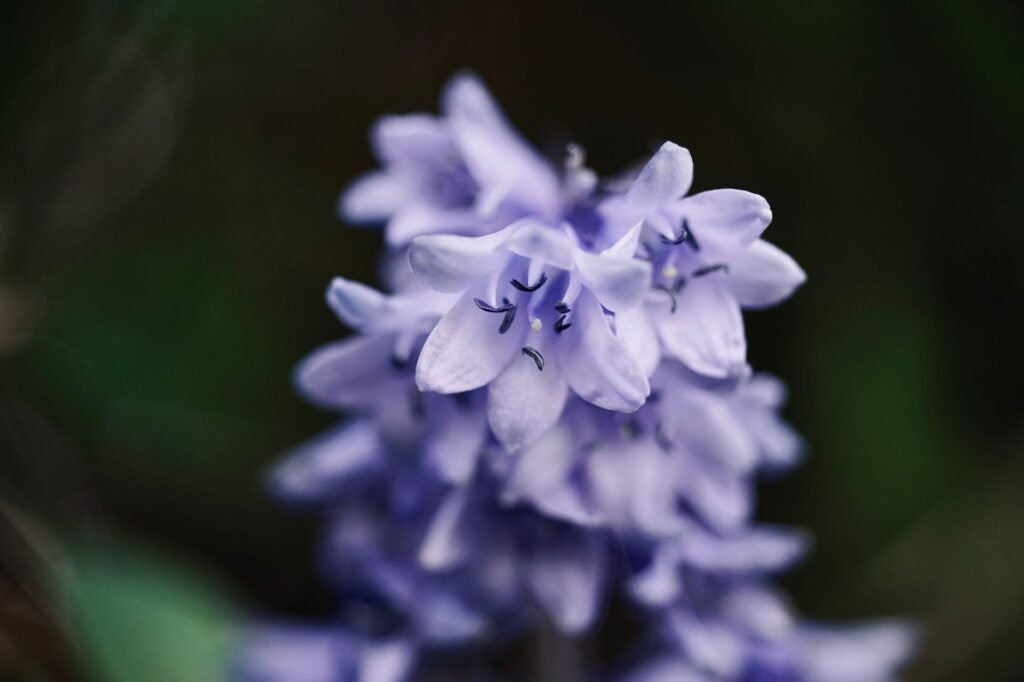
The central sacred plant is the hyacinth flower.
The hyacinth
In the myth, the flower grows from Hyacinthus’s spilled blood or from the place of his death. This makes it a plant of:
- remembrance
- loss
- beauty born from suffering
- seasonal renewal
The flower is especially important as an emblem of metamorphosis. In Greek myth, human lives are often transformed into natural objects—trees, flowers, birds, or stars—preserving memory through the landscape.
Other plants associated with Apollo
Apollo is associated more broadly with several sacred or symbolic plants, including:
- laurel: especially connected with Daphne and with victory, purification, and prophecy
- palm: often linked to divine birth and sacred celebration
- olive in some regional contexts
The hyacinth does not replace these plants in Apollo’s symbolism but adds a tragic, personal dimension.
Sacred Places
Hyacinthus is especially connected with Sparta and the nearby sanctuary at Amyclae.
Amyclae
Amyclae was a major center of the cult of Apollo and Hyacinthus. Ancient sources describe a composite worship site where Hyacinthus had an important place, sometimes suggesting a seasonal festival honoring both the dead youth and the god. This indicates that Hyacinthus was not only a mythological character but also part of living religious practice.
Sparta
Sparta was the political and cultural home of the myth. The city’s connection with Hyacinthus reflects the importance of local identity in Greek religion. Myths often served to root divine stories in particular communities and landscapes.
Other local settings
The death of Hyacinthus is frequently placed on a sports field or open area where discus throwing took place. The exact location varies by source, but the setting underlines the connection between the myth and youthful athletic competition.
Powers and Attributes
Hyacinthus is not usually described as a god with active powers in the way Apollo is. However, in cultic and mythic terms, he can be understood as having the following attributes:
- association with youthful vitality
- embodiment of beauty and grace
- connection to seasonal renewal through the flower
- a memorial presence in local Spartan religion
Apollo’s powers in this myth are more visible:
- music and poetry
- prophecy
- healing
- purification
- athletic excellence
- divine beauty
- transformation and memorialization through myth
The story emphasizes not only Apollo’s power but also its limits. Even a god cannot reverse death once fate has acted.
Main Myths
The central myth has several versions, but the most influential account is the story of Hyacinthus’s accidental death and transformation.
The discus accident
Apollo and Hyacinthus are often said to have been engaged in discus throwing or athletic play. Apollo throws the discus, and either by accident or through a change in its path, Hyacinthus is struck and killed.
Some versions add that:
- the West Wind Zephyrus was jealous and deflected the discus
- Apollo’s strength or exuberance caused the fatal blow
- fate, rather than jealousy, is the true cause of the death
Transformation into a flower
After Hyacinthus dies, Apollo grieves deeply. From Hyacinthus’s blood, a flower grows. In poetic descriptions, the petals may bear marks that resemble lamentation or letters of mourning. The flower becomes a lasting memorial of the youth.
The cultic dimension
In local Spartan tradition, the myth may also relate to seasonal rites. Ancient festivals often joined mourning and celebration, and Hyacinthus’s story likely blended hero cult, agricultural symbolism, and the worship of Apollo.
Other traditions
Some ancient accounts preserve alternative details:
- different parentage for Hyacinthus
- differing motives for the death
- varying explanations of the flower’s appearance
- less emphasis on romantic love and more on ritual memory
This variation is typical of Greek myth, which was transmitted through multiple local and literary traditions.
Relationship with Other Mythological Figures
The myth of Hyacinthus and Apollo intersects with several other figures.
Zephyrus
Zephyrus, the West Wind, appears in some versions as a rival or jealous agent who causes Hyacinthus’s death. He may be motivated by desire for Hyacinthus or by resentment toward Apollo. This rivalry adds a divine conflict to the story.
Daphne
Apollo’s love for Hyacinthus is often compared with his love for Daphne, though the two myths are different. Daphne is transformed into a laurel tree to escape Apollo, while Hyacinthus is transformed after death. Both stories show Apollo’s desire ending in botanical metamorphosis, but one is marked by pursuit and refusal, the other by tragedy and grief.
Artemis
Artemis is Apollo’s twin sister and, in some mythic frameworks, a balancing counterpart. She is not central to the Hyacinthus story, but her presence in the wider Apollo cycle highlights the god’s family and divine sphere.
Greek heroes and youths
Hyacinthus belongs to a wider group of youthful figures in Greek mythology whose beauty and premature death inspire transformation. Comparable figures include Narcissus, Adonis, and Ganymede, though each has distinct narrative and symbolic functions.
Worship and Cult
The myth of Hyacinthus was not merely literary. It was tied to cult and ritual, especially at Amyclae.
The Hyacinthia
The most famous festival associated with the myth is the Hyacinthia, held in honor of Hyacinthus and Apollo. Ancient descriptions suggest that it was an important local festival in Sparta and Amyclae, combining mourning for the dead youth with celebration of Apollo.
Although the details are not fully clear, the festival likely included:
- sacrifices
- offerings
- singing and music
- processions
- possibly athletic and communal activities
Religious meaning
The festival may have expressed a transition from grief to renewal. This fits the myth’s structure: death is not denied, but it is transformed into continuity through ritual and memory.
Offerings and observances
Ancient worship could include:
- first fruits or agricultural offerings
- floral decorations
- hymns and lamentation
- communal feasting after rites of mourning
Because sources are incomplete, many specific ritual details remain uncertain. Scholars therefore distinguish between what is securely attested and what is inferred from the broader pattern of Greek festival practice.
Ancient Sources
The myth appears in several ancient authors, though the accounts are not identical.
Important classical sources
- Ovid, Metamorphoses: one of the most influential literary versions, focusing on love, accident, grief, and transformation
- Pausanias, Description of Greece: important for local cult and Spartan traditions
- Lucian: mentions myths of Apollo and beautiful youths in later prose contexts
- Apollodorus: useful for mythological summary, though not always detailed on this particular story
- Hyginus: preserves brief mythographic versions
- Pindar and other lyric poets: relevant for the cultural world of Apollo and heroic youth, though not always specifically for Hyacinthus in surviving fragments
What the sources show
The sources demonstrate that the myth existed in both:
- cultic form, as part of Spartan and Amyclean worship
- literary form, as a poetic story of transformation and grief
Because the sources differ, no single ancient version can be treated as definitive.
Roman Equivalent
There is no exact Roman equivalent of Hyacinthus, because he is a specifically Greek figure tied to a local Spartan cult and a Greek mythic cycle. However, the Roman adaptation of the story—especially in Ovid—made it widely known in the Latin literary tradition.
Apollo remained Apollo in Roman religion, though Roman culture emphasized his roles as:
- patron of healing
- god of prophecy
- protector associated with Augustus
- figure of poetry and artistic refinement
The flower’s symbolic meaning also continued in Roman literary imagination, where metamorphosis myths were especially influential.
Influence on Modern Culture
The myth of Hyacinthus and Apollo has had a notable afterlife in modern culture, especially in art, poetry, queer cultural history, and scholarly discussion of same-sex desire in antiquity.
Literature and poetry
Writers have returned to the myth because it combines:
- tragic love
- youth and beauty
- divine grief
- metamorphosis into nature
The story appears in Renaissance, Romantic, and modern literary works, often as a symbol of love cut short.
Visual art
Painters and sculptors have depicted Apollo and Hyacinthus in classical and neoclassical styles. Artists have often focused on:
- Apollo’s emotional posture
- the discus scene
- the transformation into a flower
- the intimacy between god and youth
Queer interpretation
Modern readers and scholars sometimes interpret Apollo and Hyacinthus as a significant mythic expression of male-male affection in antiquity. This should be handled carefully: ancient Greek concepts of desire and social roles differ from modern identity categories. Still, the myth has become culturally important in discussions of homoerotic themes in classical literature.
Popular culture
The story appears in:
- retellings of Greek mythology for general audiences
- academic studies of myth and sexuality
- symbolic references in fiction, poetry, and visual design
- educational material about Greek gods and transformations
Its continued appeal lies in the combination of beauty, violence, and remembrance.
Curiosities
Interesting and lesser-known facts
- The ancient hyacinth flower in myth may not correspond exactly to the modern flower called hyacinth.
- Some traditions treat Hyacinthus as an older local deity or hero rather than only a mortal youth.
- The myth is one of several Apollo stories in which love ends in botanical transformation.
- The Hyacinthia festival appears to have mixed mourning and celebration, which is unusual but not unique in Greek religion.
- The story may preserve traces of a pre-Greek local cult absorbed into Apollo worship.
- Ancient sources disagree on whether jealousy, accident, or fate caused Hyacinthus’s death.
- The myth has influenced modern discussions of the relationship between beauty and mortality in classical literature.
Frequently Asked Questions
1. Who was Hyacinthus in Greek mythology?
Hyacinthus was a beautiful Spartan youth, loved by the god Apollo and remembered for his tragic death and transformation into the hyacinth flower.
2. How did Hyacinthus die?
In the best-known version, he died when Apollo’s discus struck him during a throwing contest or playful athletic activity. Some sources say the West Wind, Zephyrus, caused the discus to hit him.
3. Why is Hyacinthus associated with Apollo?
Apollo loved Hyacinthus, and the story became part of Apollo’s mythic cycle. The association also likely reflects local Spartan cult traditions in which Hyacinthus and Apollo were worshiped together.
4. What does the hyacinth flower symbolize in the myth?
It symbolizes remembrance, mourning, beauty, and transformation. The flower preserves Hyacinthus’s memory after death.
5. Was Hyacinthus a god or a mortal?
He is usually described as a mortal youth, though some scholars think he may have originated as a local hero or older cult figure with divine qualities.
6. Where was Hyacinthus worshiped?
He was especially associated with Amyclae, near Sparta, where he was honored alongside Apollo.
7. What ancient writers mention Hyacinthus and Apollo?
Important sources include Ovid, Pausanias, Hyginus, Apollodorus, and later mythographic or literary authors.
8. Why is the myth still important today?
It remains important because it combines mythology, ritual history, and themes of love, grief, beauty, and transformation that continue to resonate in modern culture.
Conclusion
The myth of Hyacinthus and Apollo occupies an enduring place in Greek mythology and classical cultural memory. At once a love story, a tragedy, and an origin myth, it explains the flower of the same name while also preserving traces of ancient Spartan religion. The story’s power lies in its emotional complexity: Apollo’s love cannot prevent death, but grief itself becomes creative, turning loss into a flower and memory into ritual.
Through ancient poetry, local worship, and later artistic adaptation, Hyacinthus and Apollo became symbols of beauty vulnerable to fate, yet not erased by it. Their myth remains one of the most poignant examples of how Greek mythology transforms human mortality into lasting cultural meaning.

Orin Vale has spent the better part of two decades tracing the threads that connect the world’s oldest stories — from the halls of Asgard to the banks of the Nile, from Olympus to the jungles of the Maya. What began as a childhood fascination with flood myths and trickster gods grew into years of independent study across comparative mythology and ancient religion, always chasing the same question: what did these stories mean to the people who first told them? Orin writes for readers who want more than trivia — the ones looking for the beliefs, fears, and truths that myths were built to carry.