Why Does Every God Have Their Own Symbols?
Introduction
Across the mythologies of the world, gods are rarely represented by words alone. They are identified by specific symbols, animals, objects, colors, plants, or sacred signs. A thunderbolt may stand for a sky god, a trident for a sea deity, a lotus for a creator or purity, and a sword for a war god. These divine symbols are not decorative details; they are a major part of how religious traditions organize meaning, memory, and worship.
The reason every god has their own symbols lies in a combination of practical, religious, and cultural needs. Symbols help people recognize a deity quickly. They also express a god’s powers, personality, and role in the cosmos. In societies where mythology was transmitted orally, symbols functioned as visual shorthand, preserving complex ideas in a form that could be easily remembered and shared. Over time, they became central to art, ritual, and identity.
Understanding why gods have symbols provides insight into mythology itself. It reveals how ancient people thought about the divine, how they distinguished one deity from another, and how they turned abstract spiritual ideas into visible forms.
Origin and Meaning
The phrase “why does every god have their own symbols” refers to a broad religious and mythological pattern rather than a single historical event. The practice of linking deities with distinctive signs developed independently in many ancient cultures, including Mesopotamia, Egypt, Greece, Rome, India, China, and the pre-Columbian Americas.
The historical origin of divine symbols is difficult to trace to one source because symbolism emerged gradually from ritual practice, temple art, and sacred storytelling. In many early religions, divine names and divine images were not always enough to communicate a god’s function. People needed additional markers. A god of storms, for example, might be associated with a weapon or weather motif; a fertility deity might be linked to fruit, grain, or animals of reproduction.
Symbols likely developed for several reasons:
- Recognition: to identify a deity in art and ritual
- Representation: to express invisible divine powers in visible form
- Mnemonic function: to help preserve myths in oral tradition
- Ritual use: to focus prayer, sacrifice, and temple practice
- Social order: to distinguish divine roles in complex pantheons
In scholarly terms, divine symbols are part of a larger system of religious iconography. They communicate theology through images rather than through doctrinal statements.
Historical Context
In polytheistic religions, the divine world was often organized as a structured community. Gods had distinct roles, spheres of influence, families, and rivalries. Symbols helped define these differences. They also made divine presence accessible to worshippers.
In ancient Egypt, gods were commonly associated with animals, crowns, staffs, and sacred emblems. In Greek religion, gods were identified through attributes such as the owl of Athena, the trident of Poseidon, or the laurel of Apollo. In Hindu traditions, deities may be recognized through mount animals, hand-held objects, weapons, or bodily marks. Similar patterns appear in many other traditions.
Symbols served important cultural and religious functions in societies where literacy was limited or where sacred knowledge was controlled by priests, poets, and artisans. A carved emblem on a temple wall could communicate a divine identity to an entire community. A ritual object could transform ordinary action into sacred action. A symbol was therefore not merely a sign; it was often treated as a container of presence, power, or blessing.
Historical context also matters because symbols often changed over time. A deity’s emblem in one region might differ from the same deity’s emblem elsewhere. Conquest, trade, cultural contact, and political unification all influenced symbolic traditions. In some cases, deities were merged, reinterpreted, or given new attributes. Ancient sources do not always agree, and modern reconstructions must account for regional variation.
Main Characteristics
Although each god’s symbols differ, they usually share several broad functions. These characteristics explain why divine symbols are so widespread.
1. Identification
A symbol helps distinguish one god from another, especially in pantheons with many deities.
2. Association with Power
The symbol usually reflects what the god governs or controls.
3. Visual Memory
Symbols make myths easier to remember and retell.
4. Ritual Presence
Sacred objects and signs can act as ritual stand-ins for the deity.
5. Cultural Continuity
Symbols link worshippers to inherited tradition and sacred history.
6. Artistic Convention
Once established, symbols become standard in sculpture, painting, coins, seals, and temple decoration.
A useful way to understand divine symbols is to see them as a language. Just as words compress meaning into sound, symbols compress theology into image.
Family and Genealogy
Divine genealogy varies widely by tradition. In many mythologies, the family relationships of gods are essential to understanding their symbols, because emblems often reflect inherited functions or dynastic roles.
For example:
- In Greek mythology, Zeus is a sky and sovereignty god, and his symbols such as the thunderbolt and eagle reflect authority and celestial power.
- Poseidon, often presented as Zeus’s brother, is associated with the sea, horses, and the trident.
- Athena’s symbols, including the owl and olive tree, reflect wisdom, civic order, and strategic intelligence.
In Hindu tradition, many deities are part of complex familial networks:
- Vishnu is associated with the lotus, conch, discus, and mace.
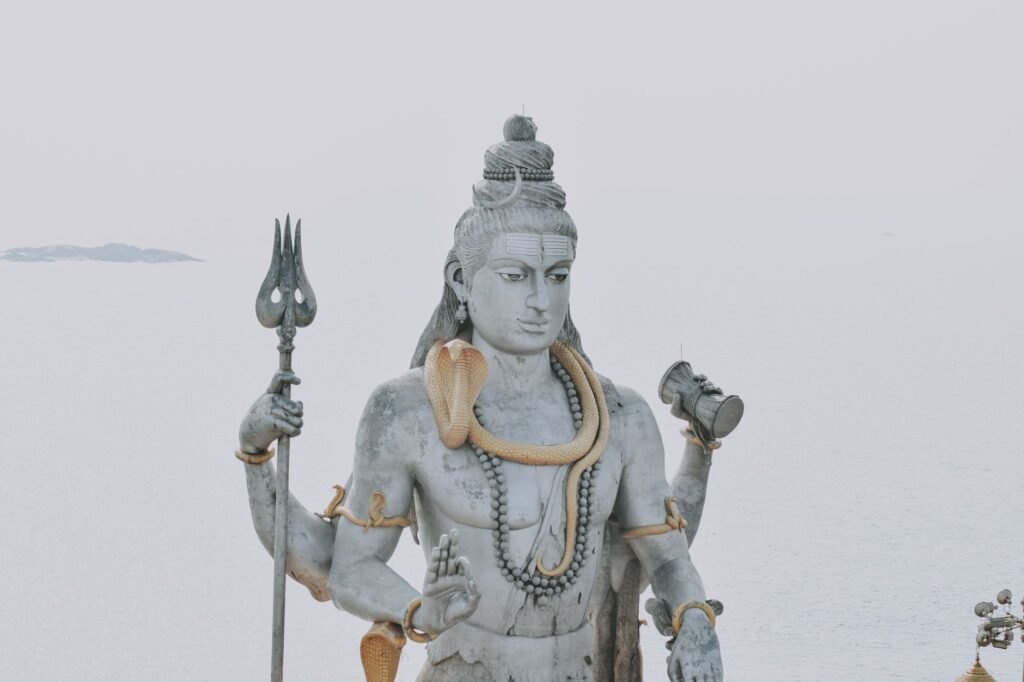
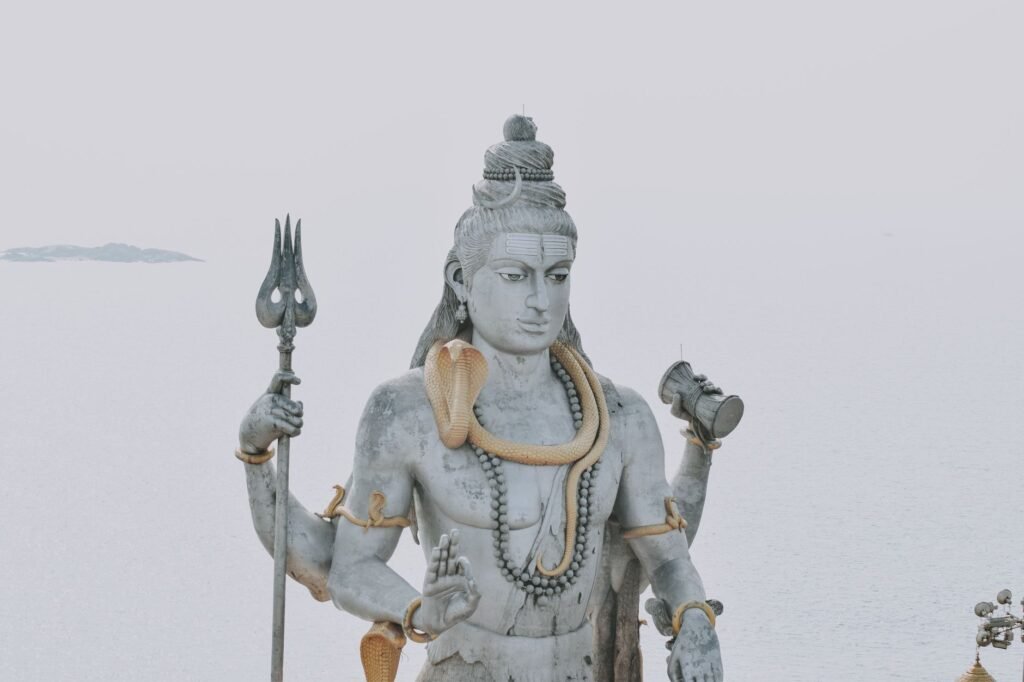
- Shiva is often linked with the trident, drum, crescent moon, and the bull Nandi.
- Lakshmi is associated with the lotus and prosperity.
- Saraswati is linked with learning, music, and the swan or veena in some traditions.
However, genealogies are not always fixed. Different texts, temples, or regional traditions may present different versions of divine relationships. Symbols may remain stable even when family narratives shift, which shows that iconography can be more durable than mythic genealogy.
Symbols
Divine symbols are one of the clearest answers to the question of why gods have their own symbols. They help translate an invisible or overwhelming deity into forms humans can recognize.
Common Types of Divine Symbols
| Type of symbol | Function | Example |
|---|---|---|
| Weapons | Express power, protection, or war | Thunderbolt, trident, sword |
| Animals | Represent traits or divine companionship | Eagle, owl, bull, lion |
| Plants | Signal fertility, purity, wisdom, or life | Lotus, olive, laurel |
| Colors | Suggest sacred qualities or cosmic roles | Blue, gold, white, red |
| Objects | Mark ritual authority or divine office | Staff, crown, scepter, wheel |
| Gestures and marks | Indicate blessing or identity | Raised hand, halo, forehead mark |
Meaning of Symbols
Symbols are rarely arbitrary. Their meaning usually arises from one or more of the following:
- Natural similarity: a god of the sea may be linked to waves or marine animals
- Functional analogy: a weapon reflects a god’s action or authority
- Mythic event: an object may be connected to a famous story
- Cult practice: priests may have used a particular object in worship
- Local tradition: a city or region may favor one emblem over another
For example, the thunderbolt attached to Zeus or comparable sky gods symbolizes sudden power, control over storms, and the authority to punish. The lotus in South Asian religions often suggests beauty, purity, creation, and spiritual unfolding because it rises from mud into bloom.
Sacred Animals
Animals are among the most important divine symbols because ancient people observed strong connections between animal behavior and divine attributes.
Common Sacred Animals
- Eagle: often linked to kingship, the sky, and supreme power
- Bull: associated with strength, fertility, and virility
- Lion: connected with sovereignty, protection, and courage
- Owl: associated with wisdom and vigilance
- Snake: linked to renewal, danger, healing, or underworld power
- Cow: in some traditions, associated with nurturing, abundance, and sacredness
- Horse: connected with speed, nobility, war, or solar movement
Symbolic Significance
Animal symbols can function in several ways:
- as the deity’s companion
- as the deity’s mount or vehicle
- as a sacred manifestation of the deity’s power
- as a model of divine traits
In Egypt, animal forms were especially prominent, and deities were often depicted with human bodies and animal heads. This visual language allowed multiple layers of meaning at once. In Greek and Roman contexts, animals usually served as attributes rather than full body forms, though exceptions exist in myths and local cults.
Sacred Plants
Plants also serve as divine symbols because they embody life, renewal, fertility, healing, and seasonal cycles. Their meanings often depend on local ecology and mythic tradition.
Common Sacred Plants
- Lotus: purity, rebirth, creation, divine beauty
- Olive tree: peace, wisdom, prosperity, civic stability
- Laurel: victory, prophetic power, and Apollo’s associations
- Fig tree: fertility and nourishment
- Pomegranate: abundance, fertility, and seasonal transition
- Oak: strength, endurance, and sacred authority in some traditions
Importance of Plant Symbols
Plants are especially powerful symbols because they connect the divine to agriculture and human survival. A deity associated with a crop or tree may represent not only nature but also the continuity of society. Plant symbols often appear in myths about death and rebirth, as well as in festivals marking seasonal cycles.
The olive tree associated with Athena, for example, links wisdom with practical benefit: the tree provides oil, food, and timber, not merely symbolic beauty. In many traditions, this combination of spiritual and material value is precisely what makes a plant sacred.
Sacred Places
Sacred geography gives symbols a physical setting. Gods are often associated with mountains, cities, rivers, shrines, or temples, and these places reinforce divine identity.
Common Types of Sacred Places
- Mountains: often linked with sky gods, revelation, or divine residence
- Temples: houses of the deity and centers of ritual
- Cities: political and religious centers linked to patron gods
- Rivers and seas: associated with life, fertility, passage, or chaos
- Groves and springs: natural sanctuaries of healing, prophecy, or fertility
Examples
In Greek mythology, Mount Olympus is the symbolic home of the Olympian gods. In Hindu traditions, many mountains and rivers are sacred, with some deities strongly connected to specific landscapes. In ancient Mesopotamia, temple complexes anchored divine presence in urban life. In Egypt, major temple sites such as Karnak and Luxor became monumental landscapes of religious symbolism.
Sacred places often determine the symbols attached to a deity. A river god may be shown with water imagery, a mountain goddess with stone or fertility signs, and a city patron with civic emblems.
Powers and Attributes
A god’s symbols usually reflect their powers and responsibilities. This is one of the clearest reasons why every god has their own symbols: the symbol visually summarizes the deity’s role.
Typical Divine Domains
- Sky and storms
- Sea and rivers
- War and protection
- Wisdom and law
- Love and fertility
- Death and the underworld
- Harvest and abundance
- Healing and prophecy
How Symbols Reflect Power
| Divine domain | Common symbol types | Meaning |
|---|---|---|
| Sky/storm | Lightning, eagle, wheel, staff | Authority, celestial force |
| Sea | Trident, fish, shell, wave imagery | Depth, movement, unpredictability |
| Wisdom | Owl, book, olive branch, veil | Intelligence, strategy, civic order |
| War | Spear, sword, shield, helmet | Violence, defense, victory |
| Fertility | Lotus, cow, fruit, grain | Life, nourishment, renewal |
| Underworld | Snake, black color, torch, key | Death, transition, hidden power |
Symbols are therefore functional as well as religious. They communicate what a god does, not only what the god is called.
Main Myths
Because the topic concerns symbols rather than a single deity, the myths involved vary widely by culture. Still, many myths explain why a god possesses a specific emblem.
Examples of Symbolic Myths
- A weapon may be given by another deity or forged by a divine smith.
- A sacred animal may be a transformed being or loyal companion.
- A plant may grow from a divine act, sacrifice, or blessing.
- A city may claim a god’s symbol as proof of patronage.
In Greek mythology, for example, Athena’s olive tree is tied to the contest with Poseidon for patronage over Athens. The olive became a symbol of civic life, wisdom, and prosperity. Apollo’s laurel is linked to the myth of Daphne, whose transformation explains the tree’s sacred association. Zeus’s thunderbolt reflects his supreme authority and his role as the enforcer of divine order.
In Hindu traditions, many myths explain the presence of attributes such as conch shells, lotus flowers, maces, and tridents as signs of cosmic function or divine identity. Because stories differ between texts and regions, interpretations should be treated carefully rather than as a single fixed canon.
Relationship with Other Mythological Figures
Symbols often clarify a god’s relationships with other divine beings.
Alliances and Family Ties
Related gods may share symbolic similarities while retaining distinct emblems. A family of storm or sky deities may use related weapons or birds. A fertility pair may share floral or vegetal symbols.
Rivalries and Differences
Symbols are also used to distinguish rivals. In a mythic conflict, each deity’s sign helps define their domain. A sea god’s trident is different from a sky god’s thunderbolt because each reflects a different kind of power.
Comparative Example
| Deity type | Common relationship pattern | Symbolic function |
|---|---|---|
| Supreme sky god | Ruler over other gods | Thunderbolt, eagle, throne |
| Sea god | Rival or brother to sky god | Trident, horse, dolphin |
| Wisdom goddess | Patron of cities and strategy | Owl, olive tree, helmet |
| War god | Protector and destroyer | Spear, shield, lion |
Relationships between gods are therefore often encoded symbolically. A symbol can mark rank, alliance, and domain in a single image.
Worship and Cult
Symbols were central to worship. They were not merely artistic labels but active elements of ritual life.
Forms of Worship
- offerings of food, drink, incense, or flowers
- temple processions carrying sacred objects
- hymns and prayers invoking a deity through attributes
- votive gifts showing the god’s symbols
- festivals connected to seasonal or mythic cycles
In many ancient religions, priests and devotees used symbols to make divine presence tangible. Statues, emblems, sacred animals, and ritual tools could all function as focal points for devotion. In some traditions, a symbol was believed to contain or evoke the deity’s power.
Symbols also helped communities maintain religious identity. A city might display its patron deity’s emblem on coins, seals, shields, or civic monuments. This practice linked religion to politics and collective memory.
Ancient Sources
Ancient authors provide many references to divine symbols, though they do not always explain them in the same way.
Greek and Roman Sources
- Homer describes gods through recurring epithets and attributes in the Iliad and Odyssey.
- Hesiod presents divine genealogy in the Theogony.
- Apollodorus offers myth summaries in the Library.
- Pausanias records local cults, statues, and sacred objects in Description of Greece.
- Ovid preserves mythic transformations, many of which explain symbolic associations, in the Metamorphoses.
Other Traditions
- Egyptian divine symbolism is known through temple inscriptions, funerary art, and religious texts.
- Mesopotamian religion is documented in cuneiform sources, hymns, and royal inscriptions.
- Hindu traditions preserve deity attributes in the Vedas, epics, Puranas, and later devotional literature.
Because ancient sources often differ, modern readers should avoid assuming a single universal version. Symbols may be stable in art while stories vary in text.
Roman Equivalent
The Roman world adapted many Greek gods and their symbols, but Roman religion also had its own older traditions.
Examples of Adaptation
| Greek deity | Roman equivalent | Common symbols |
|---|---|---|
| Zeus | Jupiter | Thunderbolt, eagle, scepter |
| Poseidon | Neptune | Trident, horse, dolphin |
| Athena | Minerva | Owl, olive, armor |
| Ares | Mars | Spear, shield, helmet |
| Aphrodite | Venus | Dove, rose, mirror |
Roman religion was especially attentive to public ritual and civic identity. Symbols helped integrate deities into state life, military imagery, and imperial propaganda. However, Roman usage did not always match Greek usage exactly. Local cults and older Italic traditions sometimes preserved distinctive symbols of their own.
Influence on Modern Culture
Divine symbols remain highly influential in modern culture, even for audiences who are not religious or mythologically trained.
Areas of Influence
- Literature: myth retellings often preserve traditional symbols
- Cinema and television: gods are identified visually through emblems and weapons
- Video games: character design often relies on divine iconography
- Art and illustration: symbolic shorthand helps audiences recognize mythic figures
- Branding and logos: ancient symbolic logic influences modern visual identity
Common mythological symbols such as the trident, thunderbolt, laurel wreath, owl, and winged staff still appear in contemporary design. They work because symbols communicate quickly across languages and cultures.
Modern fantasy and science fiction also borrow this system. Gods, demigods, and cosmic beings are often designed with distinctive colors, animals, or artifacts, continuing an ancient tradition of visual differentiation.
Curiosities
- Some symbols became more famous than the gods themselves in later popular culture.
- A deity may have multiple symbols rather than just one, depending on region and period.
- The same symbol can mean different things in different cultures.
- In some traditions, symbols are not only identification marks but sacred presences in their own right.
- Imperial and political rulers sometimes adopted divine symbols to suggest legitimacy.
- Many ancient coins and seals used divine emblems as a form of public identity.
- In some cases, modern reconstructions simplify a much more complex original symbolic system.
Frequently Asked Questions
Why does every god have their own symbols?
Because symbols help identify the deity, express their powers, and make abstract divine ideas visible in art and ritual. They also support storytelling, worship, and cultural memory.
Are divine symbols always the same in every culture?
No. Many symbols are shared across cultures, but their meanings vary. Even within one religion, regional traditions and historical periods may differ.
Did ancient people believe the symbol was the god?
Sometimes the symbol was treated as carrying the deity’s power, but beliefs varied. In some traditions, the symbol represented the god; in others, it was a sacred object associated with the god.
Why are animals so common as divine symbols?
Animals embody qualities that people associated with gods, such as strength, wisdom, speed, fertility, or vigilance. They were also deeply important in daily life and ritual.
Can one god have several symbols?
Yes. Many gods have multiple attributes. A deity may be recognized by a weapon, an animal, a plant, and a color at the same time.
Why do some symbols seem connected to nature?
Because ancient religions often linked divine power with the natural world. Mountains, rivers, trees, stars, and animals were seen as visible signs of cosmic forces.
Do all mythologies use symbols in the same way?
No. The importance of symbols varies. Some traditions emphasize statues and emblems strongly, while others focus more on names, rituals, or spoken prayers.
Conclusion
The reason every god has their own symbols is rooted in the way human beings understand and communicate the sacred. Divine symbols make gods recognizable, memorable, and meaningful. They condense theology into image, turning invisible powers into forms that can be painted, carved, worn, carried, and worshipped.
Across history, symbols have helped religions organize pantheons, preserve myths, guide ritual, and express identity. Whether it is a thunderbolt, trident, lotus, owl, or sacred animal, each emblem reflects a wider religious logic: gods are differentiated by the powers they hold, the stories they inhabit, and the roles they play in the human imagination.
This is why divine symbols remain such a lasting feature of mythology and culture. They are not accidental decorations. They are one of the oldest and most effective ways human societies have explained the divine.

Orin Vale has spent the better part of two decades tracing the threads that connect the world’s oldest stories — from the halls of Asgard to the banks of the Nile, from Olympus to the jungles of the Maya. What began as a childhood fascination with flood myths and trickster gods grew into years of independent study across comparative mythology and ancient religion, always chasing the same question: what did these stories mean to the people who first told them? Orin writes for readers who want more than trivia — the ones looking for the beliefs, fears, and truths that myths were built to carry.