Izanami
Izanami is one of the most important deities in Japanese mythology. As a creator goddess, mother of islands and gods, and later a ruler associated with death and the underworld, she occupies a central place in the mythic traditions recorded in early Japanese sources. Her story explains not only the origin of the world in Japanese cosmology, but also the deep mythological relationship between life, fertility, death, pollution, and renewal.
In the classical narratives, Izanami appears together with her partner Izanagi. Their union gives rise to the Japanese archipelago and many kami, or divine beings. Yet her myth also includes tragedy: after dying in childbirth, she descends into Yomi, the land of the dead, becoming a powerful and fearsome figure. Because of this dual role, Izanami is both a mother goddess and an underworld deity, making her one of the most complex figures in the Shinto mythological tradition.
Origin and Meaning

The name Izanami is usually understood as related to the Japanese verb izanau, meaning “to invite” or “to beckon.” In mythological interpretation, Izanami is often paired with Izanagi, whose name is commonly understood in a similar way. The names are traditionally read as complementary: Izanagi as the “male who invites” and Izanami as the “female who invites.”
The exact etymology is not fully settled, and scholarly explanations vary. As with many ancient mythic names, the interpretation comes from later linguistic and textual analysis rather than from explicit ancient explanation. What is clear is that the name became fixed in the early Japanese chronicles as part of the foundational creation narrative.
Historical Context
Izanami belongs to the mythic world of early Japan as recorded in the Kojiki (Record of Ancient Matters, 712) and the Nihon Shoki (Chronicles of Japan, 720). These works were compiled in the early eighth century, during a period when the Japanese court was consolidating political authority and shaping a state-centered religious ideology.
The myths about Izanami and Izanagi served several purposes:
- they explained the origin of Japan and its islands;
- they linked imperial and religious authority to divine ancestry;
- they integrated older regional traditions into a national mythic framework;
- they reflected early Japanese ideas about purity, death, and pollution.
Izanami’s story is especially important because it connects creation with mortality. In Shinto thought, death is often associated with impurity, and Izanami’s transition from life-giving goddess to ruler of the dead provides a mythic explanation for that association.
Main Characteristics
Izanami is typically characterized as:
- a creator deity;
- a mother goddess;
- a goddess associated with fertility and birth;
- a chthonic figure connected with death and the underworld;
- a tragic mythological figure whose death shapes the cosmic order.
Her character changes across the mythic narrative. At first, she is a creative partner in the formation of the world. Later, after dying in childbirth, she becomes a powerful and dangerous presence in Yomi. This transformation is central to her mythological significance.
Unlike some gods who remain in one symbolic role, Izanami embodies both generative and destructive forces. She gives life, but she also becomes associated with death and the boundary between the living and the dead.
Family and Genealogy
Izanami’s family relationships are central to Japanese creation myth.
Spouse
Her principal spouse is Izanagi, the male creator deity. Together, they are the primordial divine pair in the mythology of Japan.
Children
Different sources list their children somewhat differently, but they are generally credited with producing:
- the Japanese islands;
- numerous kami connected with natural features and human life;
- deities tied to fire, sea, wind, and other domains.
Among their best-known offspring is Kagutsuchi, the fire deity. In the most famous version of the myth, Izanami dies giving birth to Kagutsuchi, whose birth burns her and triggers the events leading to her descent into Yomi.
Genealogical importance
Izanami and Izanagi are often treated as ancestral beings from whom many later kami descend. In this sense, Izanami functions as a mythic mother of the divine order, not simply as one deity among many.
Symbols
Unlike later religions with fixed iconography, ancient Japanese mythology does not always assign a single standardized symbol to each deity. Still, several symbolic associations are common in representations of Izanami.
| Symbol or association | Meaning |
|---|---|
| Mirror-like purity and impurity contrast | Her story illustrates the shift from creation to death and ritual defilement |
| The underworld (Yomi) | Her posthumous realm and her connection to death |
| Fire | Linked to her death in childbirth through Kagutsuchi |
| Earth and fertility | Her role as a mother and creator |
| Thresholds and boundaries | She stands between life and death, creation and dissolution |
In modern artistic and religious contexts, Izanami may be depicted with symbols of darkness, fire, burial, or maternal power, but these are later interpretive associations rather than ancient fixed emblems.
Sacred Animals
No single sacred animal is universally and exclusively associated with Izanami in classical sources. However, later symbolic interpretation sometimes connects her to animals associated with death, the underworld, or maternal power.
Possible associations in broader Japanese religious imagination include:
- snakes, often linked in many traditions with death, rebirth, and hidden power;
- crows or other dark birds, which in some cultures mark the boundary between worlds;
- dragons or serpentine forms, in later artistic and mythic symbolism.
These are not always direct attributes from the earliest texts. It is more accurate to say that Izanami’s myth invites such symbolic readings, especially in later cultural interpretation.
Sacred Plants
The classical myths do not strongly associate Izanami with a specific sacred plant in the way that some deities are linked to particular trees or flowers. However, later symbolic association may include plants tied to life, death, and purification.
Commonly relevant plants in Japanese ritual and symbolism include:
- evergreens, which suggest endurance and life;
- sacred trees, as markers of divine presence;
- plants used in purification rites, symbolizing removal of defilement.
Because Izanami is connected to death and pollution in myth, plant symbolism around her tends to emphasize the tension between fertility and mortality rather than a single botanical emblem.
Sacred Places
Izanami is most strongly associated with Yomi, the land of the dead. This is not a geographically fixed place in the historical sense, but a mythological underworld.
Yomi
Yomi is the realm into which Izanami descends after her death. It is one of the most important sacred landscapes in Japanese mythology. It is depicted as a dark, polluted, and forbidding place, marking the separation between the world of the living and the dead.
Awaji and the islands of Japan
Because Izanami and Izanagi are said to have created the islands of Japan, many places in the archipelago are symbolically linked to them. In later tradition, certain local sites were identified with episodes from the myth, though these identifications vary regionally.
Shrines and local worship sites
There are Shinto shrines and local cult sites associated with Izanami or with deities linked to her myth. These often appear in regional traditions rather than as part of a single centralized cult. Since Shinto practice is highly localized, associations can differ by shrine and community.
Powers and Attributes
Izanami’s powers and domains change over the course of her mythic narrative.
Creator and mother
In her first role, she participates in:
- the creation of land;
- the birth of gods;
- the ordering of the world.
Fertility and childbirth
Izanami is associated with maternal power and reproductive force. Her death in childbirth makes her a particularly poignant figure in myths about the dangers and sacredness of birth.
Death and the underworld
After her death, Izanami becomes connected with Yomi and the power of death. In some retellings, she threatens to cause the deaths of many people each day, while Izanagi counters with the creation of new births. This mythic balance between death and life is among the most famous elements of her story.
Pollution and ritual impurity
Her contact with death links her to kegare, or ritual impurity. This association is crucial to understanding the later purification actions of Izanagi and the broader role of purification in Shinto thought.
Main Myths
Izanami’s mythic cycle is one of the foundational narratives of Japanese religion.
The creation of the islands
According to the classical myth, Izanami and Izanagi stand on the heavenly floating bridge and stir the primordial sea with a spear. When they withdraw the spear, drops fall and solidify into the first island. This marks the beginning of the Japanese landmass.
They then descend to Earth and, through ritual marriage, begin creating the islands and numerous deities. However, the earliest versions of the myth show a problem in their ritual order: when Izanami speaks first during the marriage rite, the couple’s first children are malformed. After repeating the rite properly, they successfully produce the islands and the divine lineage.
This part of the story has often been read as reflecting older social and ritual ideas about correct order, gender roles, and ceremony.
The birth of Kagutsuchi and Izanami’s death
The birth of the fire deity Kagutsuchi causes Izanami fatal burns. In grief and rage, Izanagi kills Kagutsuchi, but the act does not restore his wife. Izanami’s death is the turning point in the myth. The mother of creation becomes associated with death itself.
Descent into Yomi
Izanagi travels to Yomi in an attempt to retrieve Izanami. She tells him not to look at her, but he breaks the taboo and sees her transformed body in a state of decay. Ashamed and enraged, Izanami pursues him. Their confrontation leads to a permanent separation between the living and the dead.
The closing of the boundary
At the end of the myth, Izanagi blocks the passage from Yomi with a boulder. Izanami then declares that she will claim many lives each day, while Izanagi answers by ensuring that many new births will occur. This exchange explains the ongoing cycle of life and death in mythic terms.
Relationship with Other Mythological Figures
Izanami’s most important relationship is with Izanagi, but her myth places her in contact with several other figures.
Izanagi
Their relationship is foundational. They are partners in creation, but also figures in tragic separation. Their myth explores:
- marriage and ritual order;
- shared creation;
- betrayal and taboo;
- the division between life and death.
Kagutsuchi
Kagutsuchi’s birth causes Izanami’s death. He is not her enemy in the same direct sense as some mythological antagonists, but his existence triggers the chain of events that transforms her role.
The kami born from her
Many deities descend from Izanami, reinforcing her significance as a divine ancestor. These relationships establish her as a maternal source of the Japanese pantheon.
Death-related figures
In later interpretation, Izanami is sometimes compared with other underworld or death-related figures from world mythology, but such comparisons are interpretive rather than part of the ancient Japanese narrative itself.
Worship and Cult
There is no evidence of a single, uniform ancient cult of Izanami comparable to the formal worship of some major deities in other religions. However, she is honored in broader Shinto tradition as an ancestral and mythic deity.
Ritual relevance
Her myth influences practices related to:
- birth and fertility;
- purification after death;
- mourning and funerary boundaries;
- respect for ancestral and primordial deities.
Offerings and prayer
In Shinto contexts, offerings to deities associated with creation, protection, or the household may indirectly relate to Izanami’s role as a divine mother. Such offerings can include food, sake, branches, and ritual prayers, though these are generally part of broader shrine practice rather than exclusive rites for Izanami.
Festivals and local observance
Some local traditions and shrine festivals may reference Izanami, especially where she is linked to regional origin myths or protective functions. The evidence is localized and varies widely.
Ancient Sources
The primary sources for Izanami are early Japanese texts.
Kojiki
The Kojiki is the most important source for the core creation myth involving Izanami and Izanagi. It preserves the narrative of creation, the birth of the islands, Izanami’s death, and the descent into Yomi.
Nihon Shoki
The Nihon Shoki provides alternative versions of the same myth. In some cases, it differs in sequence, emphasis, or detail, reflecting the existence of multiple traditions.
Fudoki
The Fudoki regional gazetteers, though not focused on Izanami in the same way, preserve local mythic traditions that help contextualize the wider world of Japanese deity lore.
Later religious and literary tradition
Later Shinto, Buddhist, and literary interpretations elaborated on Izanami’s character. However, any modern discussion should distinguish clearly between the early textual myths and later interpretive layers.
Roman Equivalent
Izanami does not have a true Roman equivalent. No Roman goddess matches her exactly in role, mythic function, and cultural context.
That said, some of her aspects can be loosely compared with Roman deities or concepts:
- as a mother and fertility figure, she may remind readers of Juno or Ceres in a very general sense;
- as a death-associated underworld figure, she has distant thematic similarities to Proserpina or chthonic deities.
These comparisons are limited and should not be taken as direct equivalences. Izanami belongs to a distinct religious and mythological system.
Influence on Modern Culture
Izanami has become widely known outside Japan through literature, popular religion, anime, manga, video games, and academic study of mythology.
Literature and scholarship
Modern retellings often emphasize the tragic dimension of her story: the loss of the mother, the boundary of death, and the cost of creation. Scholars of mythology, religion, and gender studies also examine her as a key figure in understanding early Japanese cosmology.
Anime, manga, and games
Izanami appears in numerous works of Japanese and international popular culture, often reimagined as:
- a goddess of death;
- a primordial creator;
- a powerful underworld being;
- a symbol of forbidden knowledge or transformation.
Her name is especially common in fantasy games and role-playing settings, where mythological names are often adapted for dramatic effect.
Visual art and performance
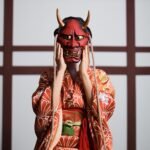
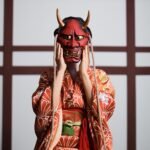
Artists and designers frequently depict Izanami with imagery of darkness, flames, ancestral power, or maternal sorrow. Such representations reflect modern interpretation more than fixed ancient iconography.
Cultural significance
Her endurance in popular culture shows the flexibility of myth. Izanami can be presented as tragic, terrifying, nurturing, or cosmic, depending on the medium and purpose.
Curiosities
- Izanami is one of the rare mythological figures whose story combines creation, marriage, childbirth, death, and the underworld in one narrative arc.
- In many versions of the myth, the correct performance of ritual speech and order is emphasized, suggesting that cosmology and ceremony are tightly linked.
- Her story helps explain why death is taboo and polluting in much of traditional Japanese religious thought.
- The conflict between Izanami and Izanagi is not only personal; it symbolizes the separation of the living world from the dead.
- Some modern interpretations treat her as a figure of female power suppressed by later cultural readings, but this is a modern scholarly lens rather than an ancient explicit statement.
- The myth of Izanami and Izanagi is among the most influential origin stories in Japanese cultural memory.
Frequently Asked Questions
Who is Izanami?
Izanami is a major Japanese creator goddess and mother deity, best known from the Kojiki and Nihon Shoki. She helped create the islands of Japan and later became associated with death and Yomi.
What is Izanami the goddess of?
She is associated with creation, fertility, childbirth, death, the underworld, and ritual impurity. Her role changes across the myth: she begins as a creator and ends as a ruler linked to the dead.
How did Izanami die?
In the best-known version of the myth, Izanami died after giving birth to the fire deity Kagutsuchi. The birth burned her fatally.
What is Yomi?
Yomi is the Japanese underworld or land of the dead. In myth, Izanami resides there after her death, and Izanagi travels there in an unsuccessful attempt to bring her back.
Are Izanami and Izanagi married?
Yes. They are divine spouses in Japanese mythology and are often described as the primordial pair responsible for the creation of the land and many gods.
Is there a Roman equivalent to Izanami?
No exact Roman equivalent exists. She is sometimes loosely compared to mother or underworld goddesses, but these comparisons are only approximate.
Where is Izanami worshipped?
Izanami is not the focus of a single universal cult, but she appears in Shinto tradition and in local shrine contexts connected to creation, ancestry, fertility, and death.
Why is Izanami important?
She is important because her myth explains the origin of Japan, the divine lineage, and the boundary between life and death. She is also one of the central figures in Japanese religious history and mythology.
Conclusion
Izanami is one of the most profound figures in Japanese mythology. She is at once a creator, mother, tragic spouse, and underworld deity. Her narrative explains how the world came into being, why death entered human existence, and why purity and impurity are such important themes in Japanese religious thought.
Her enduring importance lies in this complexity. Izanami is not only a mythic ancestor but also a symbol of transformation, loss, and the inseparability of creation and mortality. Through the classical texts and centuries of later interpretation, she remains one of the most influential and memorable deities in the Japanese mythological tradition.

Orin Vale has spent the better part of two decades tracing the threads that connect the world’s oldest stories — from the halls of Asgard to the banks of the Nile, from Olympus to the jungles of the Maya. What began as a childhood fascination with flood myths and trickster gods grew into years of independent study across comparative mythology and ancient religion, always chasing the same question: what did these stories mean to the people who first told them? Orin writes for readers who want more than trivia — the ones looking for the beliefs, fears, and truths that myths were built to carry.