Difference between Oni and Tengu
Introduction

The difference between Oni and Tengu is one of the most important distinctions in Japanese folklore. Although both are often translated loosely as “demons,” “goblins,” or “supernatural beings,” they belong to different traditions, have different appearances, and play different roles in myth, religion, and popular culture.
Oni are usually portrayed as monstrous, fearsome beings associated with punishment, misfortune, disease, and the underworld. Tengu, by contrast, are more specialized mountain and forest spirits, originally linked to birds of prey and later depicted as red-faced figures with long noses or beaks. In some traditions they are dangerous tricksters; in others they become protectors of mountains, martial arts, or Buddhist discipline.
Understanding the difference between oni and tengu helps explain how Japanese folklore blends indigenous beliefs, Buddhism, Shinto, and later literary imagination. It also shows why these figures are often confused in modern media, where both can appear as horned monsters or supernatural adversaries.
Origin and Meaning
Oni
The word oni is written with the character 鬼, originally a Chinese graph associated with spirits of the dead, invisible beings, or ghosts. In Japan, the term gradually came to describe a wide range of supernatural threats, especially those imagined as brute-like, horned, red- or blue-skinned monsters.
Historically, the meaning of oni was broader than the modern image of an ogre. It could refer to:
- invisible spirits or hidden forces
- malevolent demons
- vengeful dead
- disease-bearing entities
- monstrous figures in folklore and ritual art
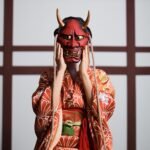
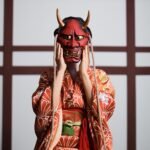
Over time, the oni image became increasingly standardized in Japanese art and theatre: large body, sharp fangs, iron club, tiger-skin loincloth, and horns.
Tengu
The term tengu is written 天狗, meaning literally “heavenly dog” in Chinese characters. Despite the name, the Japanese tengu are not dogs in a literal sense. The term likely entered Japan through Chinese and Buddhist cultural transmission, where tiāngǒu referred to a heavenly dog or a celestial omen.
In Japan, the word was applied to a class of strange, bird-like or beast-like supernatural beings. Early descriptions were often closer to avian or canine hybrid monsters, while later tradition emphasized the long-nosed humanoid daitengu and crow-like karasu tengu.
Historical Context
Religious and cultural background
Both oni and tengu developed in a cultural environment shaped by:
- Shinto beliefs in spirits, purity, and pollution
- Buddhism, especially its cosmology of hells, demons, and moral retribution
- Onmyōdō and esoteric ritual practices
- local mountain worship and folk beliefs
- court literature and medieval storytelling
Japan did not develop these figures in isolation. Their meanings changed as Buddhist concepts were adopted and adapted to Japanese social realities. In many cases, oni and tengu served as explanations for danger, disorder, or the unknown.
Oni in history
Oni became strongly associated with punishment and calamity in medieval Japan. They were sometimes imagined as inhabitants of hell, attendants of the King of Hell, or embodied misfortune. In ritual and theatrical contexts, oni could symbolize:
- the consequences of evil deeds
- disease and epidemic
- foreign or marginal threats
- social chaos
- the fearful power of the unseen
At the same time, oni were not always purely evil. Some local traditions treated them as guardians or ambiguous spirits.
Tengu in history
Tengu have a more complicated history. Early Japanese sources show them as disruptive spirits, often linked with arrogance, false religious practice, and attacks on monks. By the medieval period, they were frequently associated with mountains, ascetic practice, and warrior culture.
Tengu were especially important in Buddhist didactic literature, where they represented spiritual pride and the dangers of incorrect training. In later folklore, they were sometimes seen as:
- troublesome mountain spirits
- protectors of sacred places
- teachers of martial skill
- agents of punishment against the arrogant
- shape-shifting beings linked to birds and wind
Main Characteristics
Oni characteristics
Oni are usually identified by these features:
- large, muscular body
- horns
- sharp teeth or fangs
- wild hair
- horned club or iron staff (kanabō)
- tiger-skin garments
- red, blue, black, or multicolored skin in art
Their character is generally aggressive, brutish, and destructive. Oni often function as personifications of fear, punishment, or evil luck.
Tengu characteristics
Tengu are more diverse. Two common forms are:
- Karasu tengu: crow-like tengu, with bird features and wings
- Daitengu: more human-like, with red faces and very long noses
Typical tengu traits include:
- residence in mountains and deep forests
- ability to fly or move swiftly
- shape-shifting or illusion
- strong martial or ascetic associations
- pride and arrogance
- trickery, especially toward humans and monks
Unlike oni, tengu are not usually defined by sheer physical monstrosity alone. Their identity often depends on their connection to the wild, the sacred mountain, and disciplined but dangerous power.
Key differences at a glance
| Feature | Oni | Tengu |
|---|---|---|
| General image | Demon, ogre, monstrous being | Mountain spirit, bird-like or long-nosed supernatural being |
| Usual habitat | Hell, haunted places, symbolic outer darkness | Mountains, forests, sacred peaks |
| Main role | Punishment, calamity, fear, evil | Trickery, discipline, mountain power, pride |
| Common visual traits | Horns, club, tiger-skin loincloth, fangs | Red face, long nose, wings, beak, feathered clothing |
| Moral tone | Usually malevolent, though not always | Ambiguous: dangerous, but sometimes protective |
| Religious association | Buddhist hell, pollution, punishment | Mountain cults, asceticism, Buddhist critique of pride |
Family and Genealogy
Oni
Oni are not usually presented as a single family line with fixed genealogy in the way gods or heroic lineages are. They are often collective beings rather than individual deities. In some stories, they are:
- attendants of hell
- descendants or manifestations of impurity
- transformed humans
- local spirits of the dead
- supernatural beings without stable parentage
Individual oni may have names and backstories in specific legends, but there is no universal oni genealogy.
Tengu
Tengu also lack a single canonical family tree. Some traditions distinguish several kinds, and older sources sometimes suggest that tengu are the transformed spirits of:
- arrogant monks
- resentful dead
- mountain ascetics who failed spiritually
- beings associated with avian or celestial forces
In certain legends, famous tengu are treated almost like a clan or hierarchy living on mountains such as Kurama or Atago. However, this is a folkloric and regional pattern rather than a single fixed genealogy.
Symbols
Oni symbols
Common oni symbols include:
- kanabō (iron club): brute force and punishment
- horns: monstrous otherness
- tiger-skin clothing: links to directional symbolism in East Asian cosmology
- red and blue coloring: danger, severity, and supernatural power
- demon masks: used in festivals, theatre, and ritual protection
In Japanese culture, oni masks can be fearsome but are also used apotropaically, meaning they can repel evil by imitating it.
Tengu symbols
Tengu are associated with:
- feathers and wings: flight, bird nature, freedom
- long nose: pride, arrogance, and supernatural identity
- crow imagery: vigilance, wilderness, and liminal space
- fan of feathers (hauchiwa): magical power and control of wind
- staffs or weapons: mountain authority and martial strength
The long nose in particular became one of the most recognizable tengu symbols in later Japanese visual culture.
Sacred Animals
Oni and animals
Oni are not strongly linked to one sacred animal in a positive sense. However, several animal associations appear in folklore and art:
- tiger: through oni clothing and directional symbolism
- bull: in some local traditions and later images of fearsome strength
- wolves or dogs: occasionally in mountain or infernal contexts
These associations are symbolic rather than devotional.
Tengu and animals
Tengu are much more closely tied to animals, especially birds:
- crows
- hawks
- eagles
- other birds of prey
Bird imagery reflects their association with mountain heights, swift movement, vision, and aerial power. The “heavenly dog” etymology is less important in visual culture than the avian tradition.
Sacred Plants
Neither oni nor tengu has a single universally sacred plant in the way some deities do. However, certain plants appear in their iconography or associated environments.
Oni and plants
Oni are sometimes linked with:
- red peonies in decorative and theatrical art
- heavenly peach motifs in broader East Asian demon-protection traditions
- thorny or dangerous vegetation in symbolic depictions of wildness
These connections are mostly aesthetic or ritual rather than devotional.
Tengu and plants
Tengu are more strongly associated with mountain flora, especially:
- cedar
- cypress
- bamboo
- pine
These plants evoke sacred mountains, longevity, and secluded terrain. In folklore, tengu are often imagined in remote forests where such trees dominate.
Sacred Places
Oni-related places
Oni are often linked to:
- hell realms in Buddhist cosmology
- liminal spaces such as crossroads, gates, and borders
- haunted places or dangerous ruins
- ritual spaces for exorcism and protection
A famous cultural association places oni near the north-east direction, the so-called kimon or “demon gate,” a vulnerable direction in traditional geomancy.
Tengu-related places
Tengu are strongly associated with mountains, especially sacred peaks and forested sanctuaries. Commonly mentioned locations include:
- Kurama near Kyoto
- Atago
- Mount Ontake and other sacred mountain landscapes in local traditions
- remote temple mountains connected with ascetic practice
Tengu are often imagined in places where Buddhist monks, yamabushi, and mountain ascetics performed austerities.
Powers and Attributes
Oni powers
Oni are typically credited with:
- great physical strength
- the ability to terrorize humans
- causing disease or bad luck
- dwelling in hell or haunted regions
- enforcing punishment or karmic retribution in some stories
Their most important attribute is not subtle magic but overwhelming force and fear.
Tengu powers
Tengu are more versatile. Depending on the source, they may possess:
- flight
- shape-shifting
- illusion or invisibility
- mastery of weapons
- command over wind
- ability to abduct, mislead, or instruct humans
- supernatural martial expertise
Their power is often tied to knowledge, discipline, and wilderness rather than raw brutality.
Main Myths
Oni myths
Oni appear in many stories, but several themes recur:
- they are defeated by heroic figures such as Momotarō
- they are associated with hell and punishment
- they may emerge during rituals such as Setsubun, when beans are thrown to drive them away
- they serve as symbols of misfortune, epidemic, or social threat
In folklore, oni often represent the terrifying “other” that must be expelled or controlled.
Tengu myths
Tengu myths are numerous and regionally varied. Common themes include:
- abducting or misleading travelers
- challenging monks or proud priests
- punishing human arrogance
- teaching martial arts or secret techniques
- occupying sacred mountains and forests
- appearing as birds, old mountain men, or red-faced beings
A well-known narrative type is the tengu who tests a monk’s humility. Another is the story of tengu instructing warriors or ascetics, reflecting their dual role as obstacles and teachers.
Major difference in mythic function
The most important difference is that oni usually represent destructive evil or punishment, while tengu often represent ambiguous wilderness power. Oni are more uniformly threatening; tengu are more morally mixed.
Relationship with Other Mythological Figures
Oni and other figures
Oni interact frequently with:
- Buddhist figures, especially guardians and hell-deities
- heroic humans who defeat them
- protective deities and festival figures
- spirits of the dead or vengeful ghosts
They often embody what must be purified or overcome.
Tengu and other figures
Tengu have especially strong relationships with:
- Buddhist monks, whom they test, tempt, or punish
- yamabushi and mountain ascetics, with whom they are sometimes conflated
- warriors and martial artists, whom they may instruct or challenge
- local mountain deities and protective spirits
In some traditions, tengu are not simply enemies of religion but distorted reflections of excessive discipline, arrogance, or spiritual ambition.
Worship and Cult
Oni worship and ritual use
Oni are not normally “worshipped” in the sense of being honored as benevolent gods. However, they play a role in ritual life through:
- exorcism
- protective masks and charms
- Setsubun bean-throwing ceremonies
- theatre and festival performances
- apotropaic imagery used to repel misfortune
The oni image can paradoxically be used to protect against oni-like forces.
Tengu worship and ritual use
Tengu are also not central objects of mainstream worship, but they are associated with:
- mountain ascetic practices
- local shrine and temple traditions
- festivals in some regions
- offerings made to appease or honor mountain spirits
- folk beliefs about protection, skill, and punishment
In some local contexts, tengu are revered or respected as powerful mountain entities rather than merely feared.
Ancient Sources
Neither oni nor tengu appears in the classical Greek and Roman corpus, but Japanese and East Asian sources preserve their development.
Important Japanese and East Asian sources for oni
Relevant sources and traditions include:
- Buddhist texts and commentaries describing demons, hell beings, and punishment
- Heian and medieval literature, where oni appear in tales of courtly fear and the supernatural
- picture scrolls and illustrated handscrolls depicting hell and demons
- Setsubun customs and later folklore collections
Important Japanese and East Asian sources for tengu
Key sources for tengu include:
- medieval Buddhist polemical works
- emaki (illustrated scrolls)
- collections of temple legends
- mountain ascetic and warrior traditions
- later Edo-period folklore and art
Comparative note
Unlike figures from Greek mythology, oni and tengu are not the products of a single canonical author. Their image developed over centuries through layered religious, literary, and artistic traditions.
Roman Equivalent
There is no exact Roman equivalent for either oni or tengu.
Oni and Roman parallels
The closest Roman parallels are general concepts such as:
- daimones in the broad sense of supernatural beings
- infernal spirits
- personifications of evil or punishment
However, these are only approximate comparisons. Oni are culturally specific to Japan.
Tengu and Roman parallels
Tengu can loosely resemble Roman ideas of:
- forest or wild spirits
- mischievous supernatural beings
- tutelary or punitive local powers
Again, the parallel is limited. Tengu combine features of demons, mountain spirits, and ascetics in ways that have no direct Roman counterpart.
Influence on Modern Culture
Oni and tengu remain highly visible in modern culture, both in Japan and internationally.
Oni in modern culture
Oni appear in:
- anime and manga
- video games
- fantasy novels
- masks and festival art
- Halloween-style demon imagery
- sports mascots and brand logos
Modern oni often preserve the horned, club-bearing image, but some works reinterpret them sympathetically or humorously.
Tengu in modern culture
Tengu appear in:
- Japanese fantasy and horror fiction
- anime and manga
- role-playing and video games
- martial-arts narratives
- visual art and folklore tourism
Their long noses and red faces are especially recognizable in popular illustration. Some modern works treat tengu as wise mountain sages; others portray them as ferocious bird-spirits.
Global confusion and simplification
Outside Japan, oni and tengu are often blurred together as “Japanese demons.” This simplification ignores their distinct origins and functions. Oni are more like demonic ogres, while tengu are mountain spirits with bird and ascetic associations.
Curiosities
- In some Japanese art, oni can be used protectively, because frightening imagery is thought to repel evil.
- The tengu nose became so famous that it now symbolizes arrogance in Japanese expression.
- Tengu are sometimes portrayed as teachers of martial arts, a role far removed from the usual idea of a demon.
- Some historical depictions of tengu look more like birds with human traits than like the red-faced figures now familiar from popular culture.
- The word oni once had a broader meaning than “demon” and could refer to invisible or hidden beings.
- In some local traditions, the boundary between tengu, mountain monks, and spirits of the dead can become blurred.
- Oni and tengu both reflect the Japanese tendency to place supernatural power in liminal spaces: mountains, borders, forests, and the unseen world.
Frequently Asked Questions
1. What is the main difference between oni and tengu?
The main difference is that oni are usually monstrous demons or ogres associated with punishment and evil, while tengu are mountain and forest spirits connected with birds, asceticism, and trickery.
2. Are tengu demons like oni?
Not exactly. Tengu can be dangerous and are sometimes treated as demonic, but they are more ambiguous than oni. They may punish arrogance, deceive humans, or even act as protectors.
3. Why are oni shown with horns?
Horns became part of the standard oni image in Japanese art and folklore to emphasize their monstrous, non-human nature. The exact visual form developed over time through artistic convention.
4. Why do tengu have long noses?
The long nose became a common feature of later daitengu depictions. It is often associated with pride, arrogance, and supernatural status.
5. Are oni and tengu part of Shinto or Buddhism?
Both are shaped by both traditions, but they are not simple components of either. Oni are strongly tied to Buddhist hell imagery and ritual exorcism, while tengu are linked to mountain practice, temple legends, and Buddhist warnings against pride.
6. Do oni and tengu have historical evidence behind them?
They are not historical people, but they are well documented in centuries of Japanese literature, art, ritual, and folklore. Their development can be traced through those sources.
7. Which is more dangerous, oni or tengu?
In folklore, oni are usually more directly dangerous because they represent brute demonic force. Tengu are also dangerous, but often in a more ambiguous way, through deception, punishment, or spiritual testing.
8. Are oni and tengu still important today?
Yes. They remain major figures in Japanese popular culture, religious festivals, visual art, and folklore studies. They also continue to attract global interest in mythology and fantasy.
Conclusion
The difference between oni and tengu lies in their origins, appearances, functions, and symbolic meanings. Oni are primarily monstrous demons or ogres associated with fear, punishment, and misfortune. Tengu are more complex mountain beings, often bird-linked and morally ambiguous, who can be tricksters, teachers, punishers, or protectors.
Both figures reveal how Japanese mythology developed through the interaction of indigenous belief, Buddhism, ritual practice, and literary tradition. Oni embody the frightening force of disorder, while tengu represent the dangerous power of the wild and the spiritual limits of human pride. Together, they remain enduring symbols of the richness and complexity of Japanese folklore.

Orin Vale has spent the better part of two decades tracing the threads that connect the world’s oldest stories — from the halls of Asgard to the banks of the Nile, from Olympus to the jungles of the Maya. What began as a childhood fascination with flood myths and trickster gods grew into years of independent study across comparative mythology and ancient religion, always chasing the same question: what did these stories mean to the people who first told them? Orin writes for readers who want more than trivia — the ones looking for the beliefs, fears, and truths that myths were built to carry.