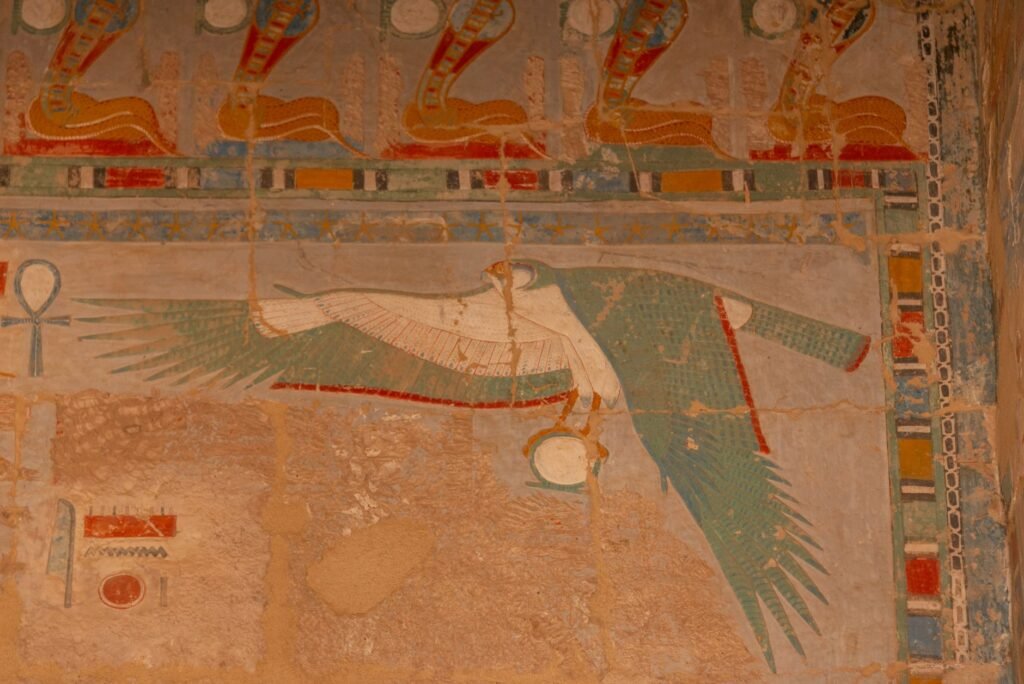
Who Is Tefnut in Egyptian Mythology?
Introduction
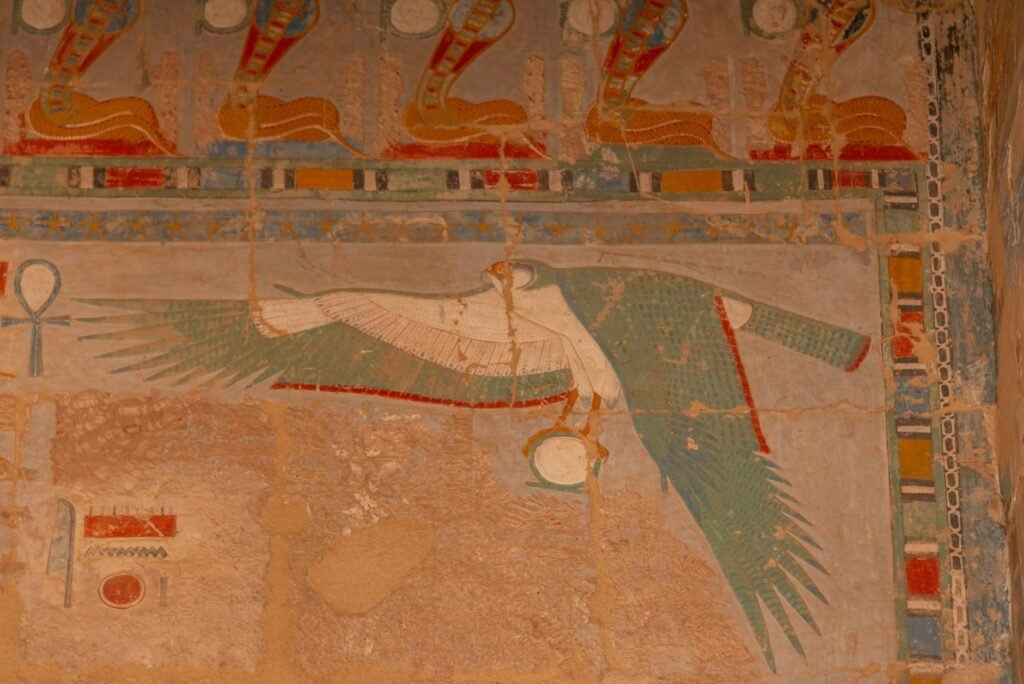
Tefnut is one of the oldest and most important goddesses in ancient Egyptian religion. In Egyptian mythology, she belongs to the Ennead of Heliopolis, a major divine family that helped explain the origins of the world and the structure of divine kingship. Tefnut is usually understood as a goddess of moisture, dew, rain, and life-giving humidity, and she often appears as part of a cosmic pair with her brother and consort Shu, the god of air.
Her significance goes beyond simple weather symbolism. Tefnut helped ancient Egyptians imagine the balance of the universe: dryness and moisture, air and water, order and disorder, distance and return. She is especially important in creation myths, where she is linked to the emergence of the first divine generation and to the maintenance of cosmic harmony. Although not as universally famous as Isis or Hathor, Tefnut played a foundational role in Egyptian theology.
Origin and Meaning
The name Tefnut is conventionally written in scholarly transliteration as Ṯfnwt or Tefenet, though spellings vary depending on the source and the period of the language. The exact etymology of her name is not fully secure, and scholars have proposed interpretations connected to moisture, liquid, or dew. Because ancient Egyptian writing often omitted vowels, modern renderings of the name are approximate.
In religious terms, Tefnut is one of the primeval deities generated at the beginning of creation. In the Heliopolitan creation tradition, she is usually the daughter of the creator god Atum. Together with her brother Shu, she forms part of the first divine generation after the creator. This places her among the earliest figures in Egyptian cosmogony.
The historical origin of Tefnut as a goddess likely lies in very ancient religious ideas tied to natural forces. Her characterization as moisture suggests an observation central to Egyptian life: in a land shaped by the Nile and the desert, water and humidity meant fertility, survival, and cosmic order.
Historical Context
Tefnut appears in Egyptian religion from the Old Kingdom onward, and possibly earlier in oral or local traditions that were later incorporated into formal theology. She became especially important in the religious system of Heliopolis, one of the major centers of solar theology in ancient Egypt.
Egyptian religion was not a single fixed system. Different cities promoted different creation myths and divine families. Tefnut belongs chiefly to the Heliopolitan tradition, where Atum or Atum-Ra emerges at the beginning of time and generates Shu and Tefnut, who in turn produce Geb and Nut, and then Osiris, Isis, Seth, and Nephthys. This genealogy helped explain not only the structure of the cosmos but also the legitimacy of kingship and temple ritual.
Tefnut’s role also reflects the Egyptian tendency to personify natural and cosmic principles as divine beings. She is not merely a weather goddess in a modern sense. She is a theological expression of the beneficial moisture that balances the dry heat of the desert and supports life along the Nile.
Main Characteristics
Tefnut is usually described through a combination of symbolic, cosmic, and maternal roles. Her principal characteristics include:
- Goddess of moisture and humidity
- Female counterpart of Shu
- Member of the creator’s first generation
- Link between creation and cosmic balance
- Sometimes associated with the Eye of Ra
In artwork, Tefnut is often depicted as a lioness-headed woman or as a woman wearing a solar disk and sometimes an uraeus. In some sources she may also appear as a lioness or as a human figure with leonine traits. The lioness form is significant because several powerful Egyptian goddesses were associated with dangerous but protective force.
Tefnut’s character can appear dual in nature. She is at once:
- nurturing, as moisture supports life;
- and formidable, as divine forces of heat, distance, and lioness power may also be connected to her.
This duality is common in Egyptian religion, where a deity can embody both beneficence and danger.
Family and Genealogy
Tefnut belongs to one of the most important divine lineages in Egyptian mythology.
Standard Heliopolitan Genealogy
In the most common version of the Heliopolitan Ennead:
| Deity | Relationship to Tefnut |
|---|---|
| Atum | Father |
| Shu | Brother and husband in many traditions |
| Geb | Son |
| Nut | Daughter |
| Osiris, Isis, Seth, Nephthys | Grandchildren |
This genealogy is not identical in every source. Egyptian mythology often presents overlapping traditions, and some texts emphasize different divine relationships.
Spouse and Sibling Relationships
Tefnut is frequently paired with Shu, who is both her brother and consort in the theological framework of the Ennead. Such sibling-marriage patterns are common in Egyptian divine genealogy and should be understood symbolically rather than as literal human family structures.
Children
Tefnut and Shu are usually said to have given birth to:
- Geb, the earth god
- Nut, the sky goddess
Together these children separate into earth and sky, forming the world as it is known in Egyptian cosmology.
Symbols
Tefnut’s symbols vary by period and context, but several motifs recur.
Common Symbols
- Lioness head or lioness form
- Solar disk
- Uraeus serpent
- Ankh in broader divine iconography, though not unique to her
- Moisture, dew, and atmospheric freshness as conceptual symbols rather than physical objects
Symbolic Meanings
| Symbol | Meaning |
|---|---|
| Lioness | Power, protection, danger, solar energy |
| Solar disk | Connection with solar divinity and the Eye of Ra |
| Uraeus | Royal authority, protection, divine force |
| Moisture | Life, fertility, cosmic balance |
Because Egyptian gods often shared iconographic features, these symbols do not always identify Tefnut uniquely. Her identification often depends on inscription, context, or association with Shu and the Ennead.
Sacred Animals
Tefnut is associated primarily with the lioness.
The Lioness
The lioness was a powerful symbolic animal in ancient Egypt. It could represent:
- protective aggression,
- solar heat,
- royal power,
- and the dangerous aspect of divine femininity.
Tefnut’s lioness form connects her to a wider group of Egyptian lioness goddesses, including Sekhmet, Hathor in her lioness form, and sometimes Bastet in certain protective roles. These relationships are not always identical, but they show how Egyptian religious thought linked the lioness with both destruction and protection.
Other Animal Associations
No single animal belongs exclusively to Tefnut in the way that some gods have more fixed animal identifications. Her symbolism is therefore best understood through the lioness and through broader solar-lion imagery.
Sacred Plants
There is no universally agreed or exclusive sacred plant of Tefnut in the same way that some gods are linked to specific trees or flowers. Ancient sources do not consistently identify a single plant as uniquely hers.
However, because she is connected with moisture and fertility, she can be associated symbolically with:
- fresh growth
- vegetation sustained by water
- rejuvenation after dryness
In Egyptian religious imagery, such associations matter more than a fixed botanical emblem. Any connection to plants is therefore indirect and thematic rather than singular and canonical.
Sacred Places
Tefnut is especially connected with Heliopolis, the principal center of solar theology.
Heliopolis
Heliopolis was one of the most important religious cities in ancient Egypt. It was linked to:
- the cult of the sun god,
- creation theology,
- and the Ennead of nine deities.
Tefnut’s prominence here stems from her place in the cosmic family generated by Atum. Although the archaeological remains of Heliopolis are limited today, the city was central to ancient religious thought.
Other Cult Contexts
Tefnut was also known in broader Egyptian temple religion, though not always as a major independent cult figure. In many temples, she appears:
- as part of divine genealogies,
- in hymns,
- or in theological lists alongside other major deities.
Because Egyptian religion was highly local and syncretic, Tefnut could be integrated into different sacred landscapes depending on the period and temple tradition.
Powers and Attributes
Tefnut’s main powers and attributes are tied to the natural and cosmic functions she embodies.
Core Domains
- Moisture and humidity
- Rain and dew
- Fertility and life-giving balance
- Cosmic order
- Protection in leonine form
- Association with the solar eye and divine power
Theological Function
Tefnut helps explain how the world sustains life. In a desert civilization, moisture was precious. Egyptian religion often transforms environmental realities into sacred concepts. Tefnut therefore represents not only physical water vapor or rainfall, but the principle that makes existence habitable.
She is also connected to ma’at, the Egyptian concept of order, truth, and balance. While ma’at is a separate goddess, the structure of the cosmos in which Tefnut participates depends on order rather than chaos.
Main Myths
Tefnut appears in several important mythological traditions, though the degree of detail varies by text.
The Creation of the World
In the Heliopolitan cosmogony, Atum creates or brings forth Shu and Tefnut. Their birth marks the beginning of the ordered world. The separation of Shu and Tefnut from the creator allows the next generation to emerge: Geb and Nut.
This myth explains:
- the origin of air and moisture,
- the separation of sky and earth,
- and the orderly unfolding of creation.
The Myth of the Wandering Goddess
One of the most important stories involving Tefnut is the myth of the wandering goddess. In some versions, Tefnut becomes angry and leaves Egypt, retreating to a distant land. Her departure causes disorder and danger, since her presence is necessary for the balance of the world.
Shu or another divine messenger is then sent to bring her back. Her return restores order and fertility. This myth has several versions and parallels in other goddess narratives, and it is sometimes connected with the Eye of Ra tradition.
The tale may reflect themes of:
- separation and reconciliation,
- drought and renewal,
- and the restoration of divine harmony.
The Eye of Ra
In some traditions, Tefnut is linked with the Eye of Ra, a dangerous but protective feminine force associated with the sun god. This association is not exclusive to her, since several goddesses can embody the Eye. Nevertheless, the connection reinforces her leonine power and her role as an active divine force.
Relationship with Other Mythological Figures
Tefnut’s relationships with other gods are central to her identity.
Shu
Shu is her brother and usually her consort. Together they form an elemental pair:
- Shu = air
- Tefnut = moisture
Their union expresses the interdependence of atmospheric forces in the created world.
Atum
Atum is usually her father in Heliopolitan theology. He is the self-created creator god from whom the first divine couple emerges.
Geb and Nut
These are Tefnut’s children. Their mythic roles are foundational:
- Geb represents the earth
- Nut represents the sky
The separation of Geb and Nut is often linked to the broader cosmological order created by the first divine generation.
Ra
Tefnut may be associated with Ra through solar theology and the Eye of Ra motif. In some traditions, solar goddesses are closely tied to the sun god’s power and protection.
Sekhmet, Hathor, and Bastet
Tefnut shares iconographic and symbolic overlaps with other lioness or feline goddesses. These relationships are complex and may reflect:
- local cult differences,
- theological merging,
- or similar divine functions expressed in different forms.
It is important not to collapse all lioness goddesses into one figure. Ancient Egyptian religion often maintained distinctions even where symbols overlapped.
Worship and Cult
Tefnut was honored within the framework of Egyptian temple religion, though she was not always the main focus of a large independent cult like some other deities.
Forms of Worship
Her worship likely included:
- temple offerings,
- hymns,
- ritual recitations,
- and participation in broader solar and cosmological rites.
As with many Egyptian gods, worship focused less on personal devotion in the modern sense and more on maintaining divine order through ritual.
Ritual Significance
Tefnut’s role in creation and cosmic balance made her relevant in liturgies concerned with:
- renewal,
- kingship,
- solar rise and setting,
- and the preservation of harmony.
Offerings
Specific offerings to Tefnut are not as well documented as those for more prominent temple deities, but in Egyptian cult practice such offerings commonly included:
- bread,
- beer,
- water,
- incense,
- and ritual words of praise.
Because moisture is central to her nature, liquid offerings would have had strong symbolic resonance.
Ancient Sources
Tefnut appears in a range of Egyptian sources, though much of the evidence comes from religious texts rather than narrative mythology in the Greek style.
Major Egyptian Sources
- Pyramid Texts: among the earliest religious texts, containing references to the Heliopolitan gods and creation theology.
- Coffin Texts: Middle Kingdom texts that preserve mythological and funerary traditions.
- Temple inscriptions and hymns: especially those tied to solar and cosmological theology.
- Later mythological papyri and theological compilations: which preserve versions of the wandering goddess motif and divine genealogies.
Classical Authors
Greek and Roman authors do not usually provide detailed independent narratives about Tefnut, but they sometimes refer generally to Egyptian theology. Important classical writers on Egypt include:
- Herodotus
- Plutarch
- Diodorus Siculus
These authors are useful for broader context, but they should be used cautiously because they often interpret Egyptian religion through Greek philosophical categories.
Unlike gods from Greek myth, Tefnut is not a major figure in Homer, Hesiod, or Ovid. Her tradition belongs primarily to indigenous Egyptian textual and iconographic sources.
Roman Equivalent
Tefnut does not have a perfect Roman equivalent. Egyptian gods were often identified with Greco-Roman deities in interpretatio graeca or romana, but Tefnut’s specific combination of moisture, lioness power, and solar connection does not map neatly onto one Roman goddess.
If an approximate comparison is needed, scholars may note partial similarities with:
- Juno in a broad protective and royal sense,
- Venus only in the very loose context of divine femininity,
- or certain aspects of Diana or Minerva in protective power.
However, none of these are true equivalents. Tefnut remains distinctly Egyptian.
Influence on Modern Culture
Tefnut is not among the most widely recognized Egyptian deities in global popular culture, but she appears in modern works that draw on Egyptian mythology.
Literature and Academic Writing
She appears frequently in:
- books on Egyptian religion,
- comparative mythology studies,
- and encyclopedic references to the Ennead.
Games and Fiction
In fantasy literature, role-playing games, and video games inspired by Egyptian mythology, Tefnut may appear as:
- a secondary deity,
- a creator goddess,
- or a lioness-linked divine figure.
Her presence is usually smaller than that of Isis, Ra, Anubis, or Osiris, but she contributes to world-building based on Egyptian cosmology.
Art and Museum Culture
Modern museum exhibitions and educational materials often include Tefnut in displays of:
- ancient Egyptian creation myths,
- temple iconography,
- and divine family trees.
Her visual identity, especially the lioness-headed form, continues to be used in reconstructions and educational illustrations.
Curiosities
- Tefnut is one of the few Egyptian deities whose name is often discussed in relation to atmospheric moisture, making her especially relevant to the environmental realities of Egypt.
- She is sometimes overshadowed by better-known goddesses, yet she is central to one of Egypt’s most important creation systems.
- In mythic genealogy, she helps establish the line that leads to Osiris, Isis, Seth, and Nephthys.
- Her lioness aspect places her among some of the most powerful female divine figures in Egyptian religion.
- The myth of her return from distant lands reflects a broader Egyptian theme: divine absence causes disorder, and divine return restores life.
Frequently Asked Questions
Who is Tefnut in Egyptian mythology?
Tefnut is an ancient Egyptian goddess associated mainly with moisture, dew, rain, and atmospheric balance. She is part of the Heliopolitan creation myth and is usually the daughter of Atum and the sister-wife of Shu.
What does Tefnut represent?
She represents the life-giving moisture that balances the dryness of the desert. She also symbolizes cosmic order, protection, and divine feminine power.
Is Tefnut a lioness goddess?
Yes, in many depictions Tefnut appears as a lioness or lioness-headed woman. This form links her with power, danger, and protective force.
Who are Tefnut’s children?
In the standard Heliopolitan tradition, Tefnut and Shu are the parents of Geb, the earth god, and Nut, the sky goddess.
Is Tefnut the same as Hathor or Sekhmet?
No. Tefnut is a distinct goddess, though she shares symbolic features with other lioness goddesses such as Hathor and Sekhmet. Egyptian religion sometimes overlaps these figures in function or imagery, but they are not identical.
Where was Tefnut worshipped?
She was especially associated with Heliopolis, a major center of solar and creation theology. She also appears in broader temple religion throughout ancient Egypt.
What is the myth of Tefnut’s return?
In the wandering goddess myth, Tefnut leaves Egypt in anger or withdrawal, causing disorder. A divine messenger brings her back, and her return restores balance, fertility, and cosmic stability.
Does Tefnut have a Roman equivalent?
Not exactly. She does not have a direct Roman counterpart. Any comparison with Roman goddesses is only approximate and partial.
Conclusion
Tefnut is a foundational figure in Egyptian mythology and religion. As the goddess of moisture, balance, and leonine divine power, she belongs to the earliest generation of gods in the Heliopolitan creation tradition. Her role in the formation of the cosmos, her connection to Shu, and her place in the lineage leading to later major deities all make her essential to understanding ancient Egyptian theology.
Although she is less famous in modern culture than some other Egyptian gods and goddesses, Tefnut remains important for what she reveals about Egyptian thought: the careful observation of nature, the personification of cosmic forces, and the belief that order depends on the harmonious interplay of divine powers. In this sense, Tefnut is not merely a minor goddess of moisture, but a key figure in the ancient Egyptian vision of how the world came into being and how it continues to endure.

Orin Vale has spent the better part of two decades tracing the threads that connect the world’s oldest stories — from the halls of Asgard to the banks of the Nile, from Olympus to the jungles of the Maya. What began as a childhood fascination with flood myths and trickster gods grew into years of independent study across comparative mythology and ancient religion, always chasing the same question: what did these stories mean to the people who first told them? Orin writes for readers who want more than trivia — the ones looking for the beliefs, fears, and truths that myths were built to carry.