The Rape of Lucretia
Introduction
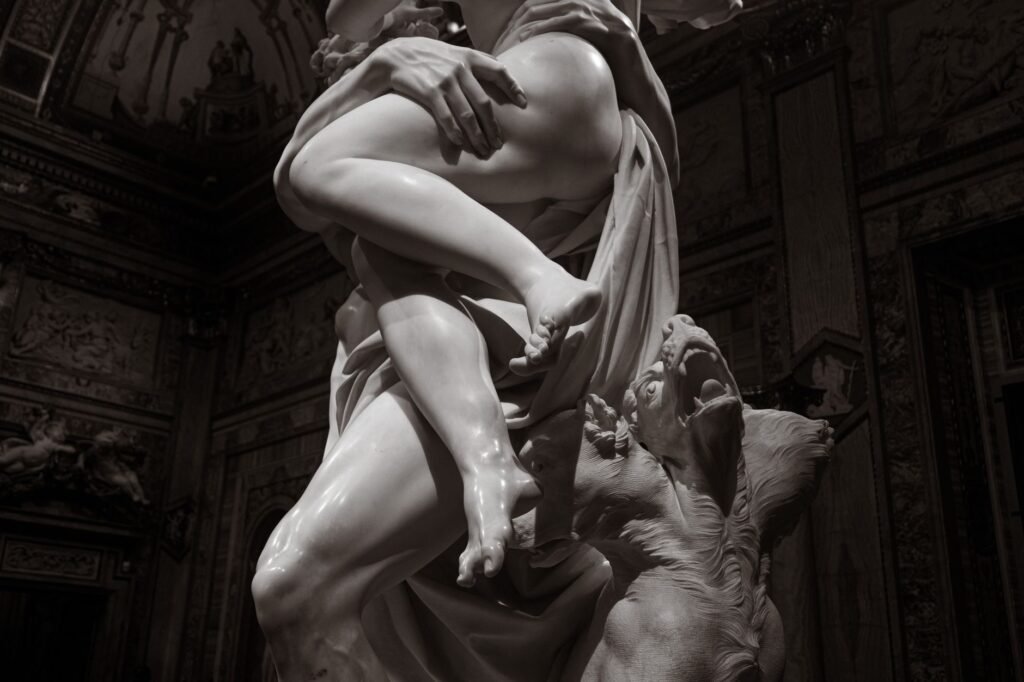
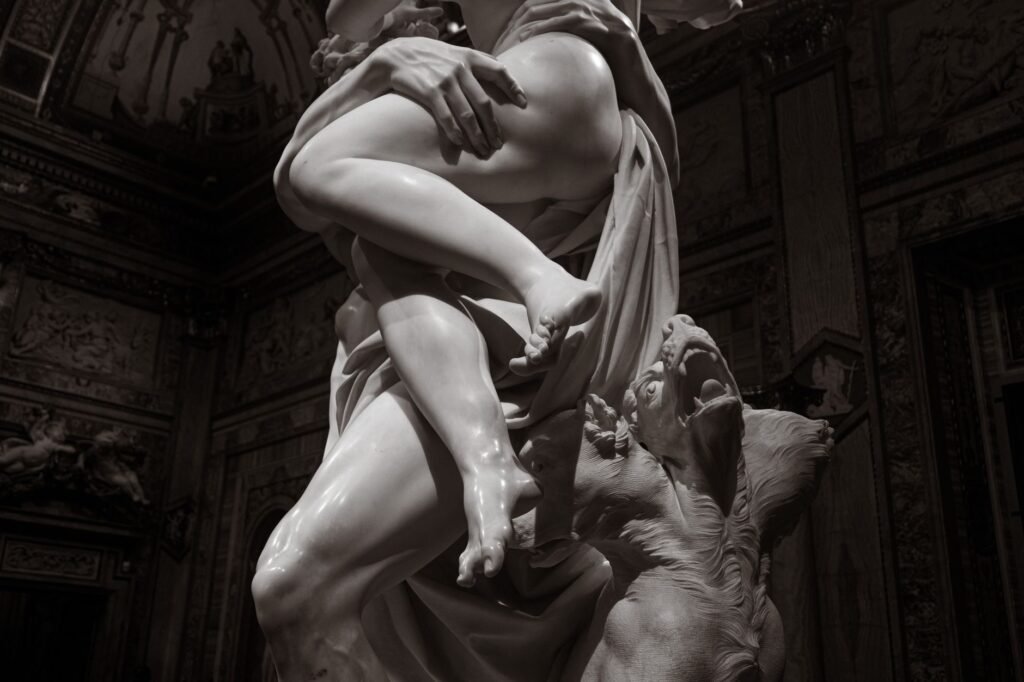
The Rape of Lucretia is one of the most influential stories in Roman tradition. It recounts the assault of the noblewoman Lucretia by Sextus Tarquinius, the son of Rome’s last king, and her subsequent suicide. In Roman cultural memory, the episode became a turning point that helped spark the overthrow of the monarchy and the founding of the Roman Republic.
Although the word “rape” in the title is traditional in English, the Latin sources describe the act primarily as sexual violation, coercion, and dishonor rather than in modern legal terms alone. The story has had lasting importance in Roman history, political ideology, literature, visual art, opera, and modern debates about gender, power, and moral responsibility.
Origin and Meaning
The name Lucretia is the feminine form of the Roman family name Lucretius. Like many Roman names, its precise etymology is uncertain and not securely explained by ancient sources.
The phrase “The Rape of Lucretia” is a conventional English rendering of the central episode in Roman historiography. In older English usage, “rape” could mean abduction, seizure, or violation; in this context it refers to the sexual assault of Lucretia by Sextus Tarquinius.
The story’s historical origin lies in the early Roman tradition preserved by later authors. It is usually set in the late 6th century BCE, during the reign of Lucius Tarquinius Superbus, Rome’s last king. Whether the episode preserves a historical memory or functions primarily as a foundational political legend remains disputed by modern historians.
Historical Context
The story belongs to the Roman tradition about the end of kingship and the birth of the Republic. According to the standard account, the Tarquin dynasty ruled Rome before being expelled after Lucretia’s death.
Political context
The narrative served an important ideological purpose:
- It explained why monarchy was rejected in Rome.
- It dramatized the moral corruption of royal power.
- It linked private virtue and public revolution.
- It offered a memorable origin story for the Republic.
Social and cultural context
Roman culture strongly valued:
- Pudicitia: chastity, modesty, and sexual integrity
- Fides: trustworthiness and good faith
- Honor: family and civic reputation
- Virtus: moral courage and public excellence
Lucretia is presented as the ideal Roman matron, while Sextus Tarquinius embodies tyrannical abuse of power. The episode also reflects Roman anxieties about elite male violence, household honor, and the vulnerability of women in patriarchal society.
Religious and moral context
The story was not only political but also moralized. Lucretia’s suicide is presented in the tradition as a response to violated honor, though ancient and modern readers have debated whether her death was a tragic necessity, a socially conditioned act, or a critique of the society that left her no honorable alternative.
Main Characteristics
Lucretia’s defining traits are consistent across most versions of the story.
Key characteristics of Lucretia
- Noble birth: she is usually described as the wife of Collatinus, a member of the Tarquin circle but not of the royal house.
- Chastity and modesty: she is renowned for domestic virtue.
- Loyalty: she protects her household’s honor.
- Composure under crisis: she speaks with dignity after the assault.
- Tragic self-sacrifice: she kills herself to preserve honor and inspire action.
Key characteristics of Sextus Tarquinius
- Royal privilege: he is a prince and the son of the king.
- Predatory desire: he abuses hospitality and trust.
- Tyrannical conduct: his act becomes a symbol of monarchical corruption.
- Political significance: his crime is the immediate catalyst for rebellion.
Narrative function
The story functions on several levels:
- Personal tragedy involving assault and suicide
- Moral exemplum for Roman conduct
- Political myth explaining the transition from monarchy to republic
- Cultural symbol of violated virtue and resistance to tyranny
Family and Genealogy
Different ancient accounts agree on the central family relationships, though some details vary.
Principal figures
| Figure | Relationship | Notes |
|---|---|---|
| Lucretia | Central figure | Noble Roman woman, wife of Collatinus |
| Lucius Tarquinius Collatinus | Husband | Relative of the Tarquin royal family in many traditions |
| Sextus Tarquinius | Assailant | Son of Tarquinius Superbus |
| Lucius Tarquinius Superbus | Father of Sextus | The last king of Rome |
| Spurius Lucretius Tricipitinus | Father of Lucretia in many accounts | Often depicted as a Roman nobleman |
| Lucius Junius Brutus | Relative or witness figure | Central leader of the anti-royal uprising |
Children and descendants
Ancient sources do not consistently emphasize children of Lucretia. The story centers instead on her husband, father, and the political figures who respond to her death. In the later Roman historical imagination, her legacy is not genealogical but civic: she becomes an ancestor in the moral sense of the Republic.
Relationship dynamics
The episode is structured around contrasts:
- Husband and wife: Collatinus is presented as honorable and trusting.
- Father and daughter: Lucretia’s father is part of the response to her assault.
- Victim and assailant: Lucretia and Sextus represent moral opposites.
- Noble household and royal household: private virtue versus public corruption.
Symbols
The Lucretia narrative is rich in symbolic meaning, though it does not belong to a cult with fixed sacred emblems.
Common symbolic elements
- Spindle and wool: associated with domestic female virtue and ideal household order.
- Bedroom/chamber: the domestic space violated by royal power.
- Knife or dagger: the instrument of Lucretia’s suicide and a symbol of tragic resolve.
- Blood: signifies both violated honor and the political cost of tyranny.
- Clothing and veiling: in artistic depictions, these often symbolize modesty and vulnerability.
Symbolic meanings
| Symbol | Meaning |
|---|---|
| Spindle/wool | Chaste domestic labor, Roman matronly virtue |
| Dagger | Honor, self-destruction, tragic agency |
| Bedchamber | Privacy violated by political power |
| Blood | Sacrifice, shame, and revolutionary aftermath |
| White garments | Purity, marital dignity, moral integrity |
Sacred Animals
There are no universally recognized sacred animals specifically associated with Lucretia in the way animals are tied to deities in classical mythology.
That said, later symbolic or artistic traditions sometimes associate the story with animals indirectly through moral imagery, such as the lamb or dove as emblems of innocence. These are later interpretive associations rather than ancient cultic symbols.
Sacred Plants
No specific sacred plant is traditionally tied to Lucretia in the ancient sources.
However, later artistic and literary treatments sometimes use flowers such as:
- Lily: purity and innocence
- Rose: beauty and fragility
- Laurel: moral fame or public honor
These associations are symbolic, not canonical. They belong to later reception rather than the original Roman narrative.
Sacred Places
The story is connected with several important locations in early Roman tradition.
Rome and its surroundings
- Rome: the political center of the action after the assault
- Collatia: often identified as Lucretia’s home and the site where her virtue is tested
- The royal camp or city: where the Tarquin family’s power is based
- The Forum and civic spaces: where the aftermath leads to political mobilization
Significance of place
The contrast between places matters deeply:
- The domestic house represents order, modesty, and family honor.
- The royal sphere represents domination and coercion.
- Public space represents the transition from private outrage to collective political action.
The story’s geography is therefore moral as much as physical.
Powers and Attributes
Lucretia is not a goddess and has no supernatural powers. Her importance lies in her moral authority and the civic consequences of her actions.
Attributes associated with Lucretia
- Virtue
- Chastity
- Honor
- Moral eloquence
- Tragic exemplariness
Attributes associated with the story itself
- Foundational political force
- Moral indictment of tyranny
- Model of Roman matronly conduct
- Example of the power of private suffering to provoke public change
In Roman literary tradition, the story demonstrates how personal virtue can become politically transformative.
Main Myths
The central narrative is relatively stable, though ancient sources differ in detail.
The standard story
According to Livy’s version and related accounts:
- A group of noble men, including Collatinus, boast about the chastity of their wives.
- They return unexpectedly to check on them.
- Most women are found engaged in leisure or luxury, but Lucretia is discovered spinning wool among her maidservants.
- Sextus Tarquinius later visits Lucretia.
- He attempts to seduce her; when persuasion fails, he threatens disgrace and violence.
- He assaults her.
- Lucretia summons her husband and father, recounts the crime, and demands vengeance.
- She kills herself.
- Lucius Junius Brutus and others use the outrage to rally Rome against the monarchy.
- The Tarquins are expelled, and the Republic is established.
Variations in ancient sources
Some ancient traditions differ in emphasis:
- In Livy, the political consequences are central.
- In Ovid, the emotional and literary treatment is more prominent.
- In Dionysius of Halicarnassus, the narrative is elaborated with historical detail.
- Later retellings expand or reshape the moral and psychological elements.
Themes of the myth
The story explores:
- Power versus virtue
- Private shame versus public action
- Tyranny versus liberty
- Female chastity as a political symbol
- The cost of founding a political order
Relationship with Other Mythological Figures
Lucretia belongs to Roman history rather than myth in the divine sense, but she is closely connected to several major legendary and historical figures.
Lucius Junius Brutus
Brutus is the most important figure after Lucretia. In the tradition, he turns her death into a political cause. He becomes the leading force in the expulsion of the Tarquins.
The Tarquin family
Lucretia’s violation is inseparable from the broader image of the Tarquins as arrogant and dangerous rulers. Sextus Tarquinius is the immediate criminal, but Tarquinius Superbus is framed as the embodiment of monarchy’s moral decay.
Collatinus
Lucretia’s husband is important because the story begins with a contest of chastity involving wives and husbands. In some accounts, he becomes one of the first republican magistrates, though later tradition also notes tensions around his Tarquin connection.
Later cultural figures
In literature and art, Lucretia is often compared with other exemplary women, both mythical and historical, who embody chastity, endurance, or tragic honor. Examples include:
- Verginia, another Roman woman associated with violence and political crisis
- Dido, in a very different moral and literary register
- Penelope, as a symbol of fidelity
- Iphigenia, for sacrificial innocence in Greek tradition
Worship and Cult
Lucretia was not the object of formal worship in the manner of a deity, hero cult, or saint in classical antiquity.
Ancient and Roman forms of commemoration
Instead of worship, Lucretia was remembered through:
- Historical narrative
- Moral exempla
- Public memory of the Republic’s origins
- Literary and artistic representation
Later commemorative uses
In later periods, Lucretia’s story was used in:
- political argument
- moral education
- Renaissance and Baroque art
- humanist writing
- early modern discussions of virtue, tyranny, and consent
The tale functioned almost like a civic legend, helping define Roman identity through memory rather than cult.
Ancient Sources
Several ancient authors preserve or discuss the Lucretia story. No single source is universally authoritative, and differences among them are important.
Major classical sources
- Livy, Ab Urbe Condita 1.57–59
The most influential narrative for the story’s political meaning. - Dionysius of Halicarnassus, Roman Antiquities
Provides a parallel Greek-language account with elaboration on early Roman history. - Ovid, Fasti and Ars Amatoria
Offers literary references and reworkings, with attention to emotion and rhetoric. - Augustine, City of God 1.19
Critically discusses Lucretia’s suicide and the moral problem it poses. - Valerius Maximus, Memorable Deeds and Sayings
Uses Lucretia as an exemplum of Roman virtue. - Plutarch, Life of Publicola and related writings
Connects the story to the political transformation of early Rome.
Important scholarly caution
Ancient sources do not provide modern historical verification. The narrative likely reflects a blend of early Roman memory, later political ideology, and literary shaping. The story’s value lies partly in what it reveals about Roman self-understanding.
Roman Equivalent
There is no strict “Roman equivalent” because The Rape of Lucretia is itself a Roman narrative.
However, it is useful to distinguish between:
- Greek mythic analogues, where women’s violation often leads to family or civic disaster
- Roman historical legend, where Lucretia’s assault becomes the founding trauma of a new political order
If an equivalent is sought in function rather than identity, Lucretia serves as a Roman counterpart to other foundational figures whose suffering legitimizes social or political change. But she remains uniquely Roman in tone, ideology, and historical role.
Influence on Modern Culture
The story has had a profound impact on Western culture.
Literature
The Lucretia legend appears in:
- medieval moral writing
- Renaissance humanism
- Shakespearean and post-Shakespearean literature
- modern feminist and critical reinterpretations
A famous example is William Shakespeare’s narrative poem The Rape of Lucrece (1594), which deeply shaped English-language reception of the story.
Visual art
Artists across centuries have repeatedly depicted the scene, including:
- the assault
- Lucretia’s confrontation with her family
- her suicide
- Brutus’ reaction and the political aftermath
The subject was especially popular in the Renaissance and Baroque periods because it combined drama, nudity, moral tension, and classical authority.
Music and opera
The story inspired several musical works, most notably Benjamin Britten’s The Rape of Lucretia (1946), a chamber opera that reinterprets the Roman tale in a modern psychological and spiritual frame.
Film and television
The story or its themes appear in historical dramas, adaptations of Roman material, and modern retellings focused on power, sexual violence, and political rebellion. Even when not directly named, the Lucretia archetype influences portrayals of violated virtue and resistance.
Political and cultural discourse
The legend has also been used to discuss:
- tyranny and resistance
- sexual violence and consent
- honor culture
- the political use of women’s suffering
- the transition from monarchy to republic
Modern readings often question the moral framework of the traditional narrative, especially the expectation that Lucretia’s death is required to restore honor.
Curiosities
- Lucretia’s story was central to Roman republican identity for centuries, even though its historical accuracy is uncertain.
- Augustine criticized the story because it creates a moral dilemma: if Lucretia was innocent, why die; if she was guilty, why honor her?
- The tale became a favorite subject in Renaissance art because it allowed artists to combine classical prestige with intense human emotion.
- The story influenced political thought about tyranny, civic virtue, and the legitimacy of resistance.
- Different ancient authors emphasize different aspects: Livy stresses politics, Ovid emphasizes literary drama, and Augustine focuses on moral paradox.
- Lucretia became a symbol beyond Rome and was repeatedly invoked in European debates about chastity, sovereignty, and female honor.
- The word “rape” in older titles reflects historical English usage, not necessarily a modern legal framing alone.
Frequently Asked Questions
1. Who was Lucretia?
Lucretia was a noble Roman woman remembered for her chastity, dignity, and tragic death after being assaulted by Sextus Tarquinius. In Roman tradition, her story helped inspire the overthrow of the monarchy.
2. Why is The Rape of Lucretia important?
It is important because it is one of the founding legends of the Roman Republic. The story connects sexual violence, personal honor, and political revolution in a single narrative.
3. Was Lucretia a real historical person?
That is uncertain. Ancient sources present her as a historical figure, but modern scholars generally treat the story as a mixture of legend, moral exemplum, and political memory rather than verifiable biography.
4. What happened after Lucretia’s death?
According to the tradition, Lucius Junius Brutus used public outrage over the crime to lead a revolt against the Tarquin kings. The monarchy was expelled, and the Roman Republic began.
5. Why did Lucretia kill herself?
In the traditional Roman account, she killed herself to preserve honor after the assault and to make a public statement of innocence and protest. Ancient readers and modern scholars have often debated the meaning and necessity of this act.
6. What is the main source for the story?
Livy’s Ab Urbe Condita is the most famous and influential source. Other important versions appear in Dionysius of Halicarnassus, Ovid, Valerius Maximus, Plutarch, and Augustine.
7. How has the story influenced modern culture?
It has inspired literature, paintings, sculptures, opera, political thought, and scholarly debates about gender, violence, and authority. Shakespeare and Britten are among the best-known modern artists to rework the story.
8. Is the story purely about personal tragedy?
No. It is also a political foundation myth, a moral lesson, and a cultural symbol. Its power comes from the way it links private suffering to public transformation.
Conclusion
The Rape of Lucretia remains one of the most enduring stories from Roman antiquity. Whether read as history, legend, political myth, or moral drama, it has shaped ideas about virtue, tyranny, and republican freedom for more than two millennia.
Its importance lies not only in the dramatic events it narrates, but also in the questions it raises: about the cost of political change, the treatment of women, the meaning of honor, and the relationship between private violence and public power. For that reason, Lucretia continues to be studied as a foundational figure in Roman cultural memory and as a lasting symbol in world literature and art.

Orin Vale has spent the better part of two decades tracing the threads that connect the world’s oldest stories — from the halls of Asgard to the banks of the Nile, from Olympus to the jungles of the Maya. What began as a childhood fascination with flood myths and trickster gods grew into years of independent study across comparative mythology and ancient religion, always chasing the same question: what did these stories mean to the people who first told them? Orin writes for readers who want more than trivia — the ones looking for the beliefs, fears, and truths that myths were built to carry.