Venus (Roman god)
Introduction
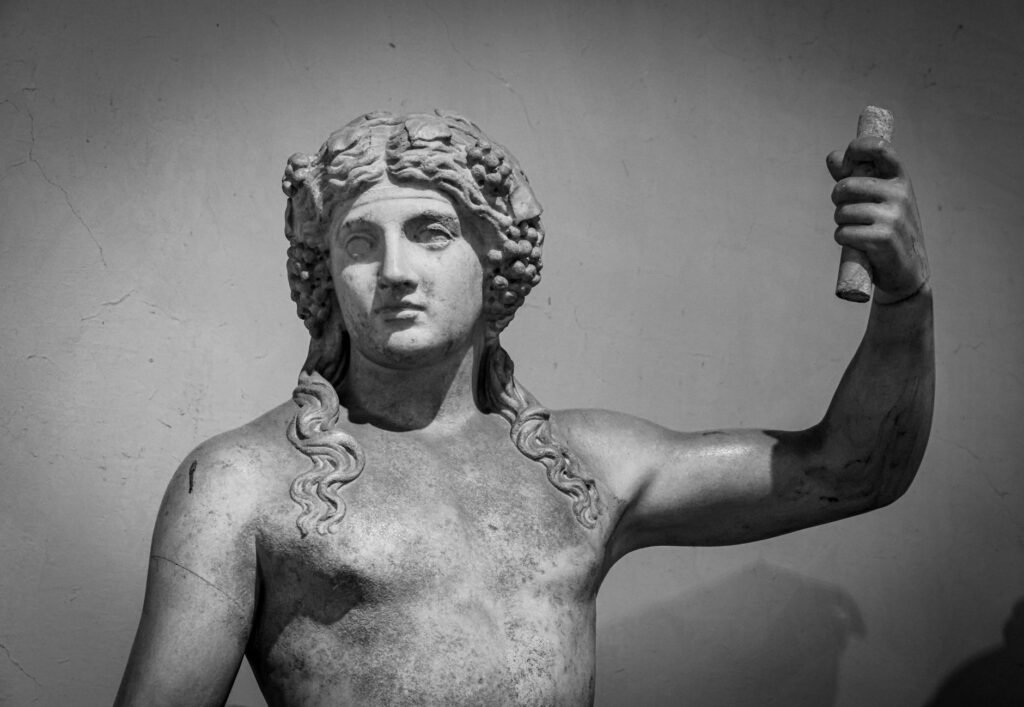
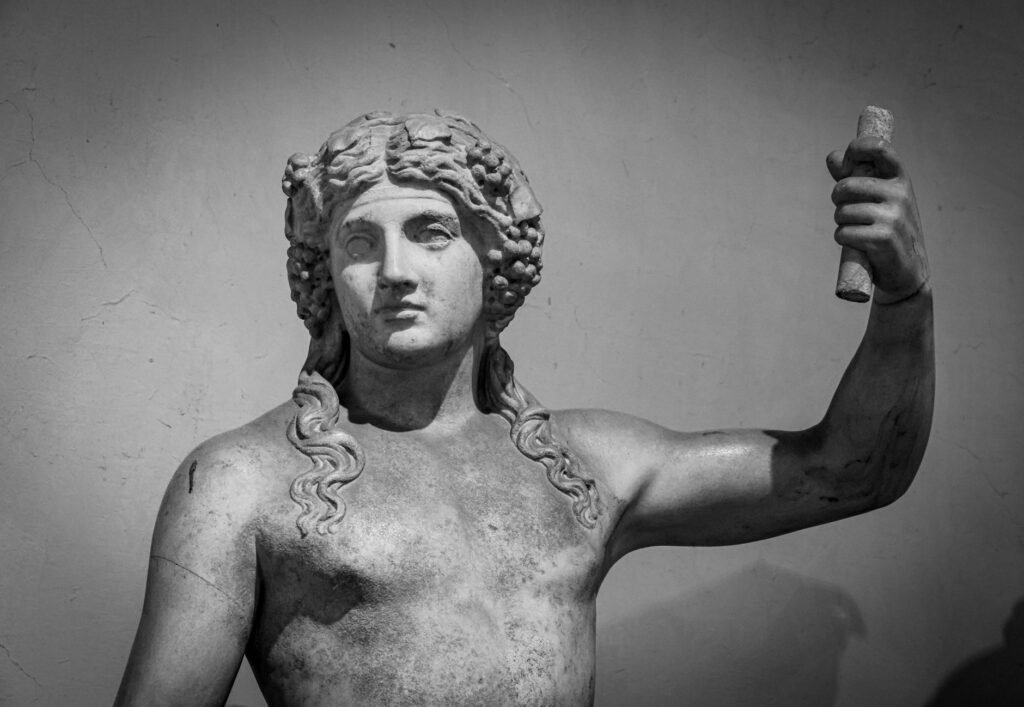
Venus was one of the most important deities in Roman religion, associated with love, beauty, desire, fertility, prosperity, and the flourishing of life. In Roman culture, she was not only a goddess of romantic attraction but also a divine force connected to victory, political legitimacy, and the Roman people’s origin stories. Over time, Venus became one of the most complex figures in the Roman pantheon, absorbing Greek influences while retaining distinctly Roman meanings.
Her significance extended beyond mythology. Venus was honored in public cult, invoked by statesmen and emperors, and celebrated in poetry, sculpture, and later European art. She became especially important because the Roman state traced mythical descent from her through Aeneas and his line, linking divine favor to Roman identity itself.
Origin and Meaning
The name Venus is usually connected with the Latin idea of desire, charm, or sexual attraction, and in broader terms with the concept of beneficial vitality and generative power. Ancient Roman religion often tied divine names to functions rather than to a single mythological origin story, and Venus appears to have developed in early Italic religion before her close identification with the Greek Aphrodite.
Scholars generally treat Venus as an old Italian deity whose role expanded under Greek influence. Early Roman religion likely knew Venus as a goddess associated with fertility, gardens, and the forces of growth. Later, as Roman contact with Greek culture increased, she was strongly assimilated to Aphrodite, bringing with her many myths, artistic forms, and symbolic associations from the Greek world.
Historical Context
Venus occupied a prominent place in the religious life of the Roman Republic and Empire. Unlike some deities whose cult remained relatively specialized, Venus developed multiple aspects and identities:
- Venus Verticordia, linked with moral purity and the turning of hearts from vice.
- Venus Cloacina, associated with cleansing and possibly with a sacred place near the Roman Forum.
- Venus Genetrix, mother of the Roman people through Aeneas.
- Venus Victrix, Venus the bringer of victory.
- Venus Felix, Venus as the bringer of good fortune.
This variety reflects the Roman tendency to adapt divine figures to civic and political needs. Venus was not only a private goddess of love but also a public and dynastic one. Julius Caesar famously promoted Venus Genetrix as an ancestral deity of the Julian family, and Augustus continued to use Venus-linked imagery to support the legitimacy of Roman rule.
As Roman religion absorbed Greek myth, Venus increasingly resembled Aphrodite in art and literature, especially in poetic works. Yet she remained a Roman goddess in function and civic meaning. Her cult reveals how Roman religion blended domestic concerns, state ideology, and inherited myth.
Main Characteristics
Venus is typically portrayed as a beautiful, youthful female deity whose presence inspires attraction, harmony, and sensual power. In artistic and literary traditions, she is often shown with idealized beauty, soft features, and graceful movement.
Key characteristics include:
- Beauty and charm: Venus embodies physical attractiveness and the power of allure.
- Love and desire: She governs passion, romantic union, and erotic attraction.
- Fertility and generation: In older and broader senses, she symbolizes the life-giving force behind reproduction and growth.
- Prosperity and favor: Some Roman forms of Venus connect her with good fortune and social flourishing.
- Political significance: She could function as a divine ancestor and protector of the Roman state.
In Roman literature, Venus often appears as both benevolent and dangerous. Love can unite, inspire, and bring civilization, but it can also cause disorder, suffering, and conflict. This duality made Venus a powerful literary and religious figure.
Family and Genealogy
The family relationships of Venus vary according to source and tradition. In Roman and Greek mythological systems, her genealogy is not entirely uniform.
Common traditions include:
| Relation | Tradition |
|---|---|
| Parentage | In Greek tradition, Aphrodite is sometimes said to arise from sea foam after Uranus is castrated; Roman Venus is often treated through this Greek identification. |
| Husband | Vulcan (Hephaestus in Greek myth) is commonly named as her husband in literary tradition. |
| Lovers | Mars is her best-known lover in Roman literature. |
| Children | Cupid (or Amor) is her most famous child; Aeneas is her son in Roman tradition through the mortal Anchises. |
Important figures associated with Venus
- Cupid/Amor: The god of desire, often depicted as Venus’s son and attendant.
- Aeneas: In Roman national myth, he is the son of Venus and Anchises and the ancestor of Rome’s ruling line.
- Vulcan: Venus’s husband in mythological storytelling, though this relationship is often more literary than cultic.
- Mars: A famous lover in Roman poetry; their union symbolizes the tension between love and war.
Different traditions assign different parentage and relationships, especially because Roman Venus was identified with Greek Aphrodite, whose mythic family history is more varied.
Symbols
Venus is associated with symbols of beauty, fertility, and love. In art and literature, the most common symbols include:
- Mirror: Represents beauty, self-knowledge, and attraction.
- Doves: Emblems of love, tenderness, and gentle desire.
- Roses: Associated with beauty, pleasure, and sometimes erotic love.
- Shell: Especially in later artistic tradition, symbolizing birth and emergence from the sea.
- Girdle or belt: In Greek tradition, the magical girdle of Aphrodite could inspire desire.
- Myrtle wreath: A plant linked with love and bridal symbolism.
- Torch: In some contexts, love’s heat and consuming power.
- Apple: A symbol of beauty and erotic choice, influenced by Greek myth.
Not every symbol belongs equally to early Roman cult. Some are better documented in literature and later visual tradition, especially after Venus became closely identified with Aphrodite.
Sacred Animals
Venus is commonly associated with animals that symbolize beauty, love, or gentleness.
Major sacred or symbolic animals
- Doves: The most widely recognized animal of Venus, expressing affection, softness, and concord.
- Swans: Often linked with elegance, grace, and poetic beauty.
- Sparrows: Associated with erotic love in classical poetry.
- Goats: In some traditions, linked less directly with Venus herself and more generally with fertility.
- Hares: Sometimes connected with fecundity and vitality.
- Fish and marine creatures: In myths concerning her birth from the sea, these may appear in artistic symbolism rather than formal cult.
Doves are the clearest and most consistent animal symbol of Venus across classical and later traditions.
Sacred Plants
Plants associated with Venus reflect themes of love, fertility, beauty, and ritual decoration.
Notable sacred plants
- Myrtle: One of the most important plants linked to Venus. It symbolized love, marriage, and beauty.
- Roses: Associated with pleasure and romantic affection.
- Violets: In classical symbolism, they could represent modest beauty and springtime renewal.
- Laurel: More strongly associated with Apollo and victory, but occasionally part of broader floral symbolism in Roman religious settings.
- Apple trees: Connected with beauty, desire, and the gift of love.
Myrtle was especially important in Roman bridal and devotional contexts. The plant’s evergreen quality also reinforced ideas of enduring life and lasting affection.
Sacred Places
Venus was worshipped in many places across the Roman world, and several sites became particularly important.
Notable locations linked to Venus
Temple of Venus Genetrix in the Forum of Caesar, Rome
Dedicated by Julius Caesar and associated with Venus as ancestral mother and protectress of the Julian line.Temple of Venus Victrix
Built by Pompey on the Campus Martius and linked with victory.Temple of Venus and Roma
A major imperial temple in Rome, dedicated under Hadrian and one of the largest temples in the city.Venus Cloacina’s shrine
A small sanctuary near the Roman Forum, associated with purification and possibly early Italic cult practice.Mount Eryx in Sicily
An ancient and famous cult center for Venus Erycina, a form of the goddess associated with fertility and, in some contexts, sacred prostitution as reported by ancient sources, though this subject is debated by modern scholars.Paphos in Cyprus
Although more strongly associated with Aphrodite, it became part of the wider Mediterranean sacred geography of Venus through Roman identification.
Venus was not confined to a single sanctuary. Her cult spread widely and adapted to local traditions throughout Italy and the provinces.
Powers and Attributes
Venus’s powers varied according to context, but several domains recur consistently.
Main spheres of influence
- Love and sexual attraction
- Beauty and aesthetic appeal
- Marriage and fertility
- Conception and childbirth
- Grace, pleasure, and harmony
- Victory and political success
- Ancestry and legitimacy
- Growth, bloom, and prosperity
In a religious sense, Venus could be approached for personal affection, family continuity, and public success. In political ideology, she could legitimize rulers and dynasties by framing them as descendants or favorites of the goddess. This made her unusually versatile among Roman deities.
Main Myths
Venus appears in a wide range of myths, especially those adapted from Greek tradition and reshaped in Roman literature.
The birth of Venus
One of the most famous stories tells of her emergence from the sea. In Greek tradition, Aphrodite arises from the foam created by the mutilation of Uranus. Roman authors often adopt this image, though it is not a uniquely Roman origin myth. It reinforces her connection with beauty, fertility, and the sea.
Venus and Mars
The union of Venus and Mars is a central myth in classical literature. Their affair symbolizes the tension between love and war. The gods’ relationship was made famous by poetic treatments, especially in Roman literature, where the lover-goddess and warrior-god form a memorable contrast.
Venus and Anchises
A major Roman myth tells of Venus’s love for the Trojan Anchises, with whom she fathers Aeneas. This story is especially important because Aeneas becomes the ancestor of the Romans. The myth gives Venus a foundational role in Roman identity and imperial ideology.
Venus and the Judgment of Paris
This story is originally Greek, but it became influential in Roman culture. Paris chooses Aphrodite as the fairest goddess, receiving Helen as a prize. Because Venus was identified with Aphrodite, the narrative entered Roman literary and artistic traditions.
Venus and Psyche
The story of Psyche is more famous in later literary tradition, especially in Apuleius. Venus appears as an angry and jealous figure who opposes Psyche’s union with Cupid. While not a foundational Roman myth, it became highly influential in the Western reception of Venus.
Venus and Aeneas in the Aeneid
Virgil’s Aeneid gives Venus an especially important role. She protects her son Aeneas, intervenes in his journey, and helps guide the destiny of Troy’s survivors toward Italy. In this epic, Venus is both maternal and political, linking divine care with Rome’s destined rise.
Relationship with Other Mythological Figures
Venus’s relationships with other gods and heroes are central to her identity.
With Vulcan
Vulcan is commonly described as Venus’s husband. The union is often strained in myth, especially because of her affair with Mars. The relationship reflects a recurring mythic pattern in which beauty, craft, and desire coexist uneasily.
With Mars
Mars is Venus’s most famous lover in Roman tradition. Their pairing is iconic because it joins opposite forces: war and love. Roman authors used this contrast for moral, poetic, and political effect.
With Cupid
Cupid is closely linked to Venus as son, attendant, or extension of her power. Together they represent the force of desire in both gentle and disruptive forms.
With Aeneas
Aeneas is perhaps Venus’s most politically important child. Through him, Venus becomes a mother of the Roman people and a guardian of Roman destiny.
With Juno and Minerva
Like Aphrodite in Greek myth, Venus can be in tension with other major goddesses, especially in stories involving beauty, rivalry, and divine status. However, Roman sources emphasize these relationships less systematically than Greek mythology does.
Worship and Cult
Venus was worshipped in both private and public settings. Her cult adapted to different functions, from fertility and marriage to state ideology and victory.
Forms of worship
- Offerings of flowers, incense, and perhaps perfumes
- Prayers for love, marriage, fertility, and success
- Public festivals and temple dedications
- Associations with gardens, spring, and renewal
- State cult under Republican and Imperial patronage
Important cult titles
| Title | Meaning |
|---|---|
| Venus Genetrix | Ancestress and mother; linked to Roman lineage |
| Venus Victrix | Venus the victorious |
| Venus Felix | Venus the lucky or favorable one |
| Venus Verticordia | Venus who turns hearts toward morality |
| Venus Cloacina | Venus in a purifying or cleansing role |
| Venus Erycina | Venus associated with Mount Eryx in Sicily |
Festivals and public observance
The Veneralia, celebrated on April 1, was associated with Venus Verticordia and Fortuna Virilis. It involved ritual cleansing and prayer for beauty, favor, and marital well-being. Other observances varied by region and period.
Venus was especially important in Roman political religion. Leaders could dedicate temples to her and use her image to claim divine ancestry or good fortune. This made her cult a bridge between personal devotion and public authority.
Ancient Sources
Venus is well attested in a wide range of classical texts, though her character changes by genre and author.
Major ancient sources include:
- Homer: In the Greek tradition underlying Roman Venus, Aphrodite appears prominently in the Iliad and Odyssey.
- Hesiod: The Theogony gives the famous account of Aphrodite’s birth from sea foam.
- Apollodorus: Offers mythological summaries useful for genealogy and major stories.
- Virgil: The Aeneid is essential for Venus as mother of Aeneas and patron of Roman destiny.
- Ovid: Especially important in the Metamorphoses and Fasti, where Venus appears in mythological and ritual contexts.
- Lucretius: Opens De Rerum Natura with an invocation to Venus as a life-giving power, showing her symbolic importance even in a philosophical poem.
- Pausanias: Useful for later Greek cult geography and temple traditions.
- Apuleius: Important for the story of Cupid and Psyche in The Golden Ass.
These authors do not always agree, and they often reflect literary aims rather than uniform religious doctrine. Ancient sources should therefore be read with attention to context.
Roman Equivalent
Venus is commonly described as the Roman equivalent of the Greek goddess Aphrodite, but the relationship is not a simple one-to-one substitution.
Similarities with Aphrodite
- Love and erotic desire
- Beauty and charm
- Association with doves, roses, and sea imagery
- Myths involving Mars/Ares and Cupid/Eros
- Identification in poetry and art
Distinctly Roman elements
- Stronger emphasis on ancestry and state legitimacy
- Roles as Venus Genetrix and Venus Victrix
- Integration into Roman civic religion and imperial ideology
- Links to Roman founding narratives through Aeneas
Thus, Venus was not merely Aphrodite under a Latin name. She was an Italic deity transformed by Greek influence and by Rome’s political needs.
Influence on Modern Culture
Venus has had a major impact on art, literature, and popular culture from antiquity to the present.
In art
- Renaissance and Baroque painters frequently depicted Venus as an idealized nude or semi-nude figure.
- Botticelli’s The Birth of Venus became one of the most famous images in Western art.
- Classical sculpture and later academic art used Venus as a standard of beauty.
In literature
- Venus appears in Renaissance poetry, allegory, and epic adaptations.
- Poets and dramatists have used her as a symbol of desire, beauty, and the instability of love.
- Her story influenced modern retellings of myths and romantic narratives.
In music, film, and games
- Venus appears in opera, ballet, fantasy fiction, and video games inspired by classical mythology.
- The goddess’s name is used in titles, character names, and symbolic references.
- She remains one of the most recognizable mythological figures in global culture.
In astronomy and language
The planet Venus is named after the Roman goddess, reflecting the longstanding link between the bright celestial body and beauty. The word also survives in terms such as venereal, historically connected to Venus in older medical and linguistic usage.
Curiosities
- Venus was one of the few major Roman deities to gain such a strong political role in addition to her personal and erotic associations.
- Julius Caesar promoted Venus Genetrix as a divine ancestress of his family.
- The temple of Venus and Roma under Hadrian was among the largest temples in ancient Rome.
- Venus appears in Roman thought not only as a goddess of pleasure, but also as a force of social and cosmic order.
- The month April was closely connected to her cult and seasonal symbolism in Roman religion.
- In some texts, Venus’s influence is broad enough to include victory and state prosperity, not just romance.
- Her image changed significantly across time: from an Italic fertility goddess to a classical ideal of beauty and then to a symbol in later European art.
Frequently Asked Questions
1. Was Venus always the Roman version of Aphrodite?
No. Venus likely began as an Italic goddess with her own religious functions. Over time, she became closely identified with the Greek Aphrodite and adopted many of her myths and symbols.
2. What was Venus the goddess of?
Venus was associated with love, beauty, desire, fertility, prosperity, and sometimes victory and political legitimacy.
3. Who were Venus’s children?
Her best-known children are Cupid and, in Roman tradition, Aeneas. Different sources and traditions vary on details of genealogy.
4. Why was Venus important to Rome?
Venus was important because Romans linked her to the origins of their people through Aeneas and used her in political and imperial ideology, especially in the Julian and Augustan traditions.
5. What symbols are most closely associated with Venus?
The most common symbols are doves, roses, myrtle, mirrors, and shells. These symbolize love, beauty, fertility, and allure.
6. Did Venus have temples in Rome?
Yes. Important temples and shrines were dedicated to Venus, including Venus Genetrix, Venus Victrix, and the temple of Venus and Roma.
7. What is the Veneralia?
The Veneralia was a Roman festival associated with Venus Verticordia and Fortuna Virilis, observed on April 1 and connected with purification and prayer for favor in love and marriage.
8. How is Venus viewed in modern culture?
She remains a major symbol of beauty, love, and classical femininity, appearing in art, literature, astronomy, and popular culture worldwide.
Conclusion
Venus was far more than a goddess of romantic love. In Roman religion and culture, she represented beauty, fertility, generative power, civic prosperity, and even the divine ancestry of Rome itself. Her identity evolved from early Italic roots into a richly layered figure shaped by Greek mythology, Roman politics, and imperial ideology.
Because of this breadth, Venus became one of the most enduring deities of the ancient world. Her myths, cult, and symbols continued to influence literature and art long after the end of pagan Rome. As both a religious figure and a cultural icon, Venus remains central to the understanding of Roman mythology and its lasting legacy.

Orin Vale has spent the better part of two decades tracing the threads that connect the world’s oldest stories — from the halls of Asgard to the banks of the Nile, from Olympus to the jungles of the Maya. What began as a childhood fascination with flood myths and trickster gods grew into years of independent study across comparative mythology and ancient religion, always chasing the same question: what did these stories mean to the people who first told them? Orin writes for readers who want more than trivia — the ones looking for the beliefs, fears, and truths that myths were built to carry.