What Is the Djed Pillar in Egyptian Mythology?
Introduction
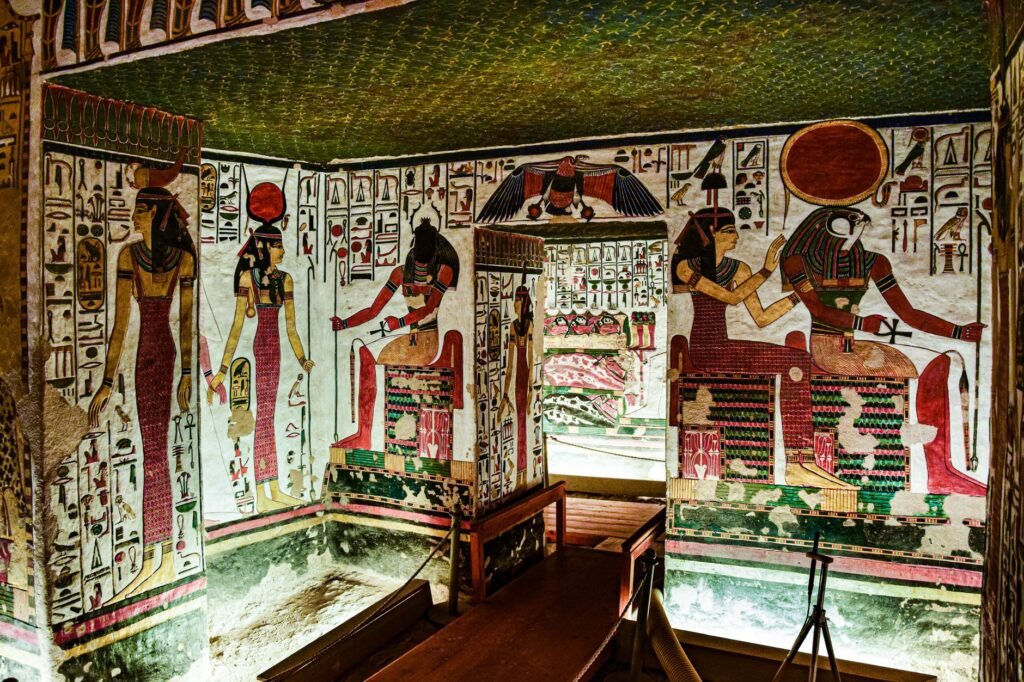
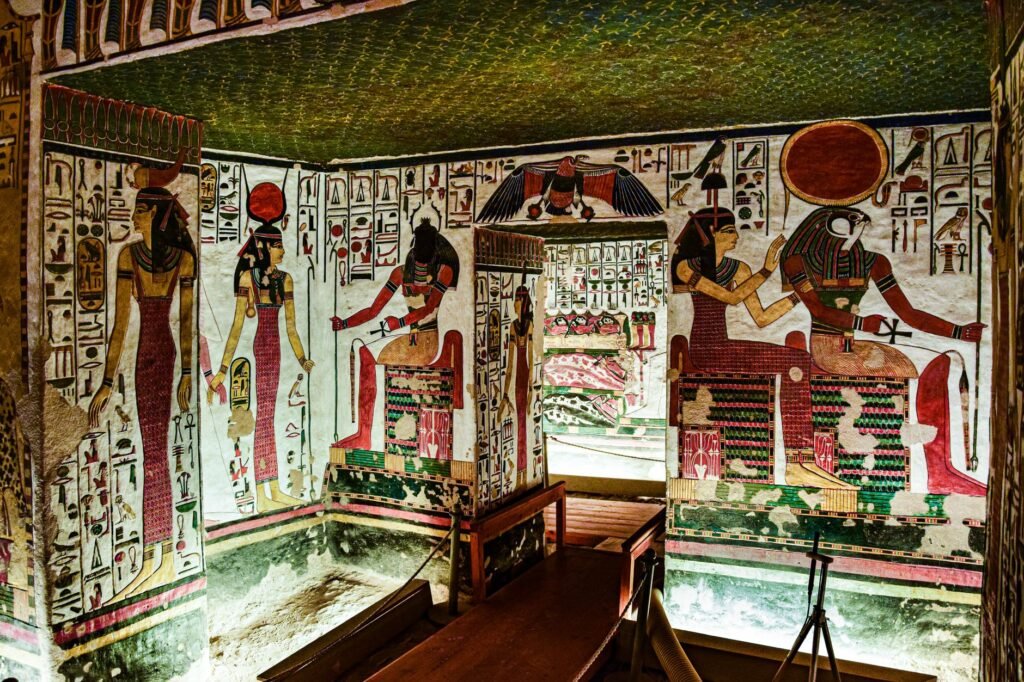
The Djed pillar is one of the most recognisable symbols in ancient Egyptian religion and art. It appears frequently in temples, tombs, amulets, and ritual scenes, where it was associated with stability, endurance, and renewal. In Egyptian mythology, the Djed was especially connected with the god Osiris, the ruler of the afterlife and a major figure in the cycle of death and rebirth.
Unlike many Egyptian deities, the Djed pillar is not a god or goddess in the usual sense. It is a sacred emblem whose meaning developed over centuries and was interpreted in both practical and cosmic terms. Because it appears in funerary contexts, royal rituals, and protective amulets, the Djed became an important sign of divine order and the hope of life after death.
Origin and Meaning
The word djed is usually understood to mean “stability”, “endurance”, or “permanence” in ancient Egyptian. This meaning is central to the symbol’s religious role. The sign itself is written as a hieroglyph and later became an emblem in art and ritual.
The exact origin of the Djed pillar is not certain. Scholars have proposed several explanations:
- It may originally have represented a stylised tree trunk, grain bundle, or sacred column.
- It may have evolved from a fetish or cult object used in pre-dynastic or early dynastic religious practice.
- It may also have been a symbol that acquired meaning through later theological interpretation, especially in connection with Osiris.
Ancient Egyptians themselves did not leave a single definitive explanation. As a result, modern scholarship treats the Djed as a symbol whose form and meaning likely developed over time.
The Name and Its Significance
The term djed appears in ancient Egyptian texts both as a noun and as a concept of firmness. This linguistic connection helped the symbol become a visual expression of lasting order. In religious contexts, “to make stable” was not merely a physical idea; it was also linked to cosmic balance, kingship, and the preservation of life.
Historical Context
The Djed pillar belongs to the broad world of ancient Egyptian religious symbolism, which developed over thousands of years. Its importance is especially visible from the Old Kingdom onward, though it remained significant throughout later periods, including the Ptolemaic and Roman eras in Egypt.
Egyptian religion placed great emphasis on:
- the maintenance of order against chaos,
- the continuity of kingship,
- the afterlife as a transformed but structured existence,
- and the ritual renewal of divine and royal power.
The Djed fit all of these concerns. It was a sign of endurance in a civilization that valued continuity across generations and across the boundary between life and death.
Connection with Osiris
The Djed became strongly associated with Osiris, one of the most important gods in Egyptian religion. Osiris was linked to the underworld, fertility, resurrection, and the legitimate succession of kings. Because Osiris was understood as one who died and was restored, the Djed naturally came to symbolize his lasting power.
In funerary thought, the Djed could therefore stand for:
- the resurrection of Osiris,
- the rebirth of the deceased,
- and the stability of the cosmic and royal order.
Main Characteristics
The Djed pillar is usually shown as a vertical column with a broad base and several horizontal bands or crossbars near the top. It is instantly recognizable in Egyptian art, though its exact proportions can vary.
Visual Features
| Feature | Description | Common Meaning |
|---|---|---|
| Vertical shaft | Central upright form | Stability, support |
| Horizontal bars | Usually four stacked bands near the top | Strata of endurance or structural reinforcement |
| Broad base | Anchoring element | Groundedness, permanence |
| White coloration in ritual art | Often depicted in a light tone | Purity, sacred order |
The symbol may be shown alone, on amulets, or in association with other signs, such as the ankh and the was sceptre. In these combinations, the Djed often contributes the meaning of stability to a larger theological message.
Ritual Feature: “Raising the Djed”
One of the most important visual and ceremonial ideas associated with the Djed was the act of raising it upright. This ritualised gesture symbolised the restoration of order and, in Osirian contexts, the reawakening of the god after death. It also became a royal ceremony associated with renewal and legitimacy.
Family and Genealogy
Because the Djed pillar is a symbol rather than a deity, it does not have a family tree in the way that gods do. However, it does have strong mythological relationships with divine figures, especially within the Osirian cycle.
Associated Divine Relationships
- Osiris: The closest and most important association. The Djed is often interpreted as the backbone or enduring body of Osiris, though this is a symbolic interpretation rather than a literal ancient anatomical claim.
- Isis: In myths of Osiris, Isis helps restore or revive Osiris, and the Djed participates symbolically in that restoration.
- Horus: As the son and heir of Osiris, Horus represents the continuation of legitimate kingship, a concept closely related to the stability signified by the Djed.
- Nephthys: In funerary tradition, she also appears within the Osirian sphere of mourning and protection.
Important Caution
It is worth noting that ancient Egyptian theology was not fixed in a single canonical form. Different temples and periods could emphasize different meanings for the same symbol. The Djed was therefore not “related” to gods in a biological sense, but rather through ritual and mythic association.
Symbols
The Djed pillar itself is a symbol, but it appears alongside other sacred signs that reinforce its meaning.
Related Symbols
- Ankh: Symbol of life.
- Was sceptre: Symbol of power and dominion.
- Tyet knot: Often associated with Isis and protection.
- Ba-bird: Linked to the soul and spiritual mobility.
- Coffin and mummy imagery: Relevant in funerary settings.
Symbolic Meanings
The Djed could represent:
- stability
- endurance
- strength
- restoration
- resurrection
- continuity
- cosmic order
In some interpretations, the Djed also functioned as a visual equivalent of the “backbone” of a god or of the world itself, although such anatomical readings should be treated as symbolic rather than literal.
Sacred Animals
The Djed pillar is not primarily associated with a single sacred animal in the way that some gods are. However, it appears in mythological settings where animals are significant symbols.
Animals in the Osirian Sphere
- Bull: Often linked with fertility, power, and royal force.
- Crocodile: In broader Egyptian religion, associated with danger and divine power, though not specifically with the Djed.
- Falcon: Associated with Horus and kingship.
- Dove or bird forms: Not central to the Djed, but common in funerary and divine symbolism.
Symbolic Note
If animal associations are mentioned in relation to the Djed, they usually come indirectly through Osiris, Horus, or broader funerary beliefs rather than through the pillar itself.
Sacred Plants
There is no single universally accepted sacred plant uniquely tied to the Djed pillar. However, some plant imagery is relevant to its symbolic world.
Possible Plant Connections
- Tree imagery: Because the Djed may have originated as a stylised trunk or post, some scholars have linked it to arboreal forms.
- Grain and fertility imagery: Since Osiris was connected with vegetation, agriculture, and cyclical renewal, the Djed could participate in these symbolic associations.
- Papyrus and lotus: These are important Egyptian sacred plants more broadly, though they are not exclusive to the Djed.
Why Plants Matter
Egyptian religion often linked divine stability with the cycles of nature, especially vegetation that dies and returns. The Djed’s symbolism of permanence within change fits well with these agricultural and seasonal themes.
Sacred Places
The Djed pillar was not confined to one sanctuary, but it was especially important in places connected with Osiris worship and funerary ritual.
Key Cultic and Mythic Centers
- Abydos: One of the most important cult centres of Osiris. It became a major place for Osirian pilgrimage and funerary devotion.
- Busiris: Associated in some traditions with Osiris.
- Heliopolis: A major theological centre in which cosmic and royal symbolism was developed.
- Temples throughout Egypt: The Djed appears in temple decoration and ritual scenes across the country.
- Tombs and burial chambers: It was common in funerary iconography and as an amulet for protection.
Spatial Meaning
The presence of the Djed in tombs and temples reflects its role as a bridge between:
- heaven and earth,
- the living and the dead,
- kingship and divine order,
- destruction and renewal.
Powers and Attributes
The Djed pillar was believed to embody a range of religious and symbolic powers.
Core Attributes
- Stability: Its most direct meaning.
- Endurance: The ability to last through destruction or time.
- Regeneration: Especially in funerary and Osirian contexts.
- Protection: Particularly in amuletic use.
- Legitimacy: Connected to rightful rule and divine kingship.
Functional Roles
The Djed was thought to help secure:
- the survival of the dead,
- the restoration of divine life,
- the continuity of the state,
- and the preservation of cosmic balance.
In this sense, it was not just decorative. It carried a theological message about the universe remaining ordered despite death, chaos, and change.
Main Myths
The Djed pillar appears most clearly in the myths surrounding Osiris. These myths survive in different forms across Egyptian sources, and some details vary.
Osiris, Death, and Restoration
A major mythic cycle tells of Osiris being killed, dismembered, and later restored through the efforts of Isis and other divine figures. The Djed became associated with the final restoration of Osiris’s stability. In later interpretation, it could be seen as the sign of his enduring presence after defeat.
The Raising of the Djed
The ritual of raising the Djed is often connected to the myth of Osiris’s resurrection or symbolic reconstitution. While the exact ancient meaning of the ceremony is debated, it clearly represented renewal and the restoration of order.
Mythic Interpretations
Different scholarly interpretations have proposed that the Djed might represent:
- the spine of Osiris,
- the tree trunk or world pillar,
- a cultic object used in ancient rites,
- or a symbol of fertility and regenerative power.
Because the surviving evidence is limited, it is best to treat these as interpretations, not universally proven facts.
Relationship with Other Mythological Figures
The Djed pillar is deeply embedded in the web of Egyptian divine relationships.
Osiris
The most important connection. The Djed is a major emblem of Osiris’s return to stability and of his continued rule in the afterlife.
Isis
Isis’s magical and restorative powers complement the Djed’s meaning. Her role in preserving and reassembling Osiris makes her central to the symbol’s mythic context.
Horus
Horus represents dynastic continuity and rightful succession. Since the Djed implies stability, it also supports the ideological message that Horus restores and protects order.
Ra
The solar god Ra belongs to a broader theological landscape where renewal, cosmic order, and cyclical rebirth are fundamental themes. The Djed is not primarily a solar symbol, but it can appear within the larger framework of divine regeneration.
Pharaohs
The Egyptian king was expected to maintain ma’at, the principle of cosmic order. The Djed therefore had strong ideological importance in royal ritual and state religion.
Worship and Cult
The Djed pillar was honoured through ritual, amuletic use, and temple ceremony rather than by worship as a deity in its own right.
Ritual Uses
- Tomb decoration: To protect the deceased and ensure rebirth.
- Amulets: Worn for protection and stability.
- Temple ceremony: Especially in rituals associated with Osiris and royal renewal.
- Royal ideology: Used to affirm the king’s role in maintaining order.
The Raising of the Djed Festival
One of the best-known rituals connected with the Djed was a ceremonial raising of the pillar. This action symbolised the return of stability after disorder or death.
Different texts and images suggest that this event could be linked to:
- Osirian resurrection,
- temple renewal,
- and royal legitimacy.
The precise ceremonial details are not completely clear, and they may have varied by place and time.
Offerings and Devotion
Typical offerings in Osirian worship included food, drink, incense, and ritual recitations. The Djed was not itself the recipient of offerings as a god would be, but it formed part of the sacred language of these rites.
Ancient Sources
Ancient Egyptian sources for the Djed include inscriptions, temple reliefs, funerary texts, and ritual scenes. Because Egyptian religion was transmitted over many centuries, the evidence comes from many different periods.
Egyptian Primary Sources
- Pyramid Texts: Early funerary inscriptions that reflect royal afterlife beliefs.
- Coffin Texts: Middle Kingdom funerary spells expanding access to afterlife theology.
- Book of the Dead: A later funerary corpus containing spells and images related to protection and rebirth.
- Temple inscriptions: Especially those connected with Osirian ritual.
- Amulets and artifacts: Material evidence of popular and elite devotion.
Classical Authors
Classical Greek and Roman writers discussed Egyptian religion in general, though they do not always describe the Djed in detail.
- Herodotus: Offers broad observations about Egyptian customs.
- Plutarch: In On Isis and Osiris, gives an influential account of Osirian myth, though it reflects Greek interpretation rather than Egyptian theology.
- Other classical writers mention Egyptian religion more generally, but the Djed is chiefly known through Egyptian sources themselves.
Caution on Classical Evidence
Greek and Roman authors often interpreted Egyptian symbols through their own cultural frameworks. Their testimony is useful, but it should be read alongside indigenous Egyptian evidence.
Roman Equivalent
There is no exact Roman equivalent to the Djed pillar. Roman religion did not have a direct counterpart with the same symbolism and theological role.
However, in the Roman period, especially in Egypt and in Greco-Roman religious syncretism, the Djed could be understood through broader ideas of:
- stability,
- sacred support,
- and resurrection-like renewal.
In artistic and religious terms, the closest Roman analogues would be symbols of support or permanence, but these are only approximate comparisons. The Djed remained distinctly Egyptian in meaning.
Influence on Modern Culture
The Djed pillar continues to appear in modern representations of ancient Egypt, often as a shorthand for Egyptian spirituality, mystery, and ancient wisdom.
In Modern Culture
- Museums display Djed amulets and temple reliefs as major examples of Egyptian symbolism.
- Books and documentaries on Egypt frequently use the Djed to explain Osirian religion.
- Art and design sometimes borrow the Djed’s shape for decorative or symbolic purposes.
- Popular culture, including films, novels, and games set in ancient Egypt, may include the sign as an emblem of hidden knowledge or magical power.
Common Modern Misunderstandings
Modern depictions sometimes overstate the Djed as if it were a single “magic object” with one fixed meaning. In reality, it was a flexible symbol whose significance changed with context.
Curiosities
- The Djed is one of the most enduring symbols in Egyptian iconography because it was used for religious, funerary, and political purposes.
- Its form is simple, but its meanings are layered and often complementary rather than contradictory.
- Some scholars have compared it to a spinal column, though this remains an interpretive theory rather than a confirmed ancient explanation.
- The Djed was often used as an amulet, showing that it had value not only in temples but also in personal devotion.
- The ritual “raising of the Djed” is among the most famous Egyptian ceremonial acts, even though its full historical details are still debated.
- The symbol’s association with Osiris made it especially important in beliefs about life after death.
- The Djed appears across a long span of Egyptian history, showing remarkable continuity in symbolic language.
Frequently Asked Questions
What is the Djed pillar in Egyptian mythology?
The Djed pillar is an ancient Egyptian symbol of stability, endurance, and renewal, strongly associated with the god Osiris and with resurrection and order.
Was the Djed pillar a god?
No. The Djed is a symbol or sacred emblem, not a deity. It was connected to gods, especially Osiris, but it was not worshipped as a god in itself.
What does the Djed pillar look like?
It is usually shown as a vertical column with a broad base and several horizontal bars near the top.
Why is the Djed linked to Osiris?
Because Osiris was the god of death, rebirth, and the afterlife, the Djed came to symbolize his enduring presence and the restoration of stability after death.
What did the raising of the Djed mean?
It was a ritual act symbolising renewal, resurrection, and the restoration of order. It was especially connected with Osirian and royal ceremonies.
Was the Djed used as an amulet?
Yes. The Djed was used as a protective amulet, particularly in funerary contexts, to support stability and rebirth.
Did ancient Egyptians explain exactly what the Djed represented?
Not in a single fixed way. Ancient sources and later interpretations vary, and scholars continue to debate its earliest original meaning.
Conclusion
The Djed pillar in Egyptian mythology is a powerful symbol of stability, continuity, and rebirth. Closely associated with Osiris, it played an important role in funerary religion, temple ritual, and royal ideology. Its precise origin remains uncertain, but its meaning became deeply embedded in Egyptian culture over millennia.
As both an artistic motif and a theological sign, the Djed expresses one of the central ideas of ancient Egyptian religion: that order can be restored, life can renew itself, and permanence can emerge even in the face of death. This enduring symbolism explains why the Djed remains one of the most studied and recognisable emblems of ancient Egypt today.

Orin Vale has spent the better part of two decades tracing the threads that connect the world’s oldest stories — from the halls of Asgard to the banks of the Nile, from Olympus to the jungles of the Maya. What began as a childhood fascination with flood myths and trickster gods grew into years of independent study across comparative mythology and ancient religion, always chasing the same question: what did these stories mean to the people who first told them? Orin writes for readers who want more than trivia — the ones looking for the beliefs, fears, and truths that myths were built to carry.