What Is the Ka in Egyptian Mythology?
Introduction
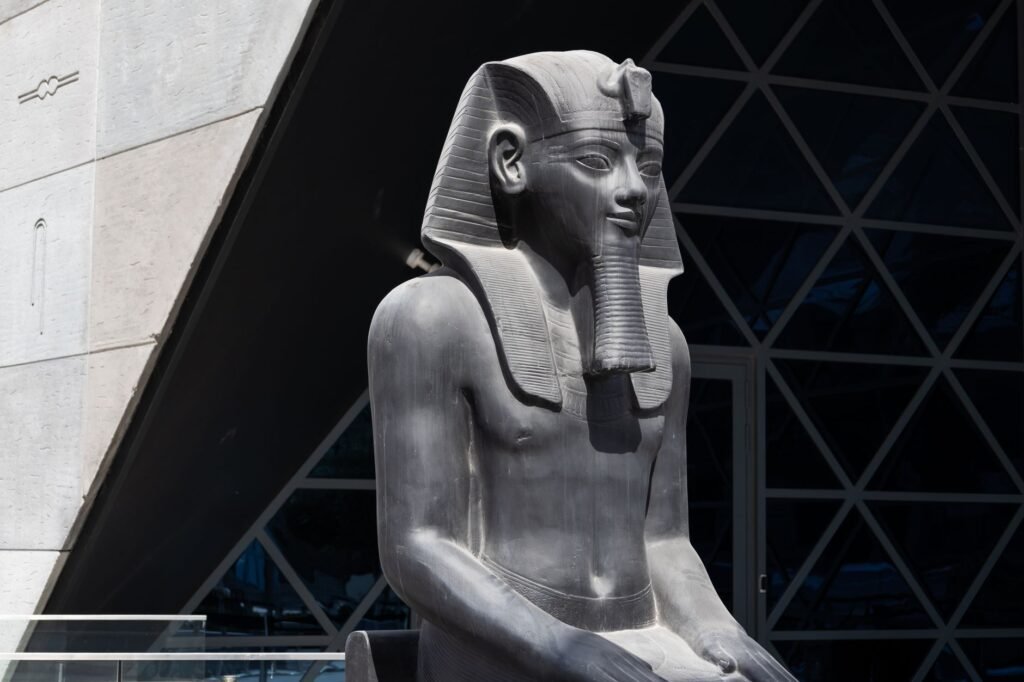
In ancient Egyptian religion, the ka was one of the most important concepts used to explain what makes a person alive, complete, and spiritually enduring. It is often translated as “life force,” “double,” or “vital essence,” but none of these English words fully captures its meaning. The ka was not simply a soul in the modern sense. It was a fundamental part of a person’s being that continued after death and required offerings, care, and proper ritual support.
Understanding the ka is essential for interpreting Egyptian ideas about the human person, the afterlife, kingship, and temple worship. It also helps explain why food offerings, tomb decoration, and funerary rituals were so central in ancient Egypt. The concept appears throughout pharaonic history, though its meaning could vary somewhat by period and context.
Origin and Meaning
The Egyptian word kꜣ is usually transliterated as ka. Its precise etymology is debated, and ancient Egyptian itself did not provide a simple direct equivalent to modern “soul.” In academic Egyptology, ka is treated as a technical religious term rather than a concept with a single perfect translation.
In general, the ka refers to:
- the vital force that animates a person or being
- the spiritual “double” or counterpart of an individual
- the aspect of a person that survives death and receives offerings
The ka appears very early in Egyptian texts, including funerary inscriptions from the Old Kingdom. It became one of the most enduring categories in Egyptian religious thought. Unlike later philosophical systems that sharply separate body and soul, Egyptian religion often described the person as a combination of several interrelated elements, including the ka, ba, and akh.
Historical Context
The idea of the ka developed within the broader framework of ancient Egyptian beliefs about life, death, and divine order. Egyptian religion was deeply concerned with continuity: the continuation of life, the stability of the cosmos, the repetition of cycles, and the preservation of identity after death.
The ka was closely tied to this concern for continuity. It helped explain why a dead person could still exist and why tombs needed regular offerings. Egyptian funerary culture was not simply about memorializing the dead. It was about sustaining a real spiritual presence.
The ka in royal ideology
The ka was especially important in the ideology of kingship. The king was often seen as the embodiment of divine authority, and royal inscriptions sometimes speak of the king’s ka in ways that emphasize legitimacy, vitality, and divine power. In some contexts, the ka of the king could be treated almost as an extension of kingship itself.
The ka in everyday religion
Although the ka is often discussed in relation to funerary religion, it also had relevance in daily life. Egyptians could understand a person’s prosperity, health, and vitality as dependent on the condition of their ka. Names of individuals and even institutions sometimes included the element ka, reflecting its cultural importance.
Main Characteristics
The ka is one of the most distinctive aspects of Egyptian religious anthropology. It was not a separate ghost in the modern popular sense, nor was it exactly a “soul” in the Christian or philosophical sense. It was a vital and personal force that remained linked to an individual.
Core features of the ka
| Feature | Description |
|---|---|
| Vital essence | The force that makes life possible |
| Spiritual double | A counterpart or duplicate of the person |
| Survives death | Continues after the body dies |
| Needs nourishment | Receives food, drink, and offerings |
| Individual and personal | Belongs to a specific person or deity |
| Linked to identity | Preserves continuity of self |
Distinguishing the ka from other elements
Egyptian texts often refer to several components of the person:
- body: the physical remains
- ka: vital essence or spiritual double
- ba: mobile personality or manifestation
- akh: transfigured or effective spirit in the afterlife
These concepts overlap in modern interpretation, and ancient sources do not always define them consistently. Nevertheless, the ka is usually associated with life force, nourishment, and continuity.
Human and divine ka
A key feature of Egyptian belief is that gods also had ka. The divine ka could represent power, identity, or manifested presence. This shows that the concept was not limited to humans. It was part of a broader sacred vocabulary for explaining how beings exist and act in the world.
Family and Genealogy
The ka is not a mythological figure with a family tree in the usual sense. It is a metaphysical or religious concept rather than a deity with parents, spouses, or children.
However, in Egyptian religion, the ka could be associated with:
- a specific individual, such as a king or noble
- the ka of a deity
- the continuing line of generations, especially through name, tomb, and offerings
Royal and ancestral continuity
Because the ka represented continuity of life and identity, it played a role in ideas of ancestry. A dead person’s ka could be maintained by descendants through offerings and remembrance. This created a link between family duty and the afterlife.
The royal ka
In some royal contexts, the ka seems almost dynastic. A king could be described as inheriting or embodying the ka of earlier rulers, reinforcing the legitimacy of the monarchy and its sacred continuity.
Symbols
The ka itself is represented in Egyptian art by a distinctive hieroglyphic sign: two raised arms. This sign is one of the most recognizable symbols in Egyptological study.
Main symbols associated with the ka
| Symbol | Meaning |
|---|---|
| Raised arms sign | The hieroglyph for ka, often interpreted as embracing or receiving |
| Food offerings | Nourishment of the ka after death |
| Offering tables | Ritual support for the dead |
| Tomb chapels | Spaces where the ka received cult |
| Statues and images | Possible dwelling points or ritual supports for the ka |
Meaning of the raised arms sign
The two raised arms sign is generally understood as expressing welcome, protection, or embrace. In funerary and religious contexts, it may suggest receiving offerings or sustaining life. As with many Egyptian symbols, its meaning is layered rather than fixed.
Offerings as symbolic nourishment
Because the ka required sustenance, bread, beer, cattle, fowl, and other offerings became central to its ritual symbolism. The offering table was not merely decorative; it was part of the religious mechanism by which the ka was maintained.
Sacred Animals
The ka is not primarily associated with a single sacred animal in the way that some Egyptian deities were linked to bulls, cats, falcons, or crocodiles. Still, certain animals appear in funerary and cultic contexts connected to the ka.
Possible animal associations
- bulls and cattle: important as sources of offerings, especially meat and dairy products
- birds: sometimes relevant in broader funerary symbolism, though more directly tied to the ba
- jackals: associated with funerary protection, especially through Anubis, and indirectly relevant to the maintenance of the deceased
It is important not to overstate animal symbolism here. The ka was not itself an animal deity. Any associations are indirect and context-dependent.
Sacred Plants
No single plant is universally and specifically dedicated to the ka. However, Egyptian funerary religion often used plant symbolism connected to regeneration, nourishment, and eternal life.
Plants that may appear in related contexts
- grain: a fundamental symbol of food, renewal, and survival
- lotus: associated with rebirth and emergence
- papyrus: often linked to vitality, growth, and divine landscape
- sycamore fig: sometimes connected with nourishment and protection in funerary belief
These plants are relevant because the ka depended on nourishment and continuity. In that sense, agricultural abundance itself was symbolically tied to the well-being of the dead.
Sacred Places
The ka is associated less with one geographic location than with the sacred spaces where offerings and funerary rites took place.
Key places connected with the ka
- tombs: the primary location where the ka received offerings
- offering chapels: ritual spaces attached to tombs
- temple precincts: especially where royal cult and funerary cult intersected
- memorial temples: used for royal afterlife cults
- mortuary complexes: monumental centers for sustaining royal identity after death
The tomb as the house of the ka
Egyptian tombs were often designed not merely as burial places but as eternal homes for the deceased’s spiritual presence. The offering chapel, false door, and decorated walls helped create a setting in which the ka could receive sustenance and remain active.
Heliopolis and broader theological context
While the ka was not tied exclusively to one city, theological traditions from major cult centers such as Heliopolis influenced Egyptian religious language. Concepts of creation, divine kingship, and cosmic order helped shape how the ka was understood.
Powers and Attributes
The ka had no “powers” in the superhero sense, but it did have essential religious functions.
Main functions of the ka
- vitality: the source of life and animating force
- continuity: the aspect that persisted after death
- receptivity to offerings: the being that could be nourished by ritual food and drink
- identity preservation: the element that helped maintain individual existence
- divine or royal presence: in gods and kings, the ka could signify sacred potency
Relationship to nourishment
One of the most distinctive features of the ka is its dependence on offerings. Egyptian tomb scenes frequently show food, drink, and ritual service because the dead were imagined as needing real support. The offerings were often symbolically transformed to sustain the ka.
The ka and memory
The ka also depended on remembrance. A named and ritually sustained dead person could continue to exist effectively. This is why names, images, and offering formulas were so important.
Main Myths
The ka is not the central character in a famous mythological cycle like Osiris, Isis, or Horus. Instead, it operates as a core religious concept woven into many myths and ritual texts.
The ka in creation and kingship
Some creation traditions emphasize that the gods brought beings into existence through speech, thought, or ordering acts. The ka belongs to this broader world of generated life and sustained being. In royal ideology, the king’s ka could legitimize his role as a divine ruler.
The ka in funerary texts
In funerary literature, the ka is often implied in the deceased’s need for offerings, identity, and survival. Pyramid Texts, Coffin Texts, and the Book of the Dead do not present a single “myth of the ka,” but they repeatedly assume that the dead require spiritual maintenance.
Common interpretive themes
- the dead continue to exist if properly supplied
- ritual preserves the dead person’s identity
- divine and royal vitality are sustained through sacred order
- the person is made whole through multiple spiritual components
Relationship with Other Mythological Figures
The ka is best understood in relation to gods, kings, and other aspects of the soul.
The ba
The ba is often the closest counterpart to the ka. While the ba is frequently described as the mobile, expressive, or individualized manifestation of the person, the ka is more tied to vitality and sustenance. Together, they contributed to the deceased’s continued existence.
The akh
The akh refers to the transfigured spirit or effective blessed dead. In many interpretations, the ka is part of the process by which a person becomes an akh through proper rites and divine favor.
Gods and kings
Gods and kings could have ka as well. This reinforces the idea that the ka was not a ghostly remnant alone, but a universal principle of sacred vitality.
Anubis, Osiris, and funerary gods
The ka is not one of these gods, but it belongs to the same funerary environment. Anubis oversees embalming and burial, Osiris embodies resurrection and the dead king, and the ka is the vital element that needs preservation within that funerary framework.
Worship and Cult
The ka was not worshipped as an independent deity in the usual sense, but it was central to funerary cult and royal ritual.
Ritual care for the ka
The most important forms of cult connected to the ka included:
- food and drink offerings
- recitation of offering formulas
- tomb rites performed by priests or descendants
- maintenance of statues and cult images
- preservation of the deceased’s name and memorial presence
Funerary offerings
Offerings were essential because the dead person’s ka was believed to need nourishment. In tomb scenes, food and drink are placed before the deceased or their symbolic representation. The ritual purpose was to make these goods available in the next world.
Priesthood and family responsibility
In many periods, priests performed regular funerary rites for the dead, especially for elites and kings. Families also had an obligation to honor ancestors and maintain tomb cults where possible.
Royal cult
The king’s ka had a special role in state religion. Royal funerary temples and memorial cults were designed to sustain the king’s continued existence and divine status.
Ancient Sources
The ka is known primarily from Egyptian primary sources rather than from Greek or Roman authors. Ancient Egyptian texts provide the best evidence.
Major Egyptian sources
- Pyramid Texts: among the earliest major references to the ka
- Coffin Texts: expand funerary beliefs and personal afterlife theology
- Book of the Dead: includes spells and formulas relevant to survival after death
- Temple inscriptions: sometimes refer to divine or royal ka
- Tomb reliefs and offering formulas: show the practical role of the ka in funerary cult
Greek and Roman writers
Classical authors such as Herodotus, Diodorus Siculus, and Plutarch wrote about Egypt, but they did not preserve the native theological meaning of ka with precision. Their accounts can be useful as comparative evidence, but they should be used carefully. Egyptian religious ideas were often misunderstood or simplified by outsiders.
Scholarly caution
Modern interpretations of the ka come from philological study, archaeology, and textual analysis. Because Egyptian religious language is complex, some details remain debated among scholars.
Roman Equivalent
There is no exact Roman equivalent to the ka. Roman religion did have concepts that may seem somewhat comparable, such as the genius in relation to a person’s protective or life-bearing spirit, but this is only a loose analogy.
Important distinction
The Roman genius was not identical to the Egyptian ka. The two belong to different religious systems and should not be conflated. At best, the genius offers a partial comparison for understanding how ancient cultures imagined a person’s vital or protective essence.
Influence on Modern Culture
The ka has had lasting influence, especially in popular treatments of ancient Egypt, spirituality, and the afterlife. However, it is often simplified in modern fiction.
In scholarship and education
The ka is a standard topic in Egyptology and appears in:
- museum displays
- university courses on ancient religion
- books on Egyptian funerary beliefs
- documentaries on mummification and the afterlife
In fiction and media
Modern novels, films, games, and television sometimes use the ka as a mystical term for soul-energy or spiritual power. These portrayals may be evocative, but they often compress or alter the original Egyptian meaning.
In popular spiritual discourse
The word sometimes appears in New Age or symbolic discussions of “energy” or “life force.” Such uses are modern reinterpretations and should not be confused with historical ancient Egyptian religion.
Curiosities
- The ka is one of the few ancient Egyptian religious terms that has become familiar even outside specialist study.
- Egyptian tombs often included offering formulas specifically designed to sustain the ka of the deceased.
- The ka could belong to gods, kings, and ordinary people alike.
- Some Egyptologists describe the ka as a “double,” but this is only an approximation.
- The famous hieroglyph for ka consists of two raised arms.
- The concept of the ka helps explain why Egyptian funerary art is so focused on food, ritual, and ongoing care.
- Modern translations of Egyptian texts often leave ka untranslated because no single English word fully captures it.
Frequently Asked Questions
1. What is the ka in Egyptian mythology?
The ka is the vital spiritual essence or life force of a person or deity. It survives death and needs offerings to remain sustained.
2. Is the ka the same as the soul?
Not exactly. “Soul” is only a rough translation. The ka is better understood as a person’s life force, double, or sustaining essence.
3. What is the difference between ka and ba?
The ka is usually linked to vitality and nourishment, while the ba is more associated with individuality, mobility, and expression. Ancient sources do not always separate them neatly.
4. Did the ka belong only to humans?
No. Gods and kings also had ka. In those cases, it could refer to divine power, presence, or sacred vitality.
5. How was the ka fed?
Through offerings of food and drink placed in tombs or presented in ritual contexts. Egyptians believed these offerings sustained the ka after death.
6. Is there a symbol for the ka?
Yes. The ka is represented by a hieroglyph of two raised arms.
7. Why was the ka important in Egyptian burial practices?
Because the dead person’s continued existence depended on it. Tombs, offerings, and funerary rites were intended to support the ka.
8. Do scholars agree on exactly what the ka meant?
Not completely. The general meaning is well established, but its precise nuances vary by text, period, and context.
Conclusion
The ka is a foundational concept in ancient Egyptian mythology and religion. It expresses the Egyptian understanding that life does not end simply with bodily death, but continues through a maintained and ritually supported spiritual presence. As a vital essence, double, and recipient of offerings, the ka helps explain tomb practice, ancestor veneration, royal ideology, and the broader Egyptian concern with continuity.
Although the term is often translated loosely as “soul,” it is more accurate to see the ka as a uniquely Egyptian idea with no perfect modern equivalent. Its enduring importance lies in the way it reveals how ancient Egyptians understood personhood, divinity, and the hope of lasting existence beyond death.

Orin Vale has spent the better part of two decades tracing the threads that connect the world’s oldest stories — from the halls of Asgard to the banks of the Nile, from Olympus to the jungles of the Maya. What began as a childhood fascination with flood myths and trickster gods grew into years of independent study across comparative mythology and ancient religion, always chasing the same question: what did these stories mean to the people who first told them? Orin writes for readers who want more than trivia — the ones looking for the beliefs, fears, and truths that myths were built to carry.