What Is the Sistrum in Egyptian Mythology?
Introduction
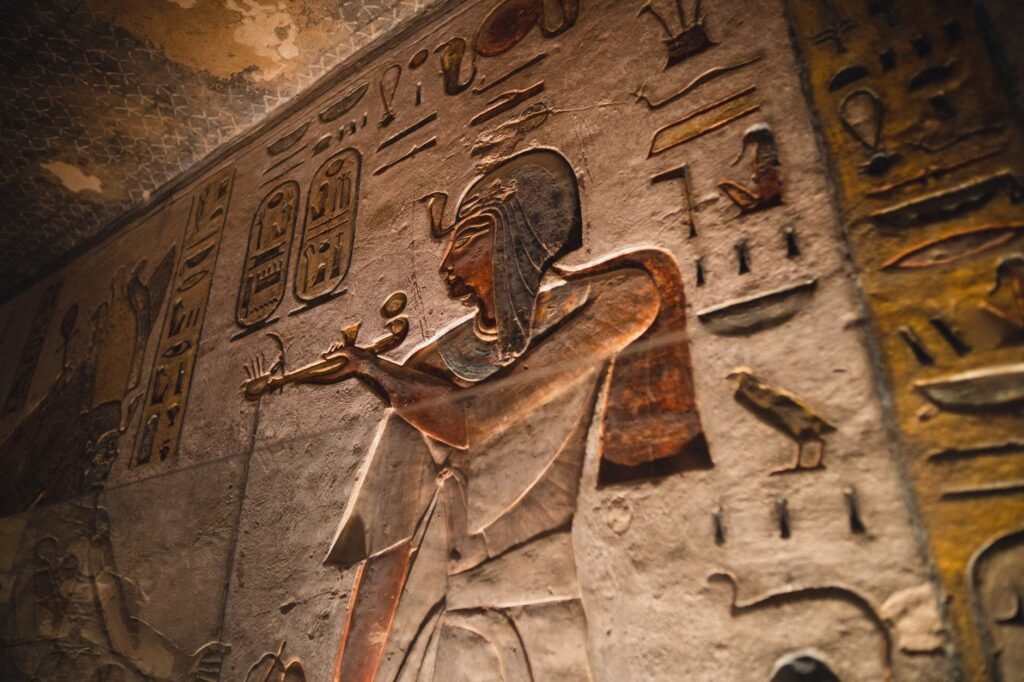
The sistrum is one of the most recognizable ritual instruments of ancient Egypt. In Egyptian mythology and religion, it was a sacred rattle used in temple worship, processions, and rites connected especially with the goddess Hathor and, in later traditions, Isis. Its sound was believed to please deities, repel harmful forces, and help create a sacred atmosphere during ceremonies.
Unlike many mythological objects, the sistrum was both a practical instrument and a religious symbol. It appears frequently in temple reliefs, tomb scenes, and ancient art, making it an important source for understanding Egyptian ritual life. Today, when people ask “what is the sistrum in Egyptian mythology,” they are usually referring to this sacred musical instrument and its religious significance rather than to a divine personage.
Origin and Meaning
The English word sistrum comes from Greek seistron (σεῖστρον), derived from a verb meaning “to shake.” This name reflects the instrument’s basic action: it produces sound when shaken.
The object itself is Egyptian in origin, and it was known in ancient Egypt long before Greek writers described it. Egyptian texts and images show several forms of the instrument over time. The exact earliest origin is difficult to establish with certainty, but it was already firmly established in religious life by the New Kingdom and likely earlier.
The sistrum’s name and use are significant because they point to a key idea in Egyptian ritual: sound as sacred power. In temple practice, music was not merely decorative. It could awaken deities, honor divine presence, and help maintain cosmic order.
Historical Context
The sistrum belonged to the wider world of ancient Egyptian temple ritual, where music, chanting, incense, and offerings all played a role. It was especially associated with goddesses who embodied joy, fertility, protection, and maternal power.
Two major forms of the instrument are generally recognized:
- The sesheshet: a more elaborate, arched type commonly associated with Hathor
- The naos-shaped sistrum: a later type with a rectangular frame, often linked to Isis and temple ritual in later periods
The instrument was not limited to one era. It remained important across centuries of Egyptian history and continued into the Greco-Roman period, when Egyptian cults spread beyond the Nile Valley.
Its cultural role can be summarized as follows:
| Context | Function of the Sistrum |
|---|---|
| Temple ritual | Honored deities and marked sacred actions |
| Processions | Added rhythmic sound and visual symbolism |
| Protective rites | Helped drive away disorder and hostile forces |
| Devotional practice | Expressed joy, reverence, and divine presence |
| Funerary imagery | Linked to rebirth, protection, and afterlife symbolism |
Because of this broad use, the sistrum became one of the most enduring emblems of Egyptian sacred music.
Main Characteristics
The sistrum was usually made of metal, wood, or bronze, though materials varied according to period and status. It typically consisted of a handle and a frame, with movable metal rods or bars that rattled when shaken.
Common Features
- A handle for holding the instrument
- A frame shaped either like an arch or a shrine-like rectangle
- Crossbars or rods that created a jingling sound
- Often decorative elements, including divine imagery
Some sistra were richly ornamented and may have been valuable temple objects rather than simple musical tools. Their appearance could reinforce their sacred identity.
Two Principal Forms
| Type | Description | Common Association |
|---|---|---|
| Arched sistrum | Hoop-like or U-shaped frame with rattling bars | Hathor |
| Naos-shaped sistrum | Rectangular frame resembling a shrine | Isis and later temple use |
The sound of the sistrum was distinctive: bright, rattling, and percussive. In ritual contexts, that sound mattered as much as the object’s appearance.
Family and Genealogy
Strictly speaking, the sistrum is not a deity, so it does not have family relationships in the mythological sense. However, because it is closely tied to divine cults, it can be discussed in relation to the goddesses with whom it is most strongly associated.
Principal Divine Associations
- Hathor: the goddess most famously linked with the sistrum
- Isis: strongly associated with the instrument, especially in later periods
- Bastet: sometimes connected through broader musical and festive cultic traditions
- Sekhmet: in some ritual and symbolic contexts involving powerful divine femininity and protection
The instrument’s “genealogy,” so to speak, belongs to the ritual world of these goddesses rather than to mythic parentage.
Symbols
The sistrum itself is symbolic. It is not only a musical instrument but also a visual sign of divine presence.
Symbolic Meanings
- Joy and celebration
- Feminine divine power
- Protection against chaos
- Fertility and renewal
- Temple purity and sacred sound
- Contact between humans and gods
The shape of some sistra may also have carried symbolic meaning. The shrine-like naos-shaped sistrum could suggest the divine dwelling place, while the arched form may have evoked movement, openness, and ritual energy.
Related Iconography
The sistrum often appears alongside:
- Menat necklace: another Hathoric ritual object
- Incense burners
- Lotus flowers
- Tambourines and other musical instruments
- Images of Hathor or Isis
These associations strengthened its role as a marker of ritual music and sacred femininity.
Sacred Animals
The sistrum is not directly connected to a single sacred animal, but it belongs to cults in which animal symbolism was important.
Animal Associations in Related Cults
- Cow: central to Hathor, whose name and iconography often include bovine imagery
- Cat: associated with Bastet, a goddess of music, protection, and domestic wellbeing
- Lioness: associated with dangerous and protective goddesses such as Sekhmet
- Falcon and other birds: less directly connected, but sometimes present in the wider symbolic world of temple ritual
The connection to the cow is especially significant because Hathor, often shown with cow ears or horns, was one of the main deities for whom the sistrum was played.
Sacred Plants
No plant is uniquely and exclusively tied to the sistrum itself, but several plants appear frequently in the religious environments where it was used.
Important Plants in Related Ritual Contexts
- Lotus: a symbol of rebirth, creation, and divine beauty
- Papyrus: associated with Lower Egypt, renewal, and ritual decoration
- Sycamore fig: linked to divine nourishment and protective goddesses, including Hathor in some traditions
- Incense-producing plants and resins: used in temple offerings alongside music
The sistrum’s meaning was therefore part of a larger sensory ritual world that combined sound, scent, and visual symbolism.
Sacred Places
The sistrum was used in many Egyptian cult centers, especially in temples devoted to Hathor and Isis.
Major Associated Sites
| Site | Significance |
|---|---|
| Dendera | Major center of Hathor worship; rich temple scenes show ritual music |
| Philae | Important cult center of Isis in the late period |
| Edfu | Major temple complex where ritual and divine processions were central |
| Memphis | Broad religious significance; musical and ritual traditions were present |
| Thebes | Major religious center with strong cultic life and temple ceremonies |
The object itself was portable, so it was not confined to one sanctuary. It likely appeared in processions, shrines, and temple interiors wherever divine music was required.
Powers and Attributes
In mythological and religious terms, the sistrum was believed to have several powers and functions.
Key Attributes
- Apotropaic power: it could ward off evil or disruptive forces
- Ritual purification: it helped create a proper sacred atmosphere
- Divine invocation: it summoned or honored the gods
- Joyful power: it expressed celebration and life-affirming energy
- Protective feminine power: linked to goddesses who guarded health, fertility, and order
The idea that sound could repel danger appears in many ancient cultures, but in Egypt the sistrum became one of the clearest ritual expressions of that belief.
Main Myths
The sistrum itself is not the protagonist of a single major myth, but it appears within mythic and ritual narratives connected to goddesses.
Hathor and the Return of Joy
One important mythic pattern surrounding Hathor concerns her role as a goddess of joy, music, and divine delight. In some traditions, she is both a gentle goddess and a powerful force whose favor must be carefully maintained. The sistrum belongs to the joyful, appeasing aspect of her worship.
Isis and Protective Ritual
Isis is often represented with the sistrum in later periods, especially in temple and devotional settings. Although the instrument does not define a canonical myth about Isis, it reflects her role as a powerful protective goddess and a master of ritual efficacy.
Cosmic Order and Sacred Sound
More broadly, the sistrum fits Egyptian religious ideas about ma’at, the principle of order, balance, and right relationship. Ritual sound helped sustain divine favor and keep disorder at bay.
Relationship with Other Mythological Figures
The sistrum is most closely tied to female deities associated with music, fertility, and protection.
Hathor
Hathor is the deity most commonly linked to the sistrum. She is a goddess of:
- music
- dance
- love
- motherhood
- joy
- divine intoxication and celebration
The sistrum is one of her principal attributes.
Isis
Isis became strongly associated with the sistrum, especially in later Egyptian and Greco-Roman contexts. This reflects her expanding role as a universal protective goddess.
Bastet
Bastet’s association with music and festivity makes her relevant to the wider ritual world of the sistrum, though she is not as central to it as Hathor or Isis.
Sekhmet
Sekhmet represents a more dangerous divine force, but she can be part of the same ritual system in which music and sacred sound help control destructive power and restore balance.
Worship and Cult
The sistrum was an active cult instrument, not merely a decorative symbol.
Ritual Use
It was used in:
- temple offerings
- divine processions
- hymns and sacred music
- purification rites
- festival celebrations
- devotional ceremonies honoring goddesses
The instrument was probably shaken by priests and priestesses, especially in contexts involving Hathor and Isis.
Ritual Meaning
The sound of the sistrum likely had several layers of meaning at once:
- pleasing the deity
- energizing the ritual
- driving off hostile forces
- marking sacred time and space
- expressing reverence and joy
Priestly and Female Associations
Women, particularly priestesses of Hathor, are often connected with musical worship in Egyptian art and religion. However, the historical evidence should be handled carefully: while female ritual roles are clearly important in Egyptian temple culture, the exact division of duties varied by period and location.
Festivals
The sistrum would have been especially relevant during temple festivals, when deities were brought out in procession and celebrated with music, incense, and offerings. These events were highly public and helped reinforce the social importance of the cult.
Ancient Sources
Direct literary descriptions of the sistrum are less abundant than visual evidence, but several ancient authors mention Egyptian ritual and the use of sacred music.
Greek and Roman Authors
- Herodotus describes Egyptian religious customs and music in a broad sense.
- Plutarch, in On Isis and Osiris, discusses Egyptian religious symbolism and later interpretations of Isis cult.
- Strabo notes Egyptian temple traditions and priestly customs.
- Apuleius, in The Golden Ass, reflects the Roman-era cult of Isis, where ritual objects such as the sistrum appear in a broader devotional context.
- Pliny the Elder refers to Egyptian religious practices and exotic sacred objects in Natural History.
Egyptian Evidence
The most important sources are often not literary but archaeological and iconographic:
- temple reliefs
- statues of goddesses
- tomb paintings
- surviving ritual objects
- inscriptions from temples and sanctuaries
These sources provide the clearest evidence for how the sistrum was used and understood in practice.
Roman Equivalent
The sistrum does not have a perfect Roman equivalent, because it belongs specifically to Egyptian religion. However, in the Roman world it became associated with the cult of Isis and spread beyond Egypt as part of Isis worship.
Roman and Greco-Roman devotees adopted the instrument in Egyptian-style ritual settings, but it remained distinctively Egyptian in origin and symbolism. It is best understood not as replaced by a Roman counterpart, but as adapted within Roman-era Isis cult.
Influence on Modern Culture
The sistrum continues to attract interest in archaeology, Egyptology, and popular culture.
Modern Visibility
It appears in:
- museum collections and exhibitions
- academic studies of ancient Egyptian religion
- reconstructions of ancient music
- historical novels and films about Egypt
- symbolic or decorative art inspired by ancient Egypt
Contemporary Cultural Role
Modern audiences often encounter the sistrum as:
- a visual emblem of Egyptian priesthood
- a ritual object associated with Isis or Hathor
- an example of ancient sacred music
- a symbol of feminine divinity and protection
In some modern spiritual or revival traditions, it may also be used in ceremonial practice inspired by ancient Egypt, though such uses are modern reinterpretations rather than direct continuations of ancient ritual.
Curiosities
Here are some lesser-known facts about the sistrum:
- The sistrum was both a musical instrument and a sacred emblem.
- It is one of the few ancient Egyptian ritual objects whose function is still broadly understandable from both images and surviving examples.
- Its sound was not meant for concert performance in the modern sense; it was part of religious action.
- The instrument’s form changed over time, showing that Egyptian ritual practice was not static.
- The sistrum became especially important in the cult of Isis in the Greco-Roman period, helping spread Egyptian religious symbolism beyond Egypt.
- Some representations show deities themselves holding sistra, emphasizing that the object was linked not only to worshippers but also to divine authority.
- The sistrum’s association with joy did not make it purely “lighthearted”; in Egyptian religion, joy, protection, and cosmic order were closely connected.
Frequently Asked Questions
1. What is the sistrum in Egyptian mythology?
The sistrum is a sacred shaking instrument used in ancient Egyptian religious rituals, especially in the worship of Hathor and Isis. It was believed to honor the gods, create sacred sound, and repel harmful forces.
2. Was the sistrum a real musical instrument?
Yes. It was a real percussion instrument with moving parts that made sound when shaken. In Egypt, it had a ritual function rather than a purely entertainment purpose.
3. Which goddess is most closely associated with the sistrum?
Hathor is the goddess most closely associated with the sistrum. Isis is also strongly linked to it, especially in later periods.
4. What did the sistrum symbolize?
It symbolized joy, divine presence, protection, fertility, and ritual purity. It was also associated with feminine power and sacred music.
5. Where was the sistrum used?
It was used in temples, processions, festivals, and devotional ceremonies throughout ancient Egypt, especially in cult centers such as Dendera and Philae.
6. Did Egyptians believe the sistrum had magical power?
In religious terms, yes. The instrument was thought to help protect against chaos and negative forces, and to make ritual more effective by pleasing the deity.
7. Is the sistrum mentioned in ancient texts?
It is more often seen in images and temple reliefs than in detailed literary descriptions, but ancient writers such as Herodotus, Plutarch, Strabo, and Apuleius provide related references to Egyptian ritual and Isis worship.
8. Does the sistrum have a Roman equivalent?
Not exactly. It was adopted in Roman-era Isis cults, but it remained an Egyptian ritual object rather than being replaced by a Roman instrument.
Conclusion
The sistrum occupies a unique place in Egyptian mythology, religion, and ritual life. It was not a god, but a sacred object whose sound, shape, and symbolism made it an important part of temple worship. Closely tied to Hathor and Isis, it expressed joy, protection, fertility, and divine presence. Its significance is visible in ancient art, ritual practice, and later Greco-Roman religious traditions.
Understanding the sistrum helps illuminate a central feature of ancient Egyptian religion: the belief that music and sacred sound could sustain order, honor the gods, and protect the world from chaos. For that reason, the sistrum remains one of the most enduring and meaningful symbols of ancient Egyptian spiritual culture.

Orin Vale has spent the better part of two decades tracing the threads that connect the world’s oldest stories — from the halls of Asgard to the banks of the Nile, from Olympus to the jungles of the Maya. What began as a childhood fascination with flood myths and trickster gods grew into years of independent study across comparative mythology and ancient religion, always chasing the same question: what did these stories mean to the people who first told them? Orin writes for readers who want more than trivia — the ones looking for the beliefs, fears, and truths that myths were built to carry.