Bellona
Introduction
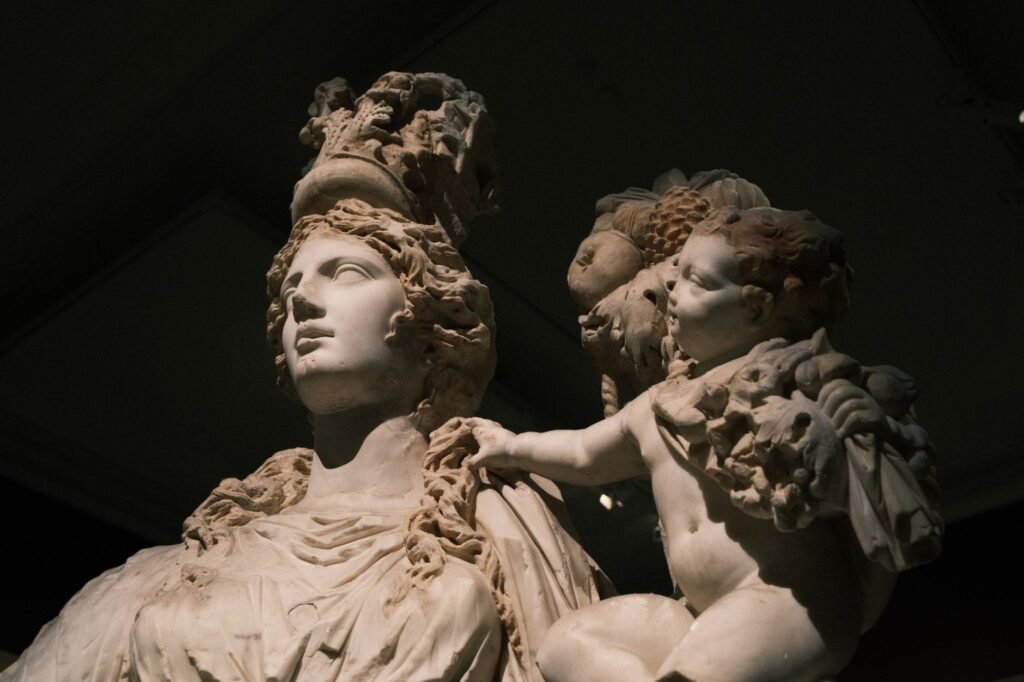
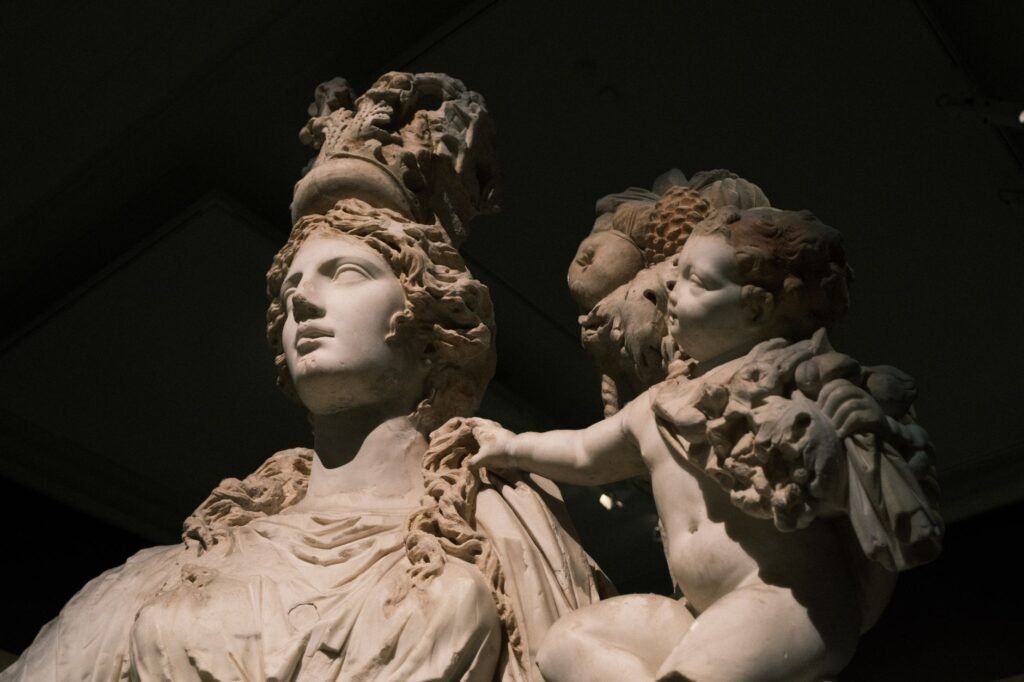
Bellona is an ancient Roman goddess of war, one of the most enduring martial divinities in the Roman religious imagination. Closely associated with battle, military fervor, and the violent energy of conflict, Bellona occupies an important place in Roman mythology, state religion, and political symbolism. Although she is sometimes treated as a distinctly Roman deity and at other times as a figure influenced by older Italic, Sabine, or Anatolian traditions, Bellona became firmly identified with the divine power that accompanied armies, sanctioned warfare, and embodied the chaos and urgency of combat.
Unlike some war deities who represent strategy or heroic strength, Bellona is often linked to the active and destructive force of battle itself. Her image appears in literature, cult practice, and later artistic representations as a goddess of military action and Roman expansion. She also became a useful political symbol in imperial Rome, where leaders and generals invoked martial divinity to legitimize conquest and victory.
Origin and Meaning
The name Bellona is generally connected with the Latin word bellum, meaning “war.” In classical Latin, Bellona was understood as the goddess of war, and her name was often interpreted in relation to that function. Ancient and modern scholars have discussed whether she was originally an independent Italic deity later identified with war, or whether she developed as a Roman personification of warfare.
Her older name in earlier Roman usage was sometimes given as Duellona, a form associated with an archaic Latin spelling or pronunciation of bellum in the sense of conflict. This linguistic history suggests that Bellona may reflect very old Roman religious vocabulary rather than a borrowed Greek goddess. At the same time, Roman writers and artists often compared her to Enyo, the Greek goddess of war, showing the tendency in the classical world to equate local divinities across cultures.
The etymology and origin of Bellona therefore point to a deity rooted in the Roman concept of armed conflict, but shaped by centuries of religious interpretation and literary adaptation.
Historical Context
Bellona belonged to the broader Roman religious system in which gods and goddesses were associated with every major civic activity, including war. For Rome, warfare was not merely a matter of military necessity; it was also a legal, religious, and political act. Before campaigns, during declarations of war, and after victories, divine powers were consulted, honored, or thanked.
Bellona’s cult was especially significant in the context of Rome’s military expansion. As the city-state grew into a Mediterranean empire, war became central to public life. A goddess associated with battle therefore had a natural place in Roman ritual and state ideology. Bellona was not simply a mythic figure; she was part of the religious language through which Romans understood state violence, imperial conquest, and the role of generals.
Her worship also reflected the Roman tendency to personify war in a more immediate and dramatic way than the Greek tradition often did. Bellona did not represent only honor or heroic warfare; she embodied the fierce, sometimes terrifying force of combat itself. This made her particularly relevant to Roman military culture, where discipline, divine favor, and martial success were deeply interconnected.
Main Characteristics
Bellona is typically characterized as a fierce, armed, and formidable goddess. In Roman art and literature, she is associated with:
- War and battle
- Military zeal
- Bloodshed and conflict
- Victory and conquest
- The awakening of martial fury
She is often described as carrying weapons or wearing armor, especially a helmet and spear or sword. Her appearance is not usually gentle or maternal; instead, it is stern, energetic, and intimidating. In some artistic representations, Bellona is shown in movement, suggesting the urgency and violence of war rather than static authority.
A distinctive feature of Bellona in Roman religion is her connection to the declaration of war. Roman ceremonial practice included symbolic acts performed in her sacred context, underscoring that warfare required proper divine sanction. Because of this, she was not only a goddess of combat but also of the ritual and state processes that preceded it.
In literary sources, Bellona may appear as a personification of frenzy or the driving force that makes armies fight. This gives her a place alongside Roman abstractions such as Victory, Discord, and Courage, yet she remains a more specific and divine presence than a mere allegorical concept.
Family and Genealogy
Bellona’s genealogy is not consistent across ancient sources, and she is not part of a single widely standardized mythological family like the Olympian gods. Different traditions describe her in different ways:
- Roman tradition: Bellona is often treated as an indigenous or semi-indigenous Roman deity without a clear mythic family tree.
- Italic or Sabine connections: Some ancient authors suggest a non-Greek origin, linking her to older Italian religious traditions.
- Greek identification: In later interpretive traditions, she is sometimes equated with Enyo or similar war divinities.
Because of this, Bellona does not have a universally agreed set of parents, spouse, or children in the way that major narrative gods do. Ancient sources do not preserve a rich cycle of family myths about her.
A useful way to understand Bellona is as a functional deity rather than a genealogically defined one. Her significance comes from what she represents and how she was worshipped, not from stories about her birth, marriage, or offspring.
Symbols
Bellona’s symbols reflect her martial nature. Commonly associated objects and images include:
| Symbol | Meaning |
|---|---|
| Helmet | Military readiness and armored combat |
| Spear | Offensive force and battle authority |
| Sword | Direct violence and war |
| Shield | Protection in battle and martial identity |
| Armor | War, discipline, and divine military presence |
| Torch | Destruction, burning cities, and the spread of conflict |
In some depictions, Bellona is shown in a chariot or in dynamic motion, emphasizing the momentum of war. Her iconography overlaps with other martial deities, but Bellona’s visual identity tends to be especially aggressive and active.
The color most often associated with war deities in Roman imagination is not uniquely fixed for Bellona in the sources, but red is symbolically appropriate because it evokes blood, fire, and violence.
Sacred Animals
Ancient sources do not preserve a fixed canon of sacred animals for Bellona comparable to those found for some other deities. However, Roman war symbolism often brought her into association with animals that represented martial energy or ominous power.
Possible associations in later tradition and artistic imagination include:
- Horses, because of their role in cavalry, chariots, and war mobility
- Dogs, sometimes linked broadly to war, guardianship, or ritual intensity
- Wolves, as symbols of ferocity and Roman military mythic identity
- Ravens or vultures, due to their connection with battlefields and death
These associations are interpretive rather than firmly established by a single ancient tradition. Bellona is better understood through her role in warfare than through a standardized animal cult.
Sacred Plants
No single plant is universally and securely documented as sacred to Bellona in the classical sources. Still, war-related divinities in Roman culture were frequently linked to plants that evoked victory, funerary association, or ritual purity.
Possible symbolic plants include:
- Laurel, associated with victory and triumph
- Cypress, often tied to death and mourning
- Oak, sometimes connected with strength and civic power
- Myrtle, in broader Roman religious contexts, though not specific to Bellona
These plants reflect the overlapping themes of triumph, death, and civic power surrounding Bellona. Because the surviving evidence is limited, such associations should be treated cautiously.
Sacred Places
Bellona had one of the most important cult centers for a Roman war goddess in the Temple of Bellona in Rome. This temple was especially significant in the political and ritual life of the Republic and early Empire.
Temple of Bellona in Rome
The Roman Temple of Bellona was located near the Campus Martius, an area closely tied to military assembly, public ceremony, and political activity. Its position outside the pomerium, the sacred boundary of the city, was meaningful because war-related rituals often took place beyond the strictly civic center.
The temple became associated with:
- declarations of war
- triumphs and military honors
- diplomatic meetings
- senatorial or public ceremonies related to military action
A notable feature of Bellona’s cult practice at Rome was the ceremonial symbolism surrounding declarations of war. In some accounts, rituals performed at or near her temple served to mark the formal beginning of hostilities. This made the temple a political as well as religious space.
Other locations
There is also evidence of Bellona worship elsewhere in the Roman world, especially in military settings or cities with strong Roman influence. Her cult could appear wherever soldiers, commanders, or civic elites sought divine support for war.
Powers and Attributes
Bellona’s powers are centered on the domain of war, but that domain includes several distinct aspects.
Primary attributes
- War itself: Bellona governs battle and armed conflict.
- Martial inspiration: She can stir courage, aggression, and combat zeal.
- Ritual authorization: She is linked to the formal and sacred beginning of war.
- Destructive force: She represents the chaos of violence and battlefield suffering.
- Victory through conflict: In Roman ideology, she could also be invoked in support of successful conquest.
Functional role in religion
Bellona was not merely a mythic explanation for war. She served as a divine presence through which Romans understood military action as something that required ceremony, legitimacy, and divine favor. In this sense, she bridged religion and statecraft.
Compared with other deities
Bellona differs from gods such as Mars, who was both a war god and a fatherly protector of the Roman people. Bellona is generally more focused on the immediate act of battle and less on the broader identity of war, agriculture, or Roman citizenship.
Main Myths
Bellona does not have a large body of narrative myths comparable to those of Jupiter, Venus, or Hercules. Instead, she appears mainly in cult, literature, and symbolic references. This is an important point: Bellona is historically significant even though she is not the center of a major mythic cycle.
Common mythic or literary functions
- Appearing as a personification of war
- Stirring soldiers into combat
- Accompanying Mars or other martial figures
- Signaling violence, frenzy, or the outbreak of battle
In Roman poetry, Bellona may appear as an emblem of war’s terrible momentum. Writers sometimes use her name to evoke the terror and passion of armed conflict. She can function as a figure who “enters” battlefields or inspires violence, rather than as a character who participates in a detailed legend.
Later interpretive tradition
Later authors and artists expanded Bellona’s image beyond the sparse ancient narrative record. In these later traditions, she sometimes became a dramatic goddess of war in her own right, especially in allegorical or nationalistic settings. However, these are artistic developments rather than independent classical myths.
Relationship with Other Mythological Figures
Bellona’s strongest relationship is with Mars, the Roman god of war. Their association is natural because both belong to the martial sphere, but they are not identical. Mars has a broader and more central place in Roman religion, while Bellona is more specifically associated with the violence and ritual of war.
Bellona and Mars
- Mars represents war, military power, and Roman identity.
- Bellona represents battle, martial frenzy, and war’s destructive force.
- In literature and art, they may appear as complementary figures.
Bellona and Enyo
Greek authors often compared Bellona to Enyo, the Greek goddess of war and destruction. This is part of the broader Greco-Roman habit of identifying deities across traditions. The comparison is useful, though not perfect, since Roman and Greek concepts of war divinity did not fully overlap.
Bellona and the Furies or Discord
Bellona also overlaps conceptually with figures such as the Furies and Discord. These are not the same deity, but they share an atmosphere of violence, agitation, and breakdown of order. Bellona’s sphere is martial conflict, yet she often appears in contexts where war seems almost uncontrollable.
Bellona and Victory
The goddess Victoria represents successful outcome, while Bellona represents the force that makes victory possible through battle. Roman religion often placed these concepts in relationship, linking destructive power with triumph.
Worship and Cult
Bellona’s worship was rooted in Roman public religion and military ceremony. She was honored through rites that reflected the seriousness of war as a state action.
Ritual practices
Ancient accounts preserve references to symbolic acts at Bellona’s temple, especially those connected with war declarations. One famous ceremonial element involved the throwing of a spear into a designated area as a symbolic act marking the commencement of hostilities. This ritual highlighted the legal-religious dimension of Roman warfare.
Offerings
Direct evidence for Bellona’s offerings is limited, but Roman war deities commonly received:
- prayers for military success
- vows before campaigns
- sacrifices in public religious contexts
- dedications by generals or commanders after victory
Worshippers
Bellona would have been especially important to:
- military commanders
- soldiers
- magistrates involved in war
- senators and public officials responsible for declaring conflict
Cult significance
Her cult shows how Roman religion integrated warfare into civic and sacred structures. Bellona was not worshipped in isolation from the state; she was part of the system by which Rome turned military power into lawful action.
Ancient Sources
Bellona is known through a range of classical sources, though often more as a cult figure or poetic emblem than as a protagonist of myth.
Key ancient authors and texts
| Author | Relevance |
|---|---|
| Varro | Important for Roman antiquarian and religious traditions, including older cult forms |
| Ovid | Uses Roman mythological and religious figures in literary contexts |
| Livy | Valuable for Roman state religion, war ritual, and historical-religious references |
| Propertius | May evoke Bellona in poetic martial imagery |
| Virgil | Uses war-goddess imagery within epic and national myth |
| Servius | Later commentator who preserves interpretations of Roman religious figures |
| Plutarch | Useful for comparative Roman religious customs |
| Aulus Gellius | Preserves antiquarian and linguistic material |
| Macrobius | Later source on Roman religious practice and interpretation |
Ancient authors do not offer a single, unified biography of Bellona. Instead, they reveal how Romans understood her through language, ritual, and literary symbolism.
Roman Equivalent
Bellona is already a Roman deity, but the question of “Roman equivalent” is relevant because classical writers often treated her as corresponding to Greek figures, especially Enyo.
Comparison with Greek and Roman war figures
- Mars: the main Roman war god, broader in scope than Bellona
- Enyo: Greek war goddess most commonly identified with Bellona
- Ares: Greek god of war, but not an exact match for Bellona
- Victoria: Roman goddess of victory, distinct from Bellona but often adjacent in military ideology
Bellona can therefore be understood as a Roman war goddess with strong equivalences in Greek religion, yet with a distinctly Roman ritual and political role.
Influence on Modern Culture
Bellona has had a notable afterlife in art, literature, naming, and symbolic language. Her image has been used to represent war in later European culture, especially in contexts that required a classical personification of martial power.
Literature and art
Renaissance and later artists often revived Bellona as an allegorical figure of war. She appears in paintings, sculptures, and decorative programs where classical myth was used to represent military power, imperial ambition, or state authority.
Political symbolism
Because Bellona embodies war itself, her name and image have occasionally been used in political and military contexts to dramatize conflict. As a classical figure, she offered a prestigious and culturally resonant emblem of armed strength.
Modern naming and references
Bellona has also appeared in:
- company names
- literary allusions
- fantasy and historical fiction
- scholarly and museum contexts
Her name remains recognizable as a synonym for war, especially in poetic or elevated language.
Popular culture
In modern games, comics, and fantasy settings, Bellona may be adapted as a warrior goddess, though these versions often combine Roman, Greek, and fictional elements. Such adaptations are creative reinterpretations rather than faithful reconstructions of the ancient cult.
Curiosities
- Bellona is one of the few Roman deities whose cult was closely connected with the formal declaration of war.
- The temple of Bellona was politically important because it lay outside the city’s sacred boundary, where war-related matters could be ritually handled.
- In Roman literature, Bellona can function almost like a living force of battle rather than a fully narrated goddess.
- Her older form, Duellona, reflects the deep antiquity of Roman religious language.
- Bellona’s image survived especially well in allegorical art, where she was useful as a personification of conflict.
- She is sometimes confused with Mars in popular retellings, but the two figures are not the same and had different symbolic roles.
Frequently Asked Questions
What is Bellona the goddess of?
Bellona is the Roman goddess of war, especially battle, martial frenzy, and the ritual beginning of armed conflict.
Is Bellona the same as Mars?
No. Mars is the principal Roman god of war, while Bellona is more specifically associated with the violence and ceremonial aspects of battle. They are related but distinct.
Did Bellona have a major mythological family?
Not really. Unlike many other gods, Bellona does not have a well-developed family genealogy in surviving ancient sources.
What symbols are associated with Bellona?
She is commonly associated with weapons, armor, helmets, spears, swords, torches, and other martial imagery.
Where was Bellona worshipped?
Her most famous temple was in Rome, near the Campus Martius. She was also honored in other Roman contexts connected to the military.
Is Bellona a Greek goddess?
No, Bellona is Roman. However, ancient writers often compared her with the Greek goddess Enyo.
Why is Bellona historically important?
Bellona reveals how the Romans linked war to religion, law, and state ritual. She also became a lasting symbol of martial power in later art and literature.
Conclusion
Bellona is an important figure in Roman religion and mythology because she embodies war not merely as a military activity but as a sacred and political force. Her cult reflects the Roman belief that warfare required divine authorization, public ceremony, and religious legitimacy. Although she lacks the extensive myths of some other deities, Bellona remains significant through her ritual role, symbolic power, and enduring presence in classical literature and later art.
As a goddess of battle, Bellona stands at the intersection of violence, state power, and religious tradition. Her legacy shows how deeply the ancient Romans connected military life with divine order, and why war deities could become lasting cultural symbols long after the fall of the Roman world.

Orin Vale has spent the better part of two decades tracing the threads that connect the world’s oldest stories — from the halls of Asgard to the banks of the Nile, from Olympus to the jungles of the Maya. What began as a childhood fascination with flood myths and trickster gods grew into years of independent study across comparative mythology and ancient religion, always chasing the same question: what did these stories mean to the people who first told them? Orin writes for readers who want more than trivia — the ones looking for the beliefs, fears, and truths that myths were built to carry.