Di Indigetes vs Di Novensiles
Introduction
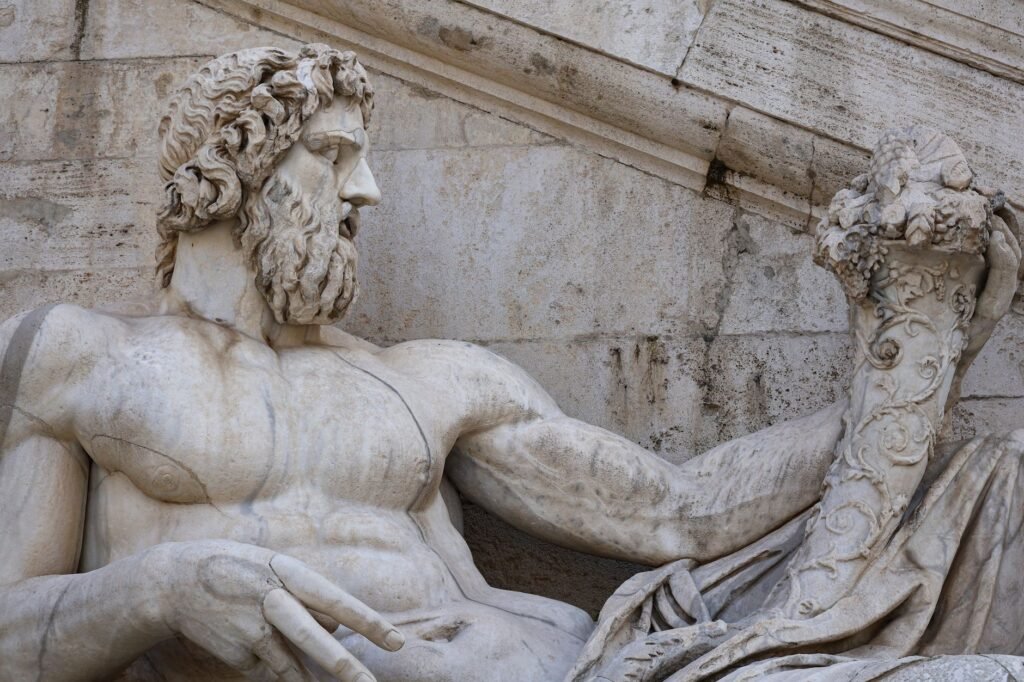
The contrast between Di Indigetes and Di Novensiles is one of the most distinctive ways the ancient Romans classified their gods. Rather than referring to a single myth or deity, this distinction reflects how Roman religion organized divine beings into categories that likely expressed ideas about antiquity, origin, and sacred authority. In broad terms, the Di Indigetes were understood as the older, indigenous Roman gods, while the Di Novensiles were gods of later introduction or comparatively recent acceptance into the Roman pantheon.
This distinction matters because it reveals how the Romans thought about religious continuity, foreign influence, and the prestige of antiquity. It also shows that Roman religion was not static: new gods, rituals, and cults could be incorporated while still preserving a sense of inherited tradition. The terms Di Indigetes vs Di Novensiles therefore illuminate both the theology and the cultural self-image of Rome.
Origin and Meaning
The terminology is ancient, but its exact interpretation is not always straightforward.
Di Indigetes
The term Di Indigetes is usually connected with the idea of gods who are native, local, or invoked from within the Roman religious tradition. Ancient and modern scholars have offered different explanations of the word indiges or indigetes:
- It may be related to Latin terms suggesting “native” or “sprung from the land.”
- Some ancient and later interpretations associated the word with indigere, meaning “to invoke” or “to call upon.”
- Others linked it to the notion of gods firmly rooted in a place or people.
Because of these uncertainties, the term should not be translated too rigidly. In practice, it denotes a group of gods regarded as ancient and characteristically Roman.
Di Novensiles
The term Di Novensiles is often understood as referring to gods who were newly introduced, newly established, or otherwise not part of the oldest Roman divine layer. The word is generally associated with novus (“new”). The exact force of the term varies in ancient discussion, but the underlying idea is clear: these were gods recognized in Rome at a later stage than the traditional indigenous deities.
A Taxonomic Rather Than Mythic Distinction
Unlike Zeus, Athena, or Apollo, these names do not denote individual mythological personalities. They are religious categories. The Romans used them to classify gods according to antiquity, origin, and perhaps ritual status. This makes the subject especially important for understanding Roman theology as a system of civic and historical organization.
Historical Context
Roman religion developed through centuries of contact with neighboring peoples, especially the Latins, Sabines, Etruscans, Greeks, and other Mediterranean cultures. The city of Rome absorbed many cults while maintaining a strong sense of ancestral continuity.
The distinction between Di Indigetes and Di Novensiles emerged in a religious environment where Romans valued:
- Tradition (mos maiorum, the custom of the ancestors)
- Ritual correctness
- The integration of new cults without abandoning older ones
- State supervision of religion
Religious Stratification in Rome
Roman religion often divided divine beings by function, origin, and cult status. The distinction between indigenous and newly adopted gods fits this broader pattern. It suggests that Romans recognized layers within their pantheon:
- Ancient civic and agricultural gods
- Imported or later-adopted divinities
- Specialized cult figures with local significance
This classification does not imply hostility toward new gods. On the contrary, Rome was famously open to religious adoption. But it did preserve a hierarchy of antiquity, with older gods often carrying greater prestige.
Literary and Scholarly Context
Ancient authors did not always agree on the exact membership of each group. Some later writers list specific gods among the Indigetes or Novensiles, but the lists vary. That variation itself is significant: it shows that the categories were not rigid fixed catalogues but fluid scholarly and priestly concepts.
Main Characteristics
The most important feature of the Di Indigetes vs Di Novensiles distinction is that it is based on origin and antiquity, not on a single mythological narrative.
Di Indigetes
These gods are generally characterized as:
- Ancient or original Roman divinities
- Closely tied to Roman civic identity
- Often associated with foundational agriculture, war, and domestic life
- Embedded in traditional ritual practice
Examples commonly associated with the Indigetes in Roman scholarly tradition include deities such as Jupiter, Mars, Quirinus, Janus, Vesta, Lares, and sometimes other early Roman or Italic gods. However, source traditions differ, and not every ancient author gives the same list.
Di Novensiles
These gods are characterized as:
- Later arrivals or later recognized deities
- Sometimes associated with foreign origin or adoption from outside Rome
- Integrated into Roman religion through cult importation, consultation of oracles, or political-religious innovation
- Not necessarily “foreign” in a hostile sense, but distinct from the oldest Roman gods
In some traditions, deities such as Apollo, Ceres, Bacchus, and other gods whose cults were introduced or formalized later could fall under this broader category. Again, ancient testimony is not uniform.
Key Differences at a Glance
| Aspect | Di Indigetes | Di Novensiles |
|---|---|---|
| Meaning | Indigenous/ancient gods | Newly introduced or later recognized gods |
| Religious status | Older Roman layer | Later addition to the pantheon |
| Cultural association | Traditional Roman identity | Adaptation, importation, innovation |
| Source stability | Often treated as Roman staples | Lists and classifications vary more |
| Function | Foundational civic and ritual gods | Supplementary or newly integrated cults |
Family and Genealogy
Because Di Indigetes and Di Novensiles are classifications rather than individual gods, they do not have a family tree in the usual mythological sense. They are not divine persons with parents or offspring.
However, the gods placed within these categories may have genealogies in their own myths.
Genealogy of Gods Commonly Associated with the Categories
For example:
- Jupiter is traditionally the supreme sky god, son of Saturn and Ops in Roman mythic genealogy.
- Mars has diverse parentage traditions, depending on the source.
- Vesta, as a virgin goddess of the hearth, is often treated as an ancient and foundational figure with limited mythic genealogy.
- Apollo, often associated with the Novensiles in some interpretive traditions, belongs to the Greek mythic family as son of Zeus and Leto.
This distinction shows an important Roman religious habit: gods could be placed into categories based on cult history without losing their mythological individuality.
Not a Kinship System
The categories themselves should not be confused with divine kinship. A god could be “novel” in Rome while still being ancient in Greek tradition. Conversely, a god could be deeply Roman in cult status while having a mythic genealogy shaped by later literary reinterpretation.
Symbols
Since the Di Indigetes and Di Novensiles are collective categories, they do not have universal symbols of their own. Their symbolic language is therefore indirect, expressed through the iconography of the gods included within them.
Common Symbolic Associations
For the Di Indigetes, symbols often reflect foundational Roman life:
- Fire and the hearth — associated with Vesta and domestic continuity
- The spear and shield — associated with Mars
- The key and double gates — associated with Janus
- Laurel and victory imagery — in some contexts linked to divine protection and civic success
For the Di Novensiles, symbols are more diverse and depend on the specific deity:
- Lyre, bow, and laurel for Apollo
- Cornucopia and grain for Ceres or related agricultural cults
- Thyrsus and vine for Bacchic cults
- Healing oracles for imported healing gods
Symbolic Meaning of the Distinction
The deeper symbol here is antiquity versus innovation. The Romans often treated older cults as carriers of ancestral legitimacy, while newer cults represented adaptability and expansion. The categories themselves symbolize Roman religious pragmatism: Rome could honor both heritage and change.
Sacred Animals
There are no sacred animals belonging to the categories themselves, but animals associated with individual gods in each category help illustrate their character.
Animals Linked with Gods Often Considered Indigetes
- Wolf — associated with Mars and Roman foundational mythology
- Horse — linked to martial and civic ritual in some Roman traditions
- Ox — connected with agriculture and sacrifice
- Goose — associated with Roman sacred warning traditions and Capitolian protection in later lore
Animals Linked with Gods Often Considered Novensiles
- Crow or raven — associated with Apollo in some classical traditions
- Snake — associated with healing cults and some imported deities
- Panther or leopard — often associated with Bacchic imagery
- Dolphin — linked with Apollo and seafaring symbolism in Greek-Roman tradition
These associations are not exclusive and should not be read as fixed catalogues. They illustrate the ritual imagination attached to the gods placed in these groups.
Sacred Plants
As with animals, sacred plants are attached mainly to specific deities rather than to the two categories themselves.
Plants Associated with Di Indigetes
- Fig tree — important in Roman foundational stories and domestic symbolism
- Oak — associated with strength, Jupiter, and sacred authority
- Laurel — linked with victory and divine approval
- Grain and cereal crops — central to agricultural gods and Roman subsistence religion
Plants Associated with Di Novensiles
- Laurel — especially prominent with Apollo
- Ivy — associated with Bacchic worship
- Vine — tied to Dionysiac/Bacchic cults
- Poppy and cultivated herbs — linked in some traditions to healing and fertility divinities
Plant symbolism underscores the functional diversity of Roman religion: some gods guarded the city’s oldest institutions, while others brought in new ritual expressions and seasonal meanings.
Sacred Places
The categories of Di Indigetes and Di Novensiles are connected to sacred spaces through the cults of the gods included in them.
Places Associated with Indigenous Gods
The Di Indigetes were tied to places that expressed Roman identity and civic continuity:
- The Capitoline Hill — center of Jupiter’s state cult
- The Forum Romanum — civic heart of Rome with multiple ancient cult sites
- The hearth of Vesta — a central sacred place symbolizing the permanence of Rome
- The Palatine Hill — connected with early Rome and foundational traditions
Places Associated with Newly Introduced Gods
The Di Novensiles often entered Rome through specific sanctuaries or imported cult centers:
- Temples dedicated after consultation of oracles or during crises
- Foreign-inspired shrines adapted for Roman use
- Sites connected to healing, prophecy, fertility, or mystery cults
Examples in Roman religion include temples and cult centers for Apollo and other imported deities, often established in response to plague, war, or ritual need.
Sacred Space as a Marker of Status
A god’s place in Rome was often as important as the god’s origin. Once a deity received a permanent temple and state cult, a formerly “new” god could become deeply embedded in Roman public life. This is one reason the Di Indigetes vs Di Novensiles distinction should be understood as historical and religious rather than purely permanent.
Powers and Attributes
Because these are categories, their “powers” consist in classification rather than divine agency. Still, the gods assigned to them reflect different areas of influence.
Powers of the Di Indigetes
The gods regarded as indigenous or ancient were often linked to the core structure of Roman society:
- Sovereignty and rule
- War and military protection
- Hearth, home, and continuity
- Agriculture and fertility
- Boundaries, beginnings, and civic order
These are the powers of a religion that sees itself as foundational and ancestral.
Powers of the Di Novensiles
The later-recognized gods often brought specialized benefits:
- Healing
- Prophecy
- Ecstatic worship
- Agricultural abundance
- Protection in crisis
- Cultural or ritual enrichment through foreign forms
This reflects Rome’s ability to absorb outside influence while preserving a strong sense of civic control.
Main Myths
There are no single myths of the Di Indigetes vs Di Novensiles as categories. Instead, the categories are illustrated by the myths and cult histories of the gods placed within them.
Myths of Indigenous Gods
The Di Indigetes are associated with foundational Roman narratives:
- The founding of Rome
- The protection of the city by Jupiter
- The sanctity of the hearth under Vesta
- War and order under Mars
- The transition from wilderness to civic life
These myths support the idea of old Roman gods as guardians of origin and stability.
Myths of Newly Introduced Gods
The Di Novensiles are connected to stories of adoption and integration:
- A god may be brought to Rome in response to a crisis.
- A cult may be imported from another region.
- Ritual consultation may authorize a new divine presence.
- Foreign myths may be reinterpreted for Roman use.
One well-known pattern is the Roman tendency to adopt deities after consulting the Sibylline Books or other religious authorities during emergencies. Such episodes highlight the practical and political dimensions of divine incorporation.
Relationship with Other Mythological Figures
The categories interact with the broader Roman pantheon rather than with one another as personal beings.
With Jupiter and the State Gods
The Di Indigetes are closely associated with the state religion and major public cults. Jupiter, as supreme sky god, represents the authority of the Roman state and the continuity of ancestral worship.
With Greek Gods
Many gods later recognized at Rome had Greek counterparts or strong Greek parallels. The Di Novensiles category can therefore reflect Roman contact with Greek religion. Apollo is a key example: his worship became central in Rome, yet he was not part of the oldest native stratum in the same way as certain Italic divinities.
With Foreign and Local Cults
Roman religion often recognized that a god could be both foreign in origin and Roman in function. This flexibility is one of the most important features of Roman religious life. The distinction between indigenous and new gods did not usually imply exclusion; it reflected managed inclusion.
Worship and Cult
The categories themselves were not worshipped in the way a god is worshipped. Instead, their significance lies in how Romans structured cult practice.
Worship of the Di Indigetes
Worship of the ancient gods was characterized by:
- State rituals
- Family and household rites
- Agricultural festivals
- Sacrifices tied to civic and seasonal cycles
- High ritual conservatism
These cults were often part of the regular religious calendar and formed the backbone of Roman public religion.
Worship of the Di Novensiles
The cult of newer gods often entered Rome through:
- Formal state adoption
- Temple dedication
- Crisis response, especially in wartime or during epidemics
- Integration of foreign rites into Roman public religion
Sometimes these cults retained distinct ritual features, especially if they came from Greek or eastern Mediterranean traditions. Over time, however, Roman practice often adapted them to local norms.
Ritual Meaning
The coexistence of old and new gods demonstrates that Roman religion was not a closed system. Instead, it functioned as a living civic order in which religion served state stability, public welfare, and divine favor.
Ancient Sources
Information about the Di Indigetes vs Di Novensiles comes from several ancient and later authors, though the evidence is fragmentary and sometimes inconsistent.
Important Sources
- Varro — one of the most important Roman antiquarian authors for religious classification
- Augustine — preserves and critiques Roman religious categories in The City of God
- Livy — useful for the history of Roman religion and the introduction of cults
- Cicero — relevant for Roman theology and public religion
- Servius — later commentator who preserves older antiquarian interpretations
- Festus and related lexicographical tradition — helpful for obscure religious terminology
Source Problems
Ancient sources do not always agree on:
- Which gods belong to each category
- What the terms precisely mean
- Whether the distinction was religious, linguistic, or antiquarian
- How consistently the categories were used in actual practice
As a result, modern scholarship treats the distinction as important but not fully transparent.
Roman Equivalent
Since this topic is already Roman, the most accurate answer is that the categories are part of Roman religion itself rather than a Roman adaptation of something else.
However, in a broader interpretive sense, the distinction has parallels in other religious systems:
- Local vs imported gods
- Ancient gods vs later cults
- Indigenous divinities vs syncretized deities
Rome developed its own version of this universal religious pattern. The categories of Di Indigetes and Di Novensiles are thus an internal Roman way of managing religious identity.
Influence on Modern Culture
The distinction between the Di Indigetes vs Di Novensiles has not become a major popular motif in the way individual gods have. Still, it has had influence in several areas.
Academic and Historical Writing
The categories are important in:
- Studies of Roman religion
- Classics and ancient history
- Comparisons of indigenous and imported cults
- Discussions of Roman identity and imperial expansion
Literature and Popular Imagination
Modern authors writing about Rome sometimes use these categories to emphasize the complexity of Roman spirituality. While not commonly featured in fiction as named groups, the idea of older civic gods versus later imported gods appears in historical novels, fantasy worldbuilding, and educational media.
Games and Media
Strategy games, role-playing settings, and historical simulations that draw on Roman mythology may include Roman gods with differing origins, even if they do not explicitly label them as Indigetes or Novensiles. The underlying concept supports worldbuilding based on layered pantheons.
Curiosities
- The distinction is more useful to historians than to storytellers, because it reflects how Romans classified religion rather than how they told myths.
- The categories are not always consistent in ancient sources; this makes them fascinating but difficult to define precisely.
- The idea likely reflects Rome’s long history of absorbing external cults without abandoning older ones.
- Some gods could be viewed as “new” in one context and “ancient” in another, depending on local tradition or authorial perspective.
- The terms show that Roman religion was highly conservative and highly adaptable at the same time.
Frequently Asked Questions
1. What is the difference between Di Indigetes and Di Novensiles?
Di Indigetes were regarded as ancient or native Roman gods, while Di Novensiles were gods of later introduction or adoption into Roman religion.
2. Are these actual gods or categories of gods?
They are categories, not individual deities. They classify gods according to origin and antiquity.
3. Did all ancient Roman writers agree on which gods belonged to each group?
No. Ancient sources vary, and the classification is not entirely consistent.
4. Why did the Romans make this distinction?
The distinction helped Romans organize divine beings according to tradition, civic identity, and religious history.
5. Were Di Novensiles considered less important than Di Indigetes?
Not necessarily. They were newer in Roman cultic terms, but many became highly important and fully integrated into state religion.
6. Is there a Greek equivalent to this distinction?
There is no exact Greek equivalent, though many cultures distinguish between local gods and adopted or foreign deities.
7. Which gods are usually associated with the Di Indigetes?
Commonly cited examples include Jupiter, Mars, Quirinus, Janus, Vesta, and the Lares, though ancient lists differ.
8. Which gods are usually associated with the Di Novensiles?
Often mentioned examples include gods such as Apollo and other deities whose cults were adopted later, but the exact membership depends on the source.
Conclusion
The distinction between Di Indigetes vs Di Novensiles offers a valuable window into Roman religion, revealing how the Romans understood divine order, cultural continuity, and religious change. The Di Indigetes embody the ancient, rooted, and ancestral side of Roman faith, while the Di Novensiles represent the flexibility of a religion able to incorporate new powers without losing its identity.
Because the categories are attested unevenly and interpreted differently across ancient sources, they should be approached with caution. Yet their importance is undeniable. They show that Roman religion was neither purely traditional nor simply open-ended: it was a system of ordered adaptation, where old gods and new gods could coexist in a carefully managed civic cosmos.

Orin Vale has spent the better part of two decades tracing the threads that connect the world’s oldest stories — from the halls of Asgard to the banks of the Nile, from Olympus to the jungles of the Maya. What began as a childhood fascination with flood myths and trickster gods grew into years of independent study across comparative mythology and ancient religion, always chasing the same question: what did these stories mean to the people who first told them? Orin writes for readers who want more than trivia — the ones looking for the beliefs, fears, and truths that myths were built to carry.