How Did the Egyptian Gods Change During the Amarna Period?
Introduction
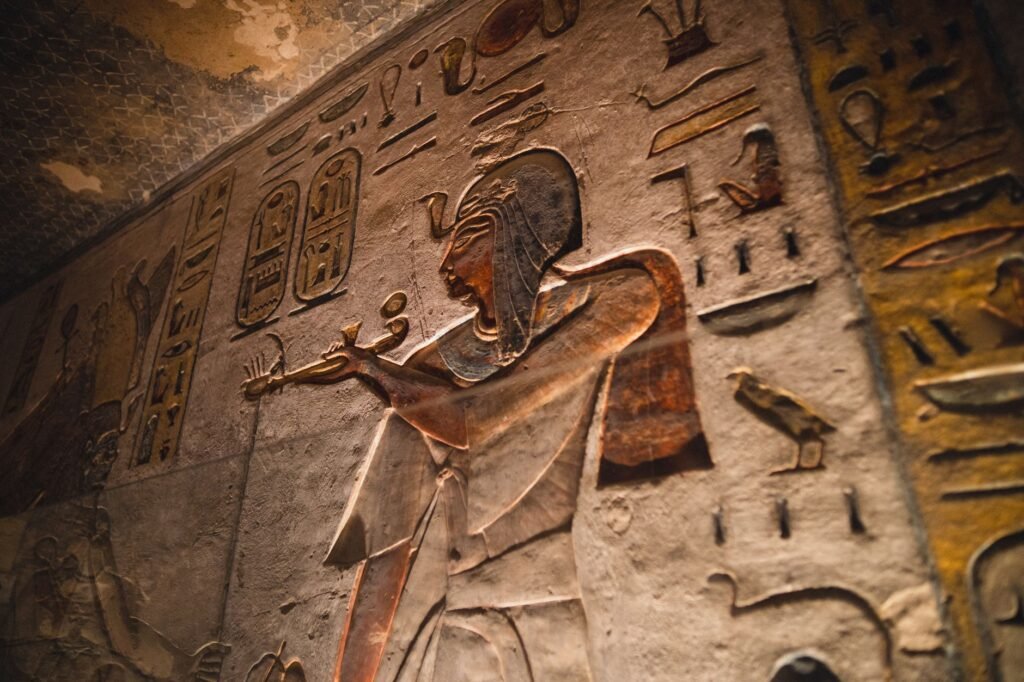
The Amarna Period was one of the most unusual and influential episodes in ancient Egyptian history. During the reign of Akhenaten in the 14th century BCE, Egypt’s traditional religious system was dramatically reorganized around the worship of the Aten, the visible solar disk. This shift did not erase all older beliefs overnight, but it did alter how gods were represented, which deities were publicly honored, and how divine kingship was expressed.
Understanding how the Egyptian gods changed during the Amarna period is important because it reveals how flexible—and how politically embedded—ancient Egyptian religion could be. The period was not simply a moment of “monotheism” replacing “polytheism,” as older interpretations once suggested. Rather, it was a complex religious reform that elevated one god above the others, reduced or redirected the cults of many traditional deities, and transformed the visual language of divinity.
Origin and Meaning
The term Amarna comes from the modern name of the site Tell el-Amarna, the location of Akhenaten’s new capital, Akhetaten (“Horizon of the Aten”). The name “Aten” referred to the sun disk itself, especially as a divine force made manifest in light.
In earlier Egyptian usage, the Aten existed as one aspect of solar divinity among several. During Akhenaten’s reign, however, the Aten became the central and, in practice, exclusive focus of state-sponsored worship. The pharaoh himself was renamed from Amenhotep IV to Akhenaten, usually translated as “effective for the Aten” or “useful to the Aten.”
The name “Amarna Period” is therefore modern, but it identifies a historical phase in which Egyptian divine order was restructured around the Aten and away from the great temple gods, especially Amun.
Historical Context
Political background
The Amarna Period belongs to Egypt’s 18th Dynasty and is usually associated mainly with the reign of Akhenaten (c. 1353–1336 BCE, though exact chronology remains debated). Akhenaten inherited a state in which large temple institutions, especially those of Amun at Thebes, held immense wealth and influence.
His religious reforms may have had both theological and political dimensions. By concentrating worship on the Aten, the king could reduce the power of established priesthoods and reframe himself as the indispensable mediator between god and world.
Religious background
Before Akhenaten, Egyptian religion was polytheistic and deeply localized. Major gods included:
- Amun
- Ra
- Osiris
- Isis
- Horus
- Ptah
- Thoth
- Mut
- Khonsu
- Anubis
- Sekhmet
- Bastet
These gods were worshipped in temples, processions, household cults, funerary rituals, and royal ideology. Egyptian religion was not a fixed creed but a network of cults, myths, and ritual practices.
Cultural transformation under Akhenaten
Akhenaten founded a new capital at Akhetaten, likely to create a religious center dedicated to the Aten and to distance his court from traditional priestly power bases. During this period:
- Some traditional temples lost royal support.
- The names and images of certain gods, especially Amun, were attacked.
- Religious art moved toward a distinctive style with more intimate domestic scenes and unusual royal imagery.
- The king and queen, Nefertiti, were presented as uniquely privileged intermediaries of the Aten.
Main Characteristics
The main change in Egyptian gods during the Amarna Period was not the total disappearance of older deities, but their reconfiguration.
Key features of the religious shift
- Elevation of the Aten as the supreme divine power.
- Suppression of Amun, whose name was systematically erased in many contexts.
- Reduction of traditional temple cults, especially in state-sponsored religion.
- Emphasis on the royal family as the exclusive channel of divine favor.
- Replacement of anthropomorphic gods with the solar disk as the principal visible divine form.
- Changes in theological language, with greater emphasis on light, life, and universal beneficence.
What changed in divine imagery
Traditional Egyptian gods were usually depicted in human, animal, or hybrid form. The Aten, by contrast, was usually shown as a sun disk with rays ending in hands, often extending the ankh, the symbol of life, toward the royal family.
This was a major visual departure. The divine body was no longer typically imagined as a person or animal, but as a universal solar presence.
What did not fully disappear
Despite the radical nature of Akhenaten’s reforms, evidence suggests that older gods did not vanish entirely from private life or from memory. Their suppression was strongest in official and monumental contexts. The extent to which ordinary Egyptians continued older devotional habits is still debated among scholars.
Family and Genealogy
Because the topic concerns a religious transformation rather than a single deity, “family and genealogy” applies differently here.
The royal family as divine mediators
In Amarna theology, the royal family became central:
- Akhenaten: chief intermediary of the Aten
- Nefertiti: prominent royal partner in ritual imagery
- Their daughters: frequently shown in scenes of devotion and family intimacy
This emphasis on the king’s household was unusual in Egyptian religion. The pharaoh had always had a sacred role, but under Akhenaten that role became even more exclusive.
Traditional divine relationships
Traditional Egyptian gods often had elaborate family structures:
- Osiris, Isis, Horus
- Amun, Mut, Khonsu
- Ptah, Sekhmet, Nefertem
During the Amarna Period, these relationships were largely pushed out of official religious focus. The Aten was not usually treated as a deity with a mythic family in the same way as earlier gods.
Relationship to older gods
The Aten absorbed some roles previously associated with other gods, especially solar deities such as Ra and Horus. This did not necessarily mean those gods were fully erased as concepts, but their cult prominence was diminished.
Symbols
Principal symbol of the Aten
The most recognizable symbol of the Amarna religion is the sun disk with descending rays, each ray ending in a small hand. These hands often offer ankh signs, symbolizing life.
Meaning of the symbols
- Sun disk: the Aten as visible solar power
- Rays: the Aten’s life-giving presence extending into the world
- Hands: divine blessing and direct action
- Ankh: life, vitality, and renewal
Contrast with earlier divine symbols
Traditional gods had many established symbols:
- Amun: hidden power, feathered crown
- Osiris: mummy form, crook and flail
- Horus: falcon
- Thoth: ibis or baboon
- Sekhmet: lioness
During the Amarna Period, these symbols were less emphasized in official art and monumentality, while the Aten’s solar imagery dominated.
Sacred Animals
The Amarna religion is notable because it de-emphasized animal-headed gods in official ideology.
Changes in animal symbolism
Many Egyptian gods were closely associated with animals:
- Horus with the falcon
- Anubis with the jackal
- Bastet with the cat
- Sekhmet with the lioness
- Thoth with the ibis
Under Akhenaten, such imagery was not central in state-sponsored representation. The Aten itself had no animal form. This was one of the clearest visual breaks from earlier tradition.
Important note
This does not mean that animal symbolism ceased in Egypt altogether. Rather, it was not the favored language of royal theology during the Amarna Period.
Sacred Plants
There is no single sacred plant uniquely defining the Amarna religion in the way the papyrus or lotus sometimes functioned in broader Egyptian symbolism. However, traditional Egyptian sacred plants remained part of the religious landscape.
Common Egyptian sacred plants
- Lotus: rebirth, solar emergence, creation
- Papyrus: Lower Egypt, vitality, order
- Sycamore fig: nourishment, protection, divine femininity
Amarna context
In Amarna art, plants and natural life appear frequently in scenes of the Aten’s life-giving power. The emphasis is less on specific cult plants and more on the natural world illuminated by the sun. Birds, flowers, and living beings are shown receiving light and vitality from the Aten.
Sacred Places
Akhetaten
The most important sacred place of the period was Akhetaten itself, the new capital founded by Akhenaten. It was intended as a city dedicated to the Aten and built in a relatively undeveloped area on the east bank of the Nile.
Temples of the Aten
The Aten’s temples differed from many older Egyptian temples because they were designed to admit sunlight more directly. While traditional temples often emphasized darkness and restricted access, Aten temples emphasized open courtyards and exposure to the sun.
Thebes and the cult of Amun
Thebes, especially the great temple complex of Karnak, was central to the traditional cult of Amun. Under Akhenaten, Thebes lost favor, and Amun’s name was often erased from monuments.
Other sacred centers
The broader Egyptian religious landscape included long-established sacred cities such as:
- Heliopolis: important to solar theology
- Memphis: associated with Ptah
- Abydos: major cult center of Osiris
These centers remained historically significant, though their public prominence changed under the Amarna reforms.
Powers and Attributes
The Aten’s attributes
The Aten was associated with:
- Light
- Life
- Warmth
- Universality
- Creation and sustenance
- Direct divine presence
The Aten was presented as the source of all life, sustaining humans, animals, and plants alike.
How this differed from other gods
Traditional Egyptian gods had specialized powers:
- Amun: hidden divine authority, kingship, cosmic force
- Osiris: death, resurrection, fertility of the land
- Isis: magic, protection, motherhood
- Horus: kingship, sky, divine legitimacy
- Thoth: writing, wisdom, measurement
In Amarna theology, these separate domains were not necessarily denied, but they were subordinated to a universal solar principle.
Royal mediation
A major feature of the period was that the Aten’s power was said to reach the world through the king. Akhenaten and Nefertiti were often shown receiving life directly from the Aten and then, by implication, transmitting divine order to everyone else.
Main Myths
Lack of a traditional myth cycle
Unlike Osiris or Horus, the Aten does not have a rich surviving myth cycle in the same way. The Amarna religion is known more from hymns, inscriptions, and images than from elaborate mythological narratives.
The Great Hymn to the Aten
The most famous text is the Great Hymn to the Aten, which describes the Aten as the creator and sustainer of life. It praises the sun’s rising and setting, the awakening of beings at dawn, and the order the Aten brings to the world.
This hymn is significant because it presents a more universal and naturalistic vision of divine power than many earlier royal inscriptions.
Mythic implications
The Amarna texts suggest a theology in which:
- The Aten creates all things.
- The king knows and mediates the god’s will.
- Life depends on visible sunlight.
- The cosmic order is maintained through the royal household.
However, scholars caution against reading the Amarna religion as a fully systematic theology in the later philosophical sense.
Relationship with Other Mythological Figures
Akhenaten and Amun
The most dramatic relationship was the conflict with Amun. During the reign, Amun’s name and cult were attacked, and his temples lost royal favor. This is the clearest example of divine displacement in the period.
Aten and Ra
The Aten drew on older solar traditions linked to Ra. In some respects, it may be understood as a re-centered solar theology rather than a complete invention from nothing. However, the Aten was distinguished from Ra by its unique iconography and political setting.
Aten and Horus
Earlier pharaonic ideology often linked the king to Horus. In the Amarna Period, that relationship was re-expressed through direct devotion to the Aten and the king’s unique role as intermediary. Horus does not disappear from all contexts, but he is less central in the new official theology.
Aten and the rest of the pantheon
Other gods such as Isis, Osiris, Ptah, and Thoth were not the focus of royal cult. Their roles were overshadowed by the Aten and the royal family.
Worship and Cult
Religious practice under Akhenaten
Worship centered on the Aten and the royal family. Temples were built with open courts for sunlight, and offerings were likely presented in ways that emphasized the god’s direct visibility.
Temple reform
Traditional temple religion was usually based on hidden sanctuaries, priestly administration, and cult statues. The Amarna temples were different in design and ritual emphasis.
Offerings
Offerings probably included standard Egyptian cult items such as:
- Bread
- Beer
- Meat
- Incense
- Flowers
- Wine
- Oil
The difference was not necessarily the complete abandonment of these offerings, but the context in which they were made and the deity to whom they were directed.
Suppression and restoration
After Akhenaten’s death, his religious policy was reversed. Under Tutankhamun and later rulers, traditional cults were restored, especially the cult of Amun. Amarna monuments were dismantled or reused, and the names of Akhenaten and his god were often suppressed.
Ancient Sources
The Amarna Period is known primarily from Egyptian sources, not from Greek or Roman writers, who lived much later.
Main Egyptian sources
- The Great Hymn to the Aten
- The Lesser Hymn to the Aten
- Royal inscriptions from Akhenaten’s reign
- Letters from the Amarna archive, a diplomatic correspondence found at Tell el-Amarna
- Archaeological remains from Akhetaten and related sites
Later classical authors
Classical writers such as Herodotus did not describe the Amarna Period in detail, and later Greco-Roman authors often preserve only broad and sometimes distorted memories of Egyptian religion. They are not reliable sources for Akhenaten’s reforms in the way the Egyptian texts are.
Modern interpretation
Much of what is understood today comes from archaeology, epigraphy, and comparative study. The interpretation of Amarna religion has changed over time, especially regarding whether it should be called monotheistic, henotheistic, or something else.
Roman Equivalent
There is no direct Roman equivalent to the Amarna religious system.
The Romans later identified many Egyptian gods with their own deities in interpretatio romana, but the Aten had no simple Roman counterpart. Because the Aten was a solar principle elevated into a unique royal cult, comparisons are only approximate.
At a broad level, the Aten may be loosely compared with Roman solar traditions or with the imperial use of divine imagery, but these are imperfect parallels.
Influence on Modern Culture
The Amarna Period has had a strong impact on modern discussions of religion, kingship, and ancient history.
In scholarship
It is central to debates about:
- the development of religious reform in antiquity
- the relationship between religion and political power
- early forms of exclusive worship
- the nature of monotheism and henotheism
In literature and popular history
Akhenaten and Nefertiti appear frequently in historical fiction, documentaries, and museum exhibitions. The dramatic nature of the religious revolution makes the period especially attractive to writers and filmmakers.
In art and design
Amarna art has influenced modern artists because of its:
- fluid, naturalistic style
- intimate family scenes
- distinctive royal iconography
- striking solar imagery
In broader culture
The period is sometimes invoked in discussions of:
- religious reform
- the dangers of iconoclasm
- visionary kingship
- cultural rupture and restoration
Curiosities
- Akhenaten’s reforms are sometimes described as the first known attempt at monotheism, but many scholars prefer more cautious terms because the historical reality was more complex.
- The Amarna style of art is highly recognizable for its elongated figures and informal family scenes, though some of these features may have been symbolic rather than strictly realistic.
- The destruction of Amun’s name on monuments was so extensive that some inscriptions were physically re-carved.
- The Aten was not usually represented as a human figure at all, which was highly unusual in Egyptian religion.
- The city of Akhetaten was occupied for only a relatively short time before being abandoned after the Amarna Period.
- Some private devotion to older gods may have continued despite official suppression.
- The surviving Amarna archive is one of the most important diplomatic records from the ancient Near East.
Frequently Asked Questions
1. What was the main religious change during the Amarna Period?
The main change was the elevation of the Aten as the central deity of royal worship, along with the suppression of many traditional cults, especially that of Amun.
2. Did Akhenaten completely abolish all other Egyptian gods?
Probably not in every sense. He strongly promoted the Aten and restricted the public cult of other gods, but the extent of total abandonment in private life is uncertain.
3. Was the Amarna religion truly monotheistic?
This is debated. Some scholars describe it as monotheistic or near-monotheistic, while others prefer terms such as henotheistic, monolatrous, or exclusive royal cult.
4. Why was Amun targeted during Akhenaten’s reign?
Amun’s priesthood had become extremely powerful and wealthy. Akhenaten’s reforms appear to have challenged both the theology and the political influence of Amun’s cult.
5. How were the gods shown differently in Amarna art?
Traditional gods were often depicted in human or animal form, while the Aten was shown as a sun disk with rays ending in hands.
6. What happened to the old gods after the Amarna Period?
After Akhenaten’s death, his successors restored traditional religion. The cults of Amun and other gods returned to prominence, and many Amarna monuments were dismantled or altered.
7. Why is the Amarna Period important?
It is important because it shows a rare and dramatic attempt to reform a long-standing polytheistic religious system and because it profoundly affected Egyptian art, politics, and theology.
Conclusion
The question of how did the Egyptian gods change during the Amarna period can be answered in one phrase: they were reordered around the Aten. The traditional Egyptian pantheon did not vanish overnight, but its public dominance was challenged by an exclusive solar cult centered on the king and his family. Amun was suppressed, older gods were marginalized, and divine representation shifted from richly populated anthropomorphic and animal forms to the abstract yet powerful image of the sun disk.
The Amarna Period remains one of the most studied and debated moments in ancient religion because it combines theological innovation, political reform, artistic revolution, and historical controversy. Its legacy lies not only in the ruins of Akhetaten or the hymns to the Aten, but also in the enduring question of how ancient societies reshaped their gods to serve new visions of power and order.

Orin Vale has spent the better part of two decades tracing the threads that connect the world’s oldest stories — from the halls of Asgard to the banks of the Nile, from Olympus to the jungles of the Maya. What began as a childhood fascination with flood myths and trickster gods grew into years of independent study across comparative mythology and ancient religion, always chasing the same question: what did these stories mean to the people who first told them? Orin writes for readers who want more than trivia — the ones looking for the beliefs, fears, and truths that myths were built to carry.