Hammer and Anvil of Vulcan
The Hammer and Anvil of Vulcan are among the most recognizable attributes associated with the Roman god Vulcan, the divine master of fire, metalworking, and volcanic force. In Roman religion and later classical tradition, these implements symbolize the creative and destructive power of controlled fire: the hammer shapes metal, while the anvil receives and transforms it. Together, they represent craftsmanship, industry, and the dangerous energy that lies beneath the surface of the earth.
Although Vulcan is often compared with the Greek god Hephaestus, the Roman tradition gave him a distinct character of its own. His hammer and anvil appear in literature, sculpture, iconography, and modern cultural references as signs of technical skill, forge-work, and divine labor. They are not merely tools; in myth and symbolism, they express a worldview in which fire can be both productive and catastrophic.
Origin and Meaning
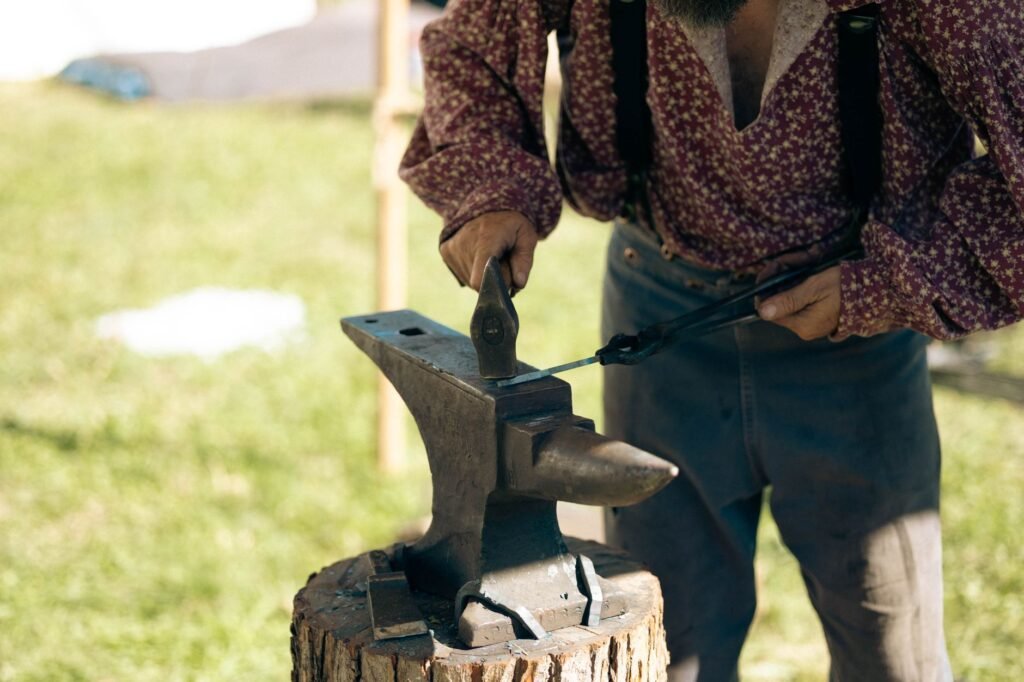
The name Vulcan comes from the Latin Volcanus or Vulcanus, the Roman god associated with fire, especially destructive fire and the forge. The etymology of the divine name is not fully certain, and scholars have proposed different explanations, but the classical Romans themselves treated Vulcan as an ancient Italic deity rather than a purely borrowed Greek figure.
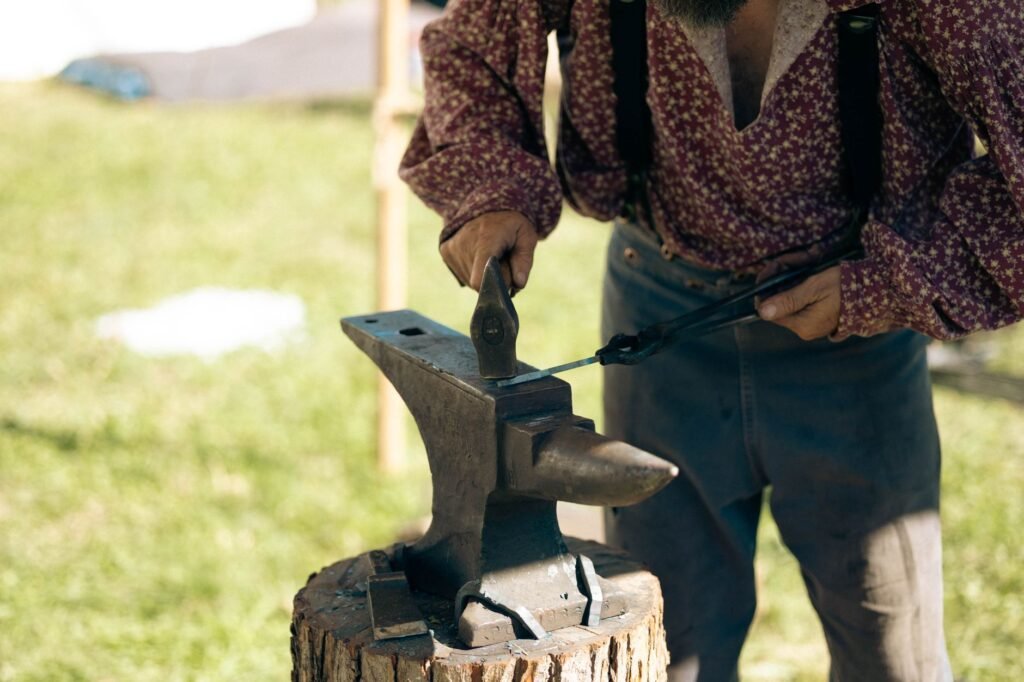
The hammer and anvil are not, strictly speaking, separate deities or mythological characters. They are the emblematic tools of the divine smith. In Roman and later Western artistic tradition, they became inseparable from Vulcan’s identity. The hammer is the instrument of force, precision, and shaping. The anvil is the stable surface upon which raw material is transformed. Together they express the productive tension between motion and stillness, heat and hardness, destruction and creation.
In mythological symbolism, these tools also suggest:
- Craftsmanship: the skill of the metalworker
- Authority over fire: the ability to control a dangerous element
- Transformation: ore into weapon, metal into art
- Labor: divine work, not idle divinity
- Punishment and power: the forge as a place where strength is applied under control
Historical Context
Vulcan was one of the older Roman gods, with cult practices that appear to predate the full influence of Greek mythology on Rome. His worship was connected to fire in multiple senses, including:
- domestic fire
- destructive urban fire
- volcanic fire
- metalworking and forging
In an ancient city of wood, stone, and densely packed buildings, uncontrolled fire was a real threat. Roman religion responded to such dangers through ritual, offering, and sacralized control. Vulcan’s presence in civic religion reflected the desire to manage fire rather than simply fear it.
The hammer and anvil belong to the world of the forge, which in antiquity was more than a workshop. The forge was a place of transformation, danger, noise, heat, and specialized knowledge. In Greco-Roman imagination, the smith occupied an ambiguous social position: indispensable to warfare, architecture, and technology, yet working in a hidden and often subterranean space.
In this context, Vulcan’s tools represent both:
- the technological foundation of civilization
- the mythic dramatization of labor beneath the earth
The later association of Vulcan with volcanoes strengthened these meanings. Volcanic eruptions were understood as subterranean fires, and the god’s forge was imagined beneath mountains or islands. The hammer and anvil thus belonged to a broader cosmology of hidden fire and divine craftsmanship.
Main Characteristics
The Hammer and Anvil of Vulcan are generally identified with the following qualities:
Hammer
- A heavy forging tool used to shape heated metal
- Symbol of force, judgment, and mastery
- Represents the active, striking aspect of creation
- Often associated with the making of weapons and armor
Anvil
- The hardened surface upon which metal is worked
- Symbol of stability, endurance, and resistance
- Represents the receptive but essential aspect of transformation
- Often understood as the foundation of the forge
In art, Vulcan may be shown with these tools, sometimes alongside tongs, a cap, an apron, or other smithing equipment. In some images he appears muscular and bearded, emphasizing labor and strength. In others, he is portrayed as physically imperfect, reflecting the Greek Hephaestus tradition; however, Roman depictions are not uniform.
The hammer and anvil can also carry moral or allegorical meaning:
- The hammer may stand for the will that shapes matter
- The anvil may stand for endurance under pressure
- Together they symbolize the making of order through discipline
Family and Genealogy
The genealogies of Vulcan vary somewhat between ancient sources.
Parentage
In Roman tradition, Vulcan is usually identified as the son of Jupiter and Juno. This accords broadly with Greek accounts of Hephaestus, who is likewise often said to be the child of Zeus and Hera.
Spouses and Relationships
Vulcan’s marital and romantic relationships differ across traditions:
- In Greek myth, Hephaestus is famously married to Aphrodite
- In Roman tradition, Vulcan is also associated with Venus, the Roman equivalent of Aphrodite
- Some accounts emphasize the tension between the smith god and the goddess of beauty
Children
The line of descent associated with Vulcan is not as prominent as that of many other gods. However, Roman and later traditions occasionally connect him to figures associated with fire, craftsmanship, or trade. These genealogies vary and should not be treated as fixed.
Family Table
| Figure | Relationship to Vulcan | Notes |
|---|---|---|
| Jupiter | Father | Common Roman tradition |
| Juno | Mother | Common Roman tradition |
| Venus | Consort / associated partner | Roman equivalent of Aphrodite |
| Minerva | Sometimes linked through craft and technical skill | Not a spouse; thematic association |
| Hephaestus | Greek equivalent | Often conflated in later tradition |
Symbols
The central symbols of Vulcan are directly tied to the forge and its work.
Primary Symbols
- Hammer: force, skill, transformation
- Anvil: endurance, stability, the site of creation
- Forge: controlled fire and production
- Tongs: handling metal safely
- Fire: destructive and creative energy
- Sword, armor, or tools: products of divine craftsmanship
Associated Colors
Ancient sources do not establish a fixed ritual color system for Vulcan in the way that some modern religious traditions do. However, in symbolic interpretation, the colors most often associated with him are:
- Red: fire, heat, power
- Orange: flame and furnace glow
- Black: soot, iron, volcanic earth
- Bronze and gold: metalwork and divine craftsmanship
Symbolic Meaning
The hammer and anvil are especially powerful because they are complementary:
- one acts
- the other supports
- one changes form
- the other resists and enables change
This balance made them enduring emblems in both antiquity and later art.
Sacred Animals
Ancient sources do not consistently assign a single sacred animal to Vulcan in the way that some gods are linked to specific creatures. Nevertheless, several animals appear in iconographic or symbolic association with fire, labor, and the underworld.
Commonly Associated Animals
- Horse: sometimes connected with fire and speed in broader mythic symbolism
- Mule or donkey: occasionally linked with labor and workshop imagery
- Dog: in some symbolic contexts, connected with vigilance and protective fire
- Snake: sometimes associated with chthonic, subterranean power
These associations are not universal and should be treated as interpretive rather than fixed cultic facts.
Sacred Plants
No single plant is universally or securely established as sacred to Vulcan in the surviving ancient evidence. However, some plants and woods may be associated with fire, industry, or ritual use in broader Roman religious practice.
Possible Associations
- Laurel: often used in Roman religion more generally, though not uniquely tied to Vulcan
- Oak: a symbol of strength and endurance in wider Mediterranean tradition
- Cypress: sometimes associated with death or the underworld in classical culture
- Ash wood: relevant to tools and handles, though not specifically sacred
Because the evidence is limited, any plant association with Vulcan should be understood as contextual and interpretive rather than canonical.
Sacred Places
Vulcan was worshipped in places connected with fire, industry, or public protection from fire. While no single location monopolized his cult, several sites are important.
Vulcanal
The Vulcanal was an ancient shrine of Vulcan in the Roman Forum. It is one of the most significant places associated with his cult. The shrine’s antiquity suggests deep roots in Roman public religion.
Forum Romanum
Because the Vulcanal stood in or near the Roman Forum, Vulcan was linked to the civic center of Rome. This placement underscores his role in the life and safety of the city.
Volcanic and Forge Landscapes
In literary imagination, Vulcan’s workshop is often imagined in:
- volcanic mountains
- subterranean caverns
- island forges
- hidden workshops beneath the earth
These are mythic rather than strictly historical sacred sites, but they are central to his image.
Notable Locations in Tradition
| Place | Significance |
|---|---|
| Vulcanal | Ancient shrine in Rome |
| Roman Forum | Civic and religious center |
| Underworld forge | Mythic workshop in later literature |
| Volcanoes | Natural manifestation of subterranean fire |
Powers and Attributes
Vulcan’s sphere of power is broader than the modern idea of a smith alone. He governs fire in its controlled and destructive forms.
Domains
- Fire
- Metalworking
- Smithing
- Craftsmanship
- Volcanic force
- Weapons and armor production
- Technological transformation
Attributes
- Mastery of heat and metal
- Exceptional skill in crafting divine objects
- Ability to shape the raw into the usable
- Association with strength, precision, and patience
- Connection to subterranean and volcanic energy
The hammer and anvil illustrate these powers more clearly than any abstract description could. Vulcan is the god who does not merely possess fire; he works with it. He turns heat into form.
Main Myths
The myths surrounding Vulcan often come from the Greek tradition of Hephaestus, adapted into Roman culture. The hammer and anvil appear either explicitly or implicitly in these stories.
The Making of Divine Weapons
One of the central mythic functions of Vulcan is crafting weapons and armor for gods and heroes. In this role, the forge, hammer, and anvil are essential. Ancient literature credits the divine smith with manufacturing extraordinary objects, including:
- weapons for major gods or heroes
- armor of exceptional quality
- automatons or mechanical servants in some later traditions
- chains, traps, and other specialized devices
The Trapping of Venus and Mars
A well-known myth, inherited from Greek tradition, tells how Vulcan caught Mars and Venus in an adulterous embrace using a cleverly constructed net or trap. Though the specific tools are not always emphasized, the story highlights Vulcan’s technical intelligence and mastery of craft.
The Fall from Heaven
Another famous myth tells that Vulcan was cast down from Olympus or fell from heaven, resulting in a physical injury or disability in some versions. This story explains why the divine smith may appear lame in Greek art. Roman retellings vary in emphasis, but the theme of the wounded craftsman remains influential.
Fire and Civic Protection
Roman ritual myth also connected Vulcan with preventing destructive fire. The hammer and anvil here symbolize mastery over a force that must be controlled for the city’s survival.
Relationship with Other Mythological Figures
Vulcan’s relationships are best understood through function as much as through family.
Jupiter
As father of Vulcan in Roman tradition, Jupiter represents sovereign authority, while Vulcan represents skilled labor under divine order.
Juno
As mother, Juno places Vulcan within the dynastic structure of the Olympian-Roman gods.
Venus
Venus is Vulcan’s most famous divine partner in Roman tradition, paralleling the Greek relationship between Hephaestus and Aphrodite. The pairing brings together beauty and craftsmanship, desire and labor.
Mars
Mars is often Vulcan’s rival in myth because of the Venus episode. More broadly, Mars embodies violence and war, while Vulcan supplies the weapons that make war possible.
Minerva
Minerva and Vulcan are both associated with skill, technology, and craft. Their domains overlap in practical intelligence, though Minerva governs broader wisdom and strategic art.
Other Gods and Heroes
Vulcan often assists gods and heroes by making armor, tools, or magical devices. In doing so, he serves as a bridge between divine power and material culture.
Worship and Cult
Vulcan’s cult had practical and protective dimensions in Roman society.
Ritual Functions
Worship of Vulcan was connected to:
- protection against fire
- purificatory rites
- community safety
- thanksgiving for controlled fire and useful craftsmanship
Offerings and Festivals
The major festival associated with Vulcan was the Volcanalia, celebrated on 23 August. During this festival, Romans offered sacrifices to Vulcan, often in hopes of averting destructive fires during the hot, dry season.
Some ancient practices may have included:
- offerings thrown into fire
- animal sacrifice
- public rites at the Vulcanal
- prayers for protection of homes and crops
Social Significance
Vulcan’s cult mattered not only to priests and elites but also to artisans, metalworkers, and anyone dependent on fire-based technology. The forge was essential to Roman life, from tools and cooking implements to military equipment.
Ancient Sources
The Hammer and Anvil of Vulcan are known through a combination of literary, artistic, and religious sources rather than through a single authoritative text.
Important Ancient Authors and Works
- Homer: provides the Greek background of Hephaestus, later influential for Roman Vulcan
- Hesiod: important for divine genealogies and early mythic tradition
- Apollodorus: compiles mythic narratives, especially of the Greek tradition
- Ovid: crucial for Roman mythological interpretation in the Metamorphoses and other works
- Virgil: presents Vulcan in Roman epic context, especially through the crafting of arms
- Pausanias: valuable for cultic and local traditions
- Varro: important for Roman religion and antiquarian explanation
- Servius: later commentator on Virgil, useful for mythographic detail
Nature of the Evidence
The evidence is varied:
- literary descriptions of smithing
- temple and shrine references
- ritual calendars
- artistic depictions of the god with tools
Because of this, details such as the exact shape of Vulcan’s hammer or the specific sacred meaning of an anvil are sometimes inferential rather than explicitly stated.
Roman Equivalent
Vulcan is the Roman counterpart of Hephaestus, though the relationship is not completely identical. Roman religion adapted Greek myth but preserved distinct Italic religious traditions.
Similarities to Hephaestus
Both gods are:
- divine smiths
- associated with fire and metallurgy
- creators of weapons and wondrous objects
- connected to craft, labor, and volcanoes
Distinctive Roman Features
Roman Vulcan is often more strongly associated with:
- public protection from fire
- civic cult in Rome
- practical and ritual fire management
In Roman culture, the hammer and anvil thus function not only as mythic symbols but also as emblems of Rome’s technical and religious order.
Influence on Modern Culture
Vulcan and his hammer-and-anvil symbolism remain influential in modern culture.
Literature and Scholarship
Classical allusions to Vulcan appear in poetry, historical novels, and academic writing about mythology, religion, and ancient technology.
Visual Art
Artists have often portrayed Vulcan at the forge, surrounded by:
- flame
- anvils
- hammers
- armor
- assistants or Cyclopes
This imagery continues in museum art, book illustration, and decorative sculpture.
Cinema, Television, and Games
Modern fantasy and science fiction frequently borrow the archetype of the divine smith:
- the master blacksmith
- the forge beneath the mountain
- the god or demi-god of technology
- the maker of legendary weapons
While not always named Vulcan, the figure is clearly influenced by him.
Popular Symbolism
The hammer and anvil also appear in:
- industrial emblems
- heraldry-inspired designs
- craft and labor imagery
- fantasy role-playing aesthetics
Their enduring appeal comes from the clarity of their symbolism: force and resistance, labor and result, heat and form.
Curiosities
- Vulcan’s festival, the Volcanalia, was held in the hot season, when fire risk was especially serious.
- The Vulcanal in Rome suggests that Vulcan was an important ancient civic deity, not merely a mythological artisan.
- The hammer and anvil are universal smithing tools, which helped make Vulcan’s imagery easy to recognize across cultures and later eras.
- In some later art, Vulcan is shown with a crippled leg, reflecting Greek Hephaestus traditions more than strictly Roman ones.
- The god’s forge is sometimes imagined underground, linking him to volcanoes, mines, and hidden labor.
- Vulcan’s role as maker of divine weapons made him essential to many heroic narratives, even when he was not the central character.
- The association of fire with both danger and usefulness made Vulcan especially relevant to urban Roman life.
Frequently Asked Questions
1. What do the hammer and anvil of Vulcan symbolize?
They symbolize craftsmanship, transformation, controlled fire, endurance, and the power to shape raw material into useful or divine objects.
2. Is Vulcan the same as Hephaestus?
Vulcan is the Roman equivalent of Hephaestus, but Roman tradition gave him distinct cultic and civic importance, especially in relation to fire protection in Rome.
3. Why is Vulcan associated with volcanoes?
Ancient people understood volcanic eruptions as subterranean fire, so Vulcan’s forge was imaginatively placed beneath mountains or within the earth.
4. Was Vulcan worshipped in Rome?
Yes. Vulcan had an ancient cult in Rome, including the shrine known as the Vulcanal and the festival of Volcanalia.
5. Did the Romans see Vulcan as a good or dangerous god?
Both. Vulcan was dangerous because fire destroys, but also beneficial because fire enables metalworking, technology, and civic survival.
6. Are the hammer and anvil mentioned in ancient texts?
The tools themselves and the forge imagery appear in ancient literary and artistic tradition, though the exact symbolism is often inferred from the broader role of the divine smith.
7. What is the Roman festival of Vulcan?
The Volcanalia, held on 23 August, was a festival dedicated to Vulcan, likely intended to protect the community from fire.
8. Why is Vulcan important in mythology?
He embodies the ancient connection between fire, invention, and civilization. Through his forge, gods and heroes receive the tools that shape mythic history.
Conclusion
The Hammer and Anvil of Vulcan are enduring symbols of divine craftsmanship, fire, and transformation. In Roman mythology and religion, they express the god’s mastery over the forge and his role as both maker and controller of powerful elemental forces. Their significance lies not only in mythic storytelling but also in the practical realities of ancient life, where metalworking, fire management, and technological skill were essential.
As symbols, they remain powerful because they combine opposites: motion and stability, force and resistance, destruction and creation. For this reason, the hammer and anvil of Vulcan continue to stand for the ancient idea that civilization itself is forged through disciplined labor, skill, and the mastery of fire.

Orin Vale has spent the better part of two decades tracing the threads that connect the world’s oldest stories — from the halls of Asgard to the banks of the Nile, from Olympus to the jungles of the Maya. What began as a childhood fascination with flood myths and trickster gods grew into years of independent study across comparative mythology and ancient religion, always chasing the same question: what did these stories mean to the people who first told them? Orin writes for readers who want more than trivia — the ones looking for the beliefs, fears, and truths that myths were built to carry.