Sacred Oak Tree
Introduction
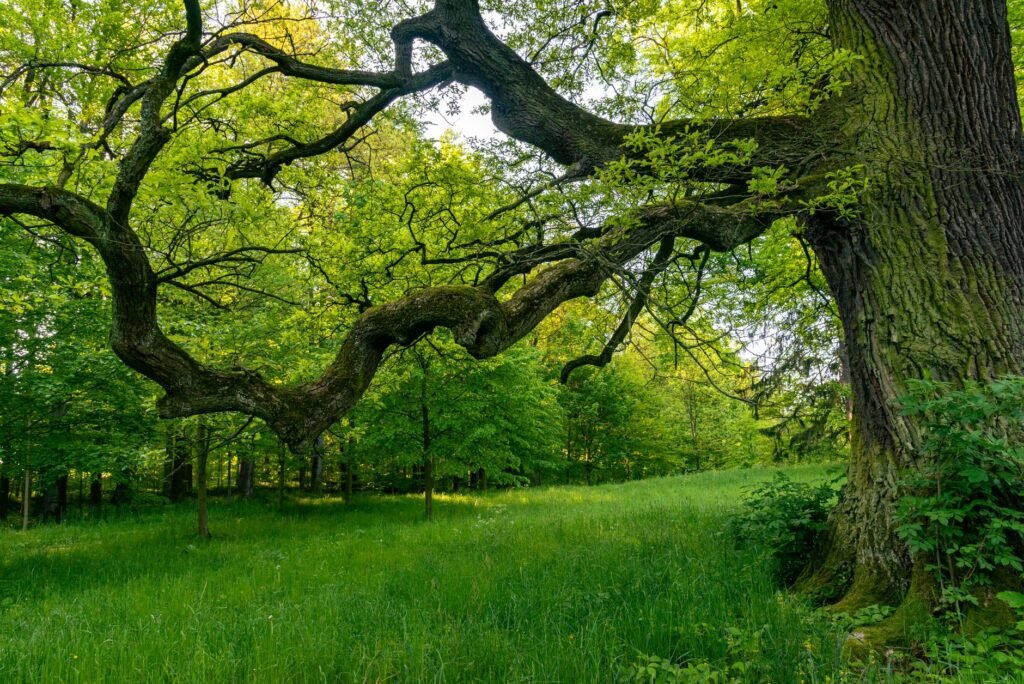
The sacred oak tree is one of the most enduring symbols in world mythology, religion, and cultural memory. Across Europe, the Mediterranean, and parts of the ancient Near East, oaks were revered for their size, longevity, strength, and association with divine power. In many traditions, the oak was not merely a tree but a living sign of the presence of a god, a protector of communities, or a natural meeting point between the human and divine worlds.
Because oaks can live for centuries and dominate the landscape with their broad canopies and deep roots, they became natural emblems of stability, authority, and endurance. Their frequent association with thunder, lightning, prophecy, kingship, and sacred groves made them central to ritual life in several ancient cultures. The meaning of the sacred oak tree varies by region and era, but its symbolic importance is remarkably consistent: it represents strength, sanctity, and a link to higher powers.
Origin and Meaning
The word oak in English comes from Old English āc, from Proto-Germanic aiks, and is related to several cognates in other Germanic languages. The phrase sacred oak tree is descriptive rather than the name of a single deity or mythological being. It refers to the oak as an object of religious reverence.
In many ancient Indo-European traditions, the oak was linked to the sky god, thunder god, or supreme divine authority. This connection likely arose from several observable features:
- Oaks are tall and prominent, often the largest trees in a landscape.
- They are long-lived, which made them symbols of permanence.
- Their wood is hard and durable.
- They are often struck by lightning, reinforcing a connection with storms and thunder.
In some cultures, the sacred status of the oak was tied to its role in groves, oracles, and sanctuaries, rather than to the tree alone. The “sacred oak” therefore refers both to a physical species and to a religious idea.
Historical Context
Oaks in Ancient Religion
The oak held special importance in the religious life of many ancient peoples, especially in Greek, Roman, Celtic, Germanic, and Slavic contexts. Sacred groves of oak trees were often regarded as places where gods could be encountered, sacrifices offered, and prophecy received.
In ancient Greece, the most famous sacred oak was at Dodona, where the oracle of Zeus was believed to speak through the rustling of the oak leaves and other natural signs. In this case, the tree functioned as a medium of divine communication.
Among the Romans, the oak was associated with Jupiter, the god of sky and thunder, and oak wreaths and crowns carried strong civic and military symbolism. Oak leaves were also signs of honor and preservation of life.
In Celtic traditions, the oak was especially important to druids, though much of what is known comes from Roman and later sources. Sacred groves were central to ritual practice, and classical authors frequently mention trees as holy spaces.
Germanic and Norse traditions also connected trees with divine order, though the most famous sacred tree in Norse cosmology is usually the ash Yggdrasil, not the oak. Even so, oak groves and individual oaks were widely respected in northern Europe.
The Oak as a Religious Symbol
The sacred status of the oak was not random. Ancient societies often treated powerful natural forms as manifestations of divine presence. A tree that survived storms, grew large, and attracted lightning could be interpreted as especially favored by the gods. This made the oak a fitting symbol for sovereignty, judgment, and protection.
Main Characteristics
The sacred oak tree is defined less by a single botanical species than by a set of cultural attributes. In many traditions, the oak is recognized through its physical presence and symbolic associations.
Common Characteristics
| Feature | Cultural Meaning |
|---|---|
| Great height and spread | Majesty, authority, and visibility |
| Longevity | Endurance, continuity, ancestral memory |
| Strong trunk and wood | Strength, stability, protection |
| Acorns | Fertility, potential, renewal |
| Attraction to lightning | Connection to thunder gods and sky deities |
| Presence in groves | Sacred space, divine dwelling, ritual gathering |
Identifying Features in Myth and Ritual
The sacred oak is often described or implied as:
- A solitary tree standing in a prominent place
- The central tree in a sacred grove
- A tree used for prophecy or divination
- A tree associated with kingship or priestly authority
- A tree protected by religious law or custom
In mythological literature, the tree may be less important as a species than as a sacred object whose location and condition matter to divine communication.
Family and Genealogy
Unlike gods or heroes, the sacred oak tree does not have a standard genealogy. It is not a personified being with parents, spouses, or children in the usual mythological sense. However, in some traditions, sacred oaks were imagined in familial or ancestral terms through symbolic language.
Symbolic Relationships
- Parentage: Not applicable in a literal mythological sense.
- Children: Acorns were often symbolically understood as offspring, representing fertility and continuity.
- Spouses: Not applicable, though some traditions personified trees in relation to deities.
- Descendants: New oaks growing from acorns could symbolize lineage and survival across generations.
In folklore and ritual, a sacred oak could be treated as the ancestor or protector of a community, especially when it stood for centuries in one place.
Symbols
The sacred oak tree is associated with a rich set of symbols that vary across cultures but often cluster around similar themes.
Common Oak Symbols
- Acorns: fertility, potential, growth, and renewal
- Leaves: victory, honor, and divine favor
- Wood: resilience, craftsmanship, and sacred permanence
- Crown or wreath: authority, triumph, and civic honor
- Lightning: the presence of a thunder god or sky deity
Colors and Materials
While color symbolism is not standardized, certain associations recur:
- Green: life, vitality, sacred growth
- Brown: earthiness, stability, rootedness
- Gold: divine favor, kingship, and sacred authority
- Oak wood: ritual objects, altars, beams, and emblematic furnishings
Oak leaves and acorns also appear in heraldry and decorative arts, where they continue to represent strength and endurance.
Sacred Animals
The sacred oak tree is often connected to animals associated with the forest, thunder, or divination. These associations differ by region and tradition.
Frequently Associated Animals
- Eagles: linked to sky power, kingship, and divine authority
- Crows and ravens: often associated with omens and sacred knowledge
- Deer: forest nobility, natural abundance, and ritual hunting symbolism
- Bulls: strength and sacrificial significance in some ancient religions
- Serpents: earth, renewal, and hidden wisdom in certain traditions
Symbolic Significance
Animals around a sacred oak could be interpreted as messengers or signs. In cultures that practiced augury, the movement or sound of birds near a sacred tree might be read as divine communication. The precise animal symbolism varied widely and should not be generalized too strictly across all traditions.
Sacred Plants
The oak itself is the central sacred plant, but it often appears in relation to other plants in ritual and symbolic contexts.
Related Plants and Their Meanings
- Mistletoe: especially important in later accounts of Celtic ritual; often linked to sacred groves and priestly ceremonies
- Laurel: prophecy, victory, and divine favor in Greco-Roman culture
- Ash: cosmic order and world-tree symbolism in Norse tradition
- Yew: death, memory, and sacred enclosure in some European traditions
- Broom and herbs used in ritual: purification and ceremonial cleansing
The relationship between oak and mistletoe is particularly famous in classical and later interpretations of Celtic religion. However, the details of those practices are not always securely known from independent native sources.
Sacred Places
The sacred oak tree is most often connected to groves, oracle sites, and forest sanctuaries rather than to temple architecture alone.
Major Sacred Locations
Dodona
The oracle at Dodona in northwestern Greece is the most famous sacred oak site in the ancient world. Ancient writers describe Zeus’s oracle there as centered on a sacred oak, whose leaves and sound conveyed divine messages. Priests and priestesses interpreted signs from the tree and surrounding natural phenomena.
Sacred Groves in the Roman and Celtic Worlds
Roman authors mention sacred groves, especially in relation to Gaul, Britain, and Germanic lands. These were often imagined as places where trees themselves formed a temple-like environment. Although many details come from outside observers, the grove was clearly regarded as a religious space.
Local Sanctuaries and Village Oaks
Across Europe, individual old oaks often became landmarks for communal ritual, assemblies, judgments, and seasonal festivals. Some of these places remained culturally important long after formal pagan worship ended.
Typical Sacred Uses of Place
| Place Type | Function |
|---|---|
| Oracle grove | Divination and prophecy |
| Assembly tree | Community meetings and legal judgments |
| Boundary tree | Marking sacred or territorial limits |
| Shrine tree | Offerings to deities or spirits |
| Ancestor tree | Memory, continuity, and local identity |
Powers and Attributes
The sacred oak tree is not a deity, so it does not possess “powers” in the supernatural sense found in mythological beings. However, it is believed to embody or channel certain qualities and divine functions.
Main Attributes
- Strength: the oak stands for physical and moral endurance
- Protection: sacred oaks often sheltered rituals and communities
- Wisdom: especially when linked to oracles and divination
- Authority: associated with kings, chiefs, and high gods
- Fertility: acorns symbolize life, seed, and generative potential
- Continuity: long life makes the oak a sign of ancestral persistence
Religious Domains
In traditions where the sacred oak tree is closely identified with a god, its domains may include:
- Thunder and storm
- Sky and sovereignty
- Prophecy
- Justice
- Sacred kingship
- Forest sanctity
Main Myths
There is no single universal myth of the sacred oak tree. Instead, there are several important stories and recurring motifs.
The Oak of Dodona
One of the oldest and best-known sacred oak traditions concerns Dodona. In Homer and later Greek sources, the oracle of Zeus at Dodona is associated with a sacred tree. The god’s will is interpreted through the rustling of leaves, the sound of bronze objects, and other signs. This makes the oak a direct instrument of divine speech.
Trees as Seats of the Divine
In many traditions, the sacred oak is not merely honored but inhabited by divine presence. The tree may be treated as a dwelling place of a god or as the point where a deity manifests. This idea is widespread in ancient religion, though details differ by culture.
The Oak and the Storm God
A recurring mythological pattern connects the oak to thunder deities. Because oaks are frequently struck by lightning, they were often seen as especially pleasing or visible to the gods of storm and sky. This association appears in Greek, Roman, and Germanic religious contexts.
Sacred Grove Legends
Classical writers often describe druidic or barbarian sacred groves containing powerful trees. While these accounts must be read critically, they show that the idea of a holy tree in a protected natural setting was widespread and influential.
Relationship with Other Mythological Figures
The sacred oak tree is most often linked to gods rather than to heroes. Its principal relationships are symbolic and cultic.
Zeus and Jupiter
The strongest classical association is with Zeus in Greek religion and Jupiter in Roman religion. Both are sky and thunder gods, making the oak an appropriate sacred tree for their worship. At Dodona, the oak was directly connected to Zeus’s oracle.
Other Divine Connections
Depending on region and tradition, the oak may also be associated with:
- Thor in Norse and later Germanic interpretation, through thunder symbolism
- Various local forest or fertility deities
- Priestly figures such as druids, who were believed to interpret sacred signs in wooded sanctuaries
Human Relations
Sacred oaks often stood at the center of social and political life:
- Kings might take oaths under them
- Communities might hold assemblies nearby
- Priests or seers might interpret omens from them
- Legal or ritual acts might require the tree’s presence
Thus, the sacred oak often mediated between divine authority and human governance.
Worship and Cult
Ritual Uses
Worship associated with the sacred oak tree varied widely, but common ritual actions included:
- Offerings of food, libations, or votive objects
- Prayers and vows beneath the tree
- Divinatory interpretation of leaves, branches, or bird activity
- Processions to groves or woodland shrines
- Sacrificial rites performed nearby in some traditions
Festivals and Seasonal Practices
In certain agricultural societies, sacred trees played a role in seasonal festivals tied to fertility, renewal, or community protection. The oak’s acorns and spring foliage made it especially suitable for rituals concerned with life cycles and the return of growth.
Prohibition and Protection
Some sacred oaks were protected by custom or law. Cutting down such a tree could be seen as sacrilege. This protection reinforced the tree’s role as a boundary between ordinary and sacred space.
Later Folk Practices
In later European folklore, old oaks often remained objects of respect, even when formal pagan worship had ended. People might leave offerings, hang tokens, or avoid harming unusually old trees believed to be inhabited by spirits or blessed by God.
Ancient Sources
Several ancient authors mention sacred oaks, sacred groves, or related tree worship. The sources vary in reliability and perspective, especially when describing non-Greek or non-Roman peoples.
Important Classical Sources
- Homer: refers to the oracle of Zeus at Dodona and its sacred associations.
- Hesiod: provides broader mythic and religious context for Greek cosmology, though not a focused account of sacred oaks.
- Herodotus: discusses foreign customs and sacred practices, including tree and grove reverence.
- Apollodorus: preserves mythological traditions relevant to Greek divine landscapes.
- Pausanias: describes sanctuaries, groves, and local cult practices in Greece.
- Ovid: includes tree-related mythic transformations and Roman religious imagery.
- Strabo: offers geographical and ethnographic observations about sacred sites.
- Tacitus: describes Germanic religious customs, including sacred groves.
- Pliny the Elder: comments on natural history, tree use, and religious traditions, including oak-related lore.
Caution with Ancient Reports
Many ancient accounts were written by outsiders. Their descriptions of Celtic, Germanic, or other non-Greek peoples may blend observation, rumor, and literary convention. For this reason, modern scholarship treats some details with caution.
Roman Equivalent
The Roman religious equivalent of the sacred oak tree is most closely associated with Jupiter, the Roman counterpart of Zeus. The oak was linked to Jupiter’s sky and thunder functions, and oak leaves had high symbolic value in Roman public life.
Roman Uses of Oak Symbolism
- Civic honor: the corona civica, a crown of oak leaves, rewarded saving a Roman citizen’s life.
- Military and political symbolism: oak wreaths signified valor and service.
- Religious association: oak groves and trees could be sacred to Jupiter.
The Roman tradition did not create a single oak deity. Rather, it incorporated the oak into the worship of Jupiter and into civic symbolism.
Influence on Modern Culture
The sacred oak tree continues to appear in modern literature, art, public symbolism, and environmental culture. Its image remains powerful because it combines natural grandeur with ancient religious depth.
Modern Literary and Artistic Influence
The oak appears in:
- Fantasy literature as a symbol of ancient wisdom or enchanted forest power
- Historical fiction set in pagan or medieval Europe
- Paintings and illustrations featuring druidic, Celtic, or mythic scenes
- Poetry that uses the oak as a metaphor for endurance, ancestry, or national identity
Popular Culture
The oak tree is often used in:
- Video games with druidic, Celtic, or nature-based worlds
- Television and film settings that evoke ancient forests or sacred places
- Fantasy role-playing systems as a symbol of natural magic and old religion
Public Symbolism
Oak leaves and acorns remain common in:
- National emblems
- Military insignia
- Academic and civic decoration
- Environmental and conservation imagery
The sacred oak tree thus survives not only as a mythological symbol but also as a modern cultural icon.
Curiosities
- The sacred oak of Dodona is among the earliest known examples of a tree used as an oracle in Greek religion.
- Oak leaves have long been associated with honor and strength in both sacred and secular contexts.
- In some traditions, the rustling of oak leaves was interpreted as speech from the gods.
- Oak groves were sometimes treated as natural temples without built architecture.
- The oak’s association with lightning strengthened its link to thunder gods across several cultures.
- Oak symbolism remains common in heraldry, where it often stands for steadfastness and courage.
- Because oaks can live for many generations, they are often treated as living witnesses to history.
- Not every ancient “sacred oak” belonged to the same religious tradition; similar reverence developed independently in different regions.
Frequently Asked Questions
1. What is a sacred oak tree?
A sacred oak tree is an oak that is revered for religious, mythological, or cultural reasons. It may be associated with a god, oracle, grove, or ritual practice.
2. Why were oak trees considered sacred?
Oaks were considered sacred because they are large, long-lived, strong, and often struck by lightning. These qualities made them natural symbols of divine power, stability, and prophecy.
3. Which god is most closely associated with the sacred oak?
In Greek and Roman tradition, the sacred oak is most closely associated with Zeus and Jupiter, both sky and thunder gods.
4. What is the most famous sacred oak in ancient mythology?
The most famous is the sacred oak at Dodona, where the oracle of Zeus communicated through natural signs, especially the movement and sound of the tree.
5. Did ancient Celts worship sacred oaks?
Ancient sources suggest that sacred groves and trees were important in Celtic religion, but detailed knowledge is limited and often comes from Roman writers. The oak was certainly significant, though precise practices vary by source.
6. What do oak leaves and acorns symbolize?
Oak leaves commonly symbolize strength, honor, and authority, while acorns symbolize fertility, growth, and new life.
7. Are sacred oaks still important today?
Yes. While they are no longer central to ancient pagan worship, oaks remain powerful symbols in cultural memory, literature, heraldry, environmentalism, and local traditions.
Conclusion
The sacred oak tree is one of the most enduring religious symbols in human history. Revered for its strength, longevity, and connection to thunder and divine speech, the oak became a natural emblem of power, prophecy, and sacred presence in multiple cultures. From the oracle of Dodona to Roman civic honor and later folk traditions, the oak has served as both a physical landmark and a spiritual symbol.
Its significance lies not in a single myth or doctrine, but in its extraordinary ability to unite nature, religion, and social identity. As a sacred tree, the oak represents the ancient human impulse to find meaning in the living landscape and to recognize in nature a reflection of divine order.

Orin Vale has spent the better part of two decades tracing the threads that connect the world’s oldest stories — from the halls of Asgard to the banks of the Nile, from Olympus to the jungles of the Maya. What began as a childhood fascination with flood myths and trickster gods grew into years of independent study across comparative mythology and ancient religion, always chasing the same question: what did these stories mean to the people who first told them? Orin writes for readers who want more than trivia — the ones looking for the beliefs, fears, and truths that myths were built to carry.