The First Battle of Mag Tuired
Introduction
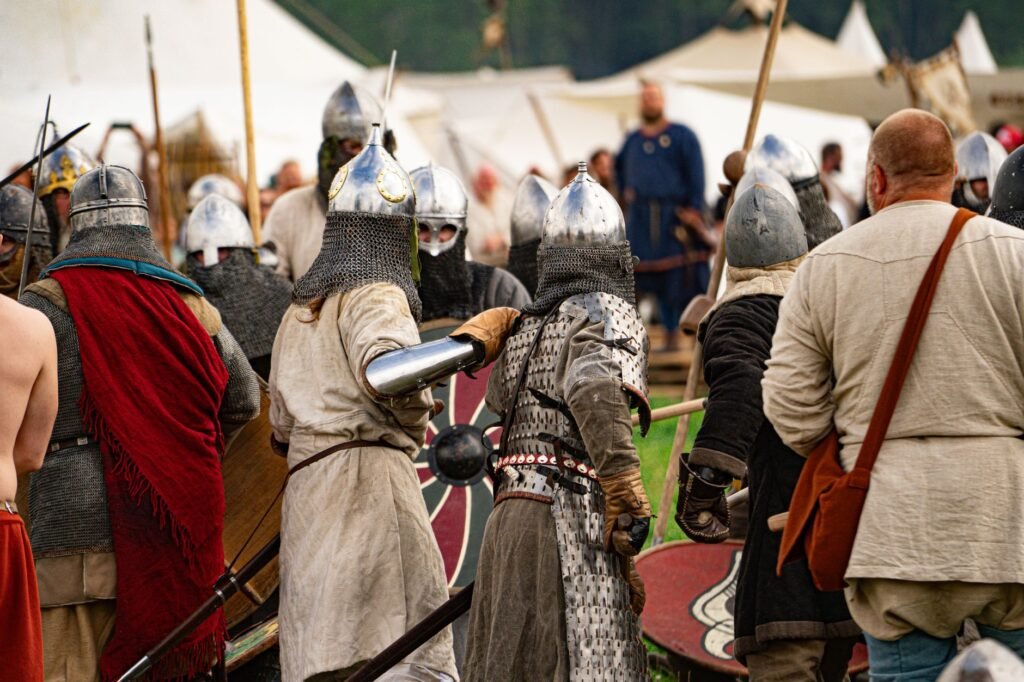
The First Battle of Mag Tuired is one of the central conflict narratives of early Irish mythology. It belongs to the mythological cycle associated with the Tuatha Dé Danann, the supernatural people who, in Irish tradition, inhabited Ireland before the coming of the Milesians. The battle is important because it explains a major turning point in the mythic struggle between the Tuatha Dé Danann and the Fomorians, a hostile and often chaotic group of supernatural beings linked with sea, darkness, and disorder.
The battle is traditionally placed at Mag Tuired or Moytura, meaning the “Plain of the Towers” or possibly the “Plain of the Pillars,” in what is now County Mayo in western Ireland. It should not be confused with the Second Battle of Mag Tuired, a different and better-known conflict later in the mythological tradition. The First Battle is preserved mainly in medieval Irish literature and is a foundational story for understanding kingship, divine sovereignty, and the mythic history of Ireland.
Origin and Meaning
The name Mag Tuired appears in Old Irish forms such as Mag Tuired or Moytura in later anglicized usage. The first element, mag, means “plain.” The second element, tuired, is less certain in origin and has been interpreted in various ways by scholars. Traditional explanations often connect it with towers, pillars, or structures on the plain, but the etymology is not universally agreed upon.
The title First Battle of Mag Tuired is a modern scholarly convention used to distinguish this account from the later battle fought at the same legendary place. Ancient sources themselves do not always label the battle in the same way modern historians do. The narrative survives in medieval manuscript tradition, especially in a text commonly known as Cath Maige Tuired (“The Battle of Mag Tuired”), which is the principal source for the first battle in a surviving form.
Historical Context
The First Battle of Mag Tuired belongs to the body of early medieval Irish mythological literature, written down by Christian scribes from earlier oral and literary traditions. Although the story presents itself as a mythic history of Ireland, it is not a historical record in the modern sense. Instead, it reflects a blend of pre-Christian myth, learned medieval storytelling, and the political and cultural concerns of the time when the texts were compiled.
Several broader contexts shaped the story:
- Pre-Christian Irish belief systems, including ideas about divine rulers, otherworldly beings, and sacred kingship.
- Medieval Irish learned culture, which sought to preserve and organize earlier narratives into genealogies, chronicles, and mythic histories.
- Social and political models of kingship, where rightful rule depended on legitimacy, support, and harmony with the land.
- Cosmic struggle motifs, common in many mythological traditions, where order contests with chaos.
The battle is part of a larger mythic sequence in which the Tuatha Dé Danann arrive in Ireland, establish themselves, and then confront rival supernatural powers. This sequence helped medieval Irish writers explain the imagined deep past of the island.
Main Characteristics
The First Battle of Mag Tuired has several defining characteristics:
- It is a mythological battle, not a documented historical event.
- It involves the Tuatha Dé Danann on one side and the Fomorians on the other.
- The conflict is tied to sovereignty, kingship, and control of Ireland.
- It includes the figure of Nuadu Airgetlám (“Nuadu of the Silver Hand”), the Tuatha Dé Danann king.
- It features the rise of Bres, whose problematic kingship becomes one of the causes of conflict.
- It ends with the Tuatha Dé Danann prevailing, though not without losses and complications.
A distinctive feature of the narrative is its combination of battle, genealogy, political legitimacy, and supernatural power. The story is not only about war but also about who is fit to rule and what kind of order should prevail in the world.
Family and Genealogy
Because the First Battle of Mag Tuired is a mythological event, its “family and genealogy” are primarily those of the major figures involved rather than of the battle itself.
Important figures and relationships
| Figure | Relationship / Role | Notes |
|---|---|---|
| Nuadu Airgetlám | King of the Tuatha Dé Danann | Loses his arm in battle; later restored with a silver replacement |
| Bres | King of the Tuatha Dé Danann for a time | Often described as having Fomorian ancestry through one parent in the tradition |
| Elatha | Fomorian noble | Commonly associated with Bres’s paternal line in surviving tradition |
| Eriú/Eriu or other Tuatha Dé Danann women | Linked through marriage alliances in some versions | Genealogies vary by source |
| Dian Cécht | Healer of the Tuatha Dé Danann | Restores Nuadu after injury in some accounts |
| Goibniu | Divine smith | Associated with the making of weapons and practical support in war |
| The Dagda | Major Tuatha Dé Danann figure | A leading deity-like character in Irish myth |
The genealogical details are not always consistent across sources. Some accounts emphasize Bres’s mixed parentage to explain his divided loyalties or his contested rule. Others focus more on the political function of his kingship than on strict family lineage.
Symbols
The First Battle of Mag Tuired is associated with several symbolic elements, though the medieval source material does not always assign fixed symbols in the way later traditions might.
Common symbolic motifs
- The silver hand of Nuadu: a symbol of restoration, kingship, and adaptation after injury.
- Weapons and spears: signs of war, authority, and martial legitimacy.
- The battlefield plain: a symbolic landscape where order and chaos contend.
- Sacred craft: especially the work of smiths and healers, which represents the cooperation of divine skills in preserving society.
The most enduring symbol is Nuadu’s silver hand, which marks both his loss and his continued suitability for kingship after healing. In many interpretations, it demonstrates that rulership in Irish myth depends not merely on physical wholeness but on restoration, social function, and divine support.
Sacred Animals
The First Battle of Mag Tuired does not present a fixed set of sacred animals in the way some other mythological traditions do. However, animals are part of the wider symbolic environment of Irish myth.
Animal associations in the broader tradition
- Cattle: central to wealth, status, and rivalry in Irish myth, especially in stories involving the Fomorians and Tuatha Dé Danann.
- Horses: associated with movement, nobility, and martial power.
- Ravens and birds of battle: common in Celtic and Indo-European war symbolism, though not always central in this specific account.
- Seals and sea creatures: sometimes linked more generally with otherworldly or maritime powers, especially the Fomorians.
Because the surviving texts emphasize political conflict and kingship more than animal symbolism, any animal associations should be treated cautiously and in relation to the wider mythological corpus rather than as explicit features of the First Battle alone.
Sacred Plants
No single plant is uniquely identified with the First Battle of Mag Tuired in the surviving primary sources. Irish myth, however, often uses plants and trees as symbols of sovereignty, healing, and sacred order.
Plants in the broader mythic setting
- Trees: especially important in Irish tradition as symbols of kingship, stability, and the land.
- Herbs of healing: associated with Dian Cécht and the restorative arts.
- Berries and grain: sometimes tied to fertility, abundance, and divine hospitality.
Since the texts about the battle do not foreground botanical symbolism, any plant associations are indirect. They emerge more from the wider Irish mythological world than from this specific battle narrative.
Sacred Places
The name of the battle itself identifies a key sacred place: Mag Tuired, the plain where the conflict is said to have occurred.
Mag Tuired
Mag Tuired is traditionally located in County Mayo in western Ireland, near modern archaeological and folkloric sites associated with the Moytura area. The location is important in both myth and later Irish cultural memory.
Other connected places
- Ireland as a whole: the battle is part of the mythic explanation for how supernatural peoples established themselves in the island.
- The Tuatha Dé Danann’s otherworldly homeland: variously imagined as a supernatural realm from which they came.
- Fomorian strongholds: not always precisely located, but often described as distant, threatening, or maritime.
Archaeological features in the Moytura region have sometimes been linked in popular imagination to the battle, but such identifications are speculative. The literary tradition should not be treated as direct evidence of a historical battlefield.
Powers and Attributes
The First Battle of Mag Tuired concerns divine and semi-divine powers rather than human armies in the ordinary historical sense.
Powers associated with major groups
Tuatha Dé Danann
- Skill in magic and supernatural arts
- Mastery of craft, healing, and knowledge
- Legitimate kingship
- Control over order and fertility
Fomorians
- Associated with chaos, scarcity, oppression, and threat
- Sometimes linked to the sea and dangerous external forces
- In some traditions, they are not wholly evil but represent a hostile or untamed power
Major attributes of the battle narrative
- It is both a military conflict and a political struggle.
- It tests the legitimacy of rulers such as Bres and Nuadu.
- It illustrates the need for a king to be not only powerful but also just and socially responsible.
- It shows that victory is linked to the cooperation of specialized figures such as healers and smiths.
Main Myths
The First Battle of Mag Tuired appears within a network of connected myths rather than as a fully isolated story.
1. The arrival of the Tuatha Dé Danann
In Irish myth, the Tuatha Dé Danann arrive in Ireland as a supernatural people, bringing knowledge, craft, and power. Their arrival sets the stage for their eventual conflicts with older or rival forces.
2. The kingship of Bres
Bres becomes king of the Tuatha Dé Danann after Nuadu is incapacitated. However, his rule is remembered negatively in the tradition because he is said to have imposed hardship and failed in the responsibilities of kingship. This dissatisfaction contributes to conflict and to his eventual replacement.
3. Nuadu’s injury and silver hand
Nuadu loses his hand in the battle or during related conflict. Since physical imperfection disqualifies him from kingship in the tradition, he is replaced. Dian Cécht then crafts a silver replacement. This episode is one of the best-known myths associated with the battle.
4. The battle itself
The Tuatha Dé Danann fight the Fomorians and defeat them in the First Battle of Mag Tuired. The victory establishes a major phase of Tuatha Dé Danann dominance in mythic Ireland.
5. The broader cycle of conflict
The first battle does not end the struggle between the Tuatha Dé Danann and the Fomorians. That conflict continues and culminates later in the Second Battle of Mag Tuired, where the Tuatha Dé Danann again confront the Fomorians in a different context.
Relationship with Other Mythological Figures
The battle is deeply connected to several major Irish mythological characters.
Nuadu Airgetlám
Nuadu is central to the story. He represents rightful kingship, but his wound raises the issue of whether a king must be physically whole. His restoration allows him to remain a key symbolic figure.
Bres
Bres is one of the most important figures in the battle’s political background. His reign is remembered as oppressive, and his mixed ancestry often marks him as a figure of divided belonging.
The Dagda
The Dagda is a leading Tuatha Dé Danann figure associated with abundance, authority, and wisdom. His presence in the wider mythic world helps frame the battle as part of a larger divine order.
Dian Cécht
The healer’s role shows that warfare in Irish myth is not sustained by force alone. Healing, restoration, and specialized craft are essential to the survival of the community.
The Fomorians
The Fomorians function as antagonists, though the exact nature of their opposition varies. They are not merely monsters; in some traditions they are complex supernatural beings with their own lineage and power.
Worship and Cult
There is no secure evidence that the First Battle of Mag Tuired was the subject of a formal historical cult in the way a documented deity might be. The story survives as literature and myth, not as a clearly attested object of worship.
Possible ritual or cultural functions
- Legitimizing kingship: the narrative may have reinforced ideas about proper rule.
- Didactic storytelling: it illustrates the importance of just leadership and social harmony.
- Seasonal or communal recitation: mythic narratives were likely performed and transmitted in learned settings.
Because the texts were written down in Christian Ireland, any earlier ritual dimensions are difficult to recover with confidence. Scholarly caution is necessary when discussing pre-Christian practices associated with the story.
Ancient Sources
The principal medieval source for the First Battle of Mag Tuired is:
- Cath Maige Tuired (“The Battle of Mag Tuired”), a medieval Irish tale preserved in manuscript tradition.
Related material appears across the broader corpus of medieval Irish literature, including genealogical and mythological texts. However, the First Battle is not found in Greek or Roman authors such as Homer, Hesiod, Apollodorus, Pausanias, or Ovid, since it belongs to the Irish tradition rather than the classical Mediterranean world.
Source considerations
- The text survives in medieval manuscripts rather than in contemporary records of the supposed events.
- Later scribes may have modified earlier material.
- Different recensions and related stories can present details differently.
- Modern scholarship reconstructs the narrative from surviving medieval evidence, not from direct archaeological proof.
Roman Equivalent
There is no true Roman equivalent to the First Battle of Mag Tuired. It belongs specifically to Irish mythology and does not have a direct counterpart in Roman religion or legend.
That said, readers sometimes compare it loosely to Roman stories of:
- Divine wars in early mythic history
- Foundational conflicts that establish political order
- Kingship struggles where legitimacy matters more than brute force
These are only analogies, not equivalences.
Influence on Modern Culture
The First Battle of Mag Tuired has had a notable influence on modern Irish cultural identity, mythology studies, and fantasy literature.
Areas of modern influence
- Irish literary revival: renewed interest in medieval Irish myths helped bring attention to the story.
- Scholarly studies of Celtic mythology: the battle is frequently discussed in academic works on early Irish literature and religion.
- Fantasy fiction and role-playing games: elements such as Tuatha Dé Danann, Fomorians, and mythic battles have inspired modern world-building.
- Art and illustration: artists interested in Celtic themes often depict Nuadu, Bres, or the Moytura battlefield.
- Popular retellings: the battle appears in modern adaptations of Irish myth, sometimes simplified for contemporary audiences.
Its influence is strongest not as a standalone popular story but as part of the larger revival of Irish myth in modern culture.
Curiosities
- The First Battle of Mag Tuired is often overshadowed by the Second Battle of Mag Tuired, even though the first battle is crucial for understanding the mythic background.
- Nuadu’s silver hand is one of the most memorable images in all of Irish mythology.
- The battle is less about a single heroic duel than about political order, divine legitimacy, and social balance.
- The Fomorians are sometimes mischaracterized as simple monsters, but in the tradition they are more complex and can include powerful rulers and kinship lines.
- The site of Mag Tuired has attracted both scholarly attention and local interest, but literary identification should not be confused with confirmed archaeology.
- Medieval Irish literature often blends myth and history so closely that the boundary between them is intentionally blurred.
Frequently Asked Questions
What is the First Battle of Mag Tuired?
It is a mythological battle in early Irish tradition in which the Tuatha Dé Danann fight the Fomorians. It is a foundational story about kingship and supernatural conflict.
Is the First Battle of Mag Tuired a real historical event?
No historical evidence confirms it as a real event. It is best understood as a mythic and literary narrative preserved in medieval Irish sources.
Who won the First Battle of Mag Tuired?
The Tuatha Dé Danann are said to have won the battle.
Why is Nuadu important in the story?
Nuadu is the king of the Tuatha Dé Danann. He loses his hand and is later given a silver replacement, making him one of the best-known figures in Irish mythology.
Who are the Fomorians?
The Fomorians are supernatural beings in Irish myth, often associated with hostility, chaos, and threat. Their exact characterization varies across sources.
What is the connection between the first and second battles of Mag Tuired?
They are separate mythological conflicts at the same legendary place. The first battle is earlier and establishes an important phase in the Tuatha Dé Danann’s dominance; the second battle is a later and more famous conflict.
Where was Mag Tuired located?
The tradition places it in County Mayo, Ireland, though the exact historical or archaeological identification remains uncertain.
What is the main theme of the battle narrative?
The central theme is legitimate rule: who has the right to govern, and what qualities a ruler must have to ensure order and prosperity.
Conclusion
The First Battle of Mag Tuired is a cornerstone of Irish mythological tradition. It combines battle narrative, sacred kingship, ancestry, healing, and political symbolism into a story that helped medieval audiences understand the mythic past of Ireland. Through figures such as Nuadu, Bres, and the Fomorians, it explores the tension between rightful rule and destructive power.
Although it is not a historical event in the modern sense, the story remains culturally significant because it preserves a rich vision of early Irish cosmology and social values. As part of the larger mythological cycle, the First Battle of Mag Tuired continues to shape modern understanding of Irish literature, mythology, and identity.

Orin Vale has spent the better part of two decades tracing the threads that connect the world’s oldest stories — from the halls of Asgard to the banks of the Nile, from Olympus to the jungles of the Maya. What began as a childhood fascination with flood myths and trickster gods grew into years of independent study across comparative mythology and ancient religion, always chasing the same question: what did these stories mean to the people who first told them? Orin writes for readers who want more than trivia — the ones looking for the beliefs, fears, and truths that myths were built to carry.