Introduction
The ba in Egyptian mythology is one of the most important concepts in ancient Egyptian religion and funerary belief. It is often translated loosely as “soul,” but this translation is only approximate. The ba was not a disembodied ghost in the modern sense, nor was it identical to the whole person. Instead, it was one of several spiritual aspects that together made up a human being, a god, or even a place or object in some religious texts.
Understanding the ba is essential for interpreting Egyptian ideas about life, death, identity, and the afterlife. It appears in funerary literature, tomb art, temple theology, and mortuary ritual across many centuries of Egyptian history. Because Egyptian religion developed over a very long period, the meaning and use of the ba varied somewhat by time and context. Ancient sources do not always define it in exactly the same way, but they consistently present it as a vital, mobile, and individualizing force.
Origin and Meaning
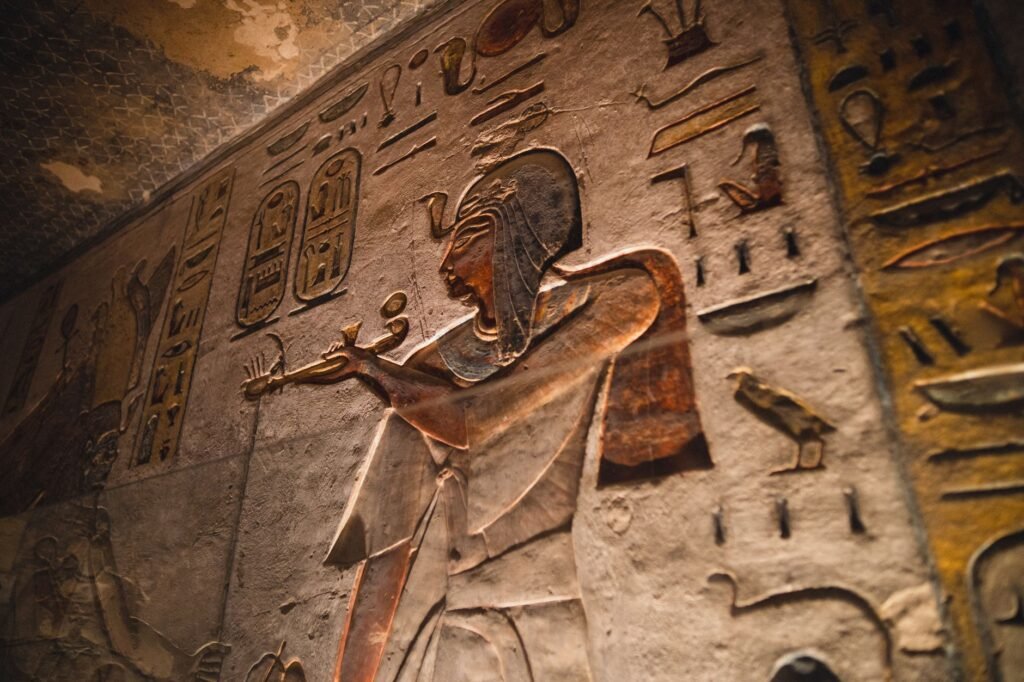
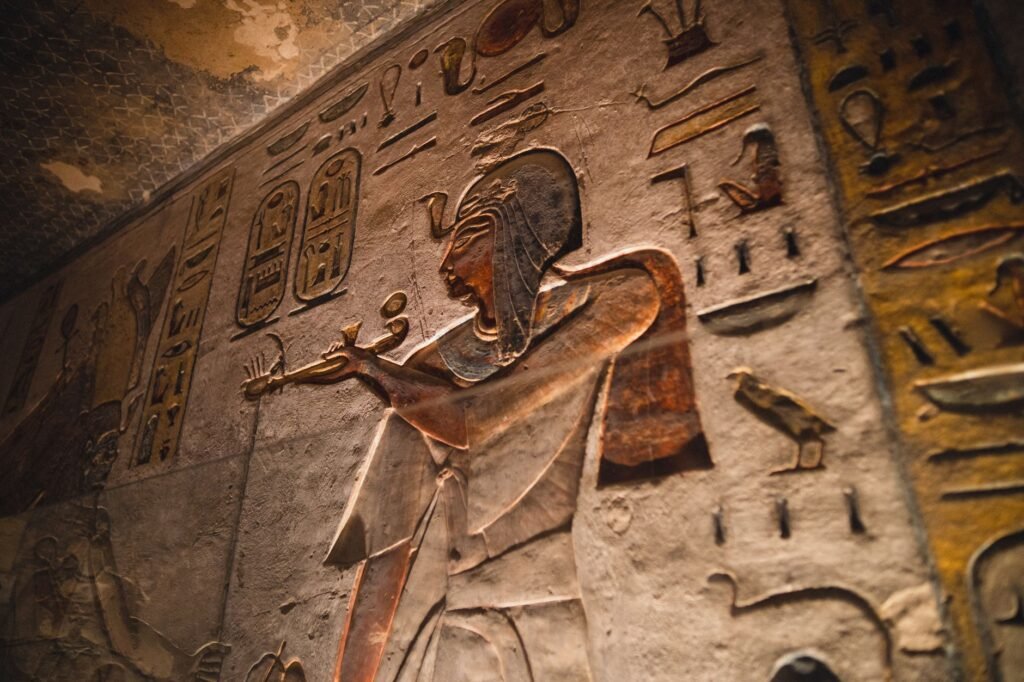
The Egyptian word ba is written with a hieroglyph commonly associated with a human-legged bird. The term is usually transliterated as bꜣ. Its exact etymology is uncertain, and scholars do not agree on a precise original root meaning. In translation, it is often rendered as “soul,” “manifestation,” “power,” or “personality,” but none of these captures the full nuance.
In ancient Egyptian thought, the ba was not simply an invisible essence. It was a dynamic aspect of identity that could move between worlds, appear in different forms, and interact with the living and the dead. For a deceased person, the ba was especially important because it enabled mobility after death and participation in offerings, memory, and transformation.
Different scholarly interpretations emphasize different aspects:
- Identity: the ba as what makes a person recognizably themselves.
- Movement: the ba as a force capable of leaving the tomb and traveling.
- Manifestation: the ba as the form in which a being becomes present.
- Vital essence: the life-bearing element that remains active after death.
Historical Context
The concept of the ba is attested from early periods of Egyptian civilization and became increasingly developed in funerary theology. It is prominent in the Old Kingdom funerary texts, later in the Middle Kingdom and New Kingdom, and continues into the Late Period and Greco-Roman Egypt.
Egyptian religion did not divide the human being into a single “soul” and “body” in the way many modern traditions do. Instead, it used a network of related concepts, including the ka, ba, akh, name, and shadow. These were not always rigidly separated in every text, but together they describe how Egyptians understood existence, death, and survival.
The ba became especially significant in mortuary belief because the dead needed to:
- remain identifiable,
- receive offerings,
- move freely between tomb and afterlife,
- unite with other spiritual components to become fully effective in the next world.
The ba was therefore central to Egyptian hopes for transformation after death. It also appears in temple theology, where divine ba forms could manifest in sacred statues, animals, or visible signs.
Main Characteristics
The most famous visual representation of the ba is a bird with a human head, often shown with arms. This image reflects the ba’s ability to move freely while retaining personal identity. The bird shape suggests mobility, speed, and the capacity to travel between realms. The human head indicates intelligence, recognition, and individuality.
Key features of the ba
- Individual identity: it belongs to a specific person or god.
- Mobility: it can leave the tomb and return.
- Continuity: it helps preserve personal existence after death.
- Transformability: it can assume forms appropriate to the spiritual realm.
- Visibility: it can be depicted, invoked, and addressed in texts.
The ba was often associated with the deceased emerging from the tomb by day and returning by night. In funerary literature, this movement expresses a cycle of freedom and restoration. The deceased is not simply trapped in the tomb; the ba allows participation in the wider universe of the living and the divine.
Family and Genealogy
Strictly speaking, the ba is not a mythological figure with a family genealogy in the same way as a god such as Osiris or Isis. It is a component of being rather than a deity with parents and children.
However, in religious texts, the ba can belong to:
- a human being, especially the deceased
- a god, whose ba expresses divine presence
- a city, place, or sacred object in some broader theological contexts
When attached to a person, the ba is intimately linked to that individual’s name, body, and ritual identity. It does not function as a separate family member but as part of the person’s continuing existence.
In divine theology, a god’s ba could be manifested in multiple ways and sometimes understood as one among several modes of divine presence. Different texts and temples could emphasize different relations among divine forms, so generalizations must be made cautiously.
Symbols
The principal symbol of the ba is the human-headed bird. This iconography is the clearest and most enduring sign of the concept.
Common symbolic associations
| Symbol | Meaning |
|---|---|
| Human-headed bird | Mobility, individuality, spiritual presence |
| Wings | Freedom, transition, movement between worlds |
| Human head | Consciousness, identity, personhood |
| Tomb imagery | The ba’s ability to leave and return |
| Solar association in some texts | Renewal, cyclical rebirth, divine transformation |
The ba is sometimes shown with outstretched wings, emphasizing active movement and protective or transformative power. Because Egyptian art is highly symbolic, the image of the ba should not be read literally as a physical bird but as a theological sign of a being’s spiritual presence.
Sacred Animals
The ba is not tied to one specific sacred animal in the way some deities are associated with the falcon, ibis, cat, or crocodile. Its canonical representation is a hybrid form: a bird with a human head.
That said, the avian form is meaningful in itself. Birds were associated in Egyptian culture with:
- the sky,
- freedom of movement,
- mediation between earth and heaven,
- the soul’s departure and return.
The bird form may evoke the idea of something that can rise above the physical world while still remaining attached to it. In funerary art, the ba is often depicted perching near the tomb, descending toward the mummy, or hovering over sacred spaces.
Sacred Plants
There is no single plant universally dedicated to the ba in the way some plants are linked to particular gods or myths. However, plants in Egyptian religion often symbolized renewal, regeneration, and eternal life, themes closely connected to the ba.
Important symbolic plants in Egyptian funerary and religious settings include:
- the lotus, associated with rebirth and emergence
- the persea tree, sometimes connected with divine knowledge and sacred space
- the papyrus, linked to life, Lower Egypt, and vitality
Although these are not exclusive plants of the ba, they belong to the symbolic world in which the ba operates. Their seasonal growth and renewal resonated with Egyptian hopes for life after death.
Sacred Places
The ba is not confined to one cult center or sacred geography. It appears throughout Egypt’s religious landscape, especially in funerary contexts.
Key locations associated with the ba
- Tombs and necropoleis: the primary setting for the ba’s posthumous movement
- The Valley of the Kings: later royal burial complex where afterlife theology flourished
- Memphis and Saqqara: major centers of mortuary religion
- Thebes: important in New Kingdom burial and afterlife traditions
- Temples: places where divine ba manifestations were recognized and honored
In temple theology, the ba of a god might be linked to a cult statue, sacred animal, or local manifestation. This means the concept had both funerary and cultic relevance.
Powers and Attributes
The ba was believed to have several important functions in Egyptian religion.
Primary powers and responsibilities
- To preserve personal identity after death
- To move between tomb, world, and divine realm
- To receive and partake in offerings
- To commune with the living and the gods
- To become effective in the afterlife
- To enable transformation into blessed existence
The ba is closely connected with the Egyptian ideal of becoming an akh, a transfigured and effective spirit. In many funerary texts, the ba must be sustained, protected, and properly reunited with the rest of the person’s spiritual being. The body mattered greatly in this system, because the ba needed a recognizable anchor.
The ba also reflects an Egyptian understanding of personhood as relational and composite. A person did not simply “have” a soul; they existed through a network of body, name, spirit, and memory maintained by ritual.
Main Myths
There is no single “myth of the ba” comparable to the myths of Osiris, Isis, or Ra. Instead, the ba appears across a wide range of texts and ritual narratives.
Important mythic and religious themes involving the ba
1. The journey of the deceased
Funerary texts describe the ba leaving the tomb, moving through the day, and returning to the body or burial place. This movement symbolizes continued existence and spiritual freedom.
2. Reunification with the body
The ba often needs to be reunited with the body or mummy to ensure wholeness and effective survival. This reflects the importance of bodily preservation in Egyptian mortuary practice.
3. Divine manifestation
Gods may possess ba forms that appear in sacred places or in ritual contexts. The divine ba expresses presence, power, and accessibility.
4. Solar and cyclical renewal
In some texts, the ba is associated with the sun’s daily cycle, linking spiritual rebirth to cosmic regeneration.
5. Transformation in the afterlife
The ba participates in the deceased’s transformation into a blessed state, often alongside other spiritual elements.
Because the concept is spread across many sources, it is best understood as a theological principle rather than a single narrative character.
Relationship with Other Mythological Figures
The ba is best understood in relation to other Egyptian concepts rather than as an independent deity.
Relation to the ka
The ka is often described as the life-force or vital double. While the ka and ba are distinct, they are complementary. The ka is frequently associated with sustenance and nourishment, especially offerings, while the ba is associated with movement and individuality. In some texts, the successful afterlife requires both.
Relation to the akh
The akh is a transfigured, effective spirit. The ba contributes to this state, but is not identical to it. The relationship varies by text and period.
Relation to the body
The body or mummy remains crucial. The ba needs a preserved body as a point of identity and return. This is one reason mummification was so important in Egyptian funerary practice.
Relation to the name
The name (ren) preserved identity in memory and ritual. The ba works together with the name to keep the deceased recognizable.
Relation to the shadow
The shadow (shut) is another component of personhood in Egyptian thought. Like the ba, it expresses presence, but it is conceptually distinct.
Worship and Cult
The ba itself was not worshiped as a deity in the usual sense. However, the concept was deeply embedded in worship, funerary rites, and ritual provision for the dead and gods.
Funerary practice
In mortuary religion, priests and family members provided:
- food offerings,
- drink offerings,
- recitations,
- incense,
- tomb maintenance.
These acts ensured the well-being of the deceased’s ba. Offering formulas often asked that bread, beer, oxen, birds, and other goods be supplied for the dead, enabling their continued existence.
Ritual importance
The ba needed proper ritual support to remain active and beneficial. Without offerings and remembrance, the deceased risked spiritual weakness or deprivation.
Divine cult
In temple religion, gods were thought to manifest through their ba forms. This allowed worshippers to engage with divine presence in specific cult places and images. While the details varied from one cult center to another, the ba concept helped explain how an unseen god could still be locally present.
Ancient Sources
The ba is known from many Egyptian sources spanning millennia. Because the surviving evidence is dispersed, no single classical author provides a complete account. Instead, the concept is reconstructed from Egyptian inscriptions, funerary texts, tomb scenes, and later interpretations.
Major Egyptian sources
- Pyramid Texts: early royal funerary inscriptions that refer to the deceased’s continued existence and transformation
- Coffin Texts: Middle Kingdom mortuary spells expanding access to afterlife knowledge
- Book of the Dead: New Kingdom and later spell collections guiding the dead
- Tomb inscriptions and funerary stelae
- Temple texts and hymns describing divine presence
Classical sources and later writers
Greco-Roman authors such as Herodotus, Plutarch, and others sometimes comment on Egyptian religion, but they do not provide a technical explanation of the ba as Egyptians themselves understood it. Their writings are valuable for historical context, yet they should be used cautiously because they interpret Egyptian beliefs through Greek and Roman frameworks.
Modern understanding therefore depends primarily on Egyptian-language sources, not on later classical summaries.
Roman Equivalent
There is no exact Roman equivalent to the Egyptian ba. Roman religion and philosophy used terms such as anima, spiritus, and umbra, but these do not map perfectly onto the Egyptian concept.
If a rough analogy is necessary, anima is sometimes used in translation because it means “soul.” However, this is only partial. The Egyptian ba is more specific: it is a mobile, individualized manifestation that remains connected to the body, tomb, and offerings.
Roman authors who encountered Egyptian religion often reinterpreted it within their own categories, but this does not create a true one-to-one counterpart.
Influence on Modern Culture
The ba has attracted modern interest through archaeology, Egyptology, literature, and popular media. It appears frequently in discussions of Egyptian spirituality because it is one of the most distinctive ideas in ancient mortuary belief.
Modern cultural influence includes:
- Egyptology and museum interpretation, where the ba is often illustrated by the human-headed bird
- Historical fiction, especially novels set in ancient Egypt
- Documentaries and educational media about mummies and the afterlife
- Fantasy literature and games, which sometimes adapt Egyptian afterlife concepts
- Art and design, where the ba image is used as a symbol of soul, freedom, or transformation
In popular culture, the ba is sometimes simplified as “the soul,” but scholarly presentations increasingly explain its more complex role. Accurate depiction matters because the Egyptian view of the person was more composite than many modern audiences expect.
Curiosities
Lesser-known facts about the ba
- The ba was not limited to humans; gods could also have ba forms.
- Egyptian texts sometimes treat the ba as something that can speak, move, and interact.
- The famous bird-headed depiction is not meant to be a literal zoological image.
- The ba concept helped explain how the dead could be both near the tomb and active in another realm.
- Some religious contexts suggest that even places or cities could have a kind of ba, broadening the idea beyond individual persons.
- The ba is one reason Egyptian funerary art so often shows offerings, birds, and scenes of emergence from the tomb.
- The concept remained relevant across very long periods, though its exact emphasis changed over time.
Frequently Asked Questions
1. What is the ba in Egyptian mythology?
The ba is an ancient Egyptian spiritual concept often translated as “soul,” but more accurately it refers to a person’s mobile, individualizing spiritual aspect that could move between the tomb, the world of the living, and the afterlife.
2. How is the ba different from the ka?
The ka is usually understood as a life-force or vital double, especially linked to nourishment and offerings, while the ba is associated with movement, personality, and spiritual manifestation. They are distinct but complementary.
3. Why is the ba shown as a bird with a human head?
This image symbolizes the ba’s freedom of movement and continued personal identity. The bird form suggests mobility, while the human head indicates consciousness and individuality.
4. Did only humans have a ba?
No. In Egyptian religion, gods could also have ba forms. The concept was not limited to human beings, although it is most commonly discussed in connection with the dead.
5. Was the ba the same as the soul?
Not exactly. “Soul” is a convenient translation, but it is incomplete. The ba is better understood as a unique spiritual manifestation or aspect of personhood in ancient Egyptian thought.
6. What happened to the ba after death?
According to funerary belief, the ba could leave the tomb, receive offerings, move freely, and participate in the deceased’s transformation into a blessed afterlife state. It remained connected to the body and other spiritual elements.
7. Is the ba mentioned in the Book of the Dead?
Yes. The ba appears in funerary spells and related texts, especially in contexts involving movement, transformation, and reunion with the body.
8. Did the ancient Egyptians believe the ba was immortal?
Egyptian religion suggests that the ba could continue after death if properly sustained through preservation, ritual, and divine favor. However, Egyptian afterlife belief was conditional and ritual-dependent rather than a simple doctrine of automatic immortality.
Conclusion
The ba in Egyptian mythology is one of the clearest examples of how ancient Egyptians understood the person as a complex and enduring unity of body, identity, and spiritual force. Neither exactly a ghost nor simply a soul, the ba was a mobile and recognizable manifestation that allowed human beings and gods to exist beyond ordinary physical life.
Its importance lies not only in funerary religion but also in the broader Egyptian vision of transformation, continuity, and cosmic order. Through tomb art, inscriptions, offerings, and sacred texts, the ba reveals how deeply the Egyptians valued memory, preservation, and the possibility of life beyond death. For that reason, it remains one of the most significant concepts in the study of ancient Egyptian mythology and religion.

Orin Vale has spent the better part of two decades tracing the threads that connect the world’s oldest stories — from the halls of Asgard to the banks of the Nile, from Olympus to the jungles of the Maya. What began as a childhood fascination with flood myths and trickster gods grew into years of independent study across comparative mythology and ancient religion, always chasing the same question: what did these stories mean to the people who first told them? Orin writes for readers who want more than trivia — the ones looking for the beliefs, fears, and truths that myths were built to carry.