Introduction
Horus is one of the most important gods in ancient Egyptian mythology. He appears in a wide range of forms, names, and local traditions, but he is most widely known as a sky deity, a divine king, and the avenging son of Osiris and Isis. Because Egyptian religion developed over thousands of years and across many regions, Horus was not a single fixed figure. Instead, he was a complex divine presence whose character changed with time, place, and context.
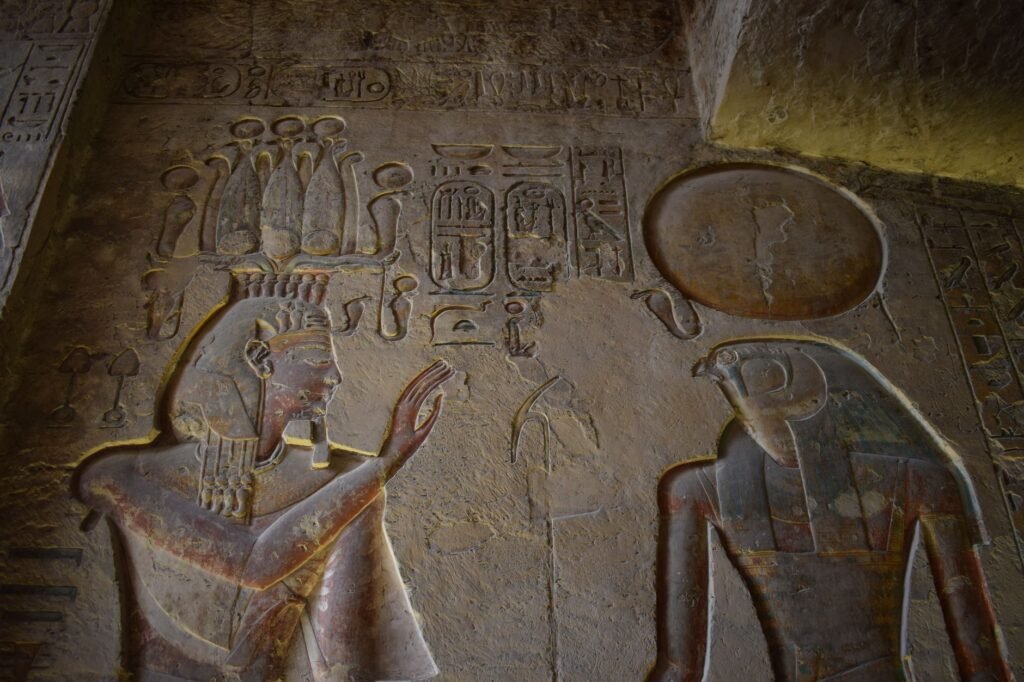
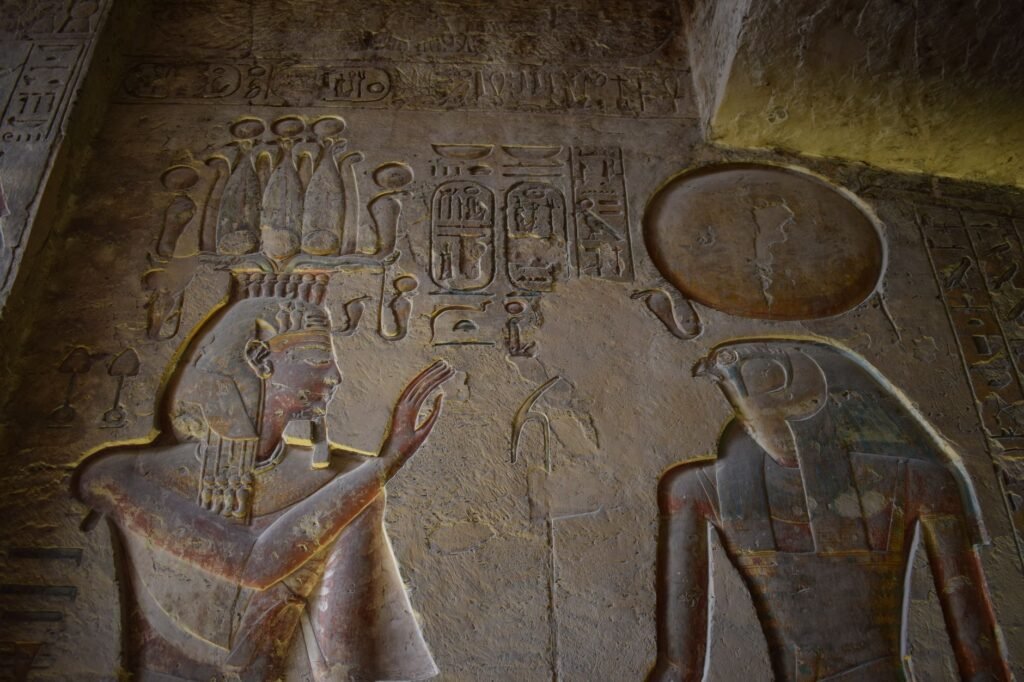
For many readers asking who is Horus in Egyptian mythology, the answer lies in his role as a symbol of kingship, protection, and the restored order of the world. He is often shown as a falcon or as a man with a falcon head, and his famous “Eye of Horus” became one of the best-known symbols in Egyptian culture. Horus also played a central role in mythic cycles involving the struggle between rightful rule and chaos, especially in the story of his conflict with Seth.
Origin and Meaning
The name Horus is the conventional Greek form of an Egyptian divine name. In ancient Egyptian, the god is usually associated with Heru or Hor forms, though several related names and titles appear depending on the period and context. The exact linguistic development is complex, and specialists distinguish between different Horus deities and epithets.
The name is commonly understood in connection with the sky and height, reflecting Horus’s association with the heavens and with the falcon, a bird that soars high above the land. In many texts, Horus functions less as a single “personality” than as a divine title or sacred force linked to kingship and celestial power.
Historical origin
Horus belongs to the earliest layers of Egyptian religion. He is attested from the Predynastic and Early Dynastic periods, long before the great temple traditions of the first millennium BCE. This early presence matters because Horus became closely tied to the concept of the Egyptian king, whose authority was often described as “the living Horus.”
Over time, different local cults and myths produced multiple Horus forms, including:
- Horus the Elder (Heru-ur), a sky god distinct from later forms
- Horus, son of Isis and Osiris, the avenger and rightful heir
- Horus of Behdet and other local manifestations
- Harpocrates, the child Horus in Greco-Roman tradition
Historical Context
Horus must be understood within the broader structure of Egyptian religion, where gods were strongly connected to kingship, geography, ritual, and cosmic order. Ancient Egypt was not a unified theological system in the modern sense. Instead, religious beliefs varied by city, temple, and era, and deities were often merged, paired, or reinterpreted.
Horus and kingship
One of Horus’s most important historical functions was his relationship to the pharaoh. The king was frequently identified with Horus during life, while after death he could be linked with Osiris. This helped express continuity between earthly rule, divine legitimacy, and the afterlife.
Horus and political theology
The mythic conflict between Horus and Seth was more than a family drama. It symbolized:
- legitimate succession
- the triumph of order over disorder
- the unification and stability of Egypt
- the authority of the reigning king
In this sense, Horus was a deeply political god, but in the ancient Egyptian sense: he embodied the rightful structure of the cosmos and the state.
Main Characteristics
Horus has several major characteristics, some of which belong to different local traditions.
Common attributes
- Sky deity: linked to the heavens and the sun’s movement
- Falcon form: often represented as a falcon or falcon-headed man
- Royal god: associated with kingship and sovereignty
- Avenger: defender of his father Osiris
- Protector: guardian of the ruler and of Egypt itself
Identifying features
Horus is usually recognized by:
- the falcon or falcon head
- the double crown or royal insignia
- the Eye of Horus
- solar imagery in some traditions
- his association with the king’s falcon standard
Different forms of Horus may emphasize different traits. For example, child Horus is vulnerable and protective in a domestic setting, while Horus the falcon god is powerful, majestic, and linked to celestial rule.
Family and Genealogy
Horus has a complicated genealogy because Egyptian mythology includes several overlapping Horus figures.
Main family relationships
In the best-known Osirian cycle:
- Father: Osiris
- Mother: Isis
- Uncle and rival: Seth
- Aunt: Nephthys
This is the version most familiar from later Egyptian literature and from modern retellings.
Alternative traditions
Earlier or parallel traditions sometimes present Horus differently. In some contexts:
- Horus may be a son of Nut and Geb
- Horus may exist as Horus the Elder, separate from the son of Isis
- some temple traditions merge Horus with local gods, producing complex family arrangements
Spouse and descendants
Horus’s marital relationships vary by tradition. In some sources he is connected with Hathor, a goddess of love, music, and kingship. In others, especially later mythic compilations, he is associated with Seshat, Meretseger, or other figures in local cults. These associations are not always consistent across Egypt or across time.
Symbols
Horus is linked to several powerful symbols in Egyptian religion.
| Symbol | Meaning | Notes |
|---|---|---|
| Falcon | Divine kingship, sky, speed, vision | Most common animal form of Horus |
| Eye of Horus | Protection, healing, wholeness | Also called the Wedjat Eye |
| Double crown | Rule over Upper and Lower Egypt | Associated with royal authority |
| Scepter and insignia | Power and legitimacy | Often shown in royal iconography |
| Sun disk in some forms | Celestial power | Especially in solar interpretations |
Eye of Horus
The Eye of Horus is among the most famous Egyptian symbols. It represents protection, restoration, and completeness. In myth, Horus loses an eye during his struggle with Seth, and the eye is later restored. Because of this, the eye became a symbol of healing and wholeness in both religious and funerary contexts.
Sacred Animals
The most important sacred animal of Horus is the falcon.
Falcon
The falcon symbolizes:
- sharp vision
- command over the sky
- royal power
- speed and vigilance
Because falcons fly high and hunt with precision, they were an ideal image for a sky god and divine ruler. Horus is frequently shown as a falcon perched on a standard, wearing the crown of kingship, or protecting the pharaoh.
Other animal associations
In some local traditions, Horus’s identity can be linked with other manifestations, but the falcon remains the dominant sacred animal. Egyptian gods were often represented through multiple animal signs, yet Horus’s falcon identity is especially stable and widespread.
Sacred Plants
There is no single universally recognized sacred plant specifically and exclusively tied to Horus in the way the falcon is tied to him. However, plants appear in broader ritual and symbolic contexts related to Horus.
Possible symbolic associations
- Papyrus: often linked with Lower Egypt and royal symbolism
- Linen and ritual vegetation: used in temple and funerary contexts
- Lotus: in wider Egyptian religion, associated with renewal and the sun
Because Egyptian divine symbolism was highly interconnected, plants associated with renewal, purification, and royal or cosmic order could appear in contexts involving Horus. Still, it is best to say that Horus is not primarily defined by a single sacred plant tradition.
Sacred Places
Horus was worshipped in many sites across Egypt, and his cult was especially strong in certain major centers.
Important locations
| Place | Significance |
|---|---|
| Edfu | Major cult center of Horus, especially Horus of Behdet |
| Nekhen (Hierakonpolis) | Early and important center of Horus worship |
| Kom Ombo region | Associated with temple traditions including Horus forms |
| Buto | Connected in some traditions to the struggle between Horus and Seth |
| Thebes | Later temple culture incorporated Horus in broader divine networks |
Edfu
The temple at Edfu is one of the most important surviving monuments for Horus worship. Its inscriptions preserve later temple theology and ritual narratives, including the conflict between Horus and Seth. Although the temple is from a later period, it reflects longstanding traditions about Horus’s authority and cosmic role.
Nekhen
Nekhen, also known as Hierakonpolis, was an early center of Horus devotion. This site is especially important for understanding the early political and religious association between Horus and kingship.
Powers and Attributes
Horus’s powers are best understood through his roles as a god of sky, kingship, and restoration.
Principal domains
- Kingship and legitimacy
- Protection of the pharaoh
- Sky and celestial order
- Victory over enemies
- Healing and restoration
- Maintaining maat, the Egyptian principle of cosmic order and balance
Divine responsibilities
Horus is often portrayed as the force that ensures the proper succession of rule. In myth, he does not merely defeat Seth; he also re-establishes rightful order after disruption. This makes him a guardian of continuity, not only a warrior.
The role of the king
The pharaoh was commonly interpreted as a living embodiment or representative of Horus. This meant that Horus’s powers were not abstract. They were expressed in ritual, state ideology, and royal iconography.
Main Myths
Several myths define Horus’s religious importance.
The struggle with Seth
The best-known myth tells how Horus battled Seth for the throne of Egypt after the death of Osiris. The contest includes:
- verbal disputes before divine councils
- physical battles
- magical interventions
- moral arguments over rightful inheritance
Different versions of the story vary in detail. In some accounts, the conflict is prolonged and absurdly legalistic; in others, it is violent and dramatic. What remains consistent is the theme of legitimate succession.
The loss and restoration of the eye
In one important episode, Horus loses an eye during the struggle with Seth. The eye is later restored, either by divine action or magical healing. This myth gave rise to the Eye of Horus as a symbol of restoration and protection.
Horus and Osiris
Horus is often the son who avenges Osiris and restores his line. Osiris himself becomes a ruler of the dead, while Horus takes the throne of the living. Together they form a complementary pair: one dead, one reigning; one father, one heir.
Horus as child
In later religious imagery, Horus appears as a child, protected by Isis. This image became especially influential in the Greco-Roman era and helped shape later devotional and artistic traditions. The child Horus was associated with vulnerability, divine protection, and renewal.
Relationship with Other Mythological Figures
Horus’s interactions with other gods are central to his identity.
Osiris
Osiris is usually Horus’s father in the most famous tradition. Their relationship expresses dynastic continuity and the passage from death to rightful rule.
Isis
Isis is Horus’s mother and protector. Her role is vital: she shelters the child, uses magical knowledge, and helps secure his future kingship.
Seth
Seth is Horus’s principal rival. Their conflict is one of the foundational myths of Egyptian religion. Seth represents disorder, aggression, and destabilization, though his role is not always purely negative in all periods of Egyptian belief.
Ra and other solar gods
Horus is sometimes combined with solar divinity. In some traditions, Horus functions as a heavenly or solar force linked with Ra, producing forms such as Ra-Horakhty (“Ra, Horus of the Horizons”). This reflects the Egyptian tendency to merge divine identities.
Hathor
Hathor is often associated with Horus as consort or divine counterpart in temple traditions. Their relationship varies by region and period, and it is sometimes more symbolic than narrative.
Worship and Cult
Horus was widely worshipped throughout Egyptian history.
Forms of worship
Worship of Horus included:
- temple rituals
- royal ceremonies
- offerings of food, drink, incense, and libations
- festivals connected with kingship and divine renewal
- protective rites invoking the Eye of Horus
Temple practice
In major temples such as Edfu, priests maintained cult statues, performed daily offerings, and recited ritual texts. These acts were meant to preserve divine order and benefit both the god and the human community.
Popular devotion
Horus was not only a state god. He also played a role in everyday religious life. Amulets bearing the Eye of Horus were worn for protection, especially in contexts involving health, danger, and travel.
Festivals
Specific festivals varied from place to place, and detailed reconstructions are often based on temple inscriptions from later periods. In general, celebrations of Horus were tied to:
- royal succession
- victory over chaos
- the renewal of divine power
- local temple processions
Ancient Sources
Because Horus appears across millennia of Egyptian religion, the most important ancient sources are Egyptian rather than Greek or Roman.
Egyptian sources
Key sources include:
- Pyramid Texts
- Coffin Texts
- Temple inscriptions
- Ptolemaic temple texts, especially from Edfu
- Mythological papyri and ritual compositions
These texts provide the richest evidence for Horus’s changing roles.
Classical authors
Greco-Roman writers also discuss Egyptian religion, though often through interpretation rather than direct tradition.
- Herodotus mentions Egyptian customs and gods in broad terms
- Plutarch, in On Isis and Osiris, gives a philosophical account of Egyptian divine myths, including Osiris, Horus, and Seth
- Diodorus Siculus also discusses Egyptian religion
- Pliny the Elder and other Roman authors refer to Egyptian symbols and beliefs in passing
It is important to note that classical authors sometimes misunderstand Egyptian theology or present it through Greek categories.
Roman Equivalent
Horus did not have a perfect Roman equivalent. Roman religion tended to identify foreign gods with Roman or Greco-Roman figures, but Egyptian deities retained their own identities.
Closest adaptations
In the Greco-Roman world, Horus was often associated with:
- Apollo, because of solar and protective associations in some interpretive traditions
- Harpocrates, the child Horus, as a distinct figure in Hellenistic and Roman contexts
- Sol or solar imagery in broader interpretive frameworks
These are not strict equivalences. They are better understood as interpretive adaptations used by Greek and Roman observers or by syncretic Egyptian cults under foreign rule.
Influence on Modern Culture
Horus has had a major presence in modern culture, especially through Egyptology, literature, art, film, and popular symbolism.
Modern uses and adaptations
- Literature: Horus appears in novels and historical fiction about ancient Egypt
- Film and television: often represented as a powerful god or as the source of the Eye of Horus symbol
- Video games: frequently used in fantasy settings inspired by Egyptian mythology
- Art and design: the falcon head and Eye of Horus are common visual motifs
- Fashion and jewelry: Horus imagery is often used as a protective or exotic symbol
Cultural significance today
In modern usage, Horus is often simplified into a symbol of ancient wisdom, protection, or royal power. While these uses can be visually striking, they sometimes overlook the complexity of the god’s ancient religious meaning.
Curiosities
- Horus is not just one god in all sources; multiple Horus figures exist in Egyptian religion.
- The Eye of Horus became a mathematical and symbolic sign in later Egyptian tradition, associated with fractions in some contexts.
- The king being called the “living Horus” shows how closely religion and monarchy were linked in ancient Egypt.
- The story of Horus and Seth was preserved and elaborated over many centuries, not in a single fixed version.
- Some temple traditions present Horus in highly localized forms, such as Horus of Edfu or Horus of Behdet.
- The child Horus image strongly influenced later Greco-Roman devotion, especially in the figure of Harpocrates.
- Horus’s falcon form made him one of the most visually recognizable gods in Egyptian art.
Frequently Asked Questions
1. Who is Horus in Egyptian mythology?
Horus is a major Egyptian god associated with the sky, kingship, protection, and victory over chaos. He is often depicted as a falcon or falcon-headed man.
2. Is Horus the son of Isis and Osiris?
In the best-known mythological tradition, yes. Horus is the son of Isis and Osiris, though Egyptian sources also preserve other Horus forms and genealogies.
3. What does the Eye of Horus mean?
The Eye of Horus symbolizes protection, healing, wholeness, and restoration. It comes from myths in which Horus loses and regains an eye during his conflict with Seth.
4. Why was Horus important to pharaohs?
The pharaoh was often identified with Horus as the living ruler. This connection supported the king’s divine legitimacy and role as guardian of order.
5. What animal represents Horus?
Horus is most strongly associated with the falcon, which symbolizes height, speed, vision, and royal power.
6. Where was Horus worshipped?
Horus was worshipped across Egypt, especially at Edfu and Nekhen. Different local forms of Horus were honored in different regions.
7. Did Horus have only one form?
No. Egyptian religion includes several Horus forms, such as Horus the Elder, Horus the child, and local Horus deities linked to specific temples.
8. Is Horus the same as the Roman gods?
Not exactly. Horus was sometimes compared with Roman or Greco-Roman figures, but he remained a distinctly Egyptian deity with his own traditions.
Conclusion
Horus is one of the central gods of Egyptian mythology and one of the clearest examples of how ancient Egyptian religion linked divine power with kingship, cosmic order, and social stability. As a sky god, falcon deity, royal protector, avenger of Osiris, and symbol of restoration, Horus played a role that extended far beyond a single myth.
Understanding who is Horus in Egyptian mythology requires recognizing the diversity of Egyptian religious tradition. He was not one fixed character but a family of related divine forms shaped by centuries of ritual, temple culture, and political ideology. From the Eye of Horus to the living pharaoh, his legacy remained one of protection, legitimacy, and the triumph of order over chaos.

Orin Vale has spent the better part of two decades tracing the threads that connect the world’s oldest stories — from the halls of Asgard to the banks of the Nile, from Olympus to the jungles of the Maya. What began as a childhood fascination with flood myths and trickster gods grew into years of independent study across comparative mythology and ancient religion, always chasing the same question: what did these stories mean to the people who first told them? Orin writes for readers who want more than trivia — the ones looking for the beliefs, fears, and truths that myths were built to carry.