Introduction
The question how many gods and goddesses did the ancient Egyptians worship does not have a single exact answer. Ancient Egyptian religion was polytheistic, meaning it recognized many divine beings, but the number of deities changed over time, from region to region, and from one period to another. Some gods were widely worshipped across Egypt, while many others were local, specialized, or known only from a small number of texts and monuments.
Rather than a fixed pantheon, ancient Egyptian religion was a flexible system of cults, myths, and divine powers. Major gods such as Ra, Osiris, Isis, Horus, Amun, Ptah, and Hathor were central to national religion, yet hundreds of local deities also existed. In total, modern scholars identify hundreds of named gods and goddesses, and in a broader sense the number rises even higher when minor, merged, regional, and personified divine beings are included.
Understanding this religious world is important because it shaped Egyptian art, kingship, burial practices, morality, and everyday life for more than three millennia. It also influenced later Mediterranean religions and continues to inspire modern culture.
Origin and Meaning
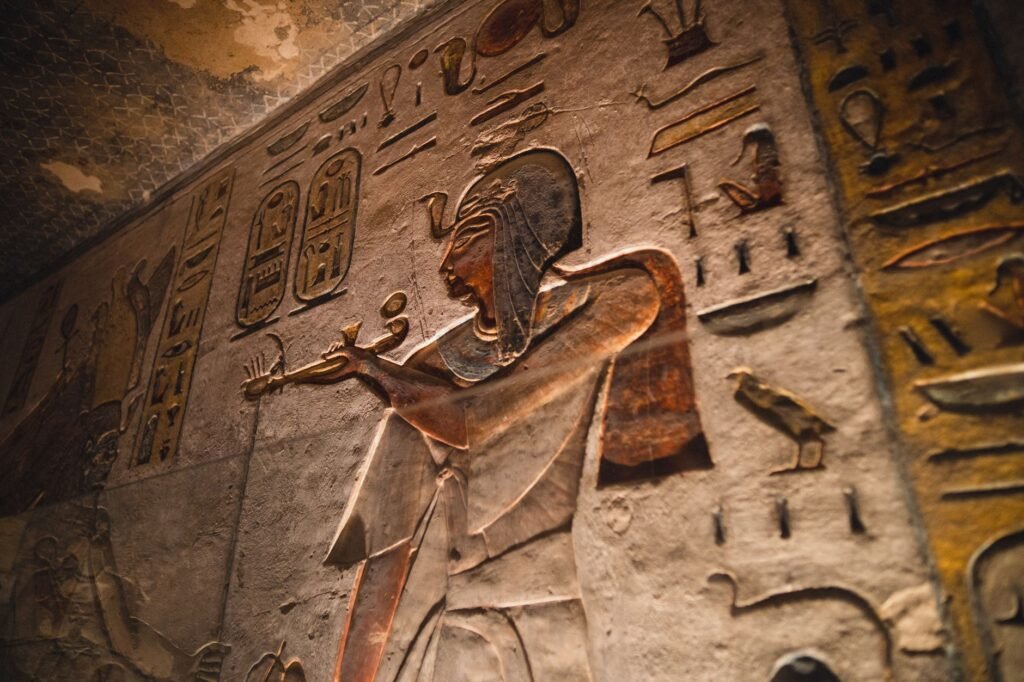
The word “god” in ancient Egyptian was commonly expressed through terms such as nṯr (often transcribed as netjer), which referred to a divine being, sacred power, or holy force. The feminine form could be used for goddesses, although Egyptian religious language did not always sharply separate gods and goddesses in the way modern languages do.
The phrase “ancient Egyptians worshipped many gods and goddesses” reflects the core principle of Egyptian religion: divinity was plural, layered, and local as well as cosmic. A deity could be a creator, a patron of a city, a force of nature, a guardian of the dead, or a royal symbol. Some gods were believed to have developed from local spirits or natural powers, while others emerged from theological elaboration in temple traditions.
Egyptian religion developed over thousands of years, beginning in the prehistoric and early dynastic periods and continuing through the pharaonic era. Over time, deities could gain prominence, merge with others, or be absorbed into larger theological systems.
Historical Context
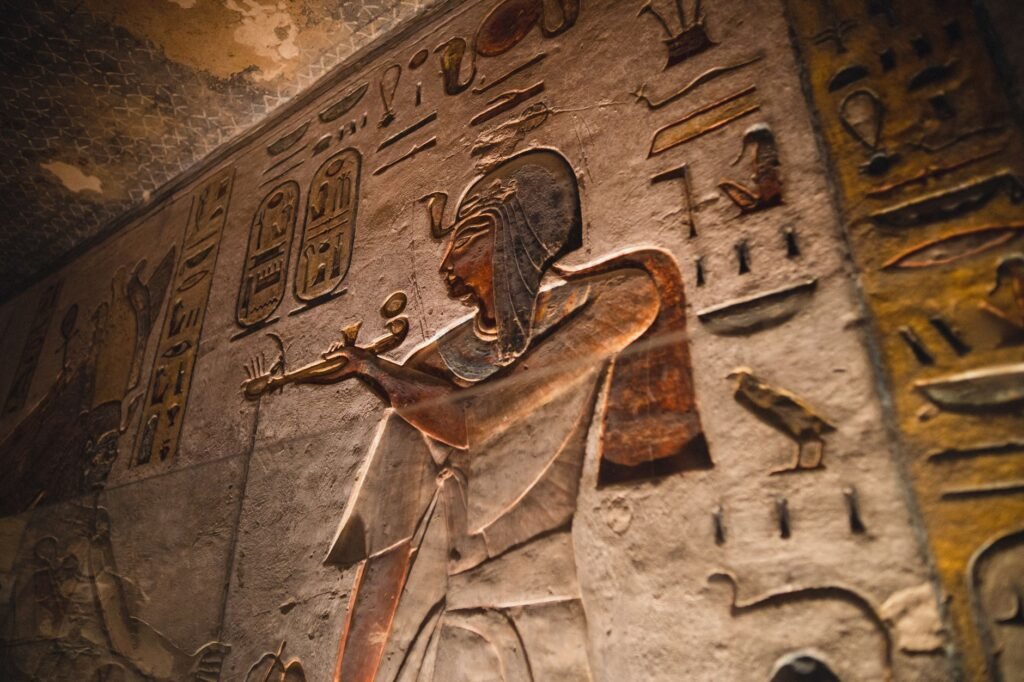
Ancient Egyptian religion was not based on a single sacred text or a single centralized church. Instead, it consisted of temple cults, royal ideology, funerary beliefs, local traditions, and myths preserved in inscriptions and ritual texts.
Why the Number Cannot Be Fixed
Several factors prevent a precise count:
- Regional variation: A deity worshipped in one city might be unknown in another.
- Historical change: New gods rose in importance while others declined.
- Syncretism: Deities were often combined, such as Amun-Ra or Ptah-Sokar-Osiris.
- Different levels of prominence: Some gods had major cult centers; others were only mentioned in spells or funerary texts.
- Plurality of forms: One god could have many manifestations, epithets, and local forms.
Broad Scholarly View
Egyptologists do not give one universal total. Instead, they generally agree that:
- There were dozens of major deities
- Hundreds of named deities are attested in surviving sources
- The full divine world also included lesser spirits, guardian beings, and personifications of forces such as truth, chaos, or destiny
Thus, the answer to how many gods and goddesses did the ancient Egyptians worship is best understood as “many hundreds, with a smaller number of major deities dominating public worship.”
Main Characteristics
Ancient Egyptian gods and goddesses were typically characterized by a combination of human and animal features, symbolic roles, and cosmic functions.
Common Traits
- Anthropomorphic and zoomorphic forms: Deities might appear as humans, animals, or human figures with animal heads.
- Multiple names and aspects: A deity could have several titles and local manifestations.
- Moral and cosmic roles: Gods maintained order, protected the dead, controlled fertility, or governed natural phenomena.
- Ties to kingship: The pharaoh was seen as the earthly representative or son of certain gods.
- Immense diversity: Egyptian theology included creator gods, sky gods, solar gods, fertility gods, funeral gods, and household protective deities.
Major Divine Patterns
Some recurring divine functions included:
| Divine Function | Examples of Deities |
|---|---|
| Sun and creation | Ra, Atum, Khepri |
| Kingship and protection | Horus, Amun, Seth in some contexts |
| Death and afterlife | Osiris, Anubis, Nephthys |
| Fertility and motherhood | Isis, Hathor, Taweret |
| Wisdom and writing | Thoth, Seshat |
| War and power | Sekhmet, Bastet in certain aspects |
| Earth and fertility | Geb, Min |
These categories overlapped. A god could be both solar and royal, or both healing and protective, depending on the text or temple tradition.
Family and Genealogy
Egyptian deities were frequently organized into families, enneads, triads, and genealogical groups, though these were not always consistent across traditions.
Divine Families
One of the most famous is the Osirian family:
- Osiris and Isis as a divine couple
- Their son Horus
- Their rivals or assistants included Set, Nephthys, and Anubis in various traditions
Another common model is the triad, especially in Thebes and elsewhere:
- Amun, Mut, and Khonsu in the Theban triad
- Ptah, Sekhmet, and Nefertum in the Memphite triad
- Osiris, Isis, and Horus in Osirian contexts
Genealogy and Flexibility
Egyptian divine genealogy was often symbolic rather than rigidly biological. Gods could be described as:
- Parents of one another
- Self-created
- Emerging from primordial waters
- Manifestations of older gods
For example, Ra was sometimes the creator and sometimes merged with Atum, Khepri, or Amun. Such relationships show that Egyptian theology was dynamic and context-dependent, not a fixed family tree.
Symbols
Each deity had specific symbols, crowns, scepters, animals, or ritual objects associated with them.
Common Symbols
- Ankh: Symbol of life
- Djed pillar: Stability and endurance, especially linked to Osiris
- Was scepter: Power and dominion
- Eye of Horus: Protection, healing, and restoration
- Solar disk: Associated with Ra, Hathor, and other solar deities
- Feathers: Linked to Ma’at, truth, and cosmic order
Examples of Divine Symbols
| Deity | Symbols |
|---|---|
| Ra | Solar disk, falcon, obelisk |
| Osiris | Atef crown, crook and flail, djed pillar |
| Isis | Throne hieroglyph, knot amulet |
| Horus | Falcon, double crown |
| Hathor | Cow horns and solar disk, sistrum |
| Anubis | Jackal, embalming implements |
| Thoth | Ibis, moon symbols, writing tools |
Symbols were not merely decorative. They communicated divine identity, cult role, and theological meaning.
Sacred Animals
Animals were central to Egyptian divine imagery because they represented divine qualities, natural power, and sacred presence.
Important Sacred Animals
- Falcon: Associated with Horus and Ra
- Bull: Linked to Apis and strength, fertility, and kingship
- Cow: Associated with Hathor, motherhood, and nourishment
- Jackal: Linked to Anubis and cemeteries
- Ibis: Associated with Thoth and wisdom
- Cobra: Protective and royal symbolism, linked to Wadjet
- Cat: Connected with Bastet and domestic protection
- Lion: Strength and fierce protection, linked to Sekhmet
Animal Worship
Some animals were worshipped directly as living embodiments of divine power, especially in later periods. For example:
- The Apis bull in Memphis
- Sacred crocodiles associated with Sobek in some regions
- Ibis and baboons connected with Thoth
This does not mean Egyptians worshipped animals as animals alone. Rather, they saw certain creatures as manifestations or vehicles of divine presence.
Sacred Plants
Plants also carried religious significance in Egyptian religion, especially in relation to rebirth, healing, and solar imagery.
Important Sacred Plants
- Papyrus: Symbolized Lower Egypt, growth, and vitality
- Lotus: Associated with creation, rebirth, and the rising sun
- Sycamore fig: Linked to protection and the goddess Hathor
- Persea tree: Connected in some traditions with sacred knowledge and royal legitimacy
Symbolic Meaning
The lotus was especially important because it closes at night and opens with the sun, making it a powerful symbol of renewal and creation. Papyrus, common in the Nile Delta, became a marker of regional identity and fertility. Sacred trees often appeared in funerary scenes as sources of nourishment from goddesses in the afterlife.
Sacred Places
Ancient Egyptian gods and goddesses were strongly tied to specific temples, cities, and sacred landscapes.
Major Cult Centers
| Place | Associated Deities |
|---|---|
| Heliopolis | Ra, Atum |
| Memphis | Ptah, Apis |
| Thebes | Amun, Mut, Khonsu |
| Abydos | Osiris |
| Dendera | Hathor |
| Edfu | Horus |
| Philae | Isis |
| Hermopolis | Thoth |
| Sais | Neith |
| Bubastis | Bastet |
Importance of Place
A deity’s power was often anchored in a temple city, but gods were not limited to one location. Many cults spread widely through Egypt, and pilgrimage, festivals, and processional rituals connected different sacred places.
Some natural sites, such as deserts, mountains, springs, and river edges, were also believed to be spiritually charged. The Nile itself was essential to divine life, fertility, and rebirth.
Powers and Attributes
The ancient Egyptian gods and goddesses governed nearly every dimension of life and death.
Major Areas of Influence
- Creation of the world
- Sun, moon, and stars
- Nile floods and agriculture
- Kingship and state order
- Protection in war
- Healing and magic
- Birth and fertility
- Death, judgment, and rebirth
- Writing, wisdom, and knowledge
The Principle of Ma’at
A central concept in Egyptian religion was ma’at, meaning truth, balance, justice, order, and proper harmony. Many gods were associated with maintaining ma’at, especially Ra, Osiris, Horus, and Thoth. Chaos was often represented by isfet, the opposite of order.
The gods did not simply grant favors. They were believed to maintain the structure of the universe itself. Human ritual helped sustain that balance.
Main Myths
Egyptian mythology contains many stories, but unlike later traditions, these myths were often preserved in fragments, ritual texts, hymns, and funerary compositions rather than in one coherent narrative.
The Creation Myths
Different cities had different creation traditions:
- Heliopolitan: Atum emerged from the primordial waters and generated the Ennead.
- Memphite: Ptah created the world through thought and speech.
- Hermopolitan: Eight primeval deities represented the chaotic waters and the conditions before creation.
- Theban: Amun developed as a hidden creator god of cosmic power.
The Osiris Myth
One of the most influential stories involves:
- Osiris as a benevolent king
- His murder by Seth
- Isis recovering and reassembling his body
- Horus avenging his father
- Osiris becoming ruler of the underworld
This myth shaped Egyptian beliefs about kingship, resurrection, and funerary rites.
The Eye of Ra and Sekhmet
Another important myth cycle concerns the dangerous Eye of Ra, often linked to goddesses such as Sekhmet, Hathor, or Tefnut. In some versions, the goddess becomes violent, and divine intervention calms her.
Solar Journey
Ra’s journey through the sky by day and through the underworld by night symbolized the cycle of life, death, and renewal. This myth was central to royal and funerary theology.
Relationship with Other Mythological Figures
Egyptian gods often interacted through cooperation, conflict, and assimilation.
Alliances and Syncretism
- Amun and Ra were merged in later periods as Amun-Ra
- Ptah-Sokar-Osiris united creation, funerary, and underworld powers
- Horus and Ra could share solar and royal attributes
- Isis absorbed attributes of many goddesses over time
Conflicts
Myths also feature divine conflict:
- Horus vs. Seth symbolized legitimacy, order, and royal succession
- Ra vs. Apophis (Apep) represented the nightly struggle against chaos
- Sekhmet’s destructive power could threaten humanity until moderated
These relationships are crucial for understanding Egyptian religion, since gods were not isolated figures. They formed networks of meaning.
Worship and Cult
Worship of the Egyptian gods was highly ritualized and deeply integrated into state and local life.
Forms of Worship
- Daily temple offerings of food, incense, wine, and linen
- Processions of divine statues during festivals
- Recitation of hymns and ritual texts
- Personal prayers and votive offerings
- Funerary rites to support the dead in the afterlife
Priests and Temples
Temples were major religious institutions, but the general population did not usually enter the innermost sanctuaries. Priests maintained cult images, performed offerings, and handled festival rituals on behalf of the king and the community.
Household Religion
Ordinary people also worshipped gods at home through:
- Amulets
- Small shrines
- Personal stelae
- Protective magical objects
- Appeals to goddesses and healing deities
Popular devotion often focused on compassionate and protective figures such as Isis, Taweret, Bes, Hathor, and Serqet.
Ancient Sources
Knowledge of Egyptian gods comes primarily from Egyptian sources, not classical Greek or Roman writers. Important categories include:
Egyptian Primary Sources
- Pyramid Texts
- Coffin Texts
- Book of the Dead
- Temple inscriptions and reliefs
- Hymns to gods such as Ra and Amun
- Myths and ritual texts from temples at Edfu, Dendera, and Philae
Classical Writers
Classical authors did write about Egyptian religion, though often from an outsider’s perspective:
- Herodotus described Egyptian customs and deities
- Diodorus Siculus discussed Egyptian religion in historical terms
- Plutarch wrote about Isis and Osiris in a famous treatise
- Strabo and Pliny the Elder mentioned sacred sites and customs
These sources are useful but must be treated carefully, since they sometimes misunderstand Egyptian beliefs or interpret them through Greek concepts.
Roman Equivalent
There is no exact Roman equivalent to the entire Egyptian pantheon. However, during the Roman period, some Egyptian gods were identified with Roman or Greco-Roman deities through interpretatio graeca and interpretatio romana.
Examples include:
- Isis, widely adopted in the Roman world, though not a simple equivalent of any one Roman goddess
- Serapis, a syncretic deity developed in Hellenistic Egypt and later honored in Roman contexts
- Horus sometimes compared with Apollo
- Amun sometimes linked with Jupiter
- Thoth with Mercury
- Hathor with Venus in some interpretive traditions
These identifications were approximate and culturally layered, not exact one-to-one matches.
Influence on Modern Culture
Ancient Egyptian gods and goddesses continue to inspire modern imagination.
In Literature and Art
Egyptian deities appear in:
- Historical novels
- Fantasy literature
- Poetry
- Museum exhibitions
- Contemporary visual art
In Film, Television, and Games
They are often featured in:
- Adventure films
- Documentaries
- Television dramas
- Video games
- Comics and graphic novels
Popular depictions often focus on:
- Anubis as a jackal-headed underworld figure
- Ra as a solar creator god
- Isis as a powerful goddess
- Horus as a falcon-headed royal deity
Cultural Impact
Modern interest in Egyptian religion is also visible in:
- Archaeology
- Comparative mythology
- Esoteric traditions
- Tourism in Egypt
- Educational media
Some modern portrayals are accurate, while others simplify or dramatize the original religion.
Curiosities
- Ancient Egyptian religion could be both local and universal at the same time.
- A single god might have many names, forms, and epithets.
- Gods could merge into one another without losing identity.
- Some deities were worshipped mainly in temples, while others were especially important in household religion.
- The same goddess might appear as nurturing, dangerous, protective, and solar depending on context.
- Egyptian theology allowed for a great deal of symbolic flexibility.
- The divine world included not just gods and goddesses, but also demons, guardian spirits, and personified concepts.
Frequently Asked Questions
1. How many gods and goddesses did the ancient Egyptians worship?
There is no exact final number. Ancient Egyptians worshipped many hundreds of named gods and goddesses, and the number depends on how broadly one defines a deity. Some were major national gods, while many others were local or specialized.
2. Did all ancient Egyptians worship the same gods?
No. Some gods were widely worshipped throughout Egypt, but local traditions varied greatly. A deity important in Thebes might not be central in Memphis or the Delta.
3. Who were the most important Egyptian gods and goddesses?
Among the most important were Ra, Osiris, Isis, Horus, Amun, Ptah, Hathor, Thoth, Anubis, Sekhmet, Bastet, and Neith. Their importance changed over time and by region.
4. Was ancient Egyptian religion monotheistic?
Generally, no. It was polytheistic, although some periods and texts emphasized one god above others, especially in royal theology. Even then, the tradition did not fully abandon belief in multiple gods.
5. Why do Egyptian gods have animal heads?
Animal forms symbolized divine qualities such as strength, wisdom, protection, and speed. The images were symbolic rather than literal portraits.
6. Did Egyptians worship animals themselves?
Sometimes sacred animals were treated as living embodiments of divine power, but this is not the same as simple animal worship. The animal was usually connected to a god or goddess.
7. What was the role of goddesses in Egyptian religion?
Goddesses were central to creation, motherhood, kingship, protection, healing, and the afterlife. Figures such as Isis, Hathor, Nephthys, Sekhmet, and Bastet were among the most significant in Egyptian religious life.
8. Where can we learn about ancient Egyptian gods?
The main evidence comes from temple inscriptions, funerary texts, hymns, tomb paintings, statues, and archaeological remains. Classical writers also provide information, though with limitations.
Conclusion
The answer to how many gods and goddesses did the ancient Egyptians worship is not a simple number but a reflection of a complex religious world. Ancient Egyptian religion was profoundly polytheistic, with dozens of major deities and hundreds of named divine figures appearing across more than three thousand years of history. Its gods and goddesses were not fixed in a single list; they changed with time, place, and theological interpretation.
This rich pantheon helped Egyptians explain creation, kingship, the Nile, death, rebirth, and the moral order of the universe. It also gave meaning to temples, festivals, funerary rites, and everyday acts of devotion. The legacy of these deities remains alive today in scholarship, art, museums, and popular culture.

Orin Vale has spent the better part of two decades tracing the threads that connect the world’s oldest stories — from the halls of Asgard to the banks of the Nile, from Olympus to the jungles of the Maya. What began as a childhood fascination with flood myths and trickster gods grew into years of independent study across comparative mythology and ancient religion, always chasing the same question: what did these stories mean to the people who first told them? Orin writes for readers who want more than trivia — the ones looking for the beliefs, fears, and truths that myths were built to carry.