Introduction
The question why do Egyptian gods have animal heads is one of the most common ways modern readers encounter ancient Egyptian religion. The short answer is that animal-headed deities were a symbolic way of expressing divine powers, natural forces, and ideal traits in forms that ancient Egyptians could recognize and venerate. These images were not meant as literal zoological descriptions. Instead, they combined human and animal features to communicate a god’s character, role, and relationship to the world.
Animal-headed gods are important because they reveal how ancient Egyptians understood divinity itself. Their religion was deeply connected to nature, kingship, death, rebirth, and cosmic order. Animals were observed carefully in daily life and in the Nile environment, so their behaviors, body parts, and habits became powerful religious symbols. A falcon could suggest speed and skyward vision; a jackal could evoke the desert and funerary protection; a crocodile could embody danger and strength. The animal head was a visual shorthand for these associations.
Origin and Meaning
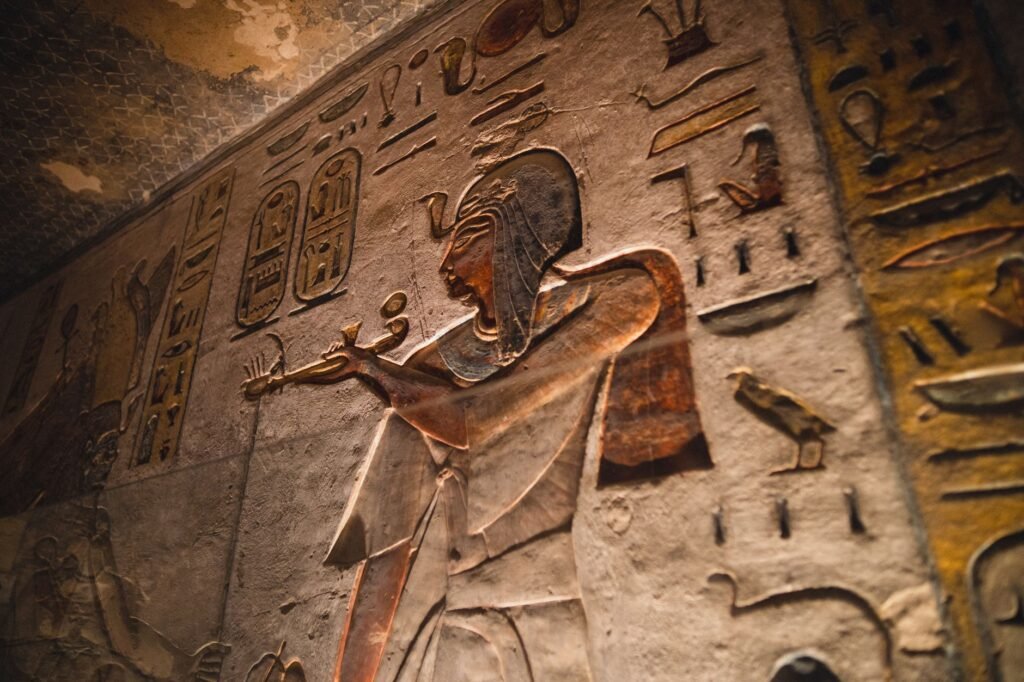
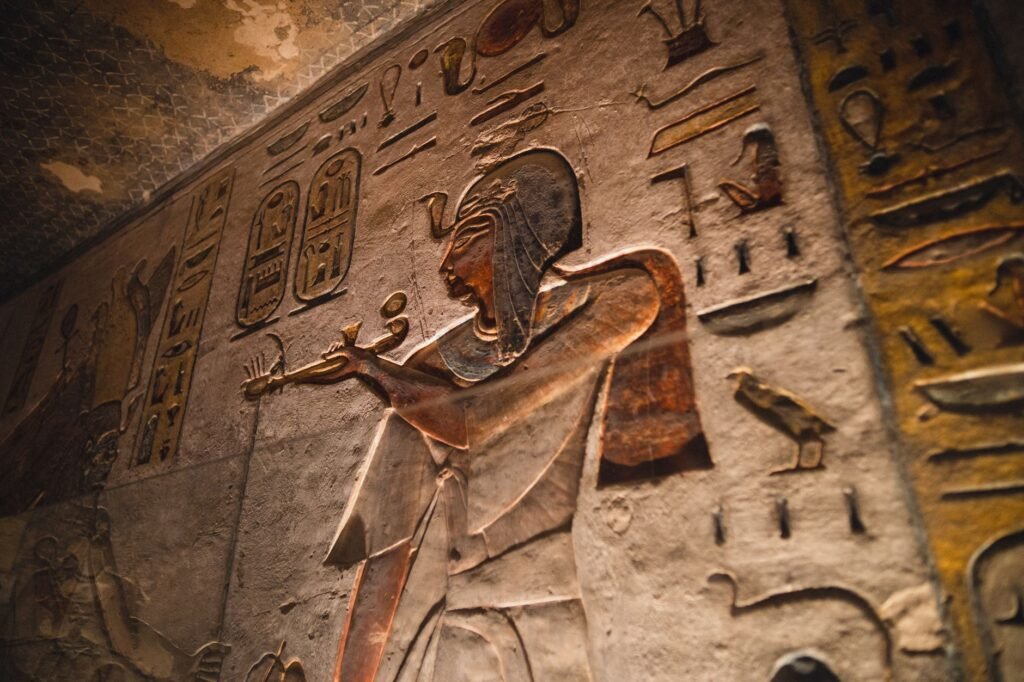
The phrase “Egyptian gods have animal heads” is a modern description of a much older artistic and religious practice. In Egyptian language and thought, these beings were not understood as “monsters” or hybrids in the modern fantasy sense. They were divine forms that could appear in many ways: fully human, fully animal, or mixed. The mixed form became especially common in temple art, funerary objects, and ritual scenes.
There is no single origin point for animal-headed gods. The practice developed over a long period in ancient Egyptian history, likely from early local cults that linked particular animals with specific divine powers. As religious ideas became more organized, these animal associations were preserved and elaborated in art and ritual. Some deities were represented consistently with animal heads; others could appear in different forms depending on context.
What the animal heads meant
Animal heads usually conveyed one or more of the following:
- A divine function: for example, protection, healing, warfare, or burial
- A natural domain: such as the sky, marshes, desert, or river
- A personality trait: strength, vigilance, ferocity, wisdom, stealth
- A sacred association: the animal was considered ritually linked to the god
- A visual identity: allowing worshippers to recognize a deity immediately
The Egyptian gods’ animal heads therefore reflect a symbolic religious language rather than a literal claim that gods were part animal and part human.
Historical Context
Ancient Egyptian religion lasted for more than three millennia and changed over time. The earliest evidence comes from pre-dynastic and early dynastic periods, when regional communities worshipped local gods often associated with animals, celestial bodies, or natural places. As the Egyptian state unified, these local cults remained important, and many gods were incorporated into broader theological systems.
Animal symbolism was especially suitable in Egypt for several reasons:
- The environment was visually rich: the Nile valley supported birds, crocodiles, cattle, cats, ibises, lions, and jackals.
- Animals were economically important: livestock, hunting, fishing, and agriculture shaped daily life.
- Observation of nature mattered religiously: Egyptians saw divine order in the patterns of the natural world.
- Religion and kingship were closely linked: the pharaoh was also represented in animal symbolism, especially as a falcon or sphinx.
Egyptian art followed conventions rather than naturalistic realism. A god with a human body and an animal head was not an attempt at portraiture. It was a carefully coded visual system. The choice of animal could vary by region, period, or temple tradition, and some gods were depicted in more than one form.
Main Characteristics
Animal-headed Egyptian deities are usually shown with a human body and the head of a specific animal. Their bodies are often clothed in the standard attire of gods and kings, such as a kilt, jewelry, and royal regalia. They may hold traditional symbols of power, such as the ankh (life), was scepter (power), and djed pillar (stability).
Common visual traits
| Feature | Typical meaning |
|---|---|
| Human body | Divine authority, anthropomorphic presence |
| Animal head | Specific divine function or symbolic power |
| Headdress or crown | Royal, cosmic, or regional identity |
| Sacred emblems | Authority, life, protection, or dominion |
| Color conventions | Often symbolic rather than realistic |
Examples of major animal-headed gods
| Deity | Animal head | Main associations |
|---|---|---|
| Horus | Falcon | Sky, kingship, divine protection |
| Anubis | Jackal | Embalming, graves, funerary guardianship |
| Thoth | Ibis or baboon | Writing, wisdom, calculation, moon |
| Sobek | Crocodile | Nile power, fertility, military strength |
| Bastet | Cat | Protection, home, fertility, grace |
| Sekhmet | Lioness | War, plague, healing through power |
| Khnum | Ram | Creation, childbirth, Nile sources |
| Wepwawet | Jackal | Pathways, warfare, funerary guidance |
Some gods were not usually shown with animal heads but rather as full animals or fully human figures with animal attributes. The visual system was flexible, and not all deities fit one rigid category.
Family and Genealogy
Genealogy in Egyptian mythology is often complex and varies across traditions. Unlike later myth systems with fixed family trees, Egyptian gods were frequently grouped by cult center, theological school, or local tradition. As a result, relationships between deities can differ from one source to another.
Examples of family relationships
- Horus is commonly the son of Osiris and Isis in the Osiris myth cycle.
- Anubis has different parentage in different sources. In some traditions he is the son of Nephthys and Osiris; in others, he is associated more broadly with funerary rites without a fixed genealogy.
- Thoth is often presented as a self-existing god of wisdom rather than as part of a clearly defined family.
- Sobek sometimes appears in local traditions as the son of other gods, but his parentage is not uniform across Egyptian religion.
- Bastet and Sekhmet are sometimes linked in broader theological traditions, especially in relation to the Eye of Ra concept, but their exact relationship varies by period and source.
- Khnum may be associated with other creator gods in different theological systems, sometimes forming triads with goddesses and child deities in temple cults.
Because Egyptian myth was not systematized into one canonical narrative, family relationships should be understood as fluid and context-dependent.
Symbols
Egyptian animal-headed gods are identified by a rich set of symbols. These often reinforce the meaning of the animal head itself.
Important symbols
- Ankh: the sign of life
- Was scepter: dominion, authority, divine power
- Djed pillar: stability and endurance
- Udjat eye: wholeness, protection, healing
- Solar disk: especially associated with solar gods and royal power
- Crown imagery: indicates status, sovereignty, or regional identity
- Feathers: truth, balance, and order, especially in relation to Ma’at
Symbolic logic
The animal head and the accompanying symbols work together. For example:
- A falcon-headed Horus with a crown emphasizes kingship and sky dominion.
- A jackal-headed Anubis in a funerary scene emphasizes protection and transition to the afterlife.
- A lioness-headed Sekhmet with a solar disk and uraeus suggests fierce solar power and defense.
These symbols were not decorative extras. They formed part of a religious language that could be read by trained priests and understood by devotees familiar with cult images.
Sacred Animals
The sacred animals connected with Egyptian gods were often chosen because of their observable traits and their place in Egyptian ecology.
Common sacred animals and their meanings
| Animal | Symbolic significance |
|---|---|
| Falcon | Vision, speed, sky, kingship |
| Jackal | Desert, cemeteries, vigilance |
| Ibis | Wisdom, writing, calculation |
| Baboon | Lunar associations, intelligence, speech |
| Crocodile | Strength, danger, river power |
| Cat | Protection, domestic life, grace |
| Lion/Lioness | Ferocity, royal power, solar force |
| Ram | Fertility, creative energy |
| Bull | Vitality, kingship, strength |
| Cow | Nourishment, motherhood, fertility |
Why these animals mattered
Ancient Egyptians did not worship animals in a simplistic sense. Rather, they regarded certain animals as embodiments or manifestations of divine qualities. Some animals were sacred because they were thought to house a god, while others symbolized divine forces through their behavior.
For instance:
- The falcon was associated with the heavens because it flies high and sees far.
- The jackal was linked to cemeteries and the desert edge because jackals were seen near burial grounds.
- The crocodile represented untamed river power because it was dangerous, territorial, and tied to the Nile.
- The cat became associated with protection because cats defended homes from vermin and snakes.
These associations helped shape the iconography of Egyptian religion.
Sacred Plants
Sacred plants are less central to the topic than animals, but they are still important in Egyptian religious symbolism and temple life.
Plants commonly connected with Egyptian religion
- Papyrus: associated with Lower Egypt, marshes, and renewal
- Lotus: linked to rebirth, the sun, and creation
- Sycamore fig: associated with nourishment, protection, and the goddess Hathor in some contexts
- Date palm: linked to fertility and time
- Persea tree: sometimes associated with sacred knowledge and divine stability in later traditions
Plant symbolism and animal-headed gods
Plants often framed the environment in which animal-headed gods operated. For example, marsh plants such as papyrus were associated with Horus and the northern delta; lotus imagery was connected with solar rebirth. In funerary and temple art, plants could appear alongside gods to signify regeneration, cosmic order, and the continuity of life.
Sacred Places
Egyptian gods with animal heads were worshipped across the Nile Valley, but certain cities and temple centers became especially important.
Key sacred places
| Place | Associated deity or tradition |
|---|---|
| Edfu | Horus |
| Cynopolis | Anubis and jackal cult traditions |
| Hermopolis | Thoth |
| Kom Ombo | Sobek |
| Bubastis | Bastet |
| Memphis region | Multiple cult traditions, including Ptah and related forms |
| Esna | Khnum |
Why place mattered
Egyptian religion was strongly local. A god’s character could be shaped by the temple city in which worship was centered. Festivals, priestly rituals, and votive offerings helped maintain the deity’s presence in that place.
Temples were not merely houses of worship in the modern sense. They were sacred microcosms representing the ordered universe. The images of gods with animal heads were part of this cosmic architecture.
Powers and Attributes
The powers of animal-headed gods depend on the specific deity. There is no one universal “animal-headed god” with a single set of attributes. Instead, each god had distinct responsibilities.
Major domains
- Kingship and sky order: Horus
- Funerary protection and embalming: Anubis
- Wisdom, writing, and lunar knowledge: Thoth
- River fertility and dangerous strength: Sobek
- Home protection, music, joy, and fertility: Bastet
- War, plague, and healing: Sekhmet
- Creation and shaping bodies: Khnum
- Pathfinding and opening roads: Wepwawet
A useful distinction
Some gods were benevolent protectors, while others were feared as much as revered. Sekhmet and Sobek, for example, embody dangerous force that can harm or defend depending on circumstance. Egyptian religion often treated power as morally ambivalent rather than purely good or evil.
Main Myths
Egyptian myths are not preserved in a single authoritative text, and stories often exist in multiple versions. Still, several major mythic cycles help explain the prominence of animal-headed gods.
Horus and Osiris
One of the most important myths in Egyptian religion concerns Osiris, Isis, Horus, and Set. Horus, usually depicted with a falcon head, becomes the avenger of his father Osiris and the rightful king of Egypt. His falcon form reinforces his role as a sky god and royal protector.
Anubis and the dead
Anubis is central to funerary mythology. He is associated with embalming, mummification, and the safeguarding of the dead. His jackal head reflects the danger of the desert and the need to protect graves from scavengers, both literal and symbolic.
Thoth and cosmic order
Thoth, often shown with an ibis head, is linked to writing, counting, and lunar cycles. In myth, he plays the role of divine scribe and mediator. He is sometimes associated with restoring order after conflict and with recording judgments in the afterlife.
Sekhmet and the destructive eye
Sekhmet, the lioness goddess, appears in myths related to the Eye of Ra. In some traditions, she is sent to punish humanity and becomes so destructive that she must be stopped. Her lioness form expresses both the danger and protective power of the sun’s force.
Sobek and the river
Sobek embodies the Nile’s powerful and unpredictable energy. Myths and cult stories present him as both dangerous and beneficial, reflecting the river’s ability to bring life and destruction.
These myths help explain why Egyptian deities were represented with animal heads: the animal image condensed narrative, function, and cosmic meaning into a single form.
Relationship with Other Mythological Figures
Animal-headed gods interacted with many other deities, and these relationships could be cooperative, genealogical, or competitive.
Common relationships
- Horus and Set: a famous mythic rivalry centered on kingship and legitimacy
- Anubis and Osiris: both associated with death, but with different roles in funerary belief
- Thoth and Ra: Thoth often supports solar order and records divine events
- Sekhmet, Bastet, and Hathor: sometimes related through the Eye of Ra tradition, though sources differ
- Sobek and other crocodile or solar deities: local cults sometimes merge or connect them
- Khnum and fertility goddesses: temple theology can pair him with goddesses associated with birth and nourishment
Egyptian theology often merged or harmonized deities rather than separating them strictly. A god could absorb traits from another god, or different gods could be viewed as different expressions of one divine force.
Worship and Cult
Worship of animal-headed gods involved daily temple rites, offerings, festivals, processions, and private devotion.
Common practices
- Food and drink offerings
- Incense burning
- Temple hymns and prayers
- Processional festivals
- Animal cults and sacred animal care in some centers
- Votive objects dedicated by worshippers
- Funerary rituals and embalming ceremonies
Sacred animals and cult practice
In some periods and places, individual sacred animals were kept, honored, or mummified after death. This varied by deity and locality. Such practices show that Egyptian religion treated the connection between animal and god as active and meaningful.
Priestly role
Priests maintained statues, cleaned sanctuaries, and performed ritual reenactments. The image of the god, including its animal head, was central to worship. It was not merely an artwork; it was a ritually empowered presence.
Ancient Sources
Our understanding of Egyptian gods with animal heads comes mainly from Egyptian art, inscriptions, temple reliefs, funerary texts, and later Greek and Roman writers.
Important primary sources and authors
- Pyramid Texts: early royal funerary inscriptions
- Coffin Texts: Middle Kingdom funerary spells
- Book of the Dead: New Kingdom and later funerary literature
- Temple inscriptions at major cult sites such as Edfu, Dendera, Kom Ombo, and Esna
- Herodotus: provides Greek observations on Egyptian religion, though filtered through outsider interpretation
- Plutarch: offers later interpretive accounts, especially in On Isis and Osiris
- Diodorus Siculus: another Greek source with ethnographic interest
- Strabo: comments on Egypt in geographic and historical writing
Caution in reading the sources
Classical authors often misunderstood Egyptian religion or interpreted it through Greek categories. Their writings are useful but must be read critically alongside Egyptian evidence. The most reliable evidence is usually the Egyptian material itself: inscriptions, statues, tomb paintings, and temple iconography.
Roman Equivalent
There is no direct Roman equivalent to the Egyptian system of animal-headed gods. However, during the Greco-Roman period, some Egyptian deities were identified with Roman or Greco-Roman gods through interpretatio graeca and later Roman religious adaptation.
Examples of syncretism
- Thoth was associated with Hermes and later with Mercury
- Horus could be linked with forms of Apollo or other sky-related divine figures in broader Mediterranean interpretation
- Isis became one of the most widely worshipped Egyptian goddesses in the Roman world
These identifications did not remove the animal-headed imagery in Egypt, but they did influence how outsiders understood these gods.
Influence on Modern Culture
Animal-headed Egyptian gods continue to fascinate modern audiences because they are visually striking and symbolically rich. They appear in museums, movies, novels, games, and graphic art.
Modern influences include
- Film and television: Egyptian themes often use falcon-headed, jackal-headed, or cat-headed imagery to signal ancient mystery
- Fantasy literature: Egyptian gods inspire hybrid deities and mythic worldbuilding
- Video games: characters and bosses frequently borrow Egyptian iconography
- Comics and animation: gods like Anubis, Horus, and Bastet are widely recognizable
- Fashion and design: the animal-head motif appears in jewelry, tattoos, and decorative art
- Museums and exhibitions: Egyptian artifacts remain among the most visited ancient objects worldwide
Popular culture sometimes oversimplifies these gods as “half-animal monsters,” but serious scholarship emphasizes their theological and symbolic meaning.
Curiosities
- Egyptians did not depict all gods with animal heads. Many major deities, including Ptah, Amun, and Ra in some forms, were shown as human or symbolically composite figures.
- The same god could appear in different forms depending on context, period, or temple tradition.
- Some divine forms were fully animal, not human-bodied with an animal head.
- The animal used was often chosen for symbolic reasons, not because the god was believed to literally look like that creature.
- In Egyptian art, the animal head could be unusually stylized, reflecting religious convention rather than natural anatomy.
- Sacred animal mummification was practiced in some cult centers, though not uniformly across Egypt.
- Modern viewers often assume animal-headed gods are unique to Egypt, but many cultures use hybrid divine imagery in different ways.
- Egyptian iconography aimed to show that a deity could transcend ordinary human form while still remaining recognizable.
Frequently Asked Questions
1. Why do Egyptian gods have animal heads?
They were given animal heads to symbolize divine powers, natural forces, and specific roles such as protection, wisdom, kingship, or fertility. The imagery was symbolic, not literal.
2. Did ancient Egyptians believe these gods were half-animal and half-human?
Not in a modern biological sense. The mixed form was a religious and artistic convention used to express divine identity and function.
3. Which Egyptian god is usually shown with a falcon head?
Horus is the best-known falcon-headed god. The falcon symbolized sky power, sharp vision, and kingship.
4. Why is Anubis shown with a jackal head?
The jackal was associated with cemeteries and the desert edge. Anubis’s jackal head symbolized his role as protector of the dead and guardian of embalming.
5. Are all Egyptian gods shown with animal heads?
No. Many Egyptian gods are shown as fully human, fully animal, or in other composite forms. The animal-headed style was only one of several iconographic traditions.
6. Did each animal head mean the same thing everywhere in Egypt?
Not always. Some meanings were widely shared, but local cults and later theological developments could modify a god’s symbolism.
7. Are animal-headed gods unique to Egyptian religion?
They are especially characteristic of Egyptian art, but other ancient cultures also used hybrid divine imagery. The Egyptian system is notable for its consistency and symbolic sophistication.
8. Why are Egyptian gods still so popular today?
Their images are visually memorable, and their myths combine mystery, power, and symbolism. They continue to inspire modern storytelling, art, and scholarship.
Conclusion
The reason Egyptian gods have animal heads lies in the symbolic language of ancient Egyptian religion. These forms were a way of expressing divine qualities through the most meaningful features of the natural world. A falcon, jackal, ibis, lioness, crocodile, cat, or ram could embody a specific kind of power that ancient Egyptians recognized in both nature and mythology.
Far from being arbitrary or decorative, animal heads were part of a sophisticated visual theology. They helped define gods’ functions, connected them to sacred places and cult practices, and made them immediately identifiable in art and ritual. Understanding this symbolism offers valuable insight into ancient Egyptian thought, where the divine was deeply intertwined with nature, kingship, death, and the enduring order of the cosmos.

Orin Vale has spent the better part of two decades tracing the threads that connect the world’s oldest stories — from the halls of Asgard to the banks of the Nile, from Olympus to the jungles of the Maya. What began as a childhood fascination with flood myths and trickster gods grew into years of independent study across comparative mythology and ancient religion, always chasing the same question: what did these stories mean to the people who first told them? Orin writes for readers who want more than trivia — the ones looking for the beliefs, fears, and truths that myths were built to carry.